• Learn to Let Go
  • Books for Everyone
  • Work
  • newsletter
  • Journal
  • Shop
  • About
Menu

Meera Lee Patel

ARTIST, WRITER, BOOK MAKER
  • Learn to Let Go
  • Books for Everyone
  • Work
  • newsletter
  • Journal
  • Shop
  • About

Dear Somebody: The space between.

January 16, 2026

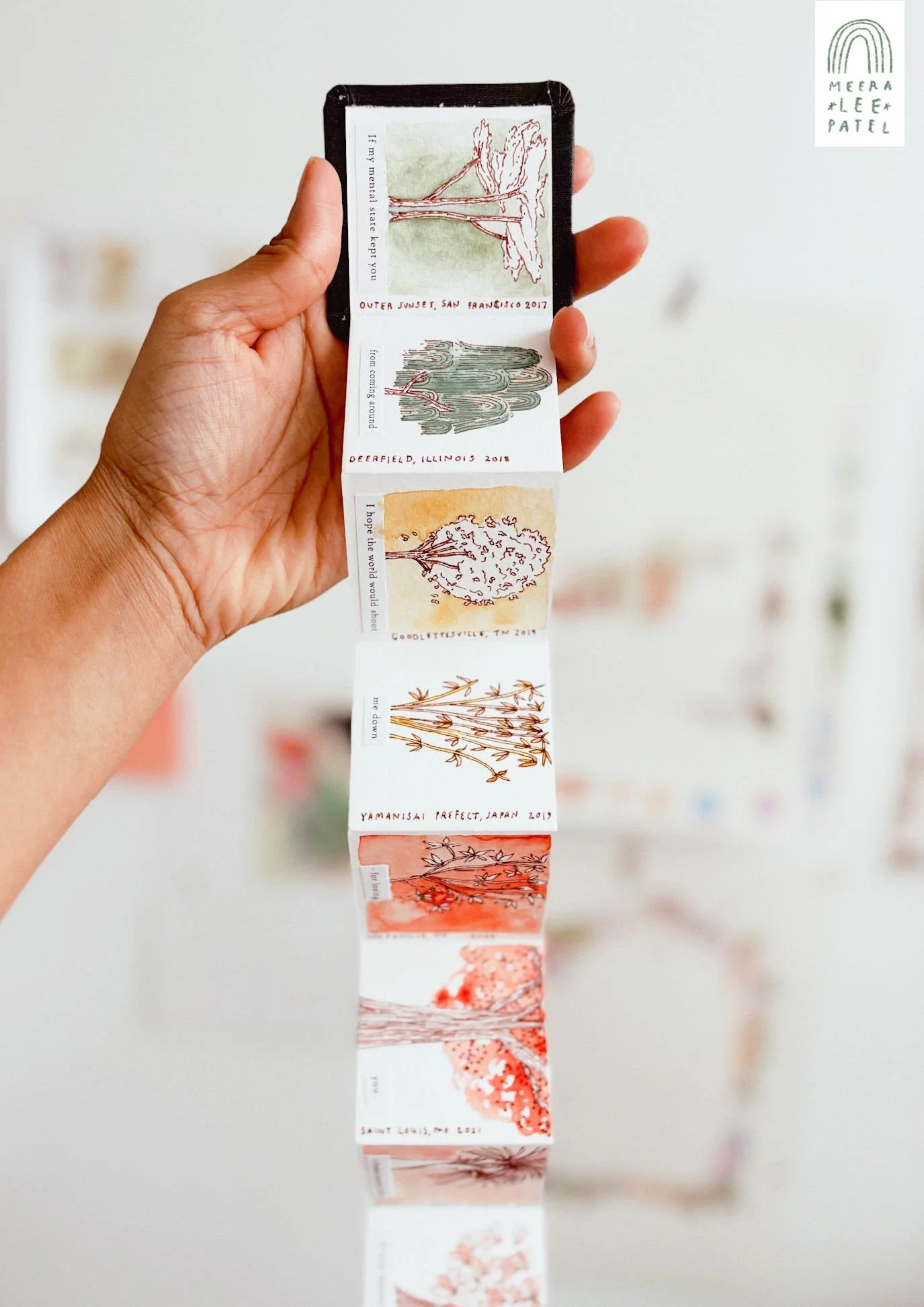
Tiny Book of Trees (watercolor and ink, 2025)

A year from now, here are five things from this week that I'd like to remember:

MONDAY 

When L married us in April of 2019, I’d known him for nearly 10 years. We’d met on Tumblr, back when Tumblr was a place where your art was seen and your thoughts were read and responded to. I was pleased to meet a friend who lived overseas but with whom I connected to well, and overlapped with on the points that mattered to me: creativity, personal values, a desire (and fear of) new adventures.

Our friendship bloomed easily. Years later, it was with L that I adventured through Iceland, making new friends and peeling back the years of fear and anxiety that kept me huddled inside my home. Years later, it is L that I have to thank for getting me through much of my twenties: years that were full of self-doubt and loneliness, years that I didn’t feel would ever amount to very much. 

It is L that I thank for introducing me to my long-time editor, with whom I have published an oeuvre of work that aids readers in more deeply connecting with themselves and the world. It is L that I have to thank for introducing me to my agent, who helped me build a career that can withstand the ripples of time. 

It is L that I thank for marrying me and T on the steps of our farm in Nashville, having flown from Germany to bring us together; having written the ceremony in pencil, in his signature tiny, handwriting on a piece of white paper that I wish I had. 

In August, we go to London. L, who I haven’t seen in 6 years, since my wedding, is flying from Berlin to meet us. I am excited and nervous. So much has changed since we saw each other last, with marriages and children and shifting values; with the insular nature of our isolated American life. Time has sped up into an unrecognizable blur and blurred so much around me that I no longer assume a friendship will feel the way it always has. Things change, and quickly. Often imperceptibly. 

When the doorbell rings and my children answer it, it is L standing in the doorway, carrying a friendship that hasn’t changed. T hugs him tightly and my children scamper towards him, drawn to this stranger they’ve never met. Children are sharp, unencumbered by social etiquette. They sense uneasiness in the places we’ve learned to numb, they know when they’re being spoken about or spoken down to, they surround themselves with good energy and shrug off the rest.
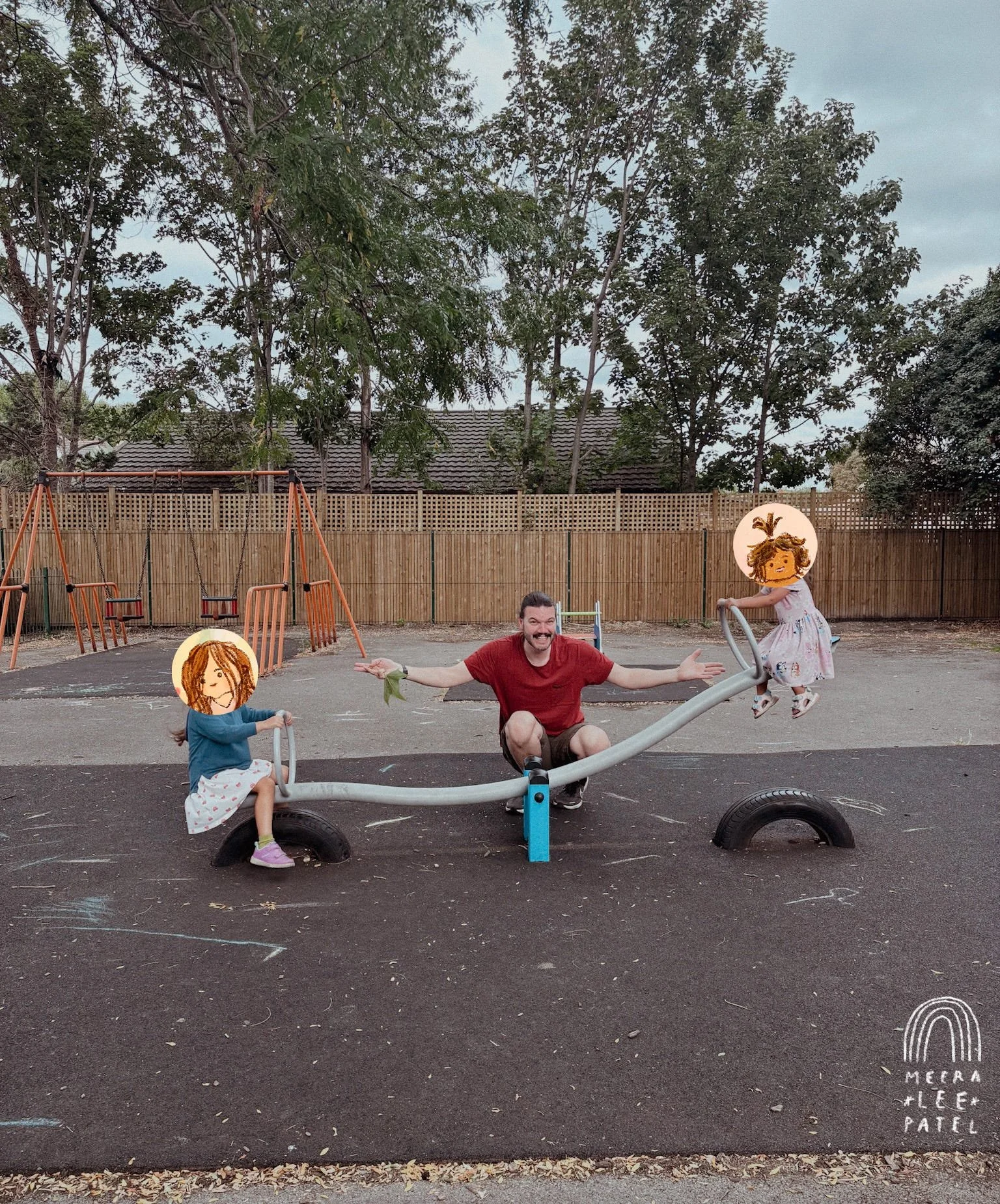
L with Thing 1, Thing 2, and a seesaw (London, 2025)

For a few days, I have my friend back. The five of us watch the changing of the guard, we have lunches, we draw on menus with N while F takes her sleep. We eat dinners and have evening drinks, but mostly, we walk to the playground. We swing on the swings and chase the kids around and do boring everyday things, each of us knowing the monotony of life is always better with a friend.

Today, I find myself thinking of a moment that still hasn’t left me. As we walked through St. James’ Park, N stopped to watch every bird. What’s that one? she asked L and he answered. How about this one? And this one? He named each one and together, they walked on. I didn’t know you knew so much about birds, I told him, surprised. Yeah, I know a fair bit, he said. 
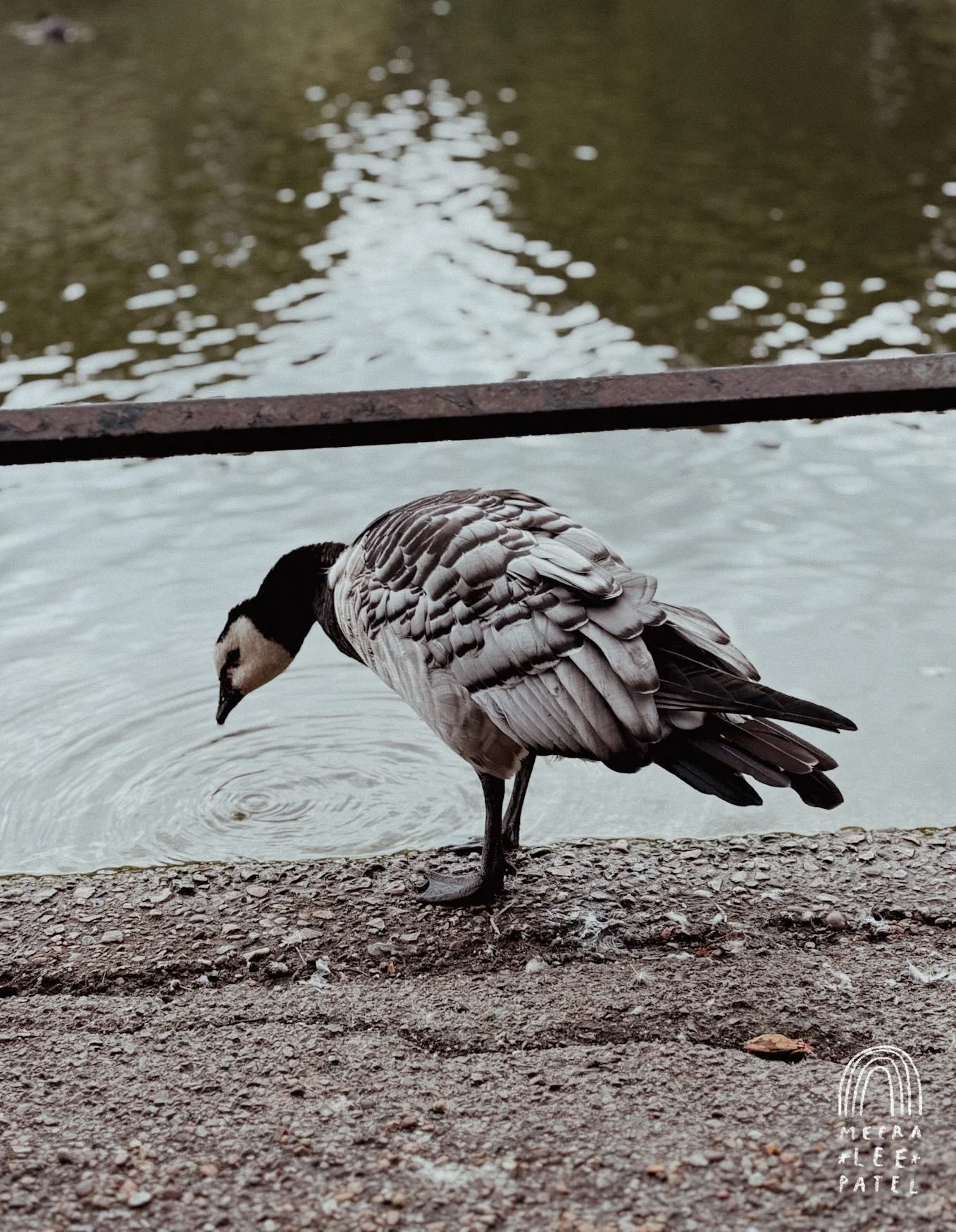
St. James Park #1 (photographed by N in London, 2025)
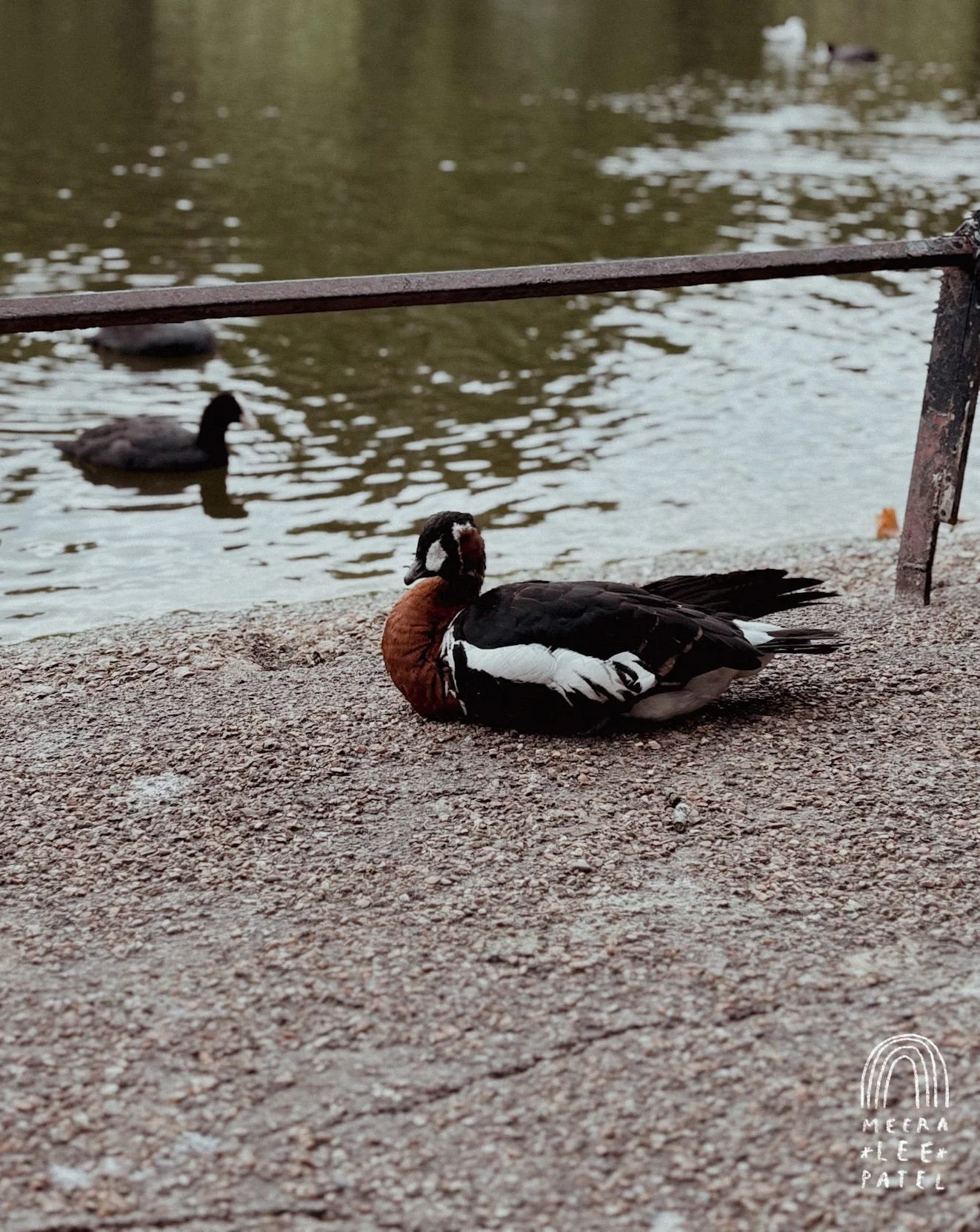
St. James Park #2 (photographed by N in London, 2025)
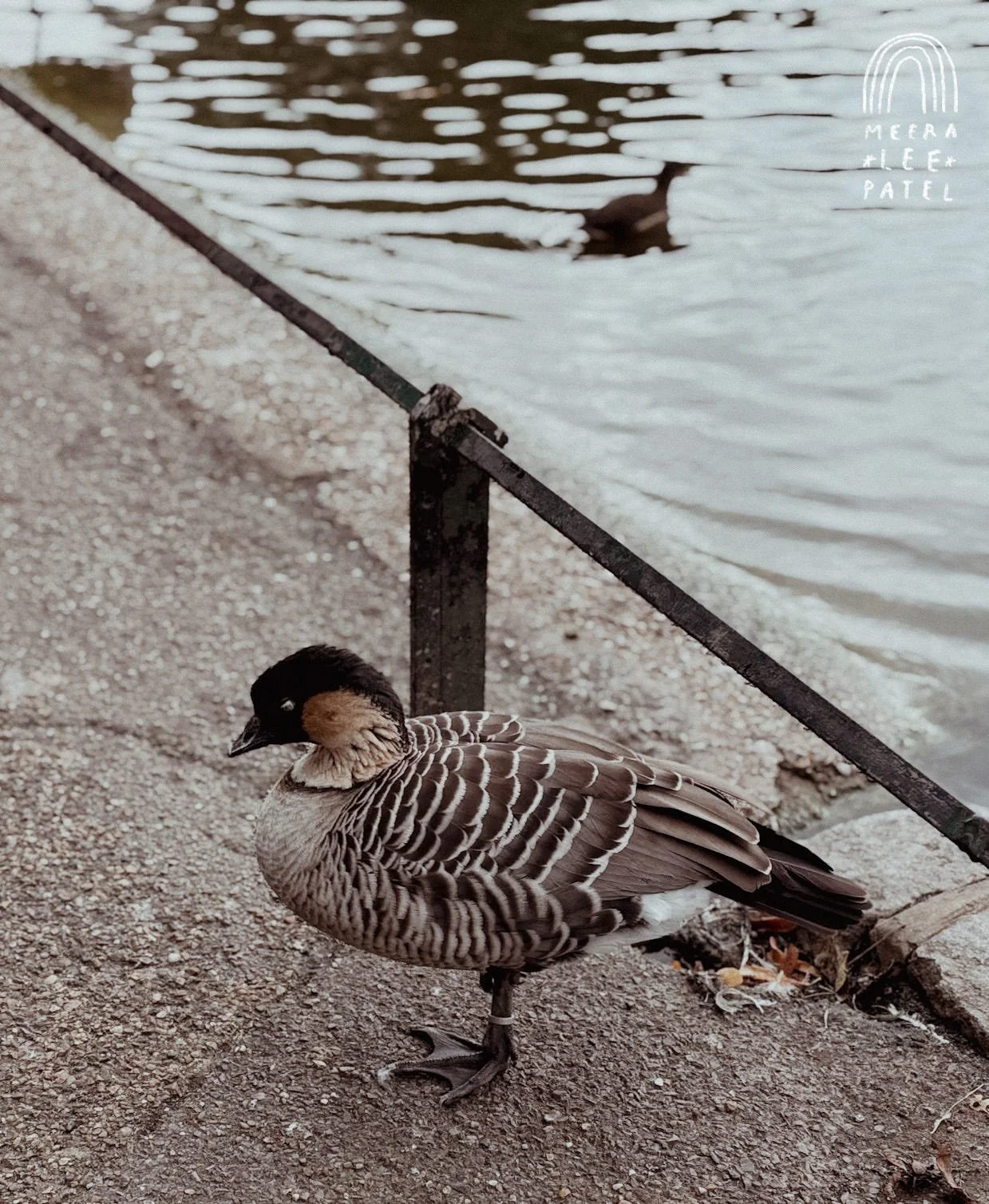
St. James Park #3 (photographed by N in London, 2025)

In this moment, I become acutely aware of how much I don’t know about my friend. This small, benign fact unsettles me: I think about how much more I never will know, because L and I don’t inhabit the same places; most likely, we never will. We see each other for a few days every handful of years. We speak regularly, but words alone are not a replacement for shared time. I think about how many facets of my friends are hidden, never to be realized because we simply don’t share enough of life together. 

Nearly fifteen years ago, during my Tumblr days, one of the first pieces of art I offered for sale was a drawing of an astronaut on the moon. I NEED MORE SPACE, the astronaut said, and for a long time, I believed the astronaut was me. 

Now, space is a divider. It divides us in terms of distance but also depth. It sets a limit for how deeply I can know another person, of how many layers I’m able to cut through and under. Here—in January, in an entirely new year, I remain full of sadness, staring out into the space that lives between me and the people I love. 
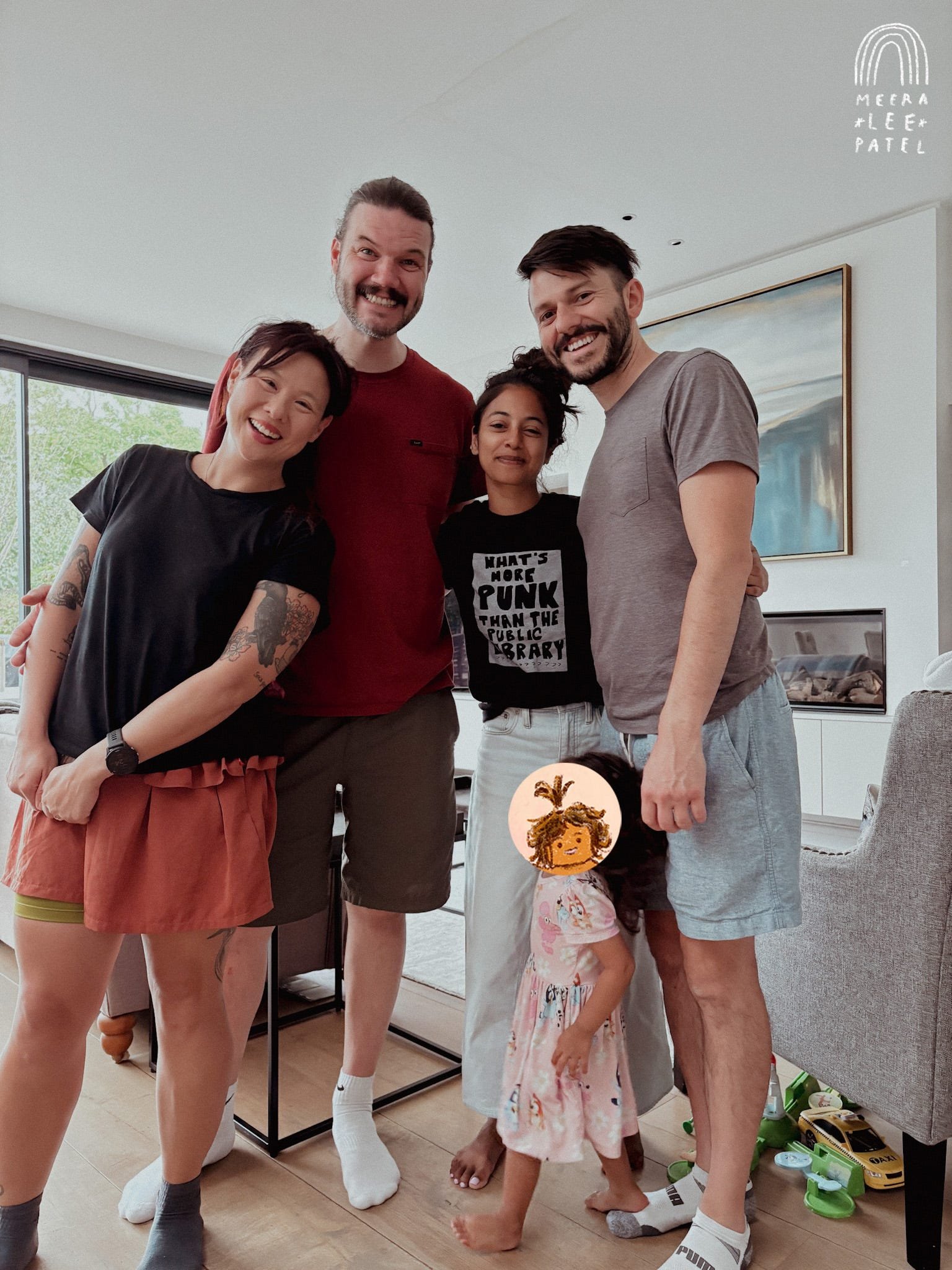
J, L, Me, T, and F (London, 2025)

TUESDAY
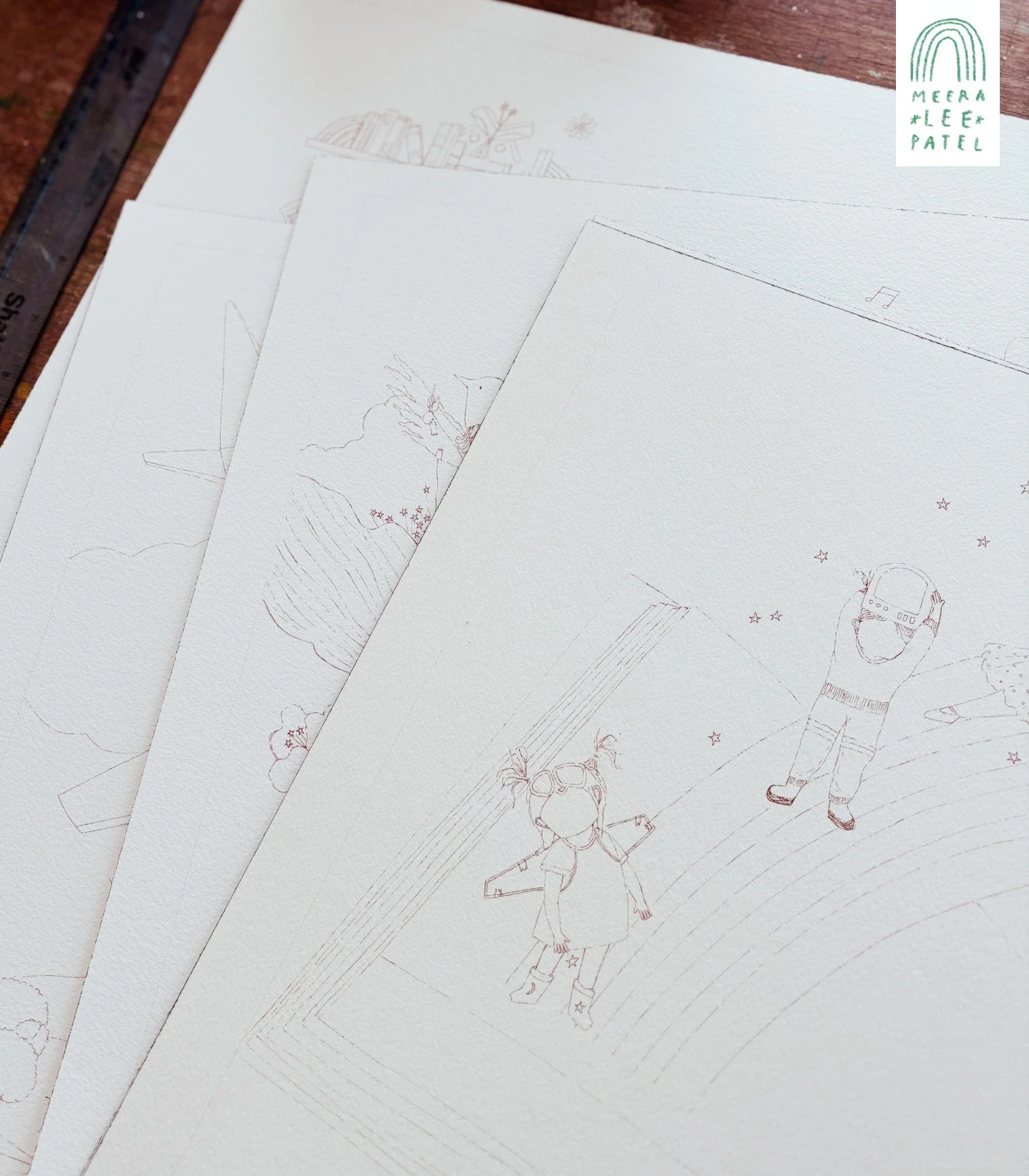
The beginnings of final artwork for DEAR LIBRARY (ink on Arches, 2025)

Here’s a look at where I am in my DEAR LIBRARY process: laying down the very delicate linework for my pages in ink. It’s a tedious, time-consuming process, and I’ve questioned whether I should’ve gone the route I have with this artwork a few times—but the facts are that I did, and I am. I only have a couple of weeks to turn these pencils into final ink-and-watercolor paintings, but instead of filling myself up with stress, I’m simply believing I can, and will. It’s a refreshing change of mind for me after nearly three decades (maybe more?) of I can’t I can’t I can’t. Maybe I can’t—but maybe, I can. 

“I’m just, you know, kind of happy in the doing of things. Even just having a great cup of coffee is happiness. Getting an idea, or realizing an idea. Working on a painting…working on a piece of sculpture, working on a film. One thing I noticed is that many of us, we do what we call work for a goal. For a result. And in the doing, it’s not that much happiness. And yet that’s our life going by. If you’re transcending every day, building up that happiness, it eventually comes to: it doesn’t matter what your work is. You just get happy in the work. You get happy in the little things and the big things. And if the result isn’t what you dreamed of, it doesn’t kill you, if you enjoyed the doing of it. It’s important that we enjoy the doing of our life.” —David Lynch

Along with believing I can, I’ve been ruminating on my immersion of the process and less on the outcome I produce. All I can do is the best I can do right now with the skills and time I have now. I’ve always believed it’s hard to be in the present and to focus on the process, but the way David Lynch has lived his life makes me feel like maybe it isn’t. Maybe it is a switch I can just turn off. More and more, it feels like I already have. 

WEDNESDAY
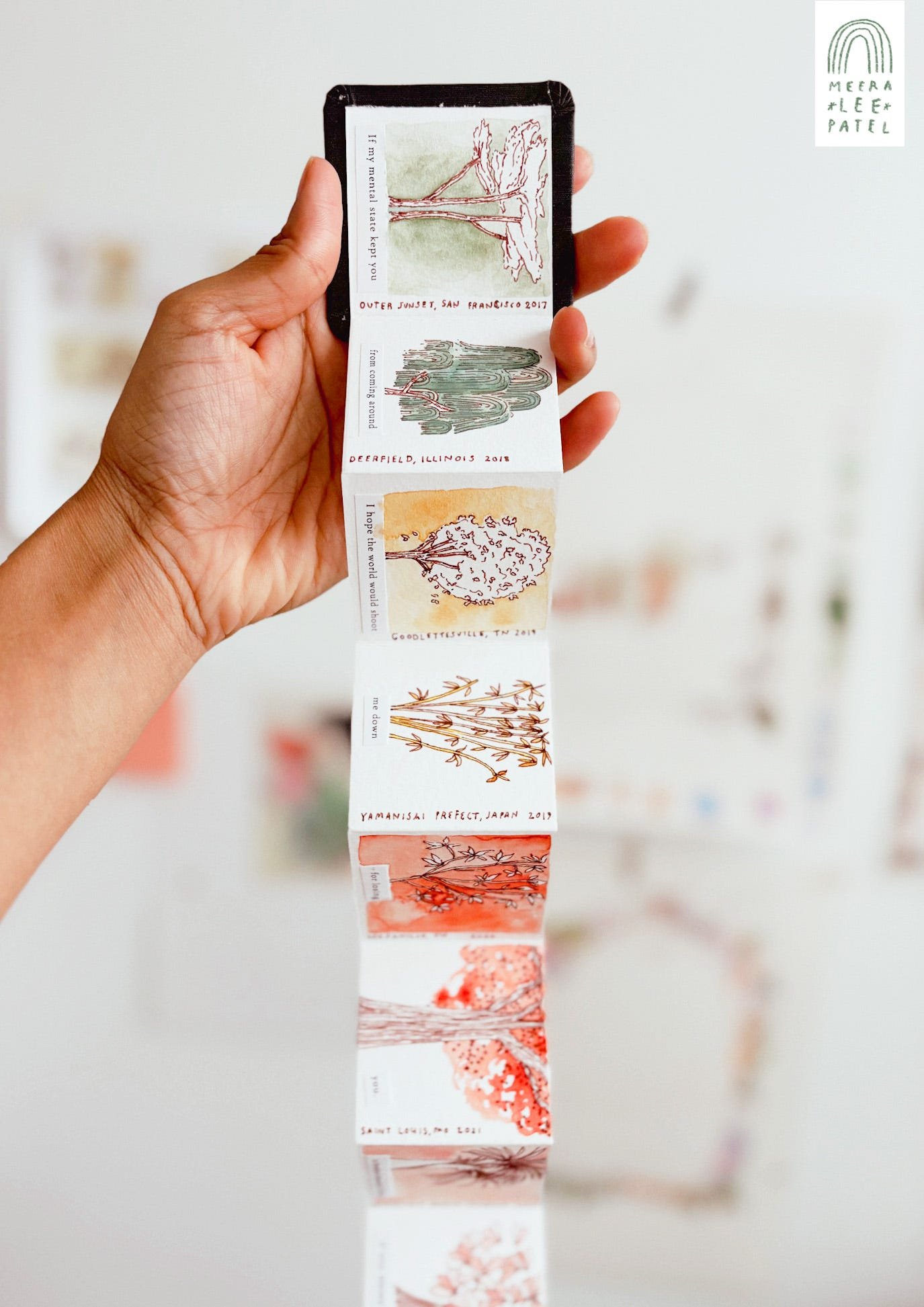
Tiny Book of Trees (watercolor and ink, 2025)

Over the holidays, I made T a tiny book of trees. This marks my second tiny book in two months (here’s the first!) and I have ideas for so many more—including a new year’s tiny book where I envision the next ten years of my life. Stay tuned.

Instead of thinking big, this year I’m determined to think tiny: tiny steps forward, tiny ideas, tiny stories, tiny books. Tiny cells turning over, slowly leading to a new brain and body. Tiny bids for connection, actively building stronger relationships. The tiniest of pieces, eventually coming together to form a whole. Stay tuned.

THURSDAY

“When we love the Earth, we are able to love ourselves more fully. I believe this. The ancestors taught me it was so. As a child I loved playing in dirt, in that rich Kentucky soil, that was a source of life. Before I understood anything about the pain and exploitation of the Southern system of sharecropping, I understood that grown-up Black folks loved the land. I could stand with my grandfather Daddy Jerry and look out at fields of growing vegetables, tomatoes, corn, collards, and know that this was his handiwork. I could see the look of pride on his face as I expressed wonder and awe at the magic of growing things. I knew that my grandmother Baba’s backyard garden would yield beans, sweet potatoes, cabbage, and yellow squash, that she too would walk with pride among the rows and rows of growing vegetables showing us what the earth will give when tended lovingly.” 

—from Touching the Earth by bell hooks in Orion Magazine

FRIDAY

I am so busy. I am practicing
my new hobby of watching me
become someone else. There is
so much violence in reconstruction.
Each minute is grisly, but I have
to participate. I am building
what I cannot break.

—from The Sun is Still A Part of Me by Jennifer Willoughby

  • Dear Somebody: The Anchors We Carry (January 17, 2025)

Of all the things you can put in front of your eyes, I’m grateful that my little letter is one of them. 

If you’d like to support me, please buy my books. My art prints and line of greeting cards make excellent gifts for yourself or a friend. You can also hire me for your next project—I’d love to work together. 

xx,
M


To sign up for my weekly newsletter, Dear Somebody, please subscribe here.
In Life, Process Tags Friends, Friendship, Family, DEAR LIBRARY, Process, Bell Hooks, Jennifer Willoughby
Comment

Dear Somebody: When all is quiet.

June 20, 2025

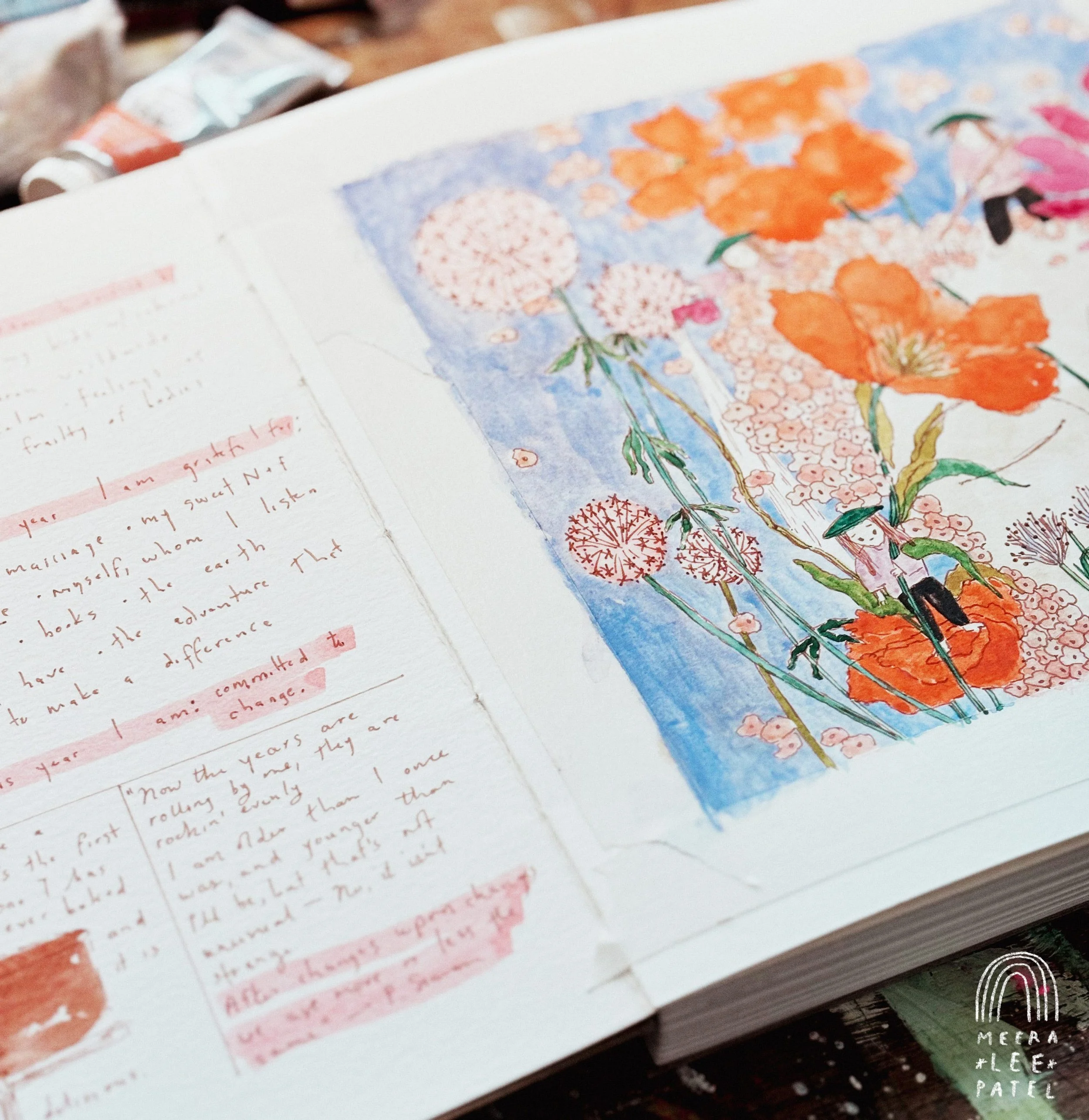
A recent sketchbook page (watercolor and ink, 2025)

A year from now, here are five things from this week that I'd like to remember:

MONDAY 

I sit on the front porch eating a sandwich slapped together with whatever is left in the fridge. I need to go grocery shopping, I need to unpack my kids’ summer clothes, I need to clean the kitchen, I need to take a shower. I’ve been working nonstop towards my current picture book deadline. I’m rewriting a manuscript I care deeply about, I have a new journal coming out this fall, I’ve begun strength training. This fall, I’m determined to learn how to sew. There is so much I want to make, but I am so slow. One day flickers into the next, and then the next, and still, it feels like I’m going nowhere.

My friend Dan Blank calls me to catch up. I confess, with embarrassment, that I don’t have very much to share: life is quiet, almost entirely consumed by my young children, and work is, too. It’s been a few years since I’ve quit the game of social media, and my world feels much smaller because of it. Quieter. I don’t receive many work inquiries because I don’t share as much online. No one can hire you if they don’t know you exist, I tell myself before emailing editors and art directors to remind them. I hold my breath and wait; I listen to the familiar song of crickets. Everyone I know is worried about work, so when my ego flares up in front of me, I stamp it out. As any artist knows, the ongoing quiet can feel suffocating. It plays tricks on you, messing with your sense of worth. It causes you to lose sight of what’s important. It is strong enough to crush your spirit. 

When I hang up the phone, I sit still, sifting through this quiet. I feel ashamed of my embarrassment, for several reasons I can’t separate, quite possibly because there is no separating them. Continuing my career at the same pace, with the same fervor postpartum was simply not a viable option for me. I made conscious decisions to restructure my career and life in a way that made healthier, more meaningful sense. Yet, at times, I feel shame for not barreling ahead at the same pace—for not being able to, for not wanting to, for not wringing myself out in order to simply keep going. Though I know it’s a symptom of the culture we live in, occasionally, I still feel shame for how much I’ve changed. 

Though lonely, the past few years have been good for my brain. Instead of documenting every step of my process for social media, I sink into my craft, remembering why this is the life I chose for myself. I’ve grown and solidified. I am more capable, I require less from others. And inside me, life continues to hum steadily. Joyfully. I feel far more grounded in my creative values. I’m proud of the work I make, however slow the progress is. I’m more present with my children, who, for now, still believe that their inherent worth isn’t dependent on what or how much they produce. I’m beginning to believe I’m a good mother. 

On the other side of worry, I divert my energy towards developing a trust between myself, my work, and the world: things will work out. I can move towards my goals andbelieve they will be achieved. I can build creative growth and hope. I can feel forgotten and be excited to one day reemerge. I can choose to feel good—and the more I do, the more meaningful my subsequent choices are.

Back on the porch, I chew slowly. A small breeze comes along and my napkin flutters, a thin pair of two-ply wings. The tulip poplar tree across from our front yard has grown so large in the few years I’ve lived here. Now, green leaves burst forth, invigorated by our recent rains. The branches stretch towards me like the future does, like the past used to before I closed the door on it. In a few hours, my kids will thunder down these sidewalks, begging me to jump rope with them. We’ll walk down to the nearby bridge, press our faces through the windows in the cement walls, and wait for the city trains to rush by. It doesn’t matter if the conductor looks up or not; we always wave.

On this street lined with grandparents, grandchildren, and shiny blue grackles, there isn’t a single soul who cares what I look like or what my next achievement is, including me. I love living on this street instead of on social media, so I give myself over to the silence. I am grateful for my sandwich, the porch I sit on, and every small, quiet breeze.

TUESDAY

“In its simplest form, a whale’s death becomes a source of life for years beyond its time. It is a transformation that turns death into life on an almost incomprehensible scale. Beyond its biological importance, the concept of a whale fall also holds a poetic significance. It reflects themes of loss and renewal, reminding us that even in its most tragic forms, what’s happened in the past can sustain life in the present in ways we are only beginning to understand.

This haunting question reframed my understanding of land and sea as intertwined repositories of history. The ocean, like the soil, bears witness to lives lost and transformed. It warranted asking: What happens to our bodies, to their essence, when they are claimed by the ocean? How do we reconcile the ocean as both a site of loss and a source of life?”

—Omnia Said on contemporary American artist Ellen Gallagher’s Accidental Records series in Atmos

WEDNESDAY

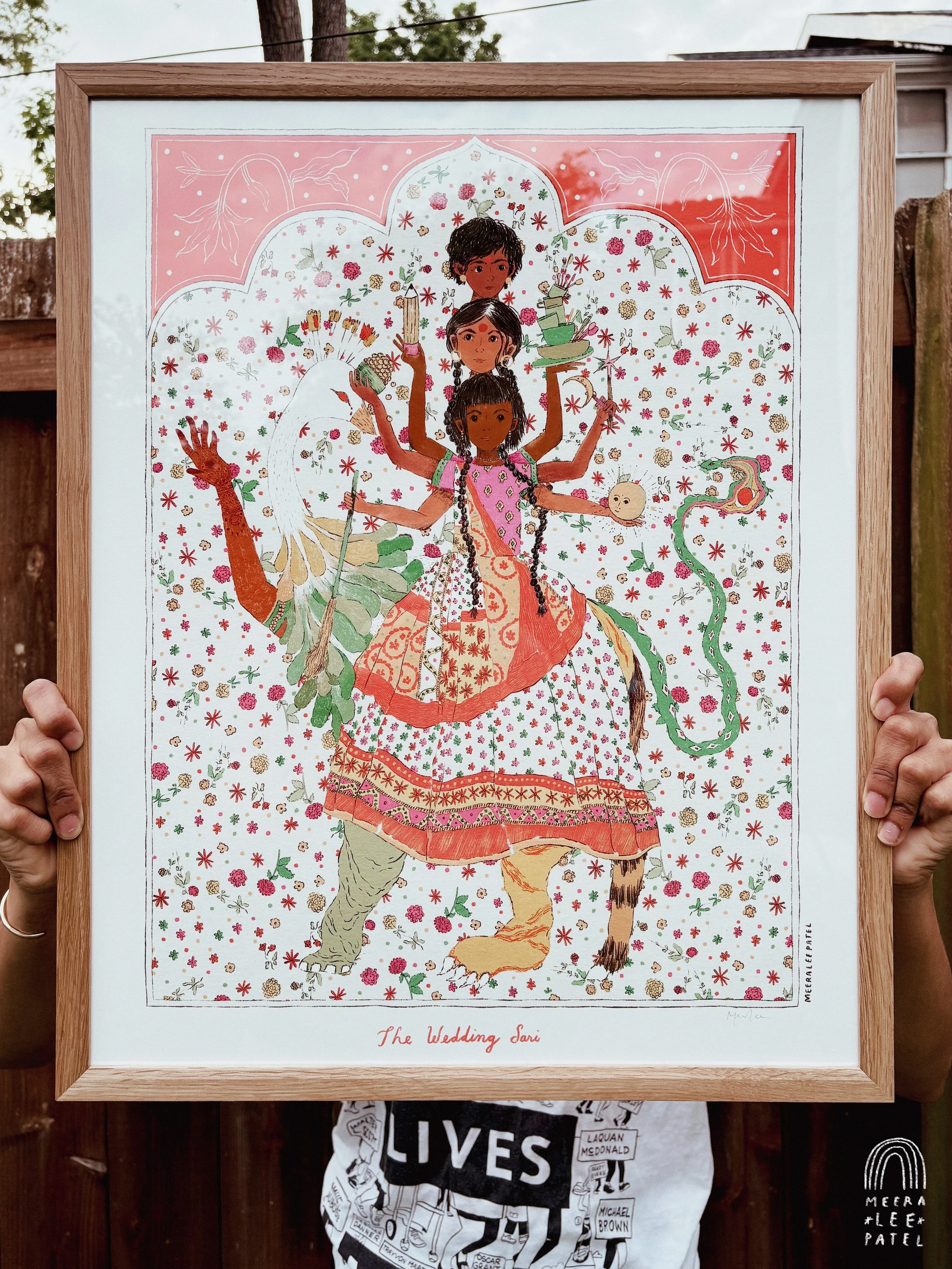
The extremely unassuming frame I ordered for The Wedding Sari finally came, so I framed this piece and am shipping it to my aunt this week. The Wedding Sari is an essay and illustration I created for my column, Being, in Issue #65 of Uppercase Magazine. It explores the history of the Gujarati panetar, or wedding sari, and the one I wore on my wedding day, which was previously also worn by my mother and her older sister, my aunt.

Three prints of this piece exist: one hangs in my home, one hangs in my mother’s home, and now, one is somewhere on its way to my aunt’s. An excerpt of my column was included in a past letter. 

THURSDAY

I’m reading: Long Way Down by Jason Reynolds, an excellent novel-in-verse about the choices we make and the choices we’re taught to make; I finished listening to Solito by Javier Zamora, a heartbreaking tale of a young child’s migration to the States; I began The One and Only Ivan by Katherine Applegate; I began My Friends by Hisham Matar. 


FRIDAY

Now we will count to twelve
and we will all keep still
for once on the face of the earth,
let’s not speak in any language;
let’s stop for a second,
and not move our arms so much.

It would be an exotic moment
without rush, without engines;
we would all be together
in a sudden strangeness.

Fishermen in the cold sea
would not harm whales
and the man gathering salt
would not look at his hurt hands.

Those who prepare green wars,
wars with gas, wars with fire,
victories with no survivors,
would put on clean clothes
and walk about with their brothers
in the shade, doing nothing.

What I want should not be confused
with total inactivity.
Life is what it is about;
I want no truck with death.

If we were not so single-minded
about keeping our lives moving,
and for once could do nothing,
perhaps a huge silence
might interrupt this sadness
of never understanding ourselves
and of threatening ourselves with death.
Perhaps the earth can teach us
as when everything seems dead
and later proves to be alive.

Now I’ll count up to twelve
and you keep quiet and I will go.

—Keeping Quiet by Pablo Neruda

See you next week!

xx,

M


To sign up for my weekly newsletter, Dear Somebody, please subscribe here.
In Sketchbook, Process Tags Sketchbook, Dan Blank, Process, Ellen Gallagher, Uppercase Magazine, Jason Reynolds, Javier Zamora, Katherine Applegate, Hisham Matar, Pablo Neruda
Comment

Dear Somebody: Tiny joys.

April 4, 2025

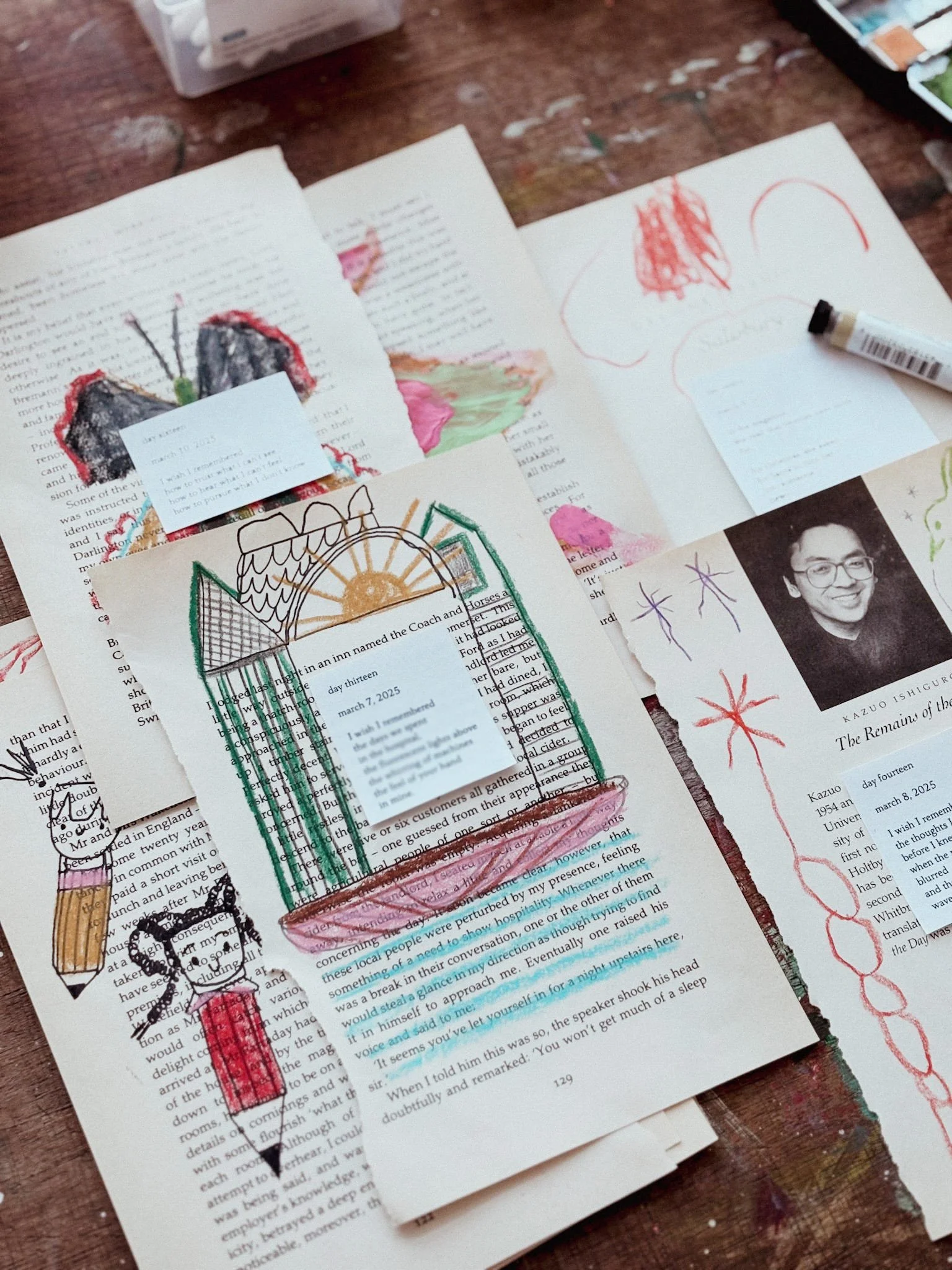
A few pages from my 100 Day Project (2025)

A year from now, here are five things from this week that I'd like to remember:

MONDAY 

Week of March 9, 2025

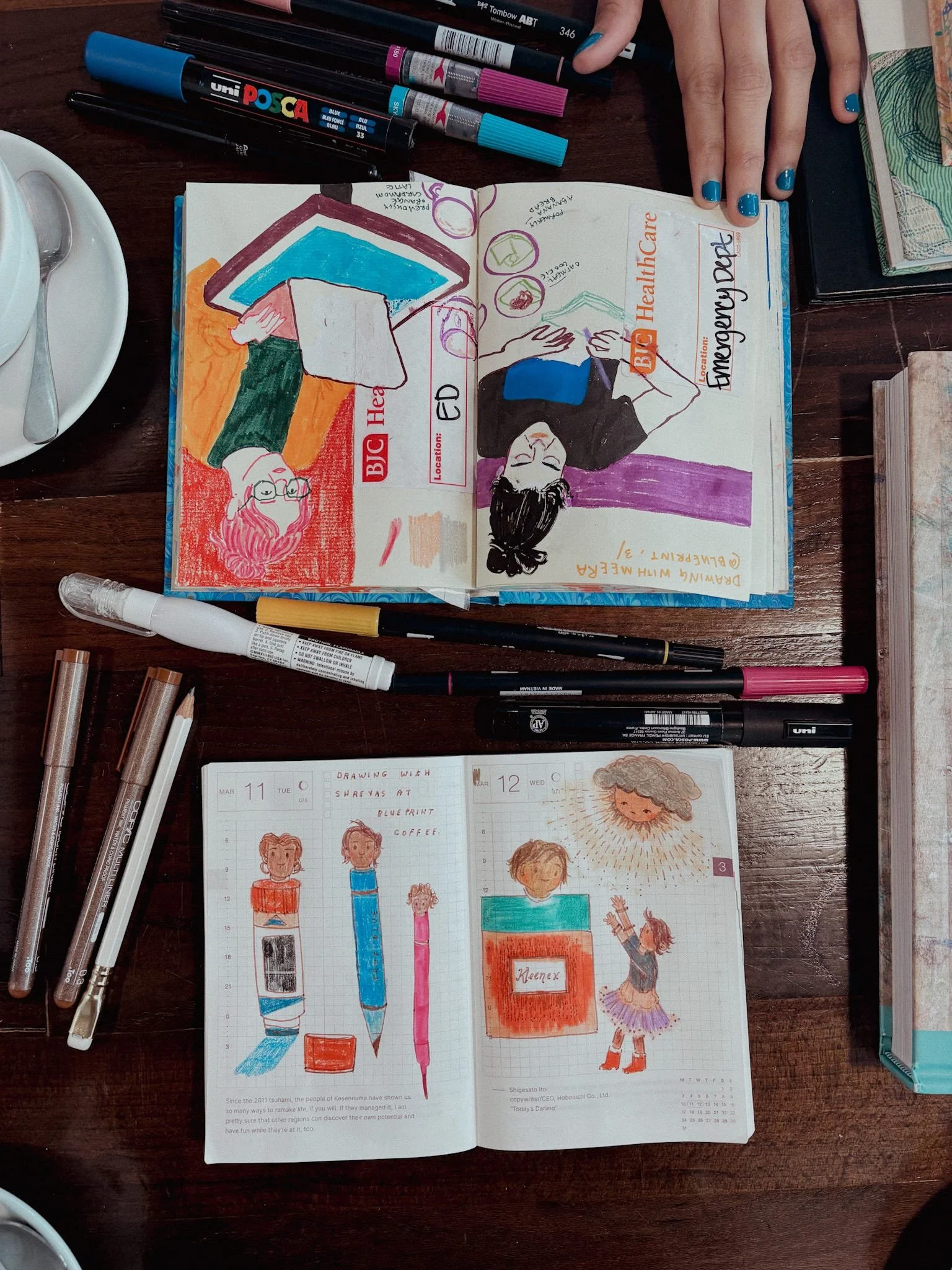
Two sketchbooks open at a coffee shop (2025)

After a long night of not-sleeping, I take a shower and walk myself to our local coffee shop to meet a friend. We’re going to draw together, something I haven’t done since I lived in Nashville nearly four years ago. Our conversation meanders naturally, and I watch where it goes with interest, each turn leading to a fork where both roads seem equally worth the stroll. I spend 3 hours unregrettably, using my hands in the way I prefer. The time together is easy and sweet; a tiny joy. 

Week of March 23, 2025

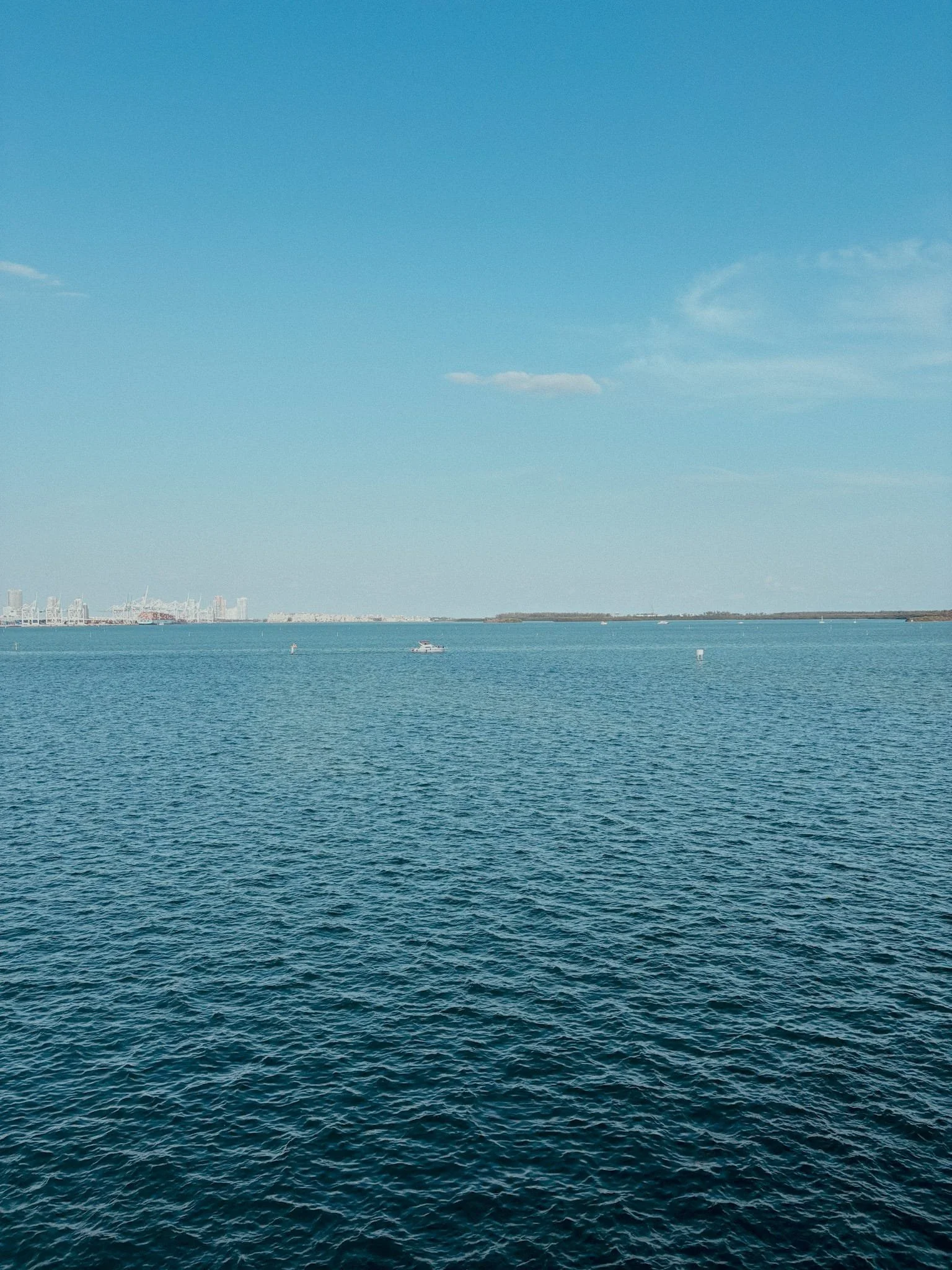
Key Biscayne, Florida (2025)

We take the girls to Miami for a couple of weeks and it doesn’t go as expected. Though full of sea, sunshine, and new adventures, it’s also sticky with resistance, sleeplessness, and many more meltdowns than I’d been prepared for. 

I find myself more tired than I usually am when we travel—vulnerable, even, as if I’d foolishly let my guard down. Had I fooled myself into thinking our family had become good travelers? Why am I so surprised by the inconsistent nature of young children? I try to stay in the moment, but I fail. 

Back at home, I wince at how poorly I’d handled the trip. I wish I’d been steadier—the consistent one, the dependable one. I wish, I want, but all I can do is try again—so I don’t dwell, knowing that that in itself is progress. In a couple of months, we’ll go to the lake, and I’ll breathe as I swim through those waters, and I’ll breathe as I help my sweet kid swim through her endless tears, too: a tiny joy. 

Week of April 1, 2025

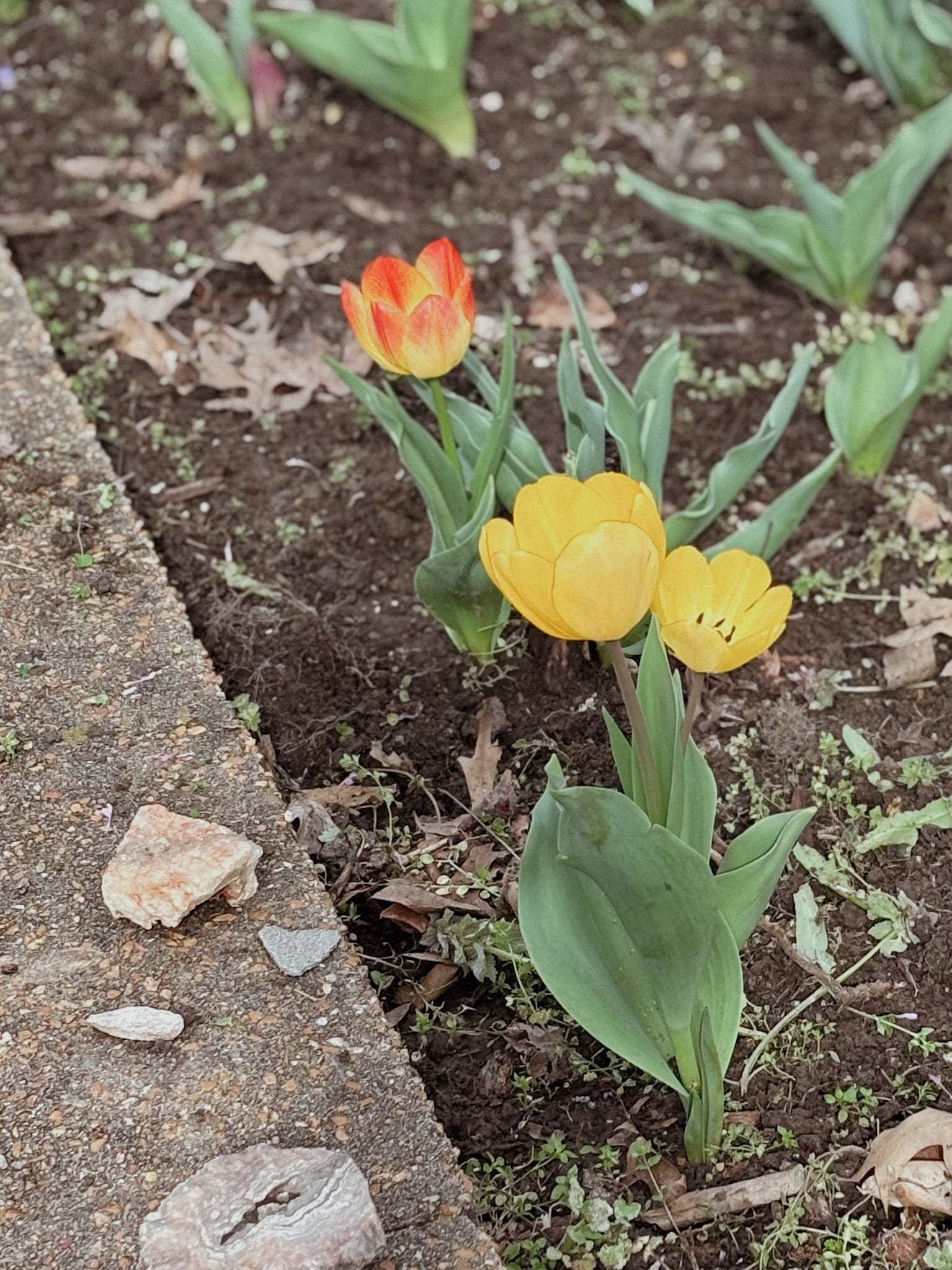
The first of Spring’s tulips (2025)

On the walk back home, the morning doves commune. Clusters of grackles scavenge the dumpsters, the deep peacock blue of their feathers glinting in the sunlight. The tulips we planted last November peak through the soil, their leaves sturdy and true. N runs ahead to count how many faces are turned to the sun. Later, when the sky opens up to let the thunder through, she watches the tulips button themselves up again, dozens of soft leaves bracing against the sudden wind. I watch her, and this is a tiny joy. 

TUESDAY

“I tell my students all the time that all writing makes a thematic argument with the reader. Even the writing that seeks not to, that’s still a stance. The stance that says “escape is a worthy cause.” That means, according to my own rules, this piece of writing is making an argument with you. What could it be? I’m never sure at first. And this is supposed to be about writing and I’ve jumped the shark. But I think if I analyze my argument here, it would be this: there are different flavors of privilege. There is the kind of privilege that, when you use it, takes something away from other people. And then there is the kind that, when you use it, doesn’t. It just—is. And then there is the kind that, when you use it, actually makes it easier for other people to use their privilege, too. Escape is the last kind, when used in particular ways, at least, and at particular times. But you have to escape and also stay for it to remain the last type of privilege.” 

—from “Escape” by A.E. Osworth, author of the forthcoming Awakened

WEDNESDAY

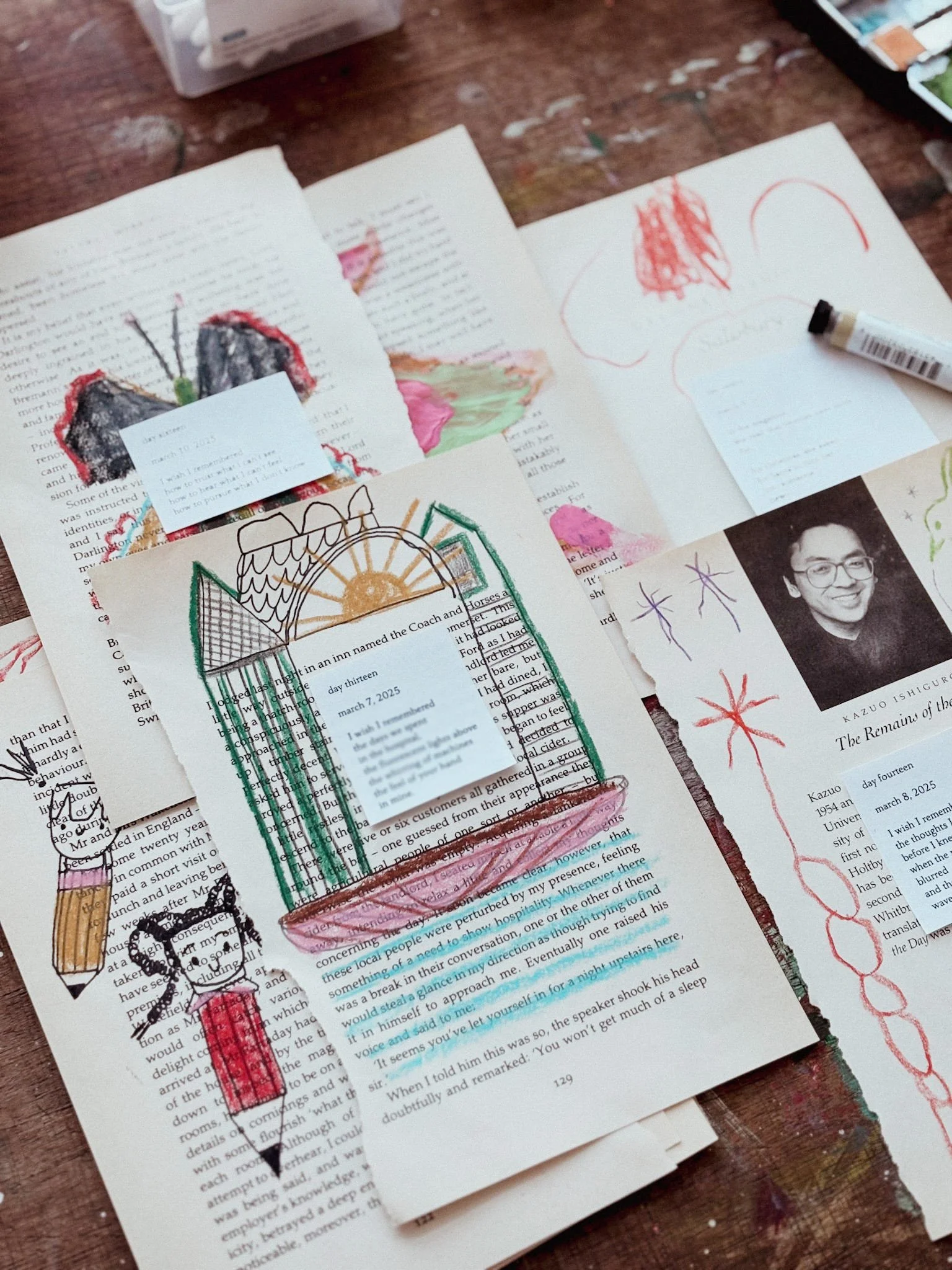
A few pages from my 100 Day Project: poetry and collage (2025)

I joined the 100-day project a few weeks ago, as always, encouraged by my friend Margaux Kent. For it, I picked our daily poem project back up and added a bit of collage, a bit of sketch, and every week or so, I mail a stack of them to her home.

There are many reasons why daily habits are nearly impossible for me to implement, both logistically and practically. Strictly emotionally speaking, perfectionism rests at the heart. I have an unfair expectation of progress—that if I do the same thing everyday, I’ll eventually master it. A fear of failure, the dreadful sense that I might not get better, even if I keep at it, leads me to stop before I start.

I’m on day 40 of the daily project now. I’ve missed days here and there, but I’ve always caught up. I don’t like what I write or draw 99% of the time, but I do it anyway, and the next day, I do it again. I haven’t progressed in any of the ways I’d anticipated—I don’t write better poetry and my sketchbook isn’t full of beautiful drawings—but I have noticed small, unexpected changes that feel even more fruitful: 

  • I have ideas. I write them down, and I find I have even more the next day. 

  • I feel less emotionally-indebted to my work or myself, less tied to what I produce or how much of it. 

  • I like writing to another person daily, even if they don’t write back. The unrequited nature of this project makes it feel even more powerful, like I’m corralling my own attention back. 

  • I am proving myself wrong. I am changing, developing discipline, and determined to complete the challenge. 

Are any of you doing the 100-day project? If so, let me know in the comments — I’d love to follow along

THURSDAY

Reading artist Julie Benbassat’s illustrated 7-year eulogy for her father, David, brought me to tears. This walk through David Benbassat’s life, and Julie’s remembrance of their time together, reminded me of how little so many of us know about our parents, and who they were before they brought us into the world. 

FRIDAY

The man I married sat next to me
after our wedding, October light pouring in
over dusty pews as he loosened his tie
and sipped from a cup of apple cider,
closing his eyes to savor the taste.

Now I think I didn’t marry him so much
as his amazement for the everyday,
the way he still gasps each time we see
something new—baby painted turtle
plodding through a stream in the quarry,

or a neon-orange caterpillar inching
across crisp leaves on the trail,
how he kneels to film it from every angle
while I crouch beside him, in awe
of his awe, learning all that I can.

—Married to Amazement by James Crews

See you next week!

xx,

M


To sign up for my weekly newsletter, Dear Somebody, please subscribe here.
In Sketchbook, Process Tags Sketchbook, Process, Nashville, Florida, Parenting, Parenthood, Travel, A.E. Osworth, Margaux Kent, Julie Benbassat, David Benbassat, James Crews
Comment

Dear Somebody: Like a cloud.

November 4, 2024

A year from now, here are five things from this week that I'd like to remember:

MONDAY 

T and I voted early last week, with N in tow. We talked about the election and voting process, but mostly we talked about why your voice matters—why you must believe it does, and act as though it does—even when it feels inaudible. Even when you feel invisible. So much of life is comprised of pretending, of doing before believing. Of doing the thing your future self would do so that one day, eventually, you become your future self.

As I cast my ballot, I thought about all the things that can go wrong between my filling out a very paper ballot and it actually counting: so many things. Elections are fragile. Ours are increasingly so, bitten through with voter restriction and misinformation, but the fact that no one other than me wants my vote to count just makes me want it more. 

This morning, I read about Craig Mod’s experience of casting his ballot from Japan: 

I slammed my ballot down and shoved it into an EMS international airmail envelope and gleefully paid thirty freggin’ bucks or so to get that sucker to my utterly blue state knowing damn well that that vote won’t tip the scales in any meaningful way. And yet. And yet — AND. YET. — I wanna be on that ledger. Goddamn, you bet I want to be on that ledger. What else is there but the ledger in a moment like this? Pull the lever, cast your tiny pebble into it all and hope things add up. De minimis? Hell no. At the very least, you’ll be present on the cosmic scale, a little number at the end of a bigger number — one that wouldn’t have been quite as big without you. That’s not nothing, and when your grandkids asked what you did right now — in this mythic time of madness and infinite resources all seemingly used in the wrong ways, facing the wrong directions, directed at the wrong people — you can at least say you were present, doing the smallest of things you could in whatever way you could.

Freedom doesn’t usually feel like freedom until it’s taken away. In 2024, I’m still allowed to vote in an American presidential election. I did, and I will, until I can’t. There were many things my family did last Thursday that were meaningless, that genuinely did not matter—but casting a vote and reminding myself and my kid that what we domatters, that who we are matters—was not one of them. 

TUESDAY

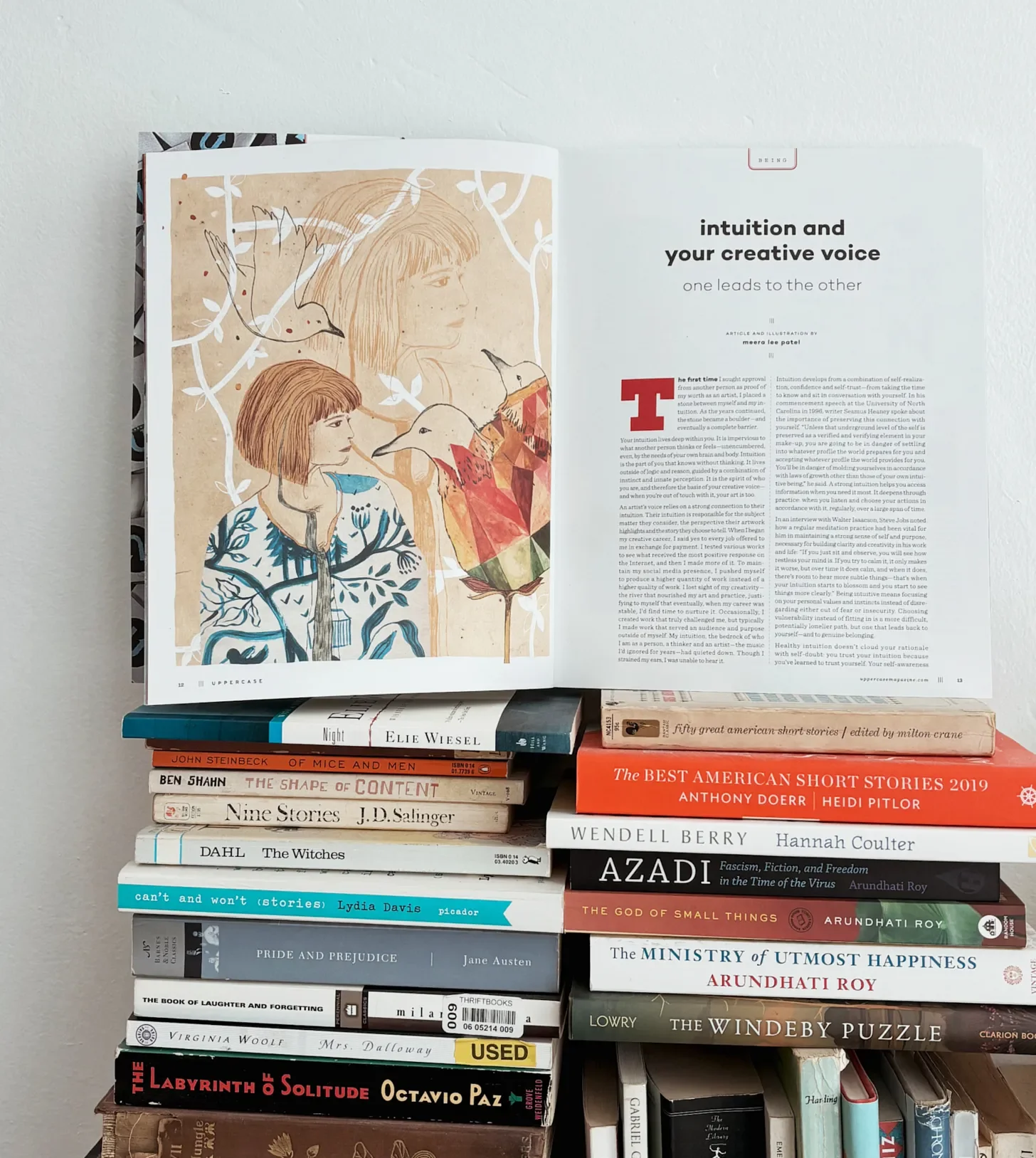
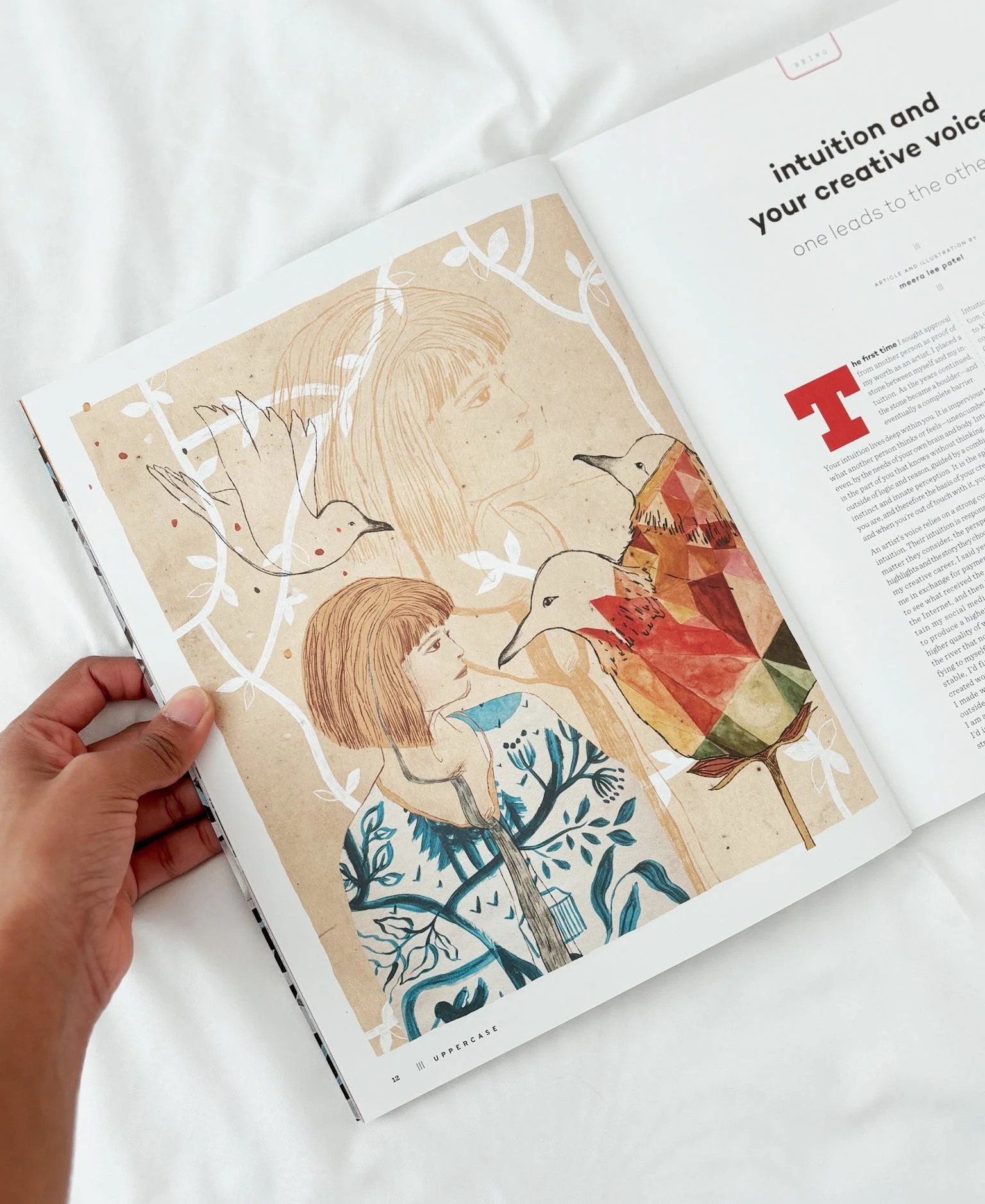
“In the past, I’ve been perplexed by artists who work intuitively–artists who say they simply knew to use a certain color or to make a specific mark. A fear of failure, compounded by a mountain of self-doubt, led me to believe these artists possessed an innate talent I didn’t have. For years, I attempted to use logic and reason to convince myself of this self-sabotaging belief because it relieved me from the responsibility of accepting the truth: that intuition in craft develops through years of regular practice. 

In Art & Fear: Observations On the Perils (and Rewards) of Artmaking, authors David Bayles and Ted Orland address this very idea: ‘For every artist who has developed a mature vision with grace and speed, countless others have laboriously nurtured their art through fertile periods and dry spells, through false starts and breakaway bursts, through successive and significant changes of direction, medium, and subject matter. Talent may get someone off the starting blocks faster, but without a sense of direction or a goal to strive for, it won’t count for much.’” 

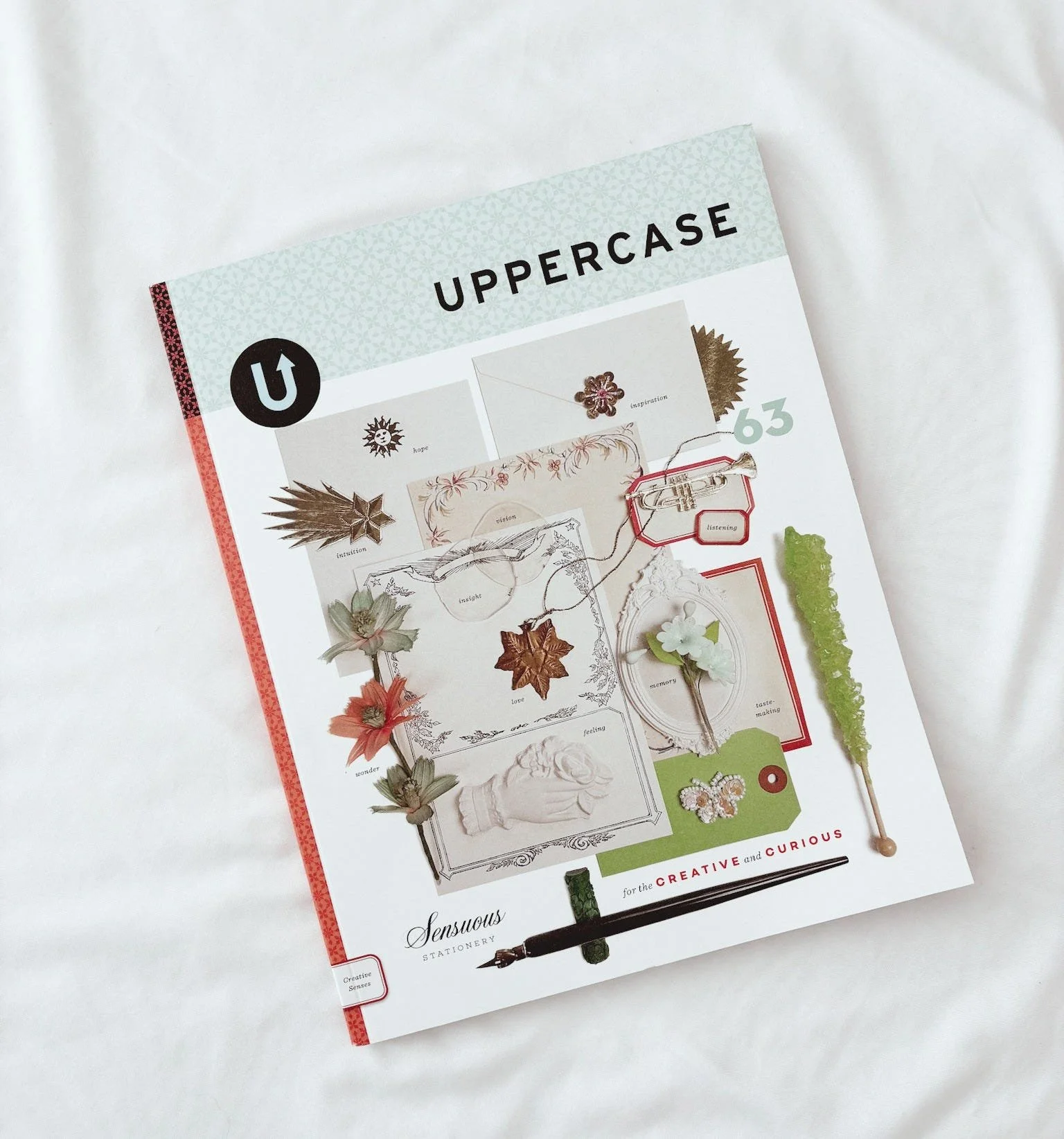
—An excerpt from my latest essay, Intuition and Your Creative Voice: One Leads to the Other, for Issue #63 of Uppercase Magazine

WEDNESDAY

“There’s no shortcut. I’m no accident. People like to say it’s natural. It’s not so. You have to practice and you have to study.” —Miles Davis

“…I personally have been focused on changing my own negativity bias. And because our brains have plasticity, we can actually change this. I’ve spent the past two years trying to unlearn a focus on the negative all the time as the main thing. And because a focus on all our problems is draining, and it is super depressing and sometimes actually is debilitating. And something that organizing campaigns taught me early on was to focus less on problems, but to turn those problems into issues that people could maybe actually find a way to engage in to transform and change. And this has really kept me going over the years. I think oftentimes about, if I hadn’t been involved in organizing campaigns, what my life would have looked like, how much I probably would have been so depressed, you know, more depressed. Because I just think having a way to be able to see a way forward to transform and change my conditions is such a huge part for me of being able to live in the world.” —Mariame Kabe, in conversation with Kelly Hayes, on their book, Let This Radicalize You

THURSDAY

As a longtime reader of Modern Love essays, I enjoyed learning a little more about how illustrating the column for so long has affected Brian Rea. 

As a longtime admirer of printmaking techniques, I’m working up the courage to make some Tetrapak prints—has anyone done this? Does anyone still have or use their Gocco printer? 

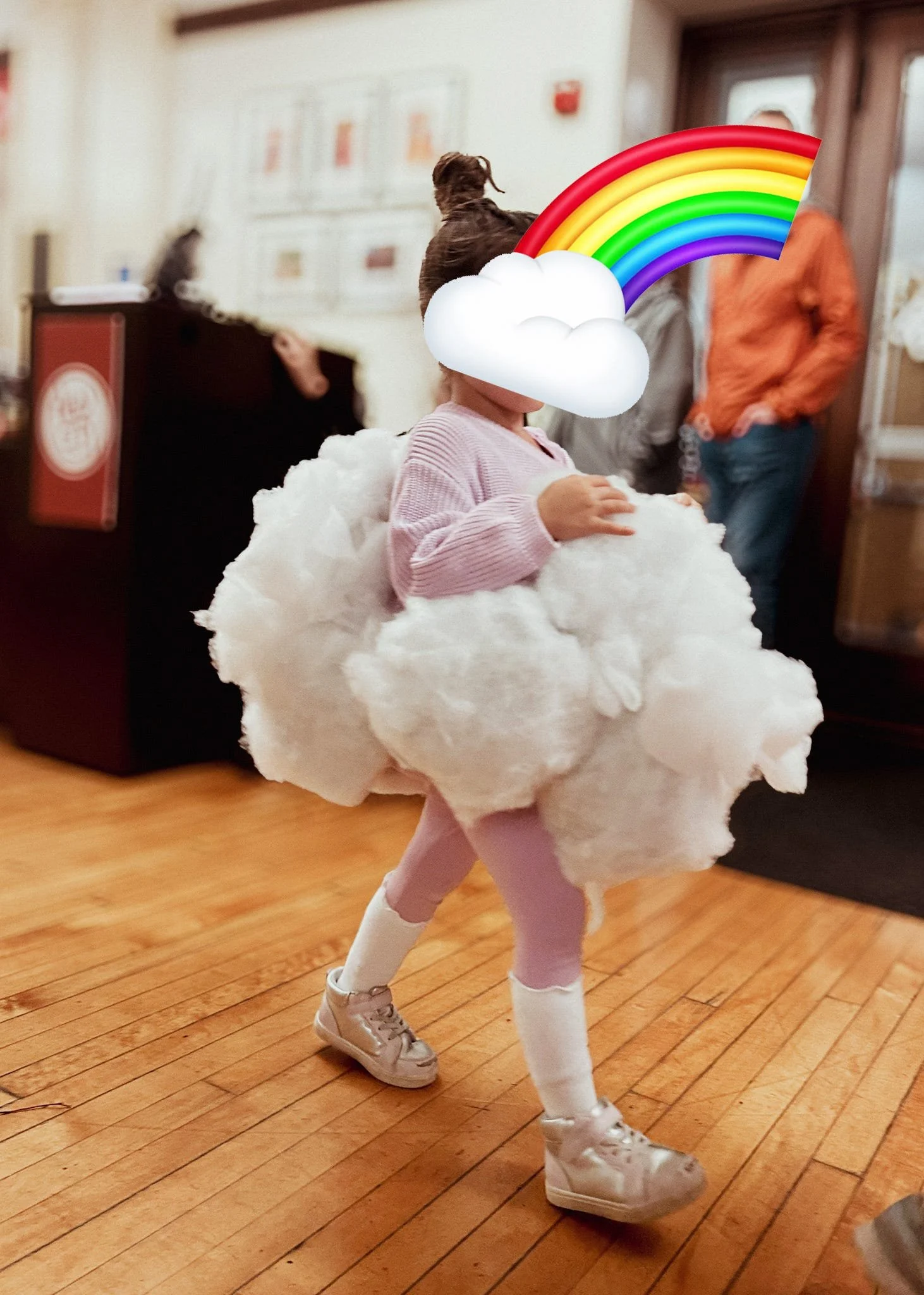
As a longtime fan of all sky-related matters, I was initially perplexed (“…a cloud?”) and ultimately renewed (“…a cloud!”) by N’s request to be a cloud for Halloween this year. I made two costumes out of paper mache, but when they didn’t work out, I turned to newspaper print and cotton batting. 

N as the perfect cloud (2024)

I constantly use my voice to tell my children to be who they are—to go against the grain if the grain doesn’t suit them, and to listen to themselves, even if it’s a little lonelier when they do. 

On Halloween, in a sea of glitter and color and power, there was only one cloud. Steady and sweet, if a little unassuming. Flying under the radar, certainly, but unreplicable. Irreplaceable. Like a cloud. Like freedom. And I was proud. 

FRIDAY

When they say Don't I know you?
say no.

When they invite you to the party
remember what parties are like
before answering.
Someone telling you in a loud voice
they once wrote a poem.
Greasy sausage balls on a paper plate.
Then reply.

If they say We should get together
say why?

It's not that you don't love them anymore.
You're trying to remember something
too important to forget.
Trees. The monastery bell at twilight.
Tell them you have a new project.
It will never be finished.

When someone recognizes you in a grocery store
nod briefly and become a cabbage.
When someone you haven't seen in ten years
appears at the door,
don't start singing him all your new songs.
You will never catch up.

Walk around feeling like a leaf.
Know you could tumble any second.
Then decide what to do with your time.

—The Art of Disappearing by Naomi Shihab Nye

See you next week!

xx,

M


To sign up for my weekly newsletter, Dear Somebody, please subscribe here.
In Life, Process, Writing Tags politics, voting, Craig Mod, Uppercase Magazine, writing, Process, Ted Orland, David Bayles, self-doubt, fear of failure, Miles Davis, Mariame Kabe, Practice, Modern Love, Brian Rea, printmaking, gocco, Parenthood, Parenting, halloween, Naomi Shihab Nye
Comment

Dear Somebody: When I change my perspective.

June 28, 2024

A year from now, here are five things from this week that I'd like to remember:

MONDAY 

I’m agitated, disappointed in myself; I thought I’d be further along by now. I need to send my final illustrations to the client by this evening, but I’m still working on the first round of sketches. The day is mapped out between daycare pick-ups and drop-offs, graduate school classes, my job, and house chores. I have an exact amount of time slotted for each task; this is how I ensure everything gets done.

My expectations crowd me. They squeeze the life out of everything I do, making it impossible for me to be present. I focus on expectations (“Creating paintings that others will adore!” “I will be happy if I stick to my rigid schedule during these unprecedented times!”) that I have little control over. Expectations are unforgiving; they reduce our feelings of ease or imagination—two ingredients necessary for thriving creativity. It’s difficult to draw well with my brain in a vice, jammed between an increasingly long to-do list and a timer waiting to go off.

I decide to replace my expectations with intentions. I can’t control what happens, but I can choose how I want to feel, and quite frankly, I’m tired of feeling disappointment each day. I say it aloud: I intend to create work that meets others where they are. I intend to try my best with the time and limits I have. I intend to be kinder to myself.

I try this for a week and notice small shifts within. I’m able to recognize my progress and feel good about it, rather than obsessing over all I haven’t achieved. I feel calmer and in control. I’m less reliant on external circumstances for satisfaction or fulfillment, knowing that although I can’t always control what happens, I can control my intentions–what I choose to see, feel, and give—and that is enough.  

—from How it Feels to Find Yourself: Navigating Life’s Changes with Clarity, Purpose, and Heart, my book of illustrated essays

TUESDAY

It’s summer. I’m working, or trying to work, on two books currently—a new journal and a picture book. I care deeply about both. I’m knee deep in revisions for one and up to my nose in sketches for the other, and struggling to make progress on 12 hours of childcare a week. Some mornings I wake up empty—physically empty, like the engine in me has fallen out, and I know that emptiness will always find a place inside a body that is overtired. 

My work is solitary, which I love, but in this particular phase of life feels dangerously isolating. Isolation breeds self-doubt and discouragement—both are part of the territory, I know, of being an artist, but this year feels particularly prickly. It’s alarming just how negative the negative self-talk can get. How ugly can one’s self critic be? Pretty ugly. 

I’m lucky enough to recognize it, mostly, when it happens, and this week I deliberately pulled myself out from inside myself and showed up for 

Andy J. Pizza

 online pep rally, a virtual meeting of creatives, and I’m just so happy I did. Spending an hour with him and his supportive community reminded me that I’m a person, not simply a pair of hands, and I left the call feeling more human, which is what I really needed.

Right now, it’s an evening in late June. The house is quiet. I hear the crickets and wasps outside my studio window. I watch the sun fade, leisurely, to make way for moonlight. I think of myself decades from now, and wonder what future me will think of the life I live: with work that challenges and fulfills me, and a family who does the same; with a home that feels like home inside a city that doesn’t, but could, someday; with an overtired body that insists on keeping on; with a life that promises the same it does for everyone else—some constant, some change. 

I wonder if future me will miss the exhaustion and the noise: the constant running behind tiny feet, the incessant stream of questions, the tugging behind my knees when I’m cooking or working or attempting to form a thought. I wonder if future me will miss being this tired—not because it’s glamorous, but because it’s still beautiful— because it’s from giving my all, each day, to building a life that is richly, unbearably full. 

WEDNESDAY

A few things that are giving me inspiration right now:

The work of Bernadette Watts, which feels very classic. 

I am tired of Earth. These people. I am tired of being caught in the tangle of their lives. 

Sophie Blackall talks with Roger. 

THURSDAY

“The most important thing is the doing—integrating your life and your work and everything together.”

—Ruth Asawa

FRIDAY

As I turned over the last page, after many nights, a wave of sorrow enveloped me. Where had they all gone, these people who had seemed so real? To distract myself, I walked out into the night; instinctively, I lit a cigarette. In the dark, the cigarette glowed, like a fire lit by a survivor. But who would see this light, this small dot among the infinite stars? I stood a while in the dark, the cigarette glowing and growing small, each breath patiently destroying me. How small it was, how brief. Brief, brief, but inside me now, which the stars could never be.

—A Work of Fiction by Louise Glück

xx,

M


To sign up for my weekly newsletter, Dear Somebody, please subscribe here.
In Life Tags Process, Perspective, Expectations, How it Feels to Find Yourself, Books, Essays, Illustration, Meera Lee Patel, Andy J. Pizza, Bernadette Watts, Ruth Asawa, A Work of Fiction, Louise Glück
Comment

Dear Somebody: It's publication day!

May 23, 2023

Hi, friends.

I’m sending out a special note today because it’s publication day for How it Feels to Find Yourself!

This book is a hard won piece of my heart. I wrote the proposal and sold the book to my publisher during my first, extremely difficult pregnancy, while isolated on our farm in Nashville during the beginning of the pandemic. I then wrote the book, while still isolated on our farm, throughout the pandemic—this time with a tiny, crying newborn by my side.

The various sunrises I captured from our Nashville farm, while writing before the baby (and the world) woke.

I often woke up at 4:30 am to write in the darkness before the baby woke, watching the sun creep up over the tree line. I wrote in the bathroom, my laptop balanced on the vanity, wearing the baby while the exhaust fan hummed her to sleep. I wrote in a room full of unpacked boxes and utter debris during our move from Nashville to St. Louis, desperate to finish the manuscript before beginning my first semester of graduate school—which I was unable to do. I wrote the book in the mornings before and the evenings after class, while T took N to the zoo or the playground. I wrote on the weekends, around my homework and N’s nap schedule, wishing I had a little less on my plate. Like all good things, the writing in this book grew from a combination of determination, persistence, many tears, and a lot of support. 

I could not have written this book without my husband, T, who helped make it a priority for me to write, even when it came at the cost of his own work and ambition. I could not have written this book without my parents, who put their lives on hold to live mine with me throughout graduate school. I could not have written this book without N, who was with me first in my belly and then in my arms, and about whom so many of these essays are written. 

Early mornings with N on the farm, after I’d spend a few hours writing while she slept.

Purchase HOW IT FEELS TO FIND YOURSELF

“The book that we all need…It reminds us that regardless of the day we’ve experienced, we are still beautifully and devastatingly hopeful and human.”

–Cyndie Spiegal, best-selling author of Microjoys

HOW IT FEELS TO FIND YOURSELF is a collection of paint palettes and short essays. Together, they work harmoniously in offering guidance for navigating the most important relationship in our lives: the one we have with ourselves. The book is full of thoughtful reflections on parenthood, friendship, love (for others and ourselves), family dynamics, and the larger questions we carry about finding our place in the world. Each essay is accompanied by a vibrant paint palette designed to help you find your way through the moment you’re in. 

If you enjoy reading this newsletter, this book is for you.

Purchase HOW IT FEELS TO FIND YOURSELF

Because of the year I’ve had (pregnancy, graduate school, and now a newborn), I’ve decided not to commit to my usual book events, interviews, or in-person signings. Instead, I’m hoping those of you who are really interested in my work will choose to support this book—and I hope that it will help you find a part of yourself that’s been hidden.

Here’s how you can support How it Feels to Find Yourself:

  • Order a copy (or like, five) of How it Feels to Find Yourself

  • Forward this newsletter to someone who will appreciate this book!

  • Ask your local library to carry the book if you can’t afford to purchase it—knowing that your entire neighborhood will now have access to it!

  • Ask your local bookstore to carry the book. I love local bookstores and want to support them as much as possible throughout this launch. 

  • Write a review on Amazon so more people can find this book

  • If you want to review or write about How it Feels to Find Yourself (or know someone who might), feature it in your publication/podcast/etc., or interview me — just reply to this email to reach me. Every little bit helps.

Purchase HOW IT FEELS TO FIND YOURSELF

THANK YOU for reading and for all of your support and encouragement. It means the world to me. 

See you on Friday with a new edition of Dear Somebody, where I’ll go a little bit deeper into the making of this book.

xx,

M


To sign up for my weekly newsletter, Dear Somebody, please subscribe here.
In Books Tags Books, Writing, Essays, How it Feels to Find Yourself, Meera Lee Patel, Self, Self-Help, Self-Worth, Nashville, Pandemic, Motherhood, Process, Cyndie Spiegal, Microjoys
Comment

Dear Somebody: A simple photograph

March 10, 2023

On my desk this week: a few in-progress illustrations for my thesis project.

Hi, friends.

Thanks so much for all of the support towards my accordion book, elegy/a crow/Baand for the warm reception to the Craft series! Most of you enjoyed a look into the process behind my work, so I’ll plan on continuing that series. I’m excited to. 

A year from now, here are five things from this week that I'd like to remember:

MONDAY

This simple photograph that T took of me and N a few weeks ago, newly clad in my third-generation hand-me-down from B, and before her, J. Prior to this photograph I was living my slovenly existence in too-big sweats and T’s old tees, since nothing fits and I have no time (or desire) to shop. 

Nothing makes me feel quite as cozy or cared for as a hand-me-down. I think of all each garment has seen: the laughter and tears housed inside the body it hugged, the hands that carefully held and washed it, the wear-and-tear that adorns only the most well-loved. Like a heart, a hand-me-down shows the signs and strengths of all it’s been through—and all it’s willing to take on.

There haven’t been many photos taken of me since N was born over 2 years ago. I’m still uncertain of my own appearance, and now with baby #2, I know it’ll still be some time yet before I feel comfortable in my body again. But this photo, taken randomly by afternoon sunlight in my parents’ temporary apartment, captures much of what I’d like to remember: the walls that sheltered the people who cared for me and my family during this pregnancy, the littlest heart who is so excited to become a big sister, and the hands that insisted on capturing this moment—because he believed it was important to. 

TUESDAY

“My daughters have pulled back the curtain to see that I am the false wizard, that I can offer no promises to them other than to point out the courage and wisdom and heart they already possess. All parents face this moment at some point, but I would have hoped to wait.

My worries hover in the back of my mind, keeping me awake in the dark hours poetically called madrugada in Spanish — the time before the dawn, when the world is quiet. I try not to share those worries with my daughters. That is not the honesty they need. Instead, they bubble up when I break a glass or burn dinner or stumble in any one of a million ways; then I am the kettle screaming to be removed from the heat.”

—My Child Is in an Impossible Place, and I am There With Her by Sarah Wildman, a beautifully-written and heartbreaking read about life, impossibility, and parenting

WEDNESDAY

“If you take a moment to really look at any of the ‘State of Children’ studies, it can be overwhelming. You could easily be thrown into spirals of hopelessness or “overwhelming I’m just not-enoughness”. Heck, just look at your local school and it’s easy to feel the weight of the work there is to be done right in your own backyard.

There’s so much work to be done. There’s so many kids. There’s just one you. There’s just one me. This is a great place to start.

Our best hope forward is not in using our imaginations to escape reality, but using our imaginations to create a better reality. There’s the world that is and there’s the world that could be. There’s also a you. There’s also a me.”

—State of the Children Address from Brad Montague’s newsletter, The Enthusiast

THURSDAY

“Part of it is observing oneself more impersonally… When you go out into the woods and you look at trees, you see all these different trees. And some of them are bent, and some of them are straight, and some of them are evergreens, and some of them are whatever. And you look at the tree and you allow it. You see why it is the way it is. You sort of understand that it didn’t get enough light, and so it turned that way. And you don’t get all emotional about it. You just allow it. You appreciate the tree.

The minute you get near humans, you lose all that. And you are constantly saying, “You’re too this, or I’m too this.” That judging mind comes in. And so I practice turning people into trees. Which means appreciating them just the way they are.”

—How to Be Less Harsh with Yourself (and Others) by Ram Dass, via The Marginalian

FRIDAY

On Earth, just a teaspoon of neutron star
would weigh six billion tons. Six billion tons.
The equivalent weight of how much railway
it would take to get a third of the way to the sun.
It’s the collective weight of every animal
on earth. Times three.

Six billion tons sounds impossible
until I consider how it is to swallow grief—
just a teaspoon and one might as well have consumed
a neutron star. How dense it is,
how it carries inside it the memory of collapse.
How difficult it is to move then.
How impossible to believe that anything
could lift that weight.

There are many reasons to treat each other
with great tenderness. One is
the sheer miracle that we are here together
on a planet surrounded by dying stars.
One is that we cannot see what
anyone else has swallowed.

—Watching My Friend Pretend Her Heart Isn’t Breaking by Rosemerry Wahtola Trommer

The National Network of Abortion Funds helps ensure the bodily autonomy and reproductive rights for all people. Please consider donating if you can.

If you'd like to support me, you can pre-order my upcoming book of illustrated essays, How it Feels to Find Yourself, for yourself, a loved one, or both! My art prints, stationery, and books are available through BuyOlympia. Limited edition prints and original paintings are available in my shop. 

xx,

M


To sign up for my weekly newsletter, Dear Somebody, please subscribe here.
In Motherhood Tags Craft, Process, hand-me-down, Motherhood, Parenting, Parenthood, My Child Is in an Impossible Place, and I am There With Her, Sarah Wildman, State of the Children Address, Brad Montague, The Enthusiast, Ram Dass, How to Be Less Harsh with Yourself (and Others), The Marginalian, Watching My Friend Pretend Her Heart Isn’t Breaking, Rosemerry Wahtola Trommer, Poetry
Comment

Dear Somebody: Life is infinitely inventive

March 3, 2023

One of the panels from elegy/a crow/Ba, my 8-page illustrated poem, now available as a hand-assembled accordion book

Hi, friends.

Once a month or so, I’ll be sending out a newsletter focusing on craft. These posts will highlight the inner workings of specific projects I’ve made or am working on. It’ll be an opportunity for you to ask questions about my process and for me to share the thoughts and inspirations behind certain decisions. 

A process post detailing the behind-the-scenes making of elegy/a crow/Ba, my accordion book (highlighted below, in Monday’s section of today’s post) will go out to all subscribers on Monday, March 6.

A year from now, here are five things from this week that I'd like to remember:

MONDAY

View fullsize 66192ccd-9b8f-42cc-8410-9873fd52db53_1536x2048.jpg
View fullsize cb0e96ad-350d-4192-bf1b-90d2dcff64ec_2048x1536.jpg

elegy/a crow/Ba is an 8-page accordion book based on an illustrated poem I wrote about the memories, passing, and recollection of my grandmother. This poem was inspired by the Hindu tradition of Shradhha, in which we feed crows, the symbols of our ancestors and the carriers of our lineage. 

A limited edition of the book, assembled, signed, and numbered by hand, is now available in my shop.

TUESDAY

I grew up listening to Simon & Garfunkel’s version of Blues Run the Game, but when Laura Marling’s version came on the radio today, T reminded me that this beautiful song was originally written and recorded by Jackson C. Frank. 

Of course, that sent me reading, and I was excited to learn that Paul Simon produced Frank’s first (and only) album, and that Frank used to live with both Simon & Garfunkel in England for some time. Can you imagine having these people as your roommates?I’ve got a lovely husband and toddler as my own, personally speaking, but geez louise the envy has taken hold.

I’ve been listening to Frank’s eponymous album on repeat all day, and of course, the original Blues Run the Game has already played more than a dozen times.

WEDNESDAY

“I grew up mostly happy, in relative poverty, using colorful paper food stamps to buy salty potato chips and sugary twenty- five- cent juice from the corner store and then trekking up to our second- floor apartment, belly satiated and heart full. And. As an adult, I’ve flown business class across the world (many times) and enjoyed meals that cost more than a month’s rent at that childhood apartment. This and that. Both true. As a kid, I spent rainy summer days climbing inside of plastic milk crates so that my brothers could push me alongside the curb on our city street, my tiny vessel floating along the current of backed- up rainwater that would quickly take me down the hill on Smith Street. It was glorious and exhilarating. And. As an adult, I’ve spent lush sunny days on a steep hillside in Italy, enjoying a private pool overlooking a vast vineyard, wine in one hand and a laptop in the other. This and that. Both true.

With full clarity, I understand the uniqueness of my position, which exists because of, rather than in spite of, how I grew up. Living both sides of the same coin has gifted me the insight to never take my experiences for granted. And to be certain, all of these experiences are etched into the happiest places deep inside of my soul. I can still instinctively feel the delight of simpler times floating down rainwater on a city street, just as much as I can feel the deep exhale and warmth of an afternoon in the Tuscan sun.

Though some may perceive poverty as bad and prosperity as good, I know that neither is absolutely true. That clarity has taught me to accept life as it is and still find joy wherever I am.”

—For Richer or Poorer, excerpted from Cyndie Spiegel’s MICROJOYS: Finding Hope (Especially) When Life is Not Okay

THURSDAY

“Sitting in a windowless room in Times Square, scrolling from library to library, state to state, we were unexpectedly moved by the color, light and joy at our fingertips. These glimpses into lives of strangers were a reminder that copies of the books piled on our desks at the Book Review will soon land on shelves in libraries across the country and, eventually, in the hands of readers. You’ll pass them to other people, and on and on.

We all know that books connect us, that language has quiet power. To see the concentration, curiosity and peace on faces lit by words is to know — beyond a shadow of a doubt, in a time rife with shadows — that libraries are the beating hearts of our communities. What we borrow from them pales in comparison to what we keep. How often we pause to appreciate their bounty is up to us.”

—A Love Letter to Libraries, Long Overdue by Elisabeth Egan and Erica Ackerberg 

FRIDAY

More amazed than anything 
I took the perfectly black 
stillborn kitten 
with the one large eye 
in the center of its small forehead 
from the house cat's bed 
and buried it in a field 
behind the house. 

I suppose I could have given it 
to a museum, 
I could have called the local 
newspaper. 

But instead I took it out into the field 
and opened the earth 
and put it back 
saying, it was real, 
saying, life is infinitely inventive, 
saying, what other amazements 
lie in the dark seed of the earth, yes, 

I think I did right to go out alone 
and give it back peacefully, and cover the place 
with the reckless blossoms of weeds.

—The Kitten by Mary Oliver

xx,

M


To sign up for my weekly newsletter, Dear Somebody, please subscribe here.
In Process Tags Craft, Process, elegy/a crow/Ba, Books, Accordion Book, Picture Book, Poetry, Hindu, Shradhha, Simon & Garfunkel, Laura Marling, Blues Run the Game, Jackson C. Frank, Cyndie Spiegel, MICROJOYS: Finding Hope (Especially) When Life is Not Okay, Elisabeth Egan, Erica Ackerberg, A Love Letter to Libraries, Long Overdue, Mary Oliver, The Kitten
Comment

Dear Somebody: Holding onto the proof.

April 1, 2022

A year from now, here are five things from this week that I'd like to remember:

MONDAY

The past few weeks have been a series of can-we-make-it-to-the-next-day? days. Days full of class-and-homework, my looming book deadline, and the last dregs of winter; weeks that all seem the same.

I sit on the edge of our bed talking to T, whose eyes are worn with sickness. We have food poisoning, and it's the first time we've both been sick, at the same time, since having N. I rake the carpet with my toes, listening to her shout No! over and over again, her tiny voice permeating through the walls and ringing in my ears. She should've been asleep a long time ago. This weekend has been hard. I am tired. But something in me feels new.

Somewhere between the hours of school and hours of work, between the food poisoning and the exhaustion, between the constant cleaning and meal-planning and piles of neglected laundry, I'd found the proof. I didn't even know I was looking for it, but here it was, hanging in the mundanity: proof of a life well-lived.

Even the most disappointing of experiences hold meaning. I try to remember that even though I'm not always successful. But when I stop rushing through them to get to the “good” part of life, the value is too great to miss. The good part is here––in the illness, the deadlines, and the round, giddy baby who watched an entire hour of Daniel Tiger while her mother lay, utterly exhausted, beside her.

The good part is here: I'm holding onto the proof.

TUESDAY

"But how does one keep an imagination fresh in a world that works double-time to suck it away? How does one keep an imagination firing off when we live in a nation that is constantly vacuuming it from them? And I think that the answer is, one must live a curious life. One must have stacks and stacks and stacks of books on the inside of their bodies. And those books don’t have to be the things that you’ve read. I mean, that’s good, too, but those books could be the conversations that you’ve had with your friends that are unlike the conversations you were having last week. It could be about this time taking the long way home and seeing what’s around you that you’ve never seen, because most of us, especially city folk, we stay in our little quadrants.

But what if you were to walk the other way? What if you were to explore the places around you? What if you were to speak to your neighbor and to figure out how to strike a conversation with a person you’ve never met? What if you were to try to walk into a situation, free of preconceived notion, just once? Once a day, just walk in and say, “I don’t know what’s going to happen, and let’s see. Let me give this person the benefit of the doubt — to be a human.” ––Jason Reynolds on Imagination and Fortitude (via On Being)

*For those with pre-teens, I recently listened to When I Was the Greatest and recommend it for many reasons, but especially for what it teaches about non-traditional friendships, families, and building inner confidence.

WEDNESDAY

I'm continuing my experiments in collage (see above for my latest). This process has brought forth several questions within me: Whose voice is lost when an existing work is combined with something new? Does an artist have the right to illustrate someone else's words? What does it mean to be inspired?

For now, I'm enjoying the exercise collage brings. It attracts me to a wider range of ephemera, opens up my compositions, encourages me to combine textures, and forces me to relax. It's also been a really surprising exercise in letting go: I cut and paste without really knowing why or how, propelled further by intuition than my thinking brain, and in the end, I find that I'm somewhere unexpected––and that it is good.

THURSDAY

As far as kisses go, N's way of giving them has been to smush her cheek next to yours. This is all she's ever done in her 17 months of life. Tonight, after dinner and bath time, she climbed into T's lap and gave him her first real kiss: her mouth against his cheek, followed by a great big cozy hug. The first kiss she's ever given anyone! I watched the whole thing from a front-row seat, extremely wide-eyed, only 20% of my body angry with envy.

FRIDAY

And when they bombed other people’s houses, we

protested

but not enough, we opposed them but not

enough. I was

in my bed, around my bed America

was falling: invisible house by invisible house by invisible house.

I took a chair outside and watched the sun.

In the sixth month

of a disastrous reign in the house of money

in the street of money in the city of money in the country of money,

our great country of money, we (forgive us)

lived happily during the war.

–from Ilya Kaminsky's We Lived Happily During the War

xo,

M


To sign up for my weekly newsletter, Dear Somebody, please subscribe here.
In Motherhood Tags Books, Motherhood, Parenting, Family, Jason Reynolds, Process, Collage, Ilya Kaminsky, Poetry
Comment

Meera Lee Patel is an artist, writer, and book maker. Her books have sold over one million copies, and been translated into over a dozen languages worldwide.

Her newsletter, Dear Somebody, is a short weekly note chronicling five things worth remembering, including a look into her process, reflections on motherhood, and creative inspiration.

Join thousands of other readers by subscribing.


Latest Posts

Featured
Apr 10, 2026
Dear Somebody: The hard work of it makes me shine.
Apr 10, 2026
Apr 10, 2026
Apr 3, 2026
Dear Somebody: A thousand years.
Apr 3, 2026
Apr 3, 2026
Mar 6, 2026
Dear Somebody: On giving up.
Mar 6, 2026
Mar 6, 2026
Feb 20, 2026
Dear Somebody: A monster inside the wall.
Feb 20, 2026
Feb 20, 2026
Jan 30, 2026
Dear Somebody: More Than Machine.
Jan 30, 2026
Jan 30, 2026

categories

  • Books 12
  • Life 62
  • Motherhood 11
  • Picture Book 1
  • Process 31
  • Sketchbook 12
  • Writing 4
Full archive
  • April 2026 2
  • March 2026 1
  • February 2026 1
  • January 2026 3
  • December 2025 1
  • November 2025 1
  • October 2025 4
  • September 2025 3
  • August 2025 1
  • July 2025 1
  • June 2025 3
  • May 2025 3
  • April 2025 4
  • March 2025 1
  • February 2025 2
  • January 2025 3
  • December 2024 2
  • November 2024 2
  • October 2024 2
  • September 2024 3
  • August 2024 2
  • July 2024 2
  • June 2024 2
  • May 2024 3
  • April 2024 2
  • March 2024 4
  • February 2024 4
  • January 2024 3
  • December 2023 2
  • November 2023 2
  • October 2023 4
  • September 2023 5
  • July 2023 2
  • June 2023 2
  • May 2023 3
  • April 2023 2
  • March 2023 4
  • February 2023 3
  • January 2023 4
  • December 2022 2
  • November 2022 1
  • August 2022 1
  • July 2022 2
  • May 2022 2
  • April 2022 2
  • March 2022 1
  • January 2021 1

READ MY BOOKS


Copyright © 2023 Meera Lee Patel