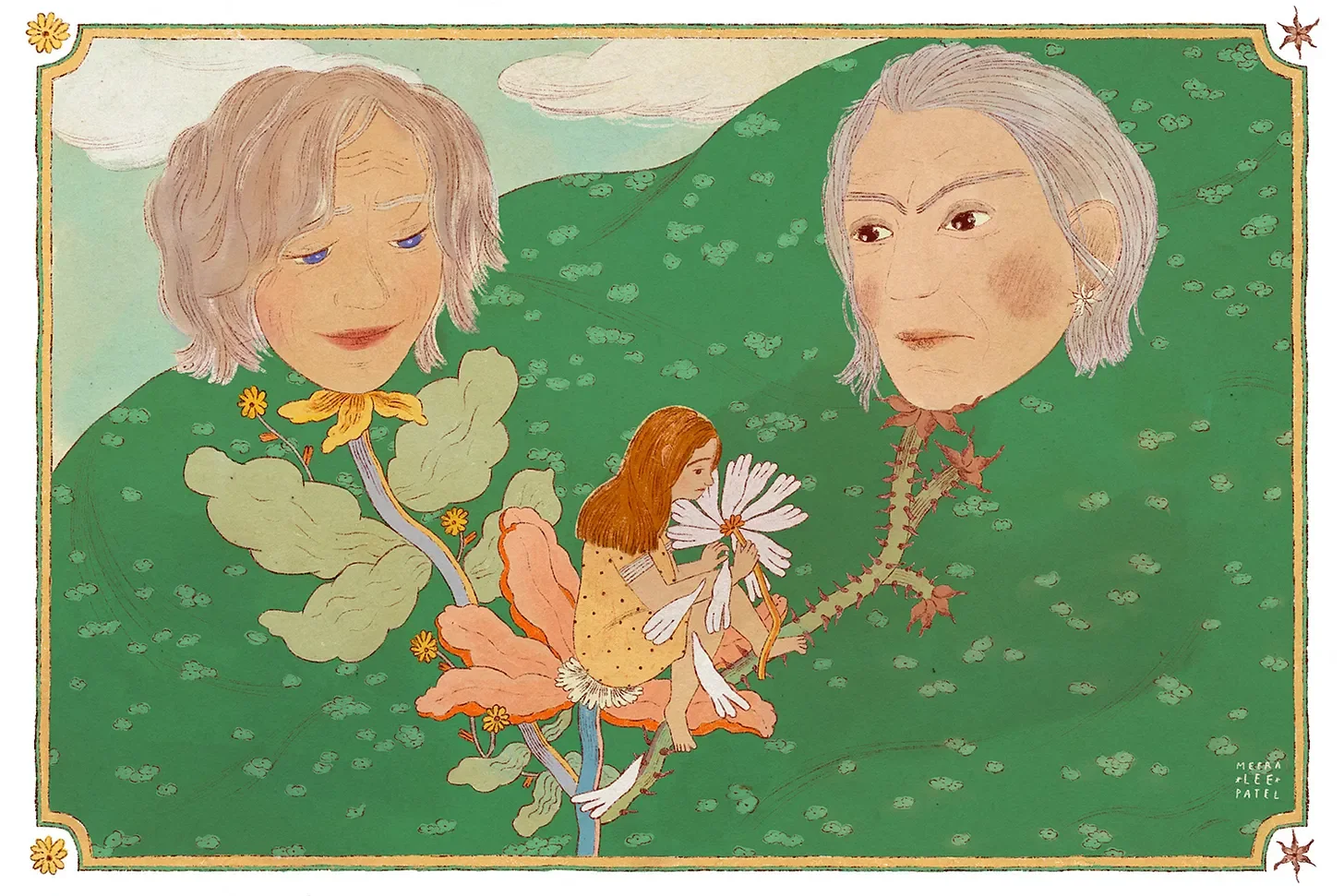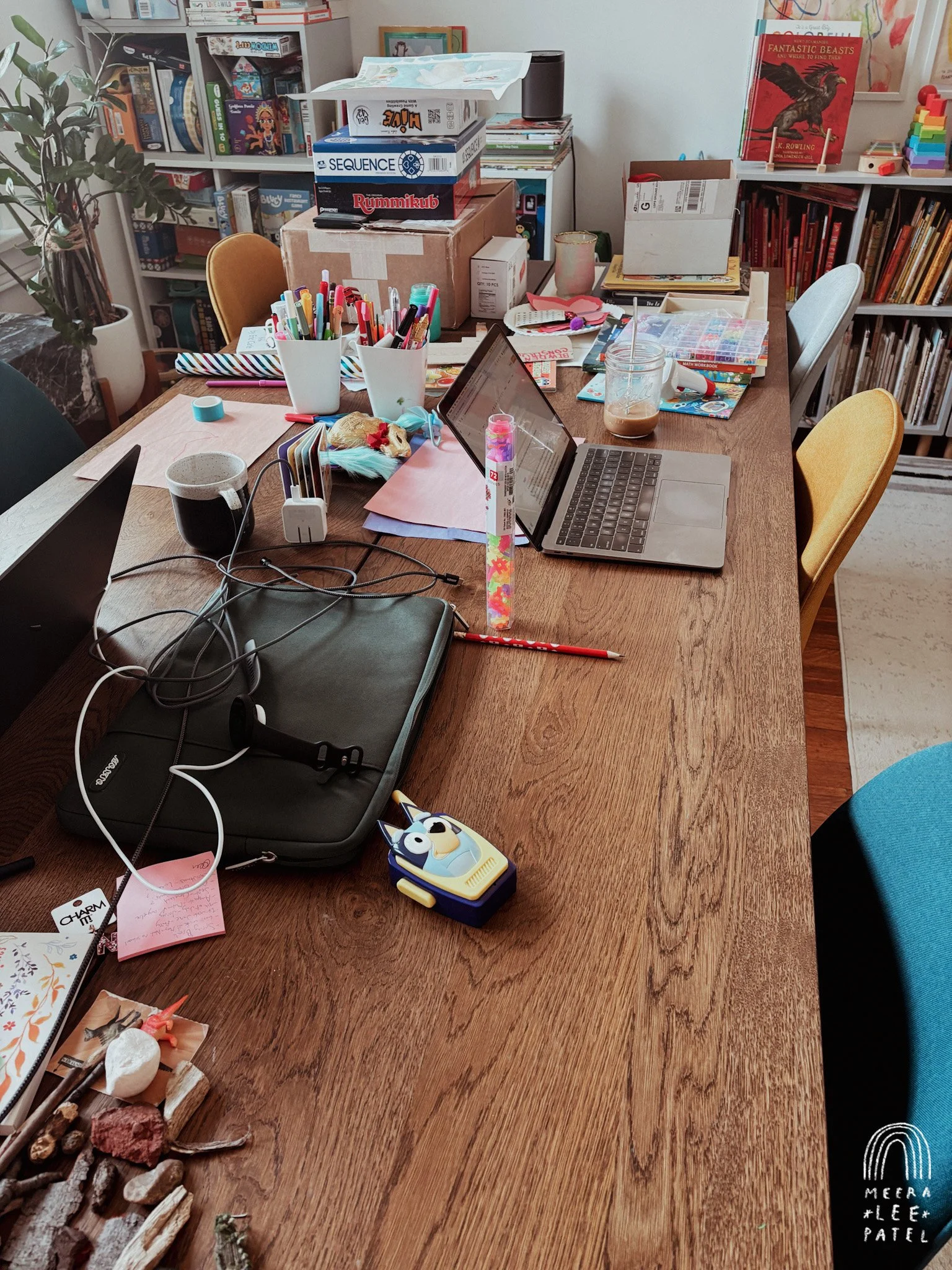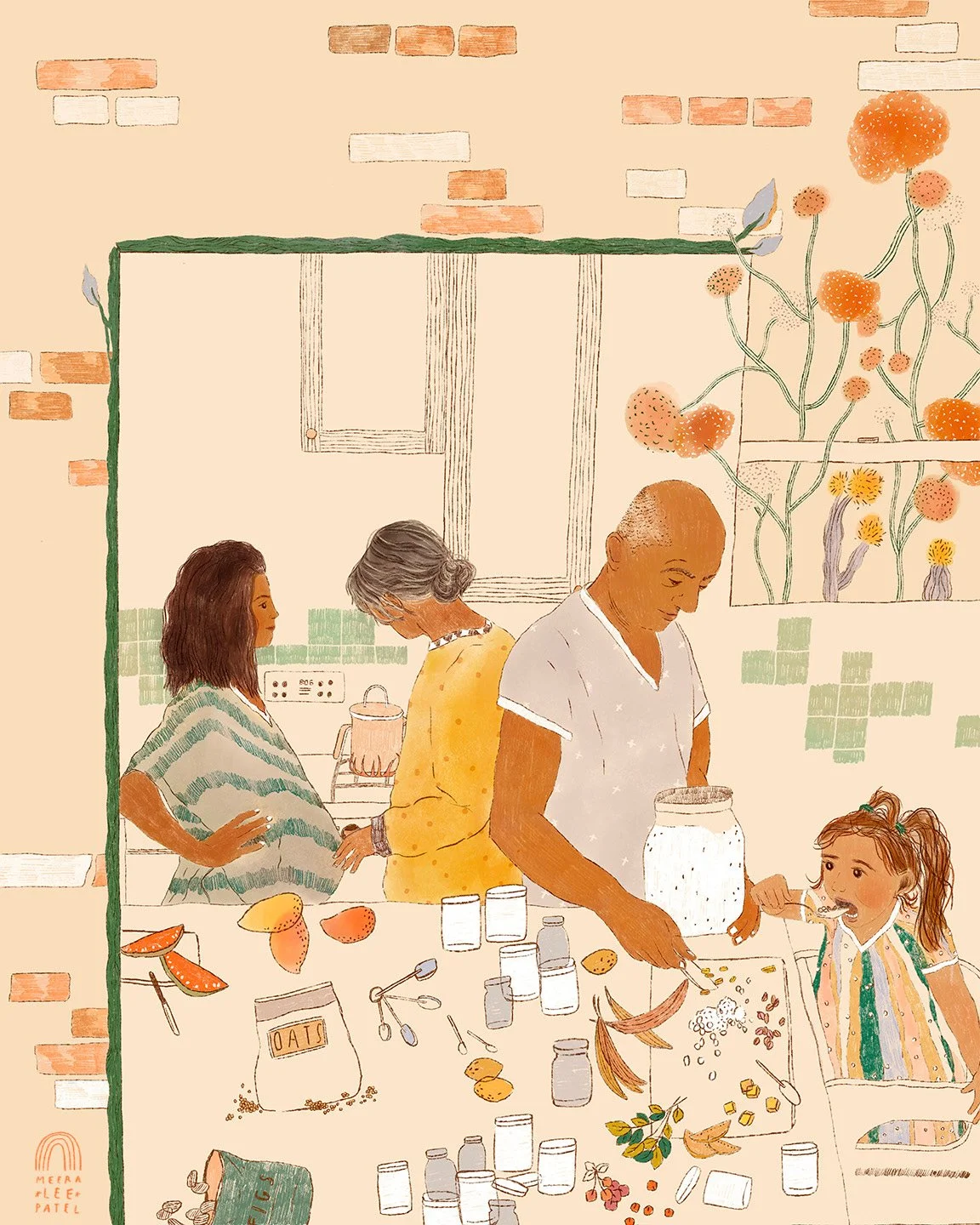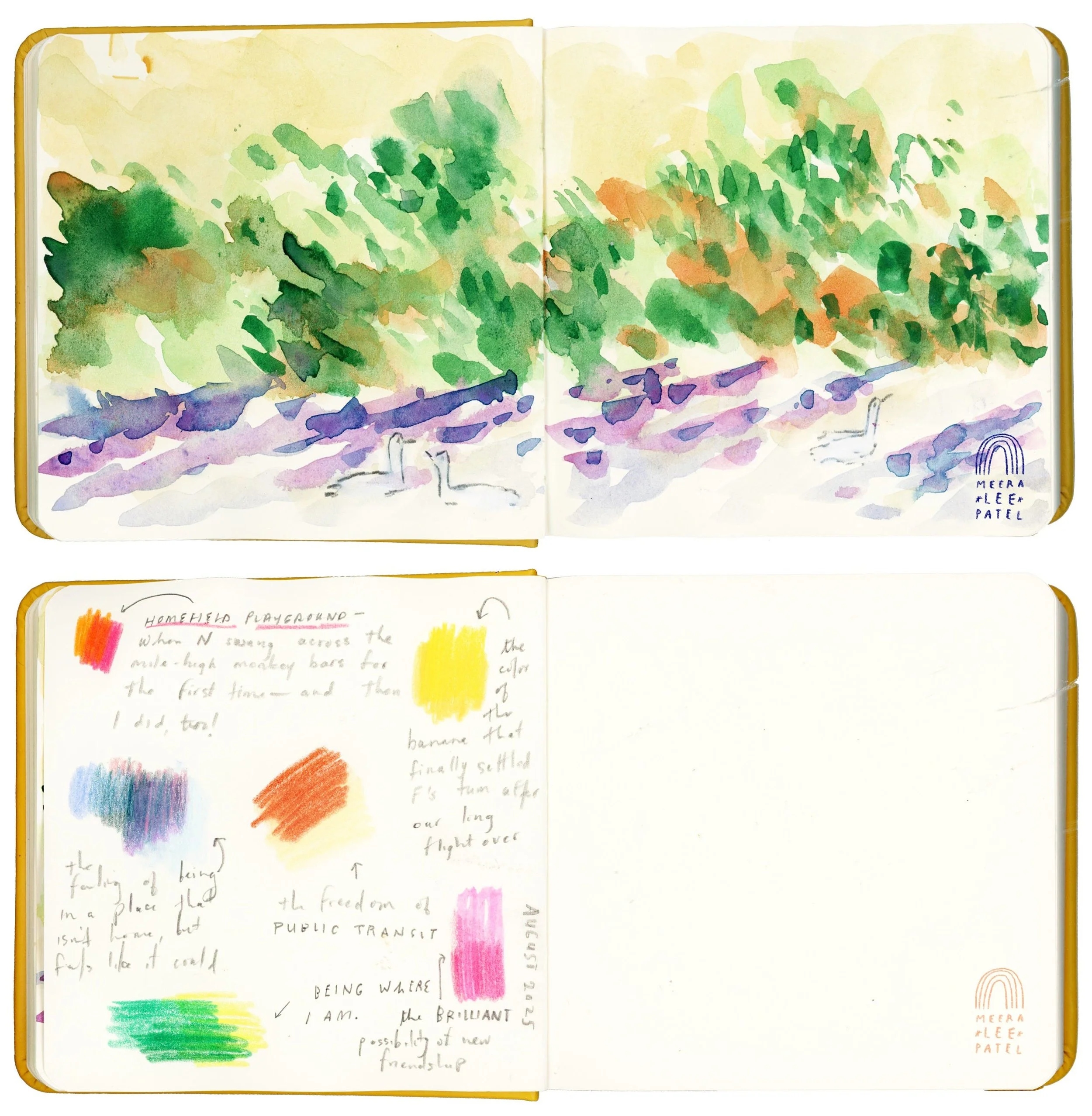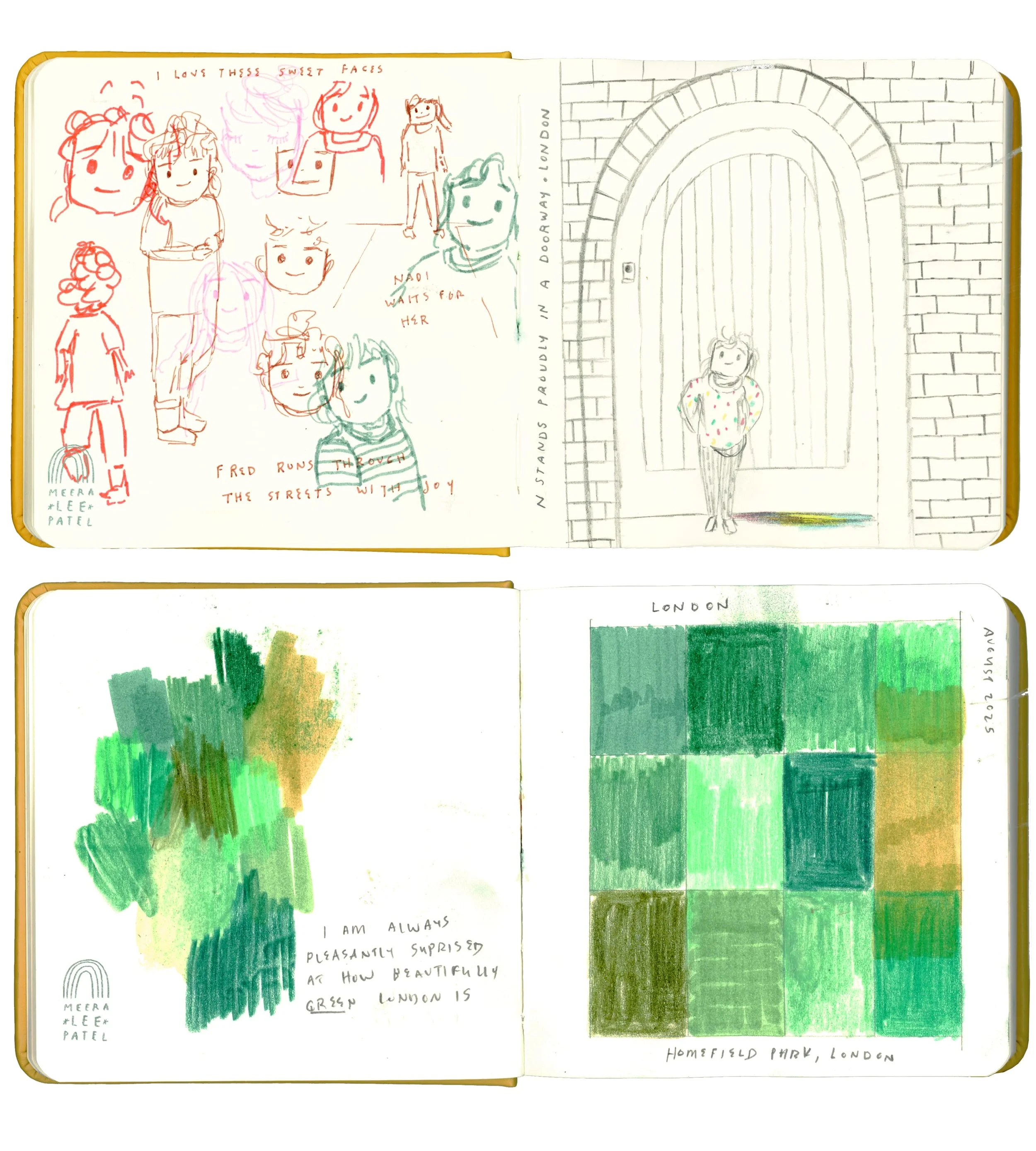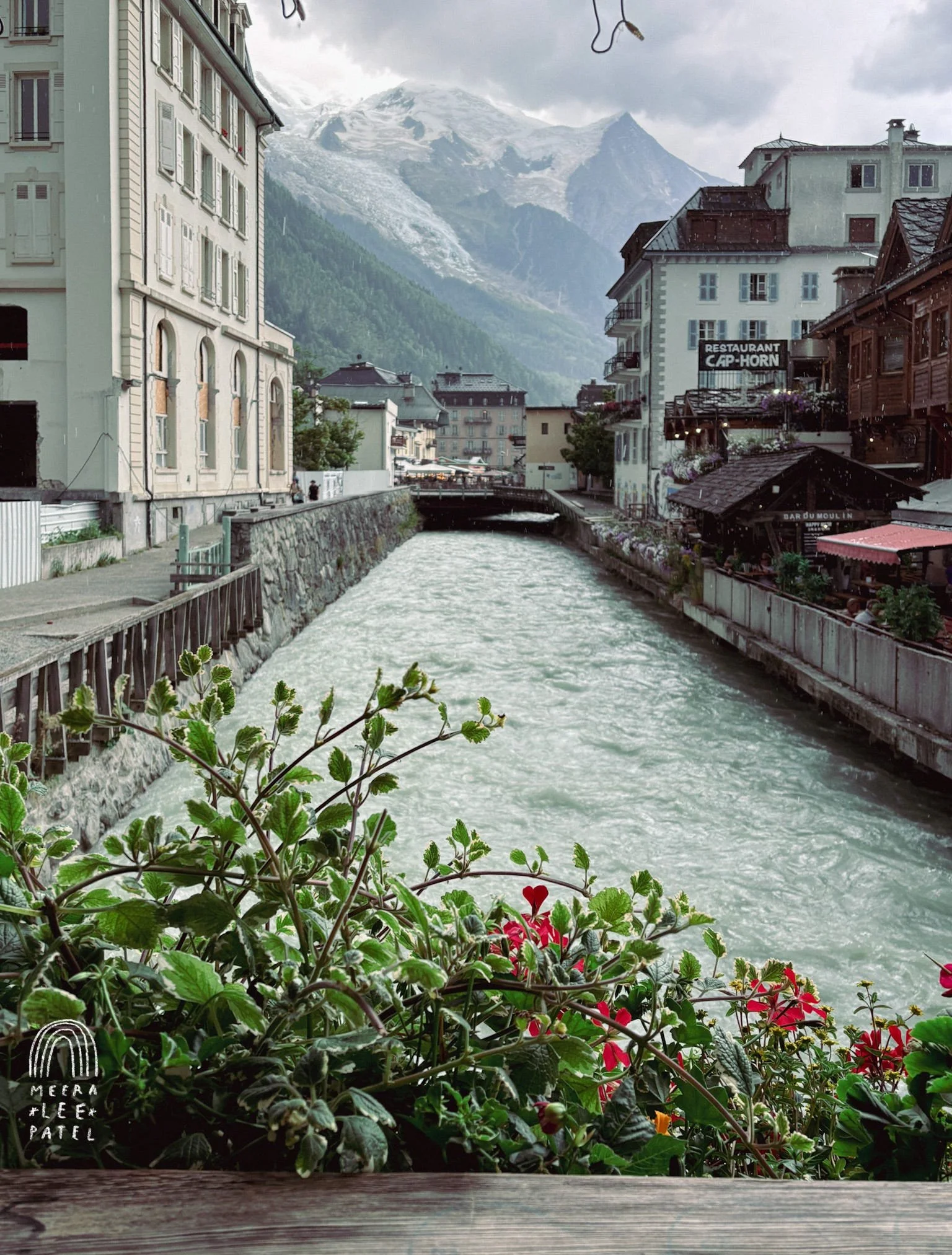
A friend comes to visit and for this reason, and this reason alone, I begin to clean the house. She hasn’t been to our house here in Saint Louis since we moved nearly four years ago. Four. I say the number aloud, not believing it but having to because it is the truth and I’m hunting for it. Now that I have children who also hunt, it’s become clear: this is not a journey particular to me, but one that most find themselves lost on, looking this way or that, wondering if what they see is mirror or mirage.
Read MoreDear Somebody: A thousand years.
The Biggest Dream, originally published in Issue #38 of Chickpea Magazine
A year from now, here are five things from this week that I'd like to remember:
MONDAY
I’m sitting under the Dallas sun when I hear about the blood. The bleeds are two fish making their way through the currents of your brain and I wonder what they are looking for. What do they hope to find? Do they realize the disruptions they are causing?
I’m sitting in the DFW airport when it occurs to me that the fish inside your brain are still swimming, that possibly they’ve been swimming for a very long time. It occurs to me that sharks are a type of fish: stealthy, silent. Their bodies are made out of cartilage; they are unburdened by the weight of bone. Sharks sneak up on us when we finally set our anxiety aside, just long enough for a dip in the salty waters. Just long enough to enjoy life for a few minutes. I feel torn. I’m stuck between my own anger and the reality of knowing that no sharks singled you out. They were just hungry. You were just there.
I’m sitting in the ICU when I first see that the waves in your brain are large. Only a large object could cause such a disturbance, ripples that wash over your memory, your judgment, your speech. The brain is categorized into eight separate lobes and there is water, I mean, blood—everywhere.
These are some big fish, I think to myself, trying to reach you through your closed eyes. I’ve spent years trying to catch the big fish, and here you caught two all on your own without even trying. I wonder if you’ve ever been whale watching; I don’t think you have. Maybe once in Hawaii? I begged you to take me fishing when I was a kid, but I don’t think we ever did…right? Right? I want you to wake up so I can confirm this information, but your eyes remain closed no matter how loud I scream.
I’m sitting in the hospital room next to you when you tell me the year is 1926. I don’t blink; I ask you to try again. You want to ask where my sister is, but you can’t retrieve her name. She’s coming soon, I tell you, and your face softens. What’s my name? I ask, and you hesitate. You don’t answer. I don’t blink; I don’t ask you to try again. I know you recognize who I am and the warmth of you washes over me. You’re still you, and I feel comforted by your presence, just like I did when I was a kid. Even though you don’t know my name. Even though everything has changed.
I’m pulling a sheet over the chair next to your bed when you speak to me unprompted. I think I’m going to get better, you say, and my heart breaks over the light in you. Some people swallow a little of the sun and it stays with them forever; you did, and I know that. The sunlight beams out of your face brightly even though everything is cracked. It’s a light that always plays, even when it’s a bad hand, even when it’s easier to blame, to argue, to just plain quit.
You lay down in bed and I lay down in the chair next to you. It is so loud in this room filled with patients and nurses and lights and flashes and I am filled to the nose with overwhelm and questions. How strong is each ripple moving through your brain? Will the water hurt or heal all that it touches? After everything evaporates, what will remain?
You are confused, displaced. I’m right here, I reassure you. It’s time for sleep. I think about how many times my small children have fought against the night, apprehensive about what happens after they close their eyes. I think about how many times I’ve waited until they’ve fallen asleep before backing out of their room slowly, sometimes on my knees. I think about how life is a ripple, a wheel that keeps turning. Time waits for no one.
It’s been one thousand years since I relied on parental presence to feel safe enough to close my eyes; for you, it’s been even longer. You’re my dad, and for the first time in a thousand years, I fall asleep holding your hand. And you fall asleep holding mine.
TUESDAY
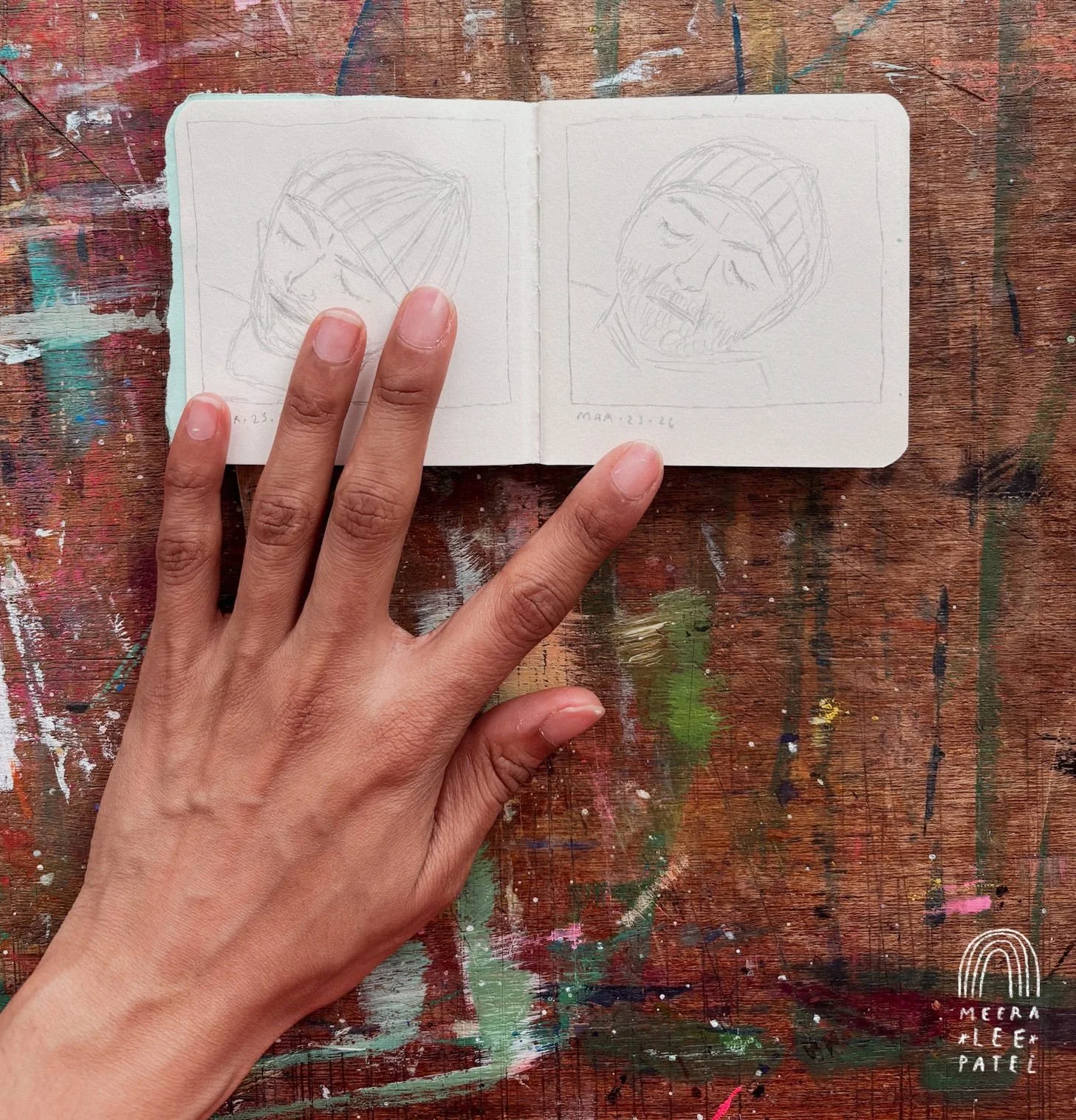
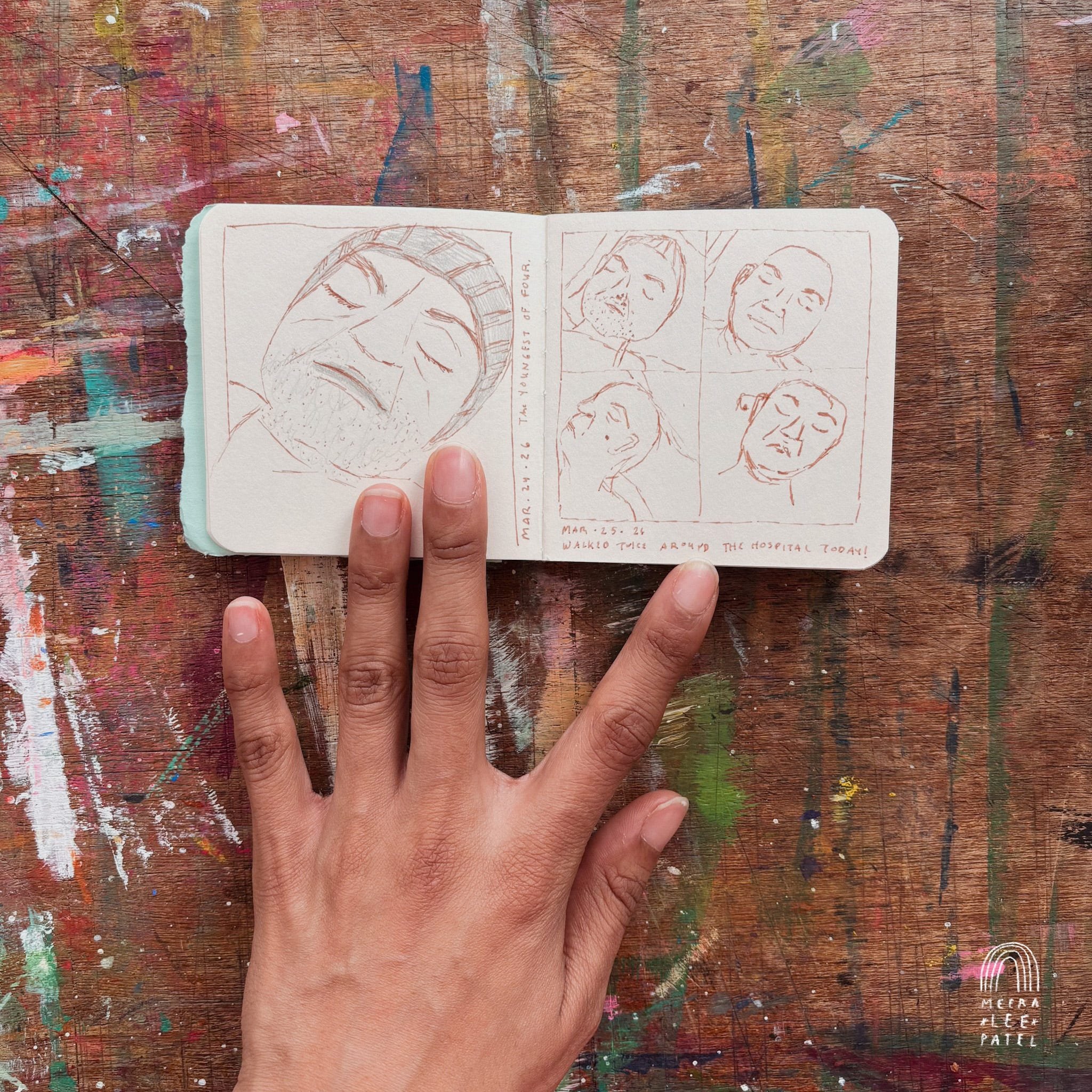
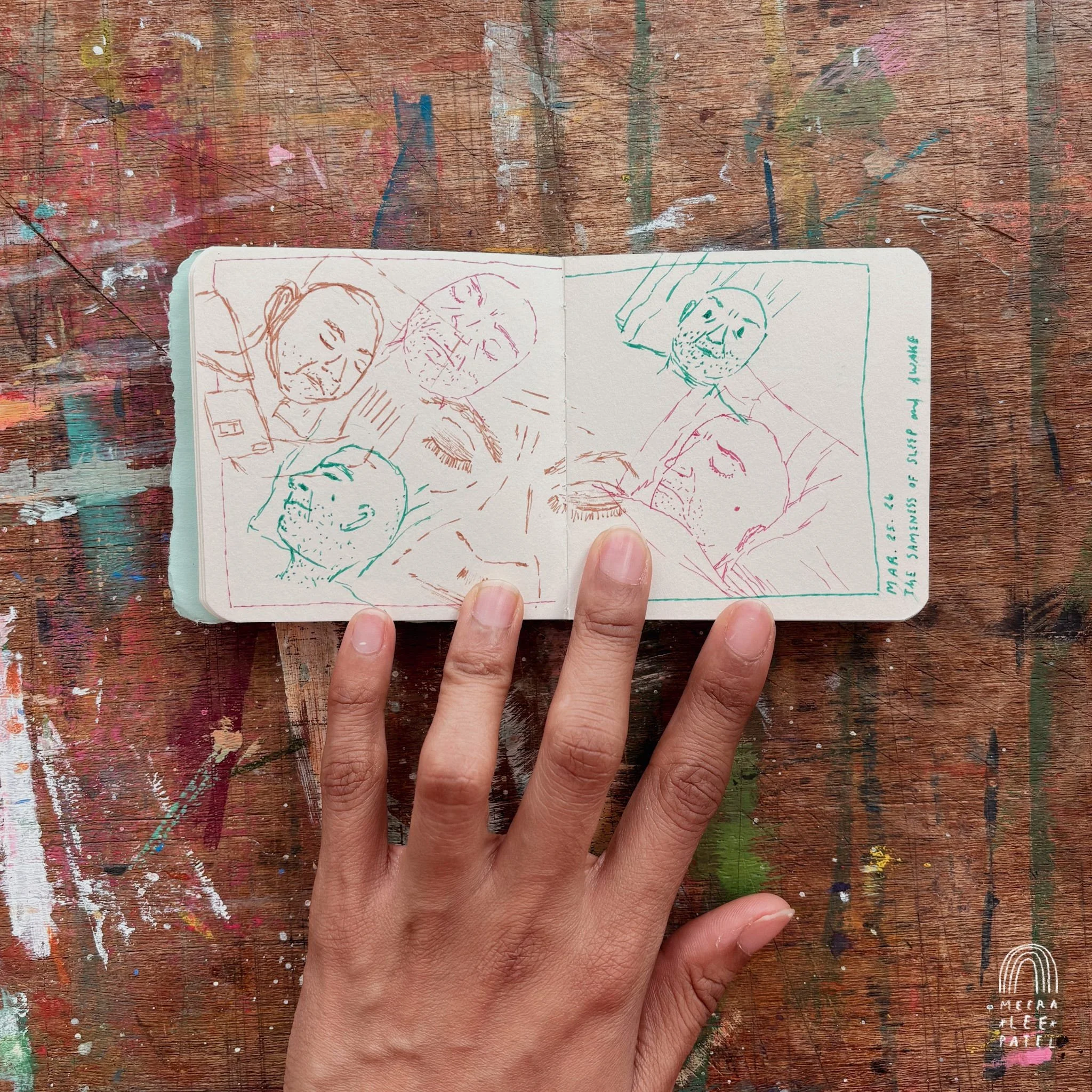
Pops in March (sketchbook, 2026)
I’m no good at capturing likeness, but for once, I don’t let it bother me. I just focus on the moment, the drawing, the memory. Everything changes in time.
WEDNESDAY
I’ve cited this passage in my newsletter before, and I’ve no doubt I will do so again; it is one that I return to repeatedly as the years roll on by:
“Care is like ephemeral art—an Andy Goldsworthy sculpture of mac and cheese and baby wipes and no tears shampoo and socks that never match and chore charts that never work and all that just gets blown away with the winds of time. And like art that isn’t static, isn’t permanent, can’t be put up on a wall and admired in a museum—care is devalued. We stumble on it sometimes in the wild and it takes our breath away, a momentary glimpse of the tenderness with which we hold and protect and nourish and delight in our loved ones; just like one of Goldsworthy’s mandala’s, there’s a divine structure to it, a feeling of inevitability. It’s as ordinary as dirt and as sacred as the kind found at Chimayo. It’s here, there, and everywhere, so kind of nowhere.
Caring for someone you love is, of course, a reward on to itself, the deepest of them, but it need not be labor that happens in such embattled circumstances. It could be absorbed and still revered, invisible and still funded, ephemeral and still prized. It could be held as the center of our existence, rather than the thing we rush through to get to our “real work.” We could see and honor the seasons—caring for children, caring for elders—and the variable capacities—the neurodivergent and disabled and chronically and temporarily ill.
I wish we had policy and professional expectations that mirrored our better angels, which show up again and again and again. Meanwhile, the winds will keep blowing away our beautiful care. That’s okay. That’s as it should be. Most of what is wildly worthwhile is achingly impermanent.”
—from Courtney Martin’s The Art of Care Mostly Disappears
THURSDAY
Some folks’ lives roll easy as a breeze, drifting through a summer night; but most folks’ lives, oh, they stumble, Lord, they fall; some folks’ lives never roll at all.
FRIDAY
It is a kind of love, is it not?
How the cup holds the tea,
How the chair stands sturdy and foursquare,
How the floor receives the bottoms of shoes
Or toes. How soles of feet know
Where they’re supposed to be.
I’ve been thinking about the patience
Of ordinary things, how clothes
Wait respectfully in closets
And soap dries quietly in the dish,
And towels drink the wet
From the skin of the back.
And the lovely repetition of stairs.
And what is more generous than a window?
—The Patience of Ordinary Things by Pat Schneider
Of all the things you can put in front of your eyes, I’m grateful that my little letter is one of them.
If you’d like to support me, please buy my books. My art prints and line of greeting cards make excellent gifts for yourself or a friend. You can also hire me for your next project—I’d love to work together.
xx,
M
To sign up for my weekly newsletter, Dear Somebody, please subscribe here.
Dear Somebody: On giving up.
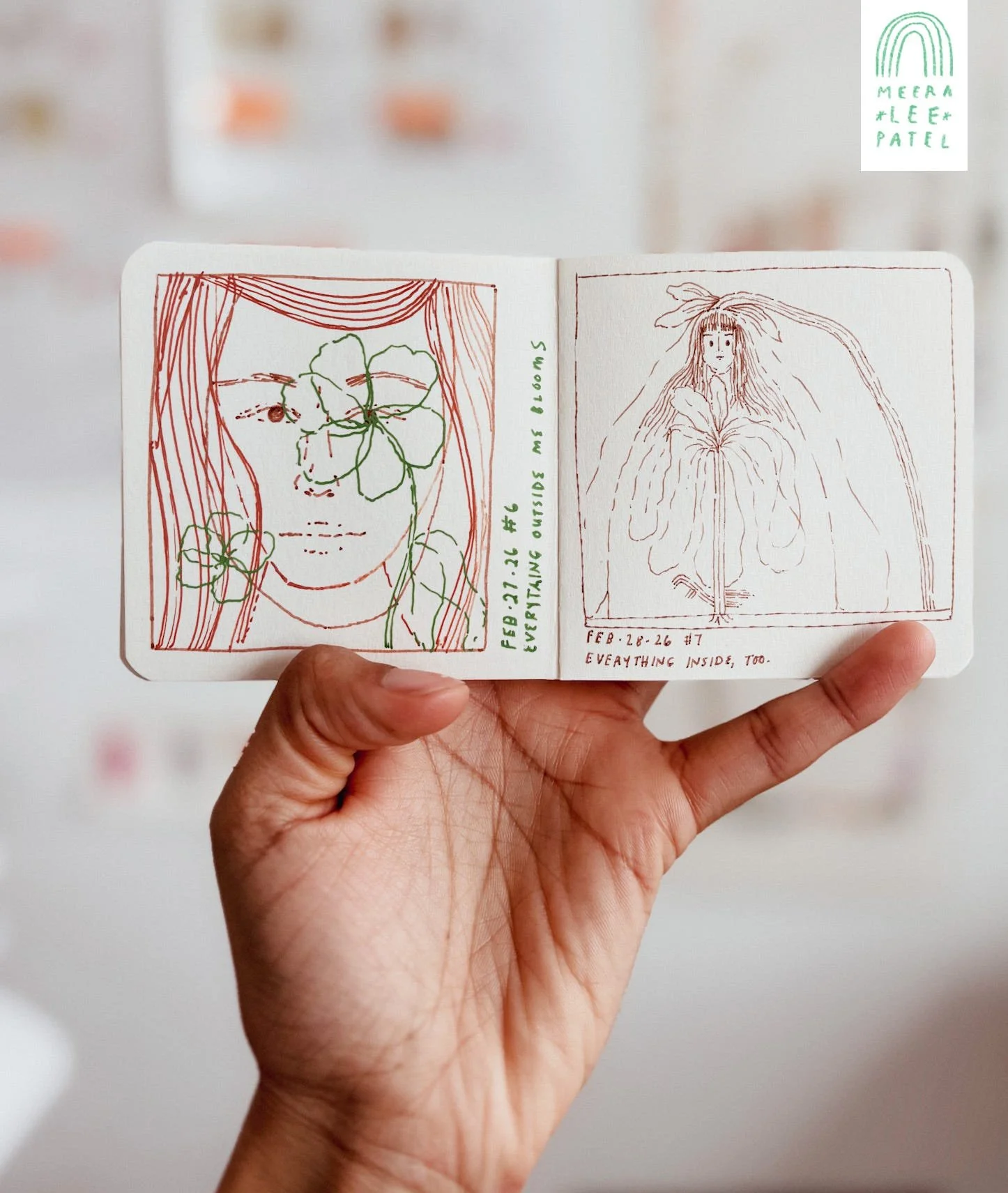
Days 6 and 7 of the 100 Day Project (ink on paper, 2026)
A year from now, here are five things from this week that I'd like to remember:
MONDAY
I wake up at midnight to F’s anger. Her blankets are tangled, lost to her flailing limbs, and my eyes take too long to adjust to the night. Even in sleep, the anger spills out of her like a river, threatening to drown everyone in sight. In the daylight, I’m plenty busy cowering around the 24 pounds of her wrath, but the night offers me enough of a shield to sleepily wonder: Dang, she’s angry. Is this what I’m like?
Her eyes are still closed while I sort her sheets, but she cries from behind a darkness only she can see and feel. I cover her body gingerly, wincing with her every movement, wanting to comfort without disruption, wanting to help without getting burned.
I climb back into bed and lay awake for hours. The shadows on the walls are nice, not too severe. I think about drawing them but know I won’t. My body is aging. I’m learning to take sleep when it arrives and to forgive each time it refuses. What’s the use in holding onto anger?
Outside, it continues to rain. I love the rain always, but especially at night. I love the thunder, the majestic sound of earth crushing our dreams and concerns. I think of how the day will hum pleasantly when I throw open the back door in the morning, fresh with the fragrance of damp earth and new beginnings. I think of my sleeping children, each replete with their own combinations of worry and joy, each with a mind they’ll learn to affectionately wrestle with, or so I hope. I think of T, sleeping on top of the covers in a too-warm-for-him-home, and I think of how I am changing, really changing, like a cobra shedding its diamond-studded skin, like water rising up to become vapor, and for the first time in my almost-over thirties, I am tormented by absolutely nothing.
TUESDAY
I sit on a panel for Penguin Random House’s Author University alongside Chris Guillebeau, Allegra Goodman, and Phil Stamper. We’re here to discuss writer’s block, creativity, and advise authors on remaining inspired through the various stages of publishing—the actual writing process, through various drafts and revisions; the marketing work as we prepare to push a book out into the world; and the publicity process, which continues long after a book is published.
The questions themselves are routine but important: How do I maintain boundaries and protect time for creative work? What rituals and routines help me muddle through writer’s block? How do I encourage others to locate and encourage their own creativity?
As I answer each question and listen to my peers’ responses, I understand that advice, in life and in writing, only goes so far. I can’t think my way into a healthier parent-child relationship or into emotional regulation the same way I can’t think my way into writing better sentences. Instead, I have to do. I have to try. I have to fail.
Although all four of us have successfully found a way into our writing and into the world of published authors, we grapple with the same setbacks, and our advice reflects what works for us. The confidence I hear in our voices is built from years of trial-and-error, from years of listening to how our bodies and minds respond to certain environments and challenges.
All of us, despite our successes, struggle: self-criticism, repeated rejection, the impossible struggle between paid and creative work, and, always, the pressure to sell more books. All of us take advice from others and try it on for size. Sometimes, it fits. Most of the time, it doesn’t. A large part of why the four of us were chosen to sit on this panel and advise others is because none of us have, yet, given up. And that makes all the difference.
WEDNESDAY
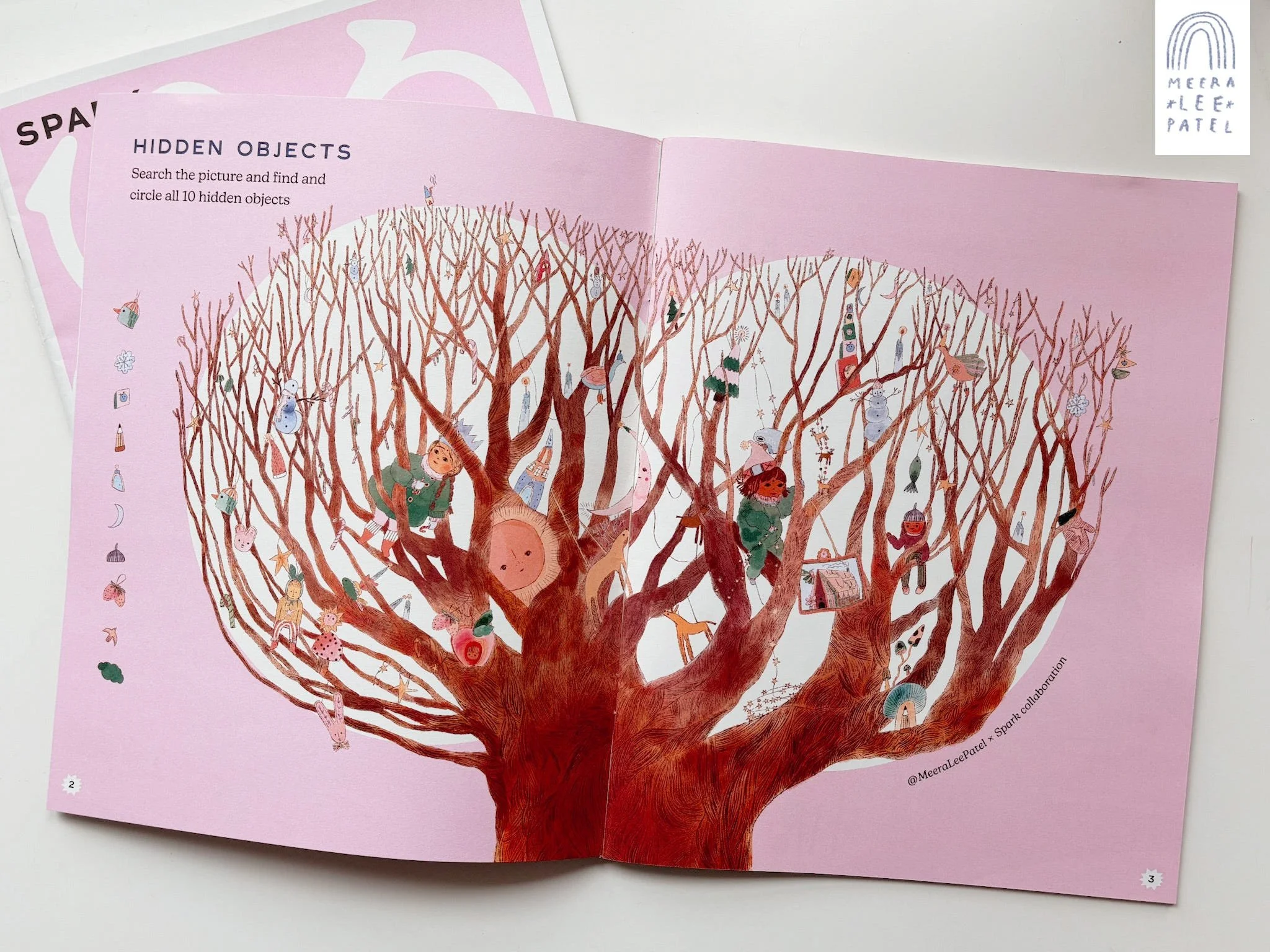
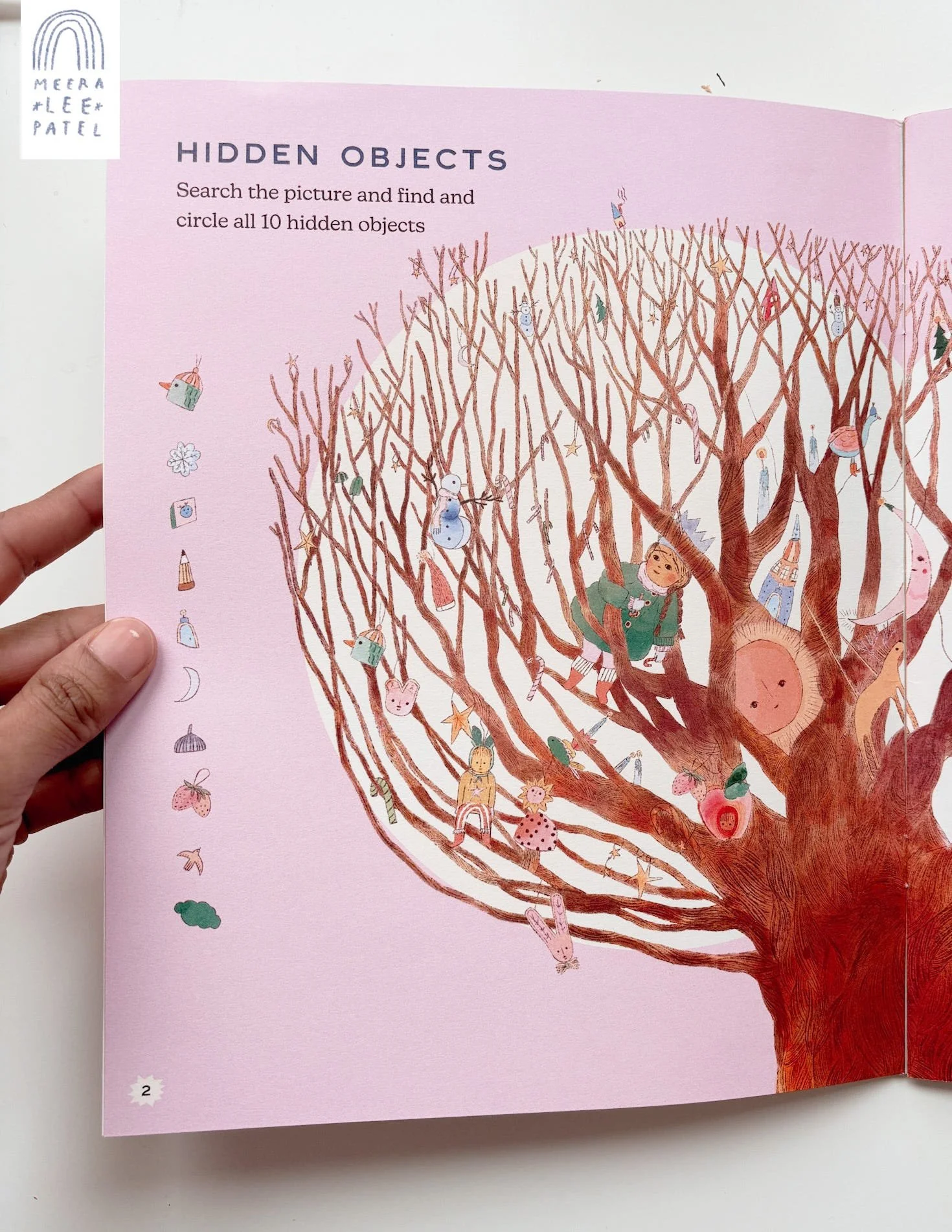
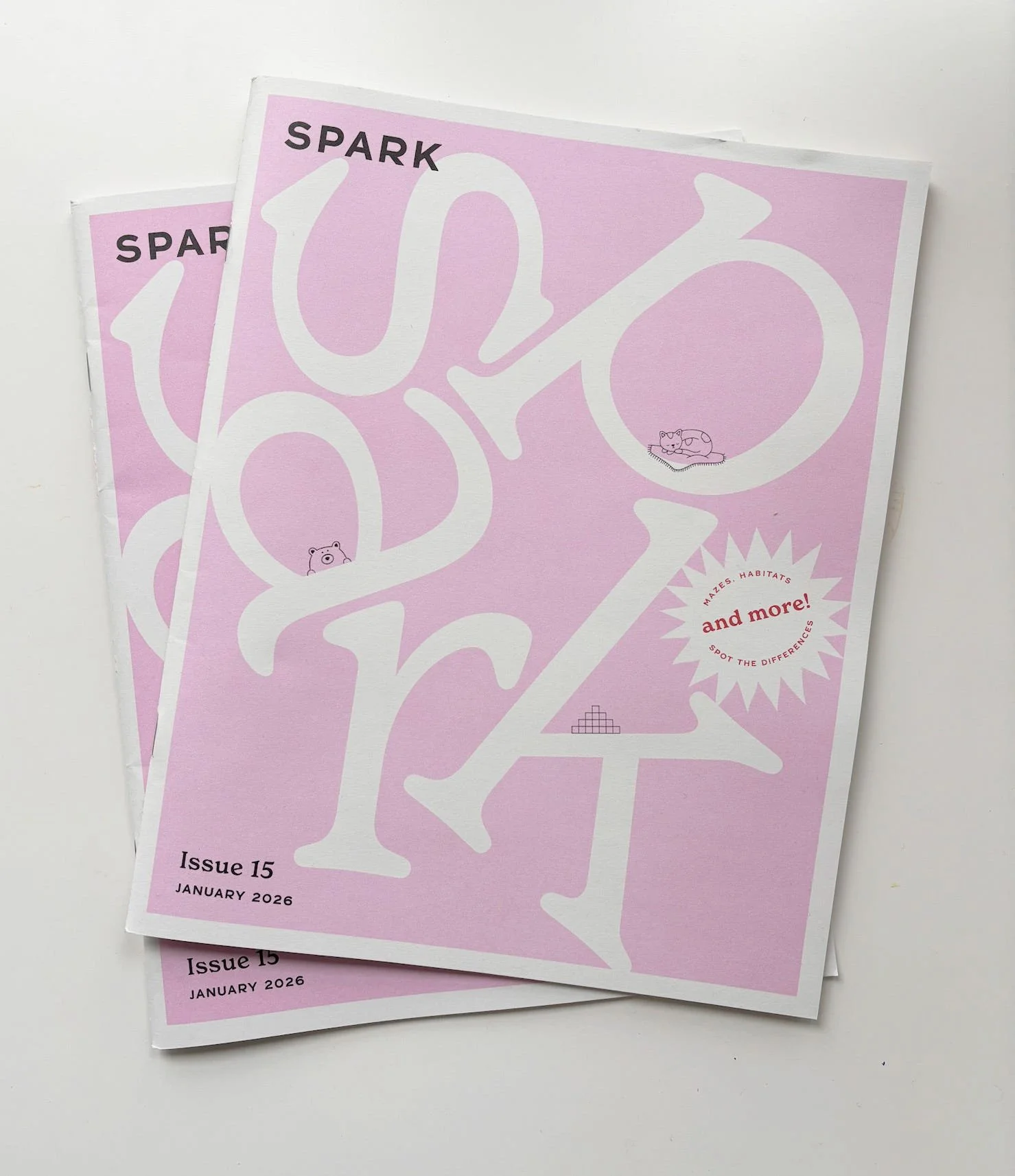
N loves doing seek-and-finds so much that I was over the moon to receive an opportunity to illustrate my own for the HIDDEN OBJECTS section of SPARK, a magazine for young children.
HIDDEN OBJECTS in the January issue of SPARK Magazine (2026)
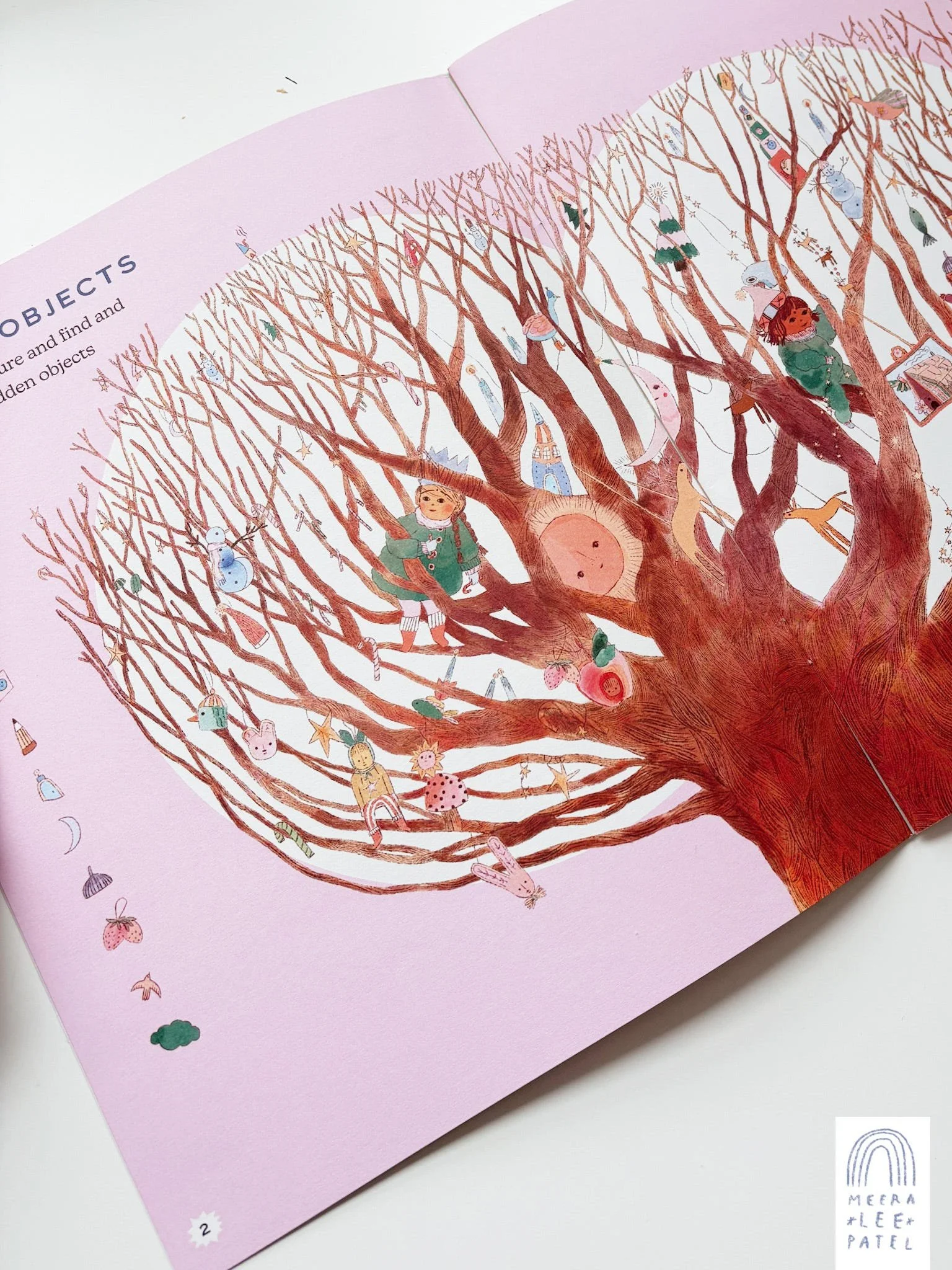
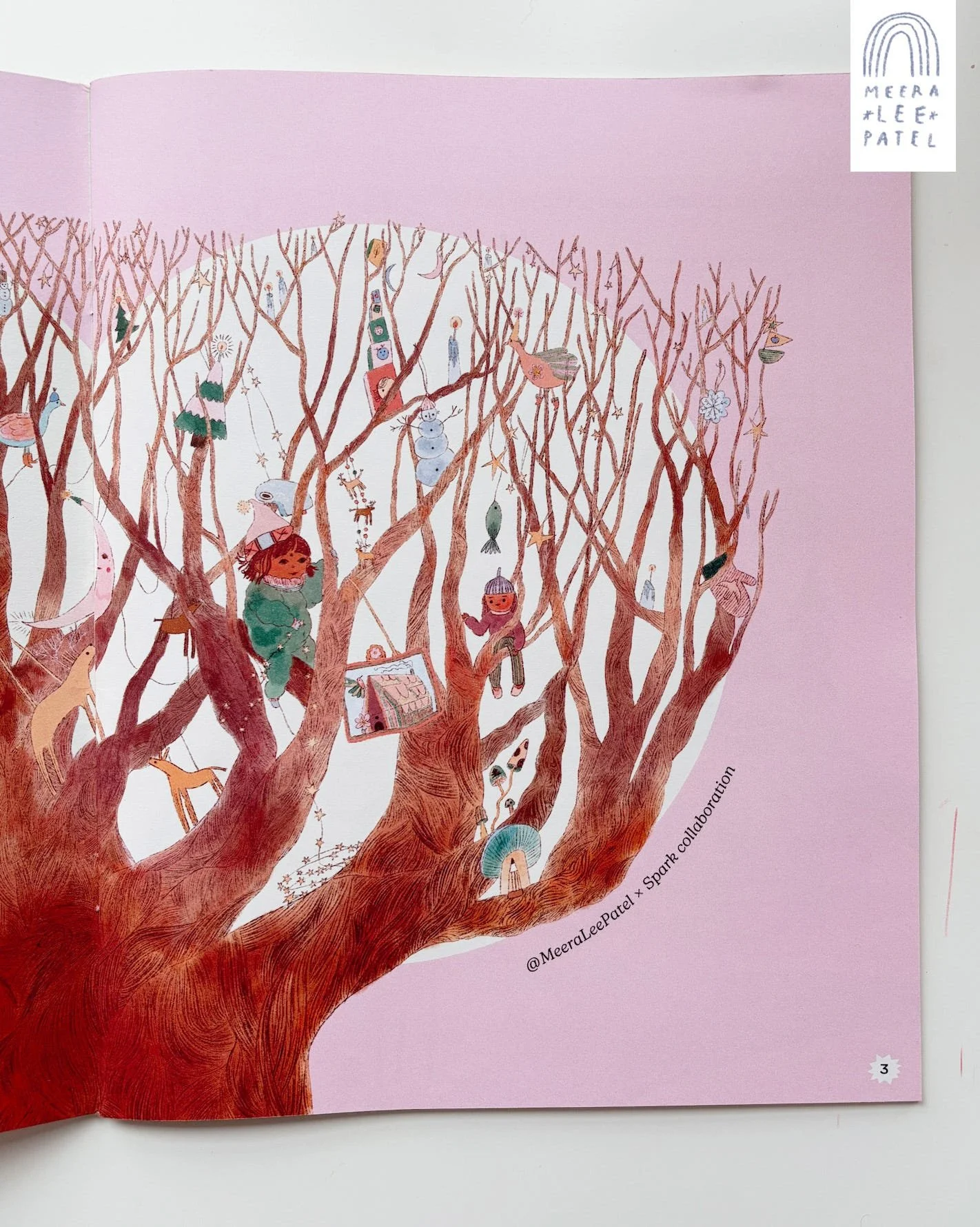
Since it was for the January issue, I wanted to draw a winter scene—and since N laments about how easy most seek-and-finds are, I wanted to make it challenging. I went with a detailed, ornamental tree scene, with various objects embedded in and hanging from the bark.
A close up of HIDDEN OBJECTS in the January issue of SPARK Magazine (2026)
When I sent in the final files, my art director made a few edits. He felt some of the objects were too difficult to find for such a young audience, and swapped them for some more obvious ones.
When we received our issue, N finished the seek-and-find within five minutes, told me it was too easy, and moved onto another page full of puzzles.
Such is life. My children are hard to please, but I am not — thank you to my editor, Katie, for such a fun assignment, and to my art director, Mark for bringing it all together. You can check out SPARK magazine here.
THURSDAY
“With each new stage of life, we outgrow the strategies that worked for us at an earlier stage. We find ourselves in an environment that pelts us with more challenges than our current self can manage. If we don’t grow bigger, we can become bitter. When our problems become too big for us, our healthiest response is to expand our capacities. That growth is qualitative.” —Mary Pipher
FRIDAY
After she’s gone to camp, in the early
evening I clear our girl’s breakfast dishes
from the rosewood table, and find a dinky
crystallized pool of maple syrup, the
grains standing there, round, in the night, I
rub it with my fingertip
as if I could read it, this raised dot of
amber sugar, and this time,
when I think of my father, I wonder why
I think of my father, of the Vulcan blood-red
glass in his hand, or his black hair gleaming like a
broken-open coal. I think I learned to
love the little things about him
because of all the big things
I could not love, no one could, it would be wrong to.
So when I fix on this image of resin
or sweep together with the heel of my hand a
pile of my son’s sunburn peels like
insect wings, where I peeled his back the night before camp,
I am doing something I learned early to do, I am
paying attention to small beauties,
whatever I have–as if it were our duty to
find things to love, to bind ourselves to this world.
—Little Things by Sharon Olds
Of all the things you can put in front of your eyes, I’m grateful that my little letter is one of them.
If you’d like to support me, please buy my books. My art prints and line of greeting cards make excellent gifts for yourself or a friend. You can also hire me for your next project—I’d love to work together.
xx,
M
To sign up for my weekly newsletter, Dear Somebody, please subscribe here.
Dear Somebody: A monster inside the wall.
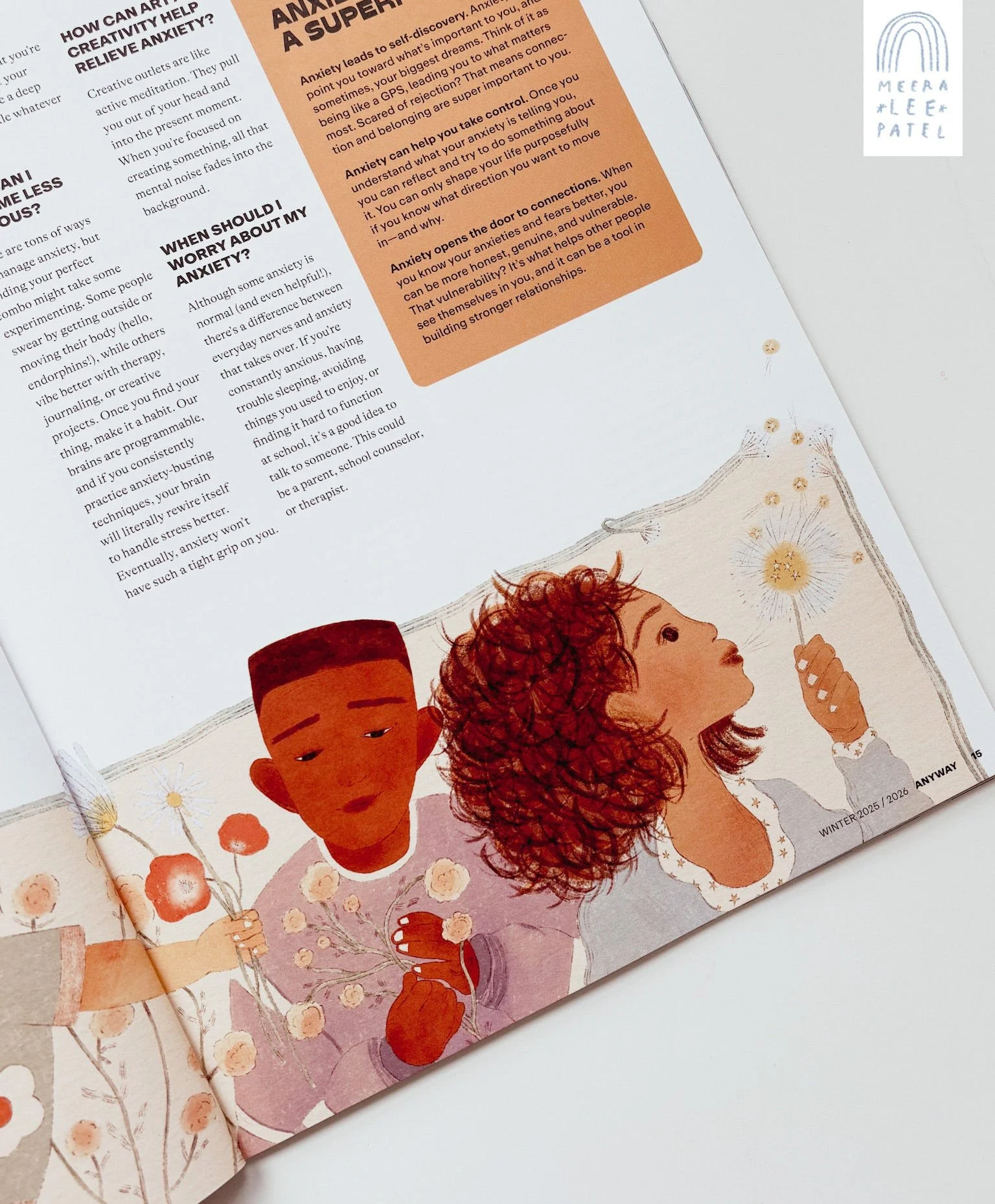
An illustration for ANYWAY Magazine (2026)
A year from now, here are five things from this week that I'd like to remember:
MONDAY
Life with F is loud. At almost three, she defaults to screaming as her primary manner of communication, and the screaming is loud. Wrong plate color? Screaming. Bath too hot? Screaming. Having too much fun? Screaming. I try to be patient, to emotionally detach, but my nervous system thins, teetering. The flood of constant sound—of unreasonable discontent, is overwhelming. I find myself constantly tip-toeing around her tiny being, flinching at her every movement. I feel trapped by the creature I created.
Each evening, I wait for F to fall asleep. I want to return our house to the night, to let it infuse our walls with its calm and its silence. Instead, F screams and cries and wails: there’s a monster living inside her wall. She’s never been afraid of much, and a large part of me files monster under manipulation, but a smaller part of me, the part who is still afraid, stresses about leaving F alone in a room with her fear.
After the fourth check-in, when all I can think about is my workout and my shower, when my only consideration is how my own bedtime is ticking farther and farther away, I close F’s door. I walk one, two, three feet away into my own 100-year-old bedroom, crammed so closely to hers, and listen to her wails. I think about how I left F alone in a room with her fear. I separate my childhood from my parenting, I remember that no single choice I make will affect her too greatly.
T walks in smiling; he’s been reading about tulips. He tells me about how, in Persian culture, tulips symbolize the brevity of life. From the moment their strong leaves poke through the soil, it’s a rapid progression towards death: quickly they bloom; quickly they dazzle; quickly we breathe in their sweet scent. Quickly they fall, petal by petal, back into the soil again.
My favorite flower is a tulip. They remind me of time capsules, planted only to be forgotten. I love the idea of burying what I love most in the earth. I like that they often arrive before spring, a jolt of joy at the very moment when winter feels too long. Most of all, for no particular reason I can identify, I like their shape.
Tonight has been long. F screams all through bath, all through pajamas, all through books. She sobs and throws a book; she sobs and throws her jewelry; she sobs and swats at me with tiny hands I’m afraid of. After I throw her into her crib and switch off the light, she finally quiets. There’s a monster inside the wall, she says. Can you stay for a little bit?
Though her eyes brim with mischief, I sit on the floor next to her crib. She soothes herself by petting Tuna, her penguin, then takes my hand and shows me how. After a few minutes, she falls asleep, her hand on top of mine, mine on top of Tuna.
I consider the brevity of life. The moment I’m in right now is already gone. F’s screams are lost to the silence of this night; her nightmare, a petal turning back towards the soil. Perhaps it isn’t so terrible to be needed after all.
F’s body moves quietly, a tiny stem braced against the late-winter wind. I sit on crossed legs for a long time, watching.
TUESDAY
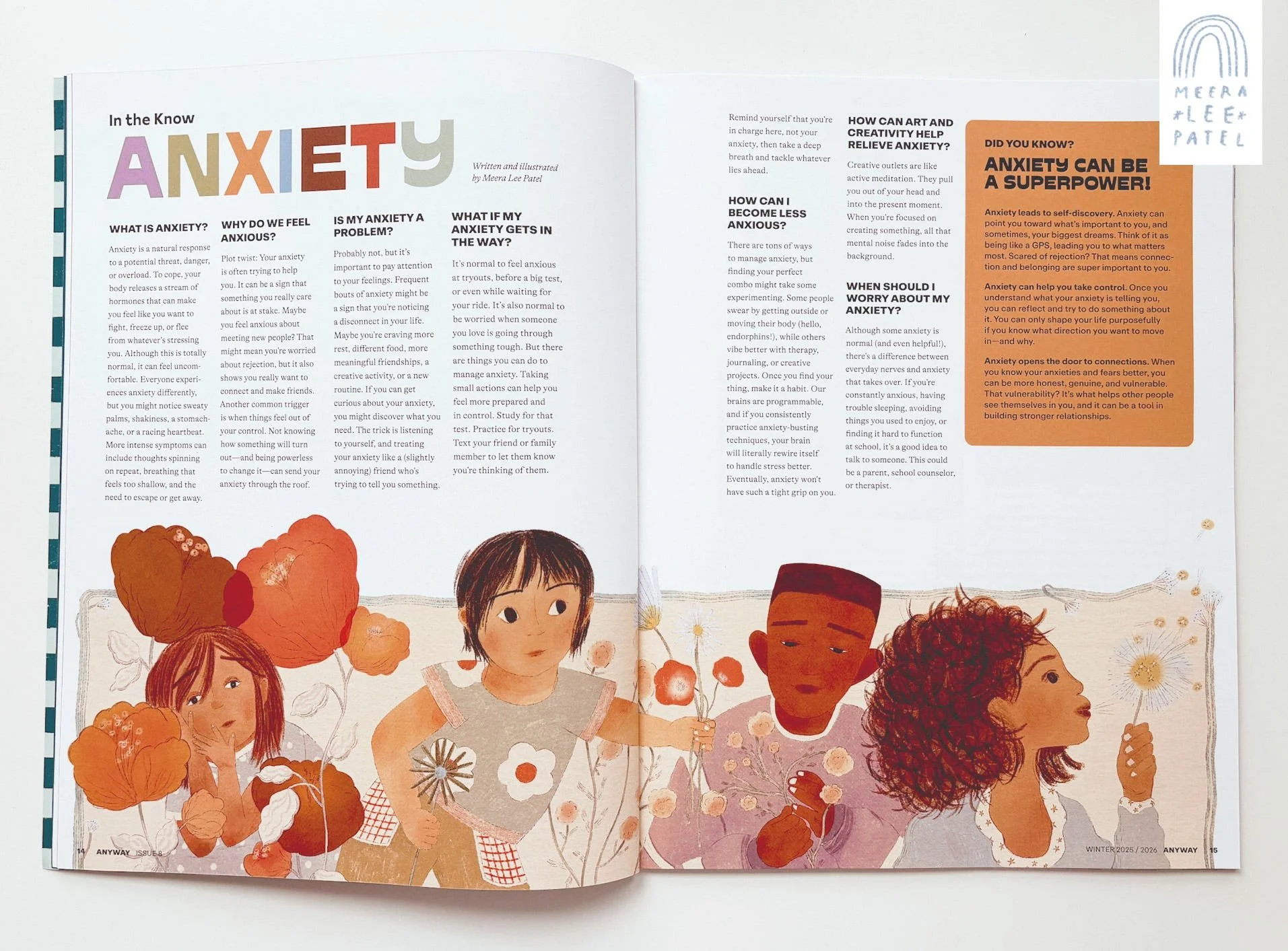
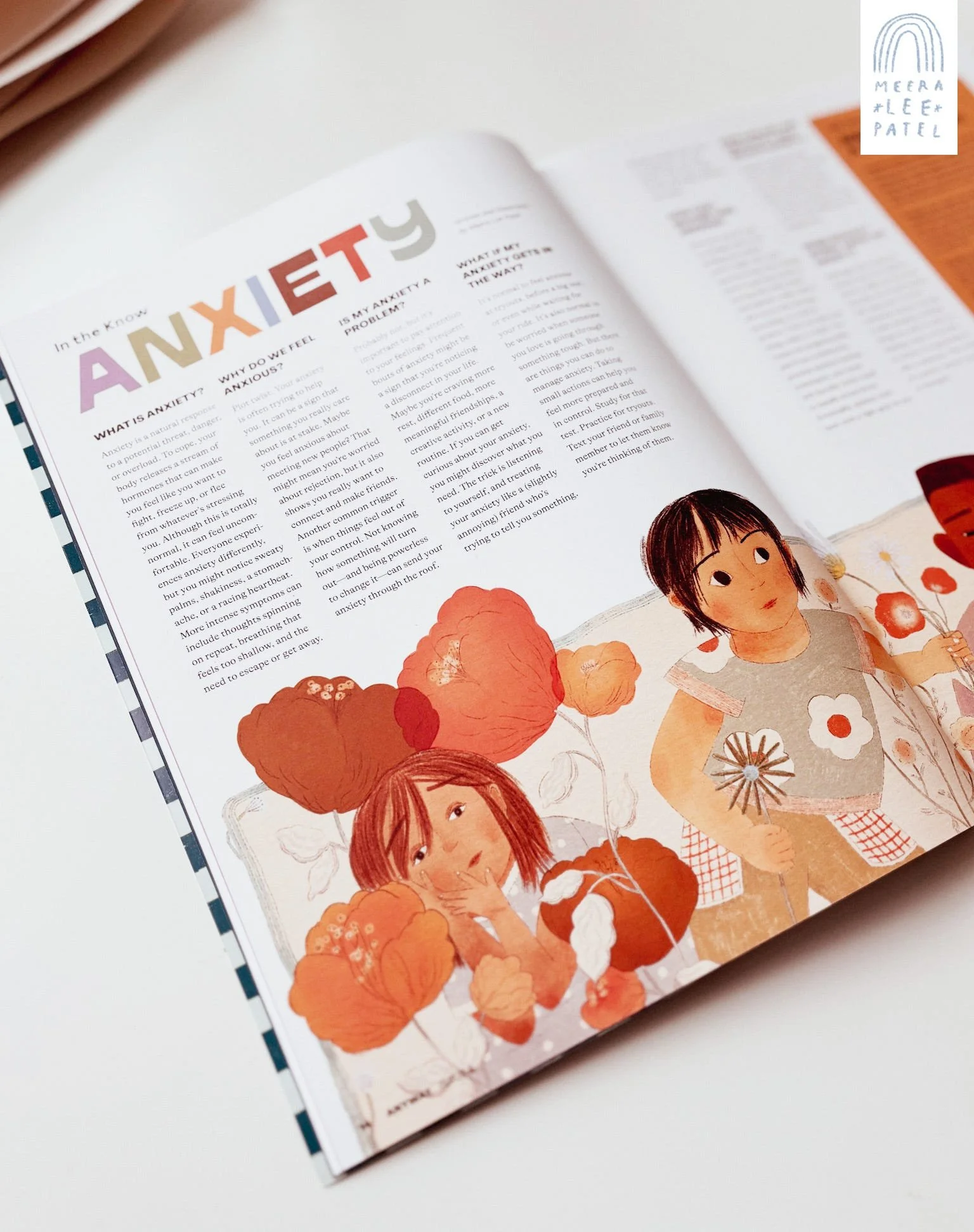
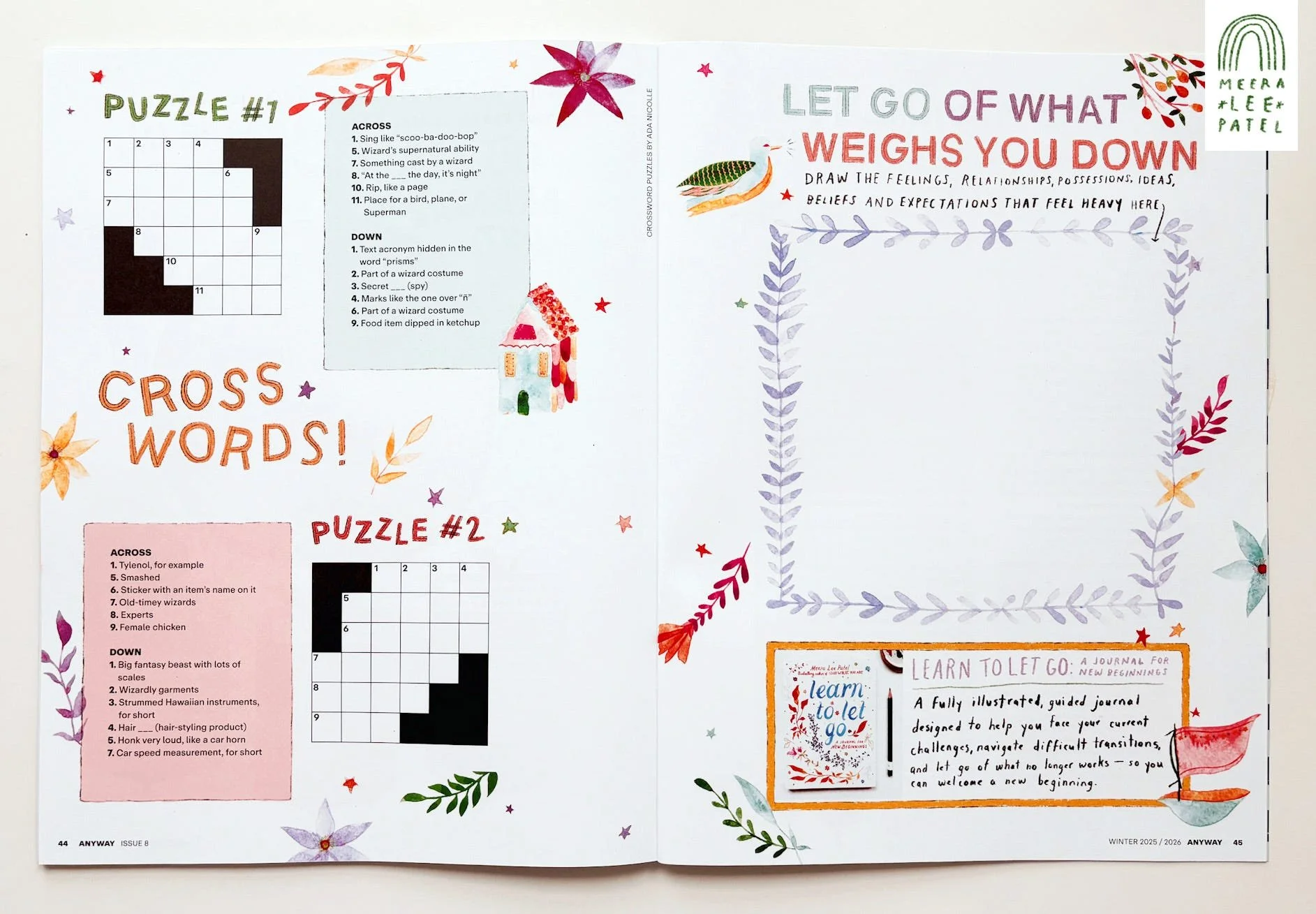
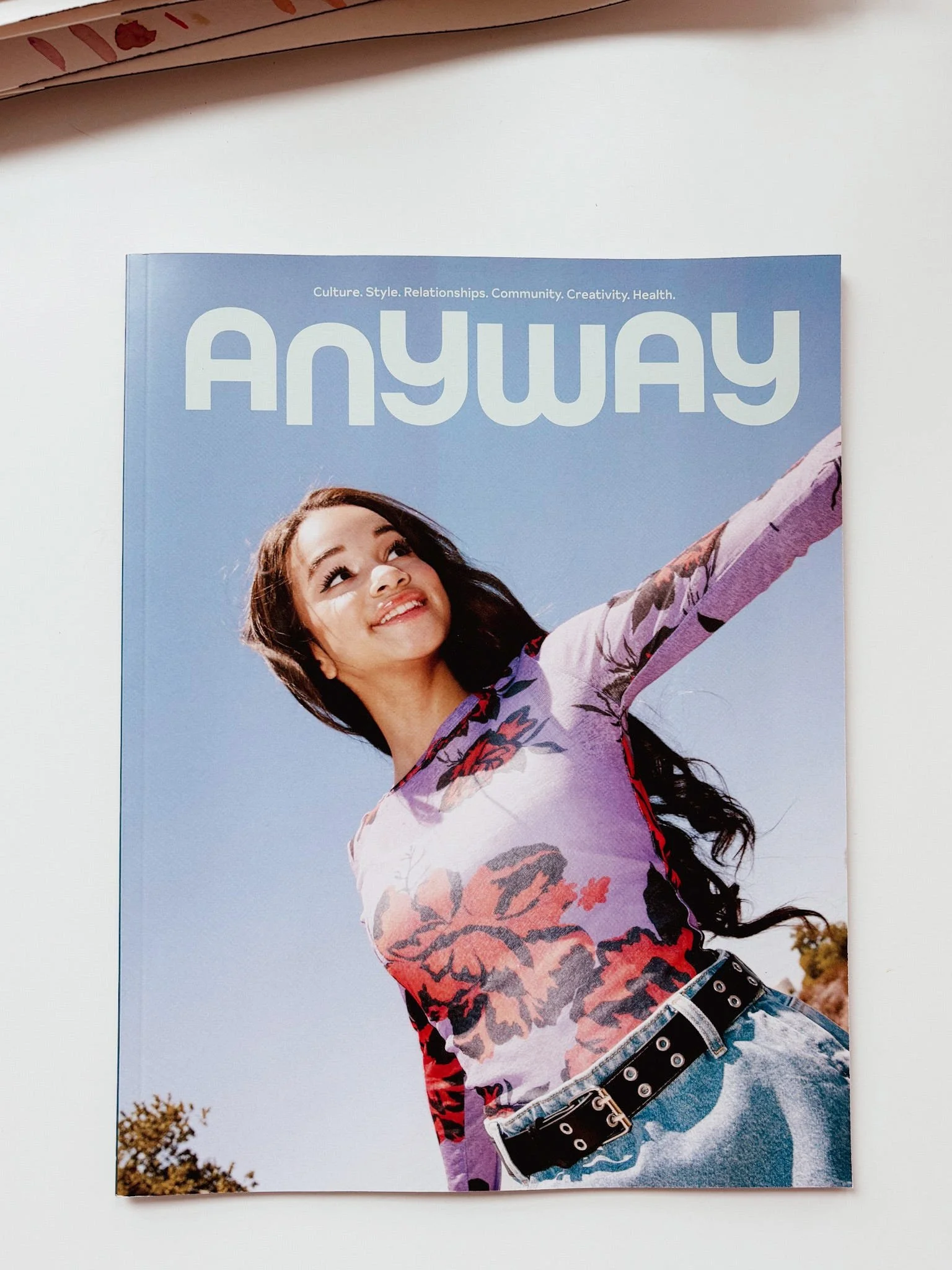
A few months ago, I was invited to write and illustrate a piece on anxiety for NYC-based youth magazine, ANYWAY. The pleasure I receive from writing these pieces is paramount. Nothing can be accomplished or enjoyed in life without a sound mind and grounded heart, so I take this work seriously—and I’m grateful for independent publications that provide guidance that wasn’t as readily available to me as a kid.
In the Know: Anxiety for ANYWAY Magazine (2026)
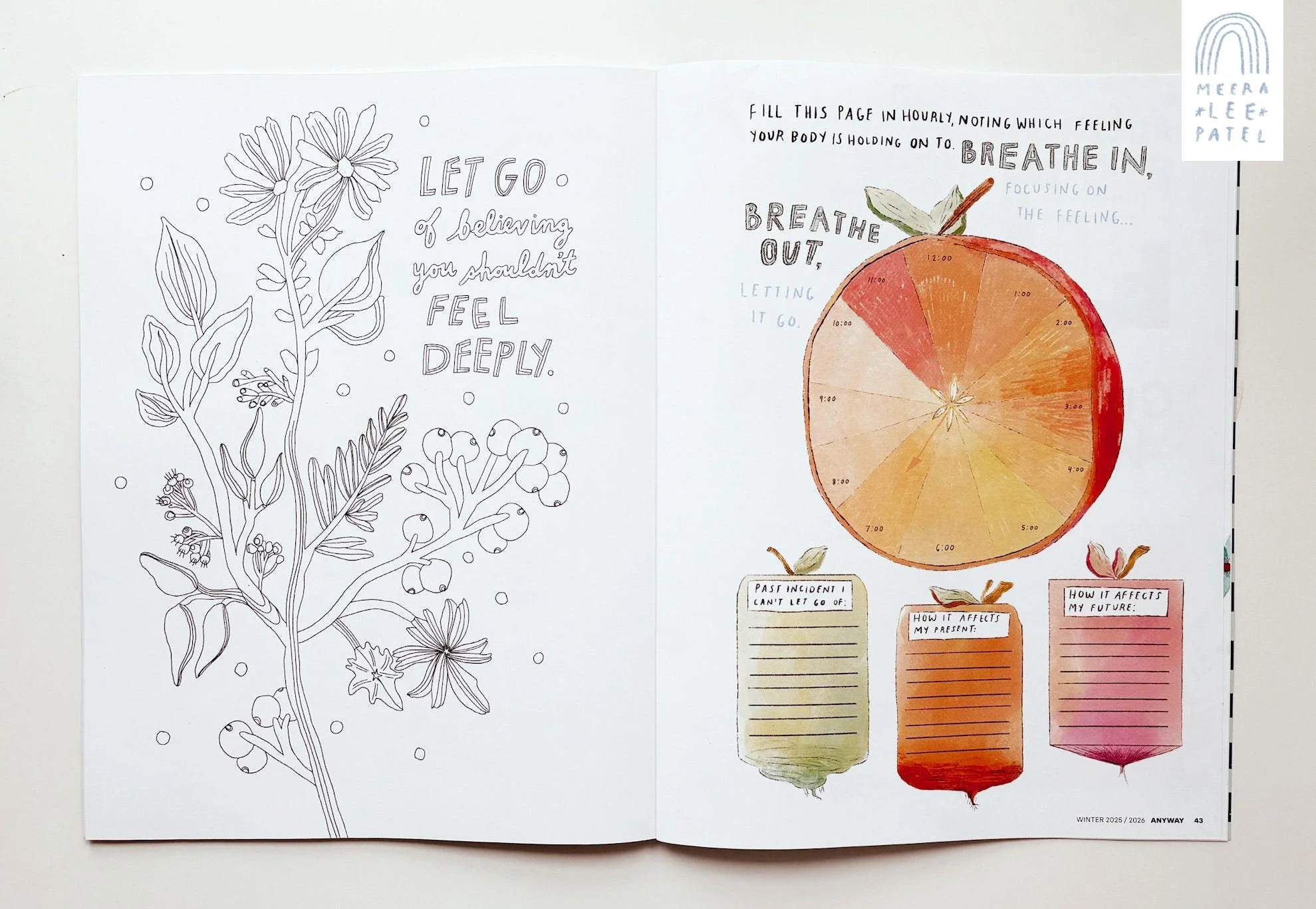
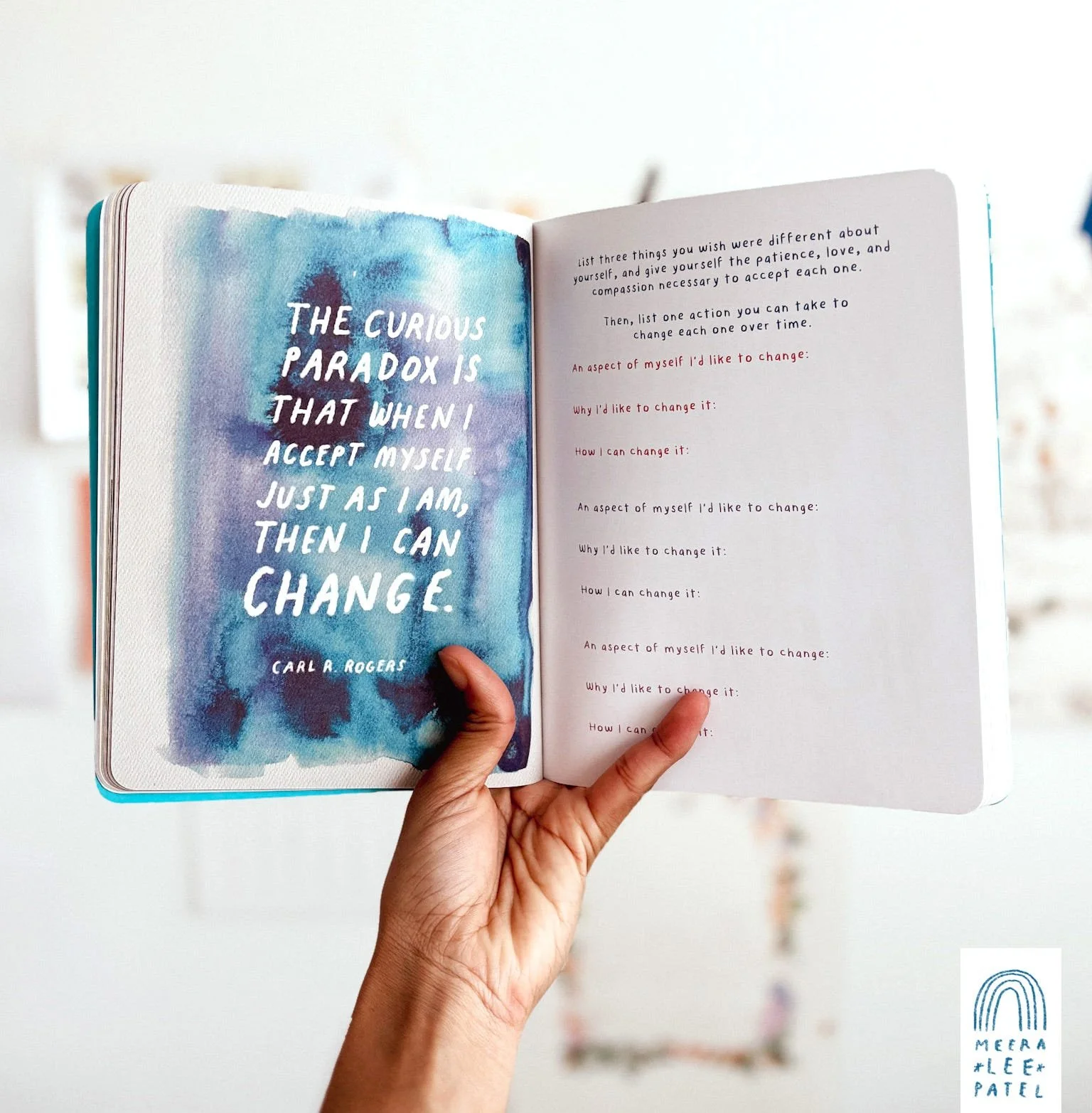
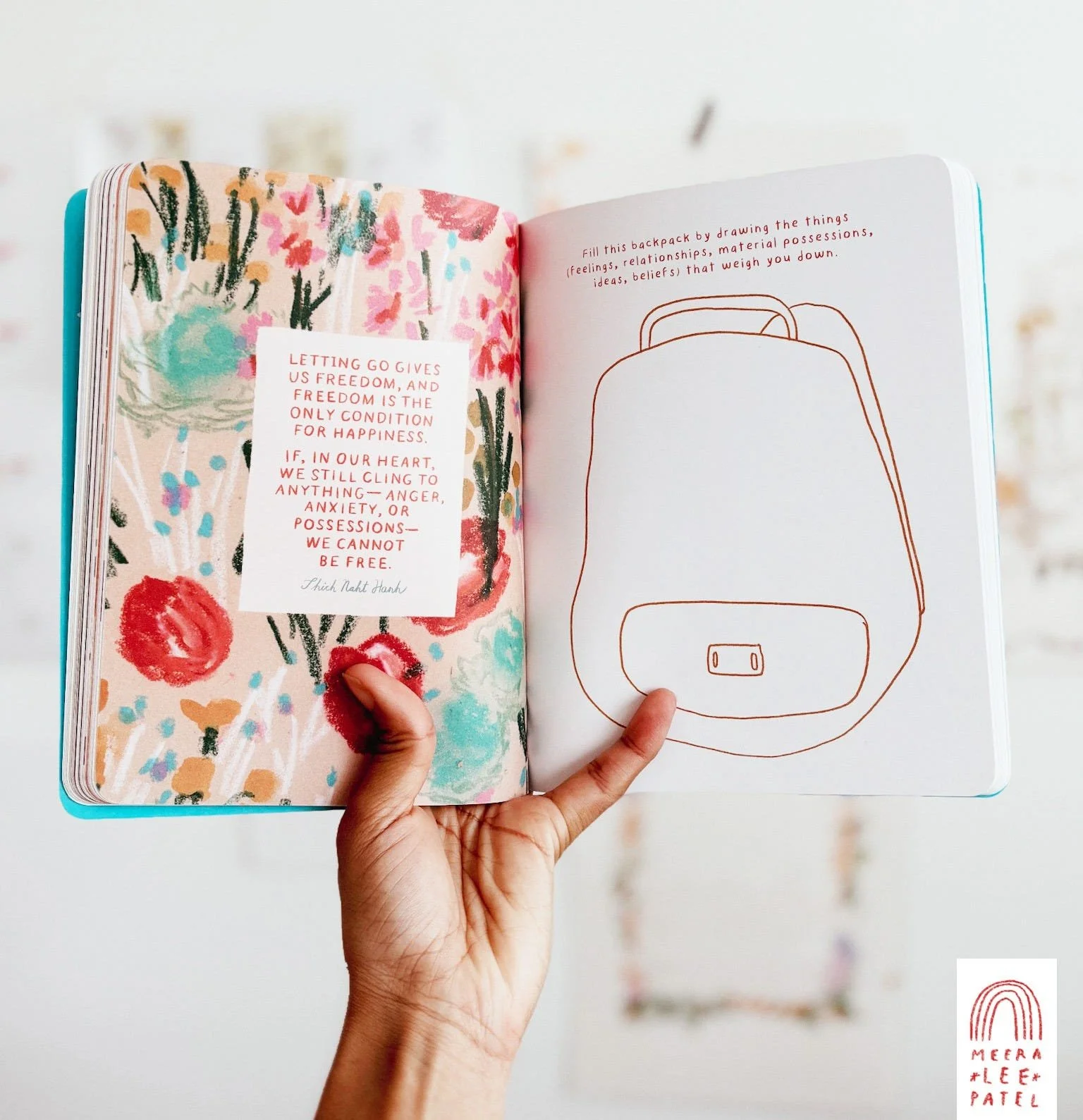
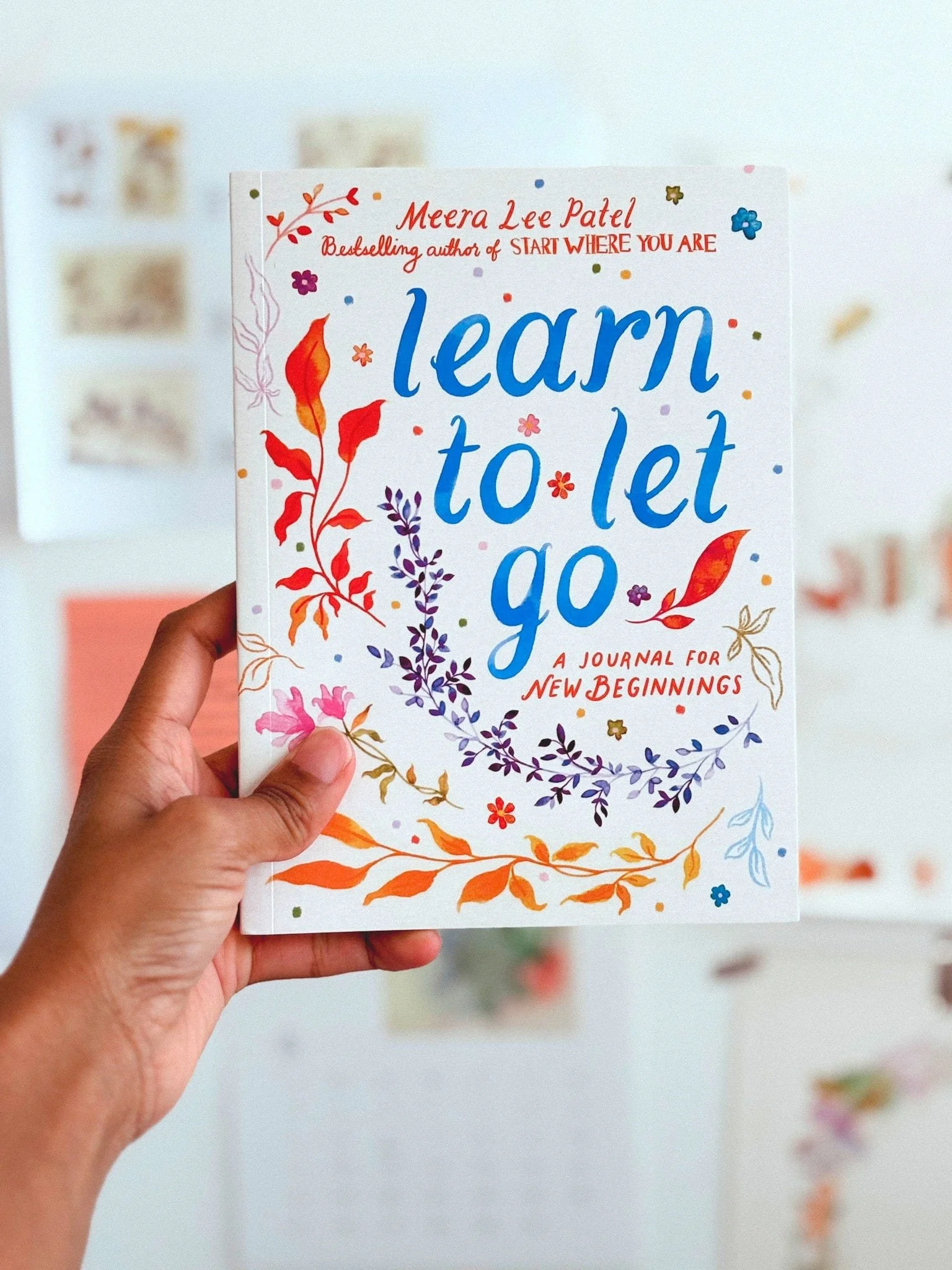
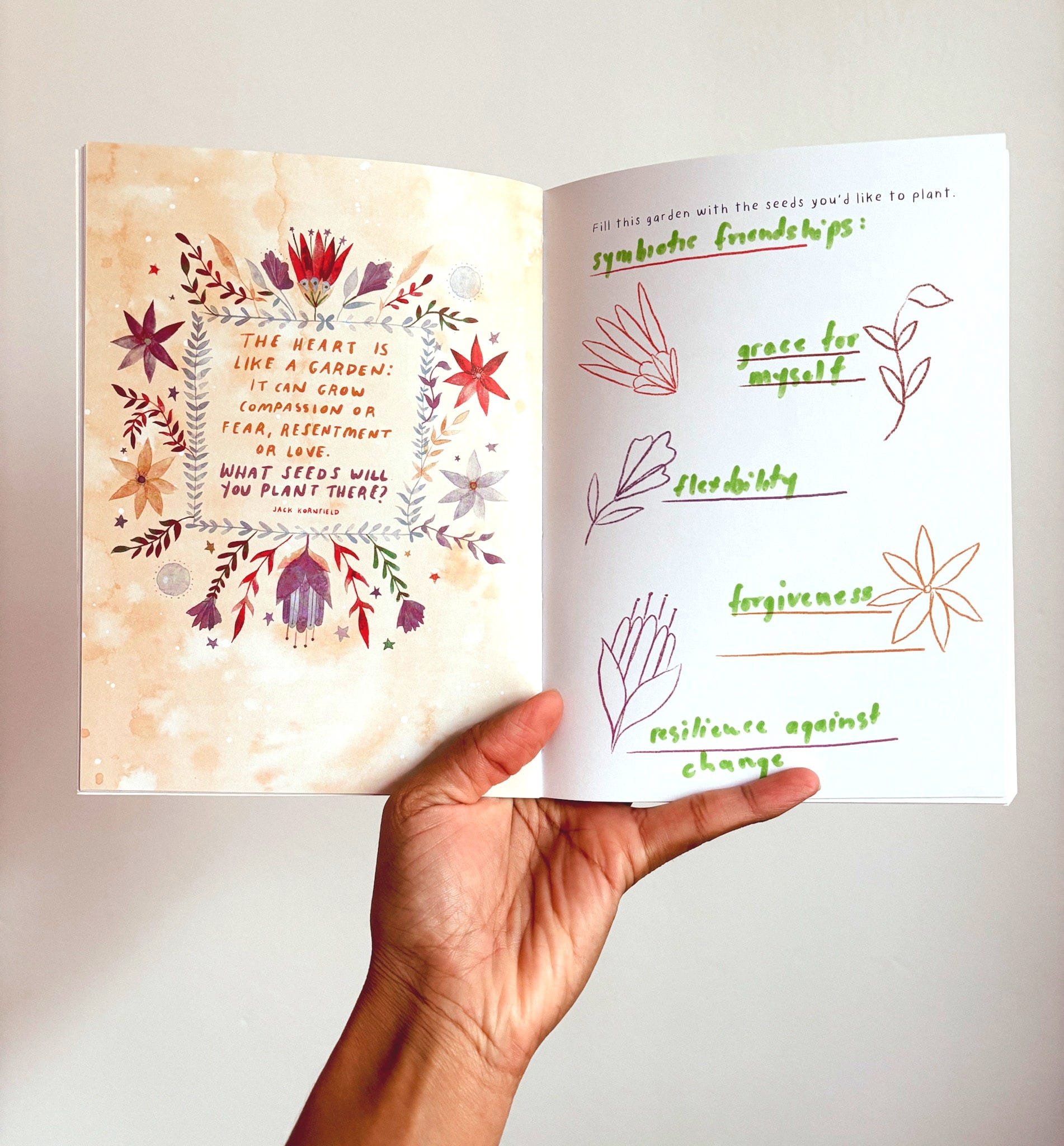
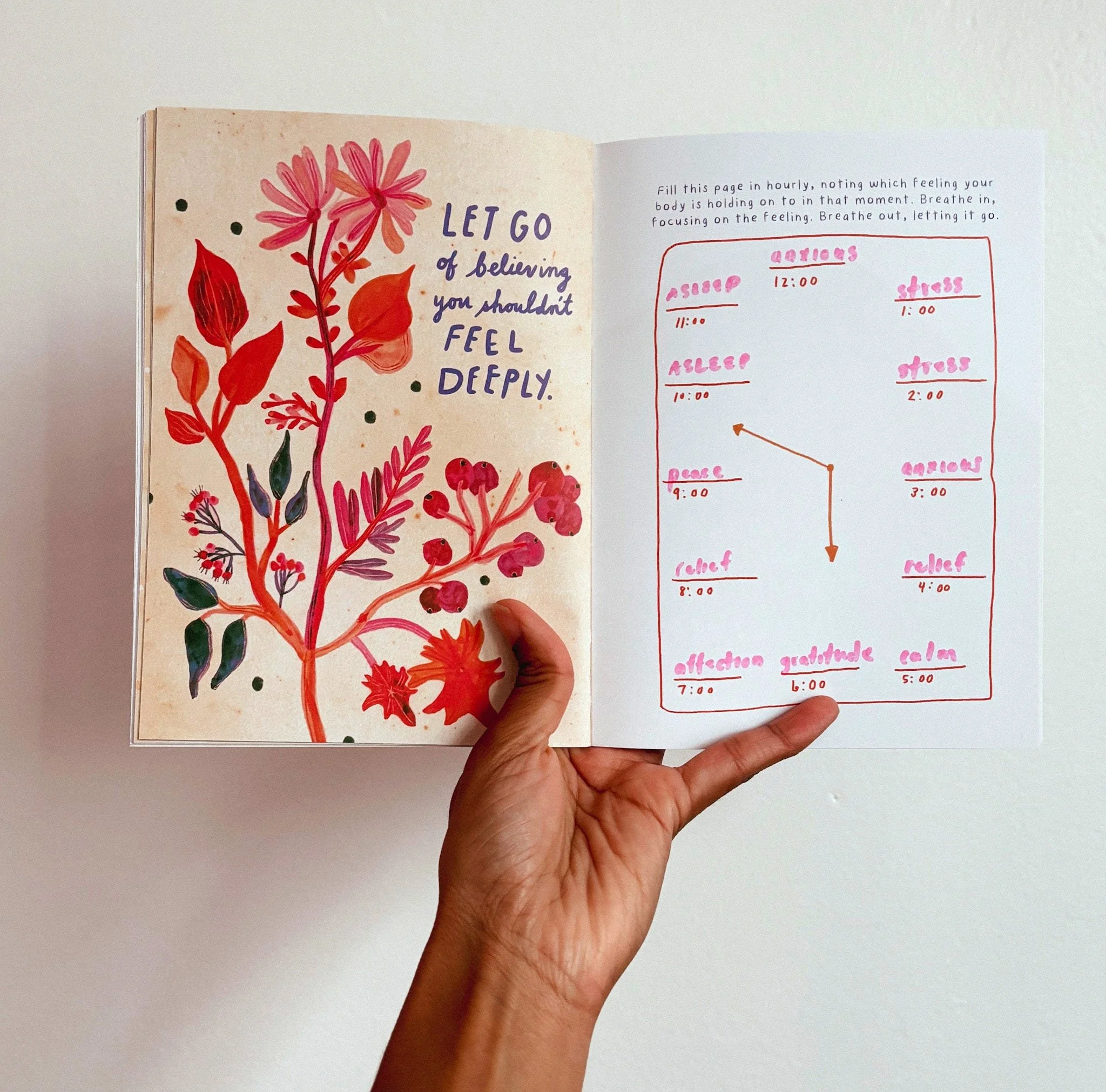
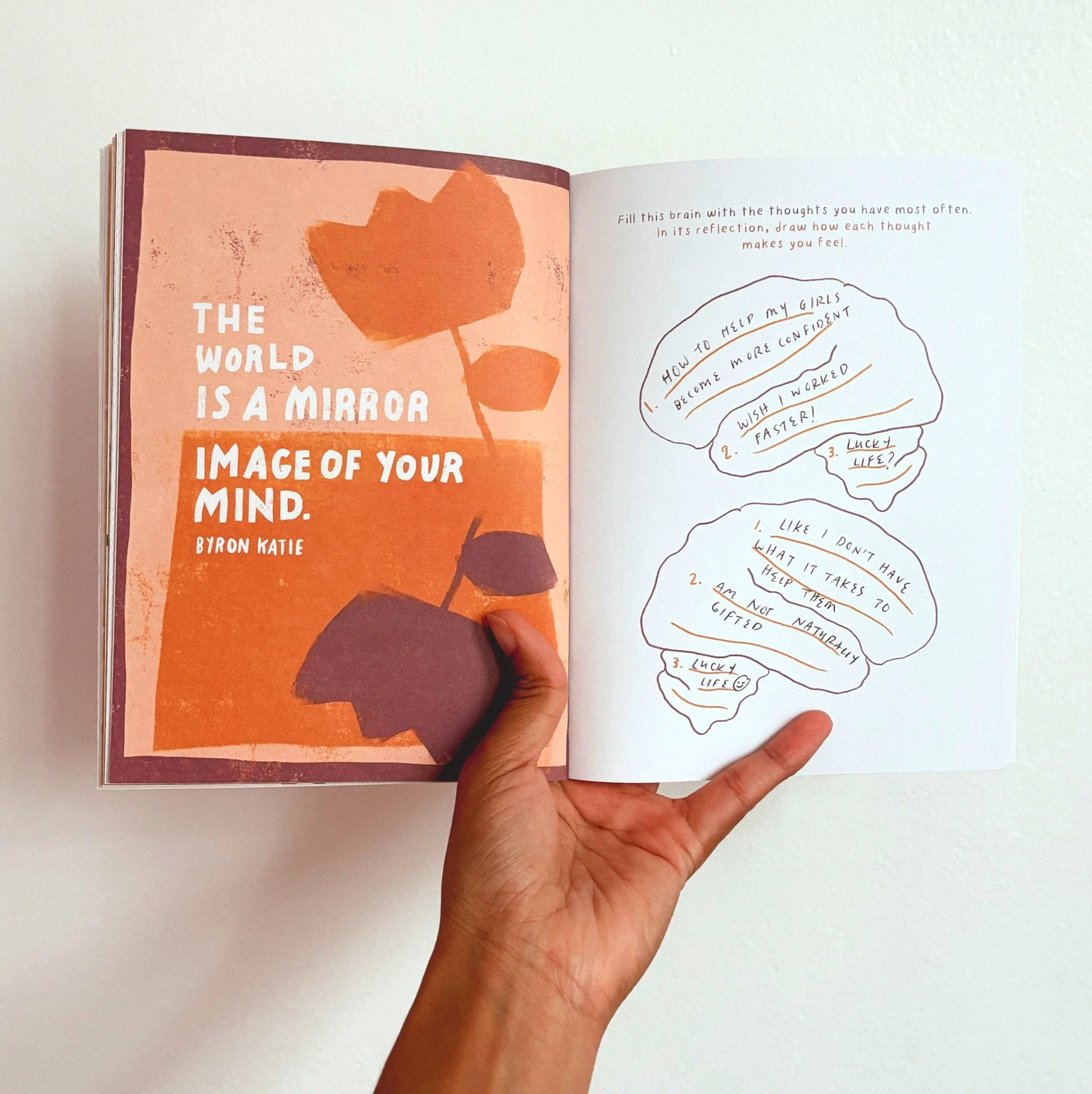
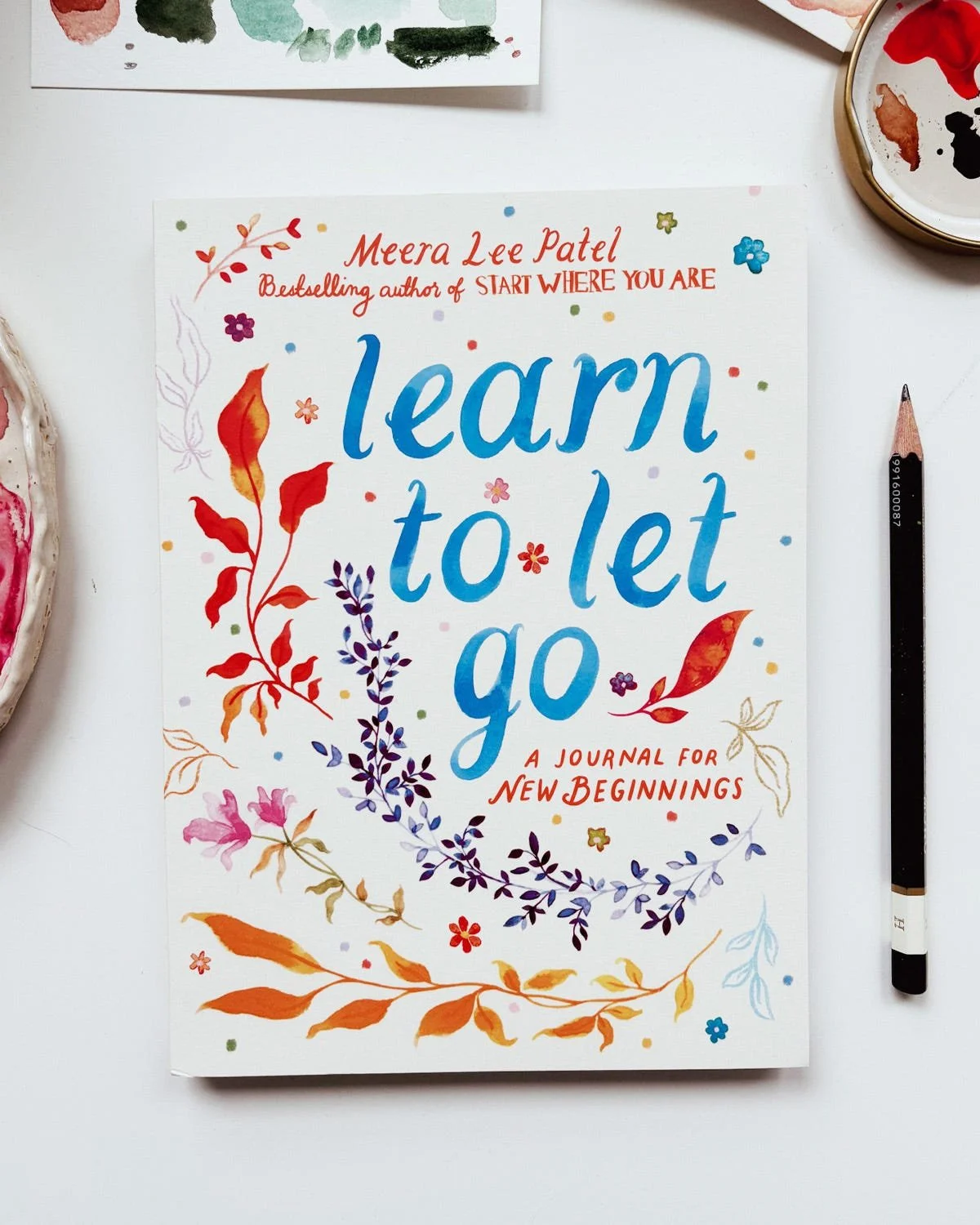
I also created a coloring page and two journal exercises designed to help adolescents calm their bodies, align their breath, and refocus their minds during periods of stress or overwhelm. All three were derived from exercises found in Learn to Let Go: A Journal for New Beginnings.
Coloring and journal pages for ANYWAY Magazine (2026)
Journaling exercise for ANYWAY Magazine (2026)
December 2025/January 2026 issue of ANYWAY Magazine
Thank you to ANYWAY founder Jen for a fun and importance assignment, and for including my work in these pages.
WEDNESDAY
I’m reading Brian Selznick’s illustrated version of Live Oak with Moss, a collection of 12 poems by Walt Whitman about his affection for other men; I am listening to Bad Bunny’s TinyDesk again and again; I love this book of drawings Heidi Griffiths made of her children.
THURSDAY
Studio desk on February 19, 2026 (2026)
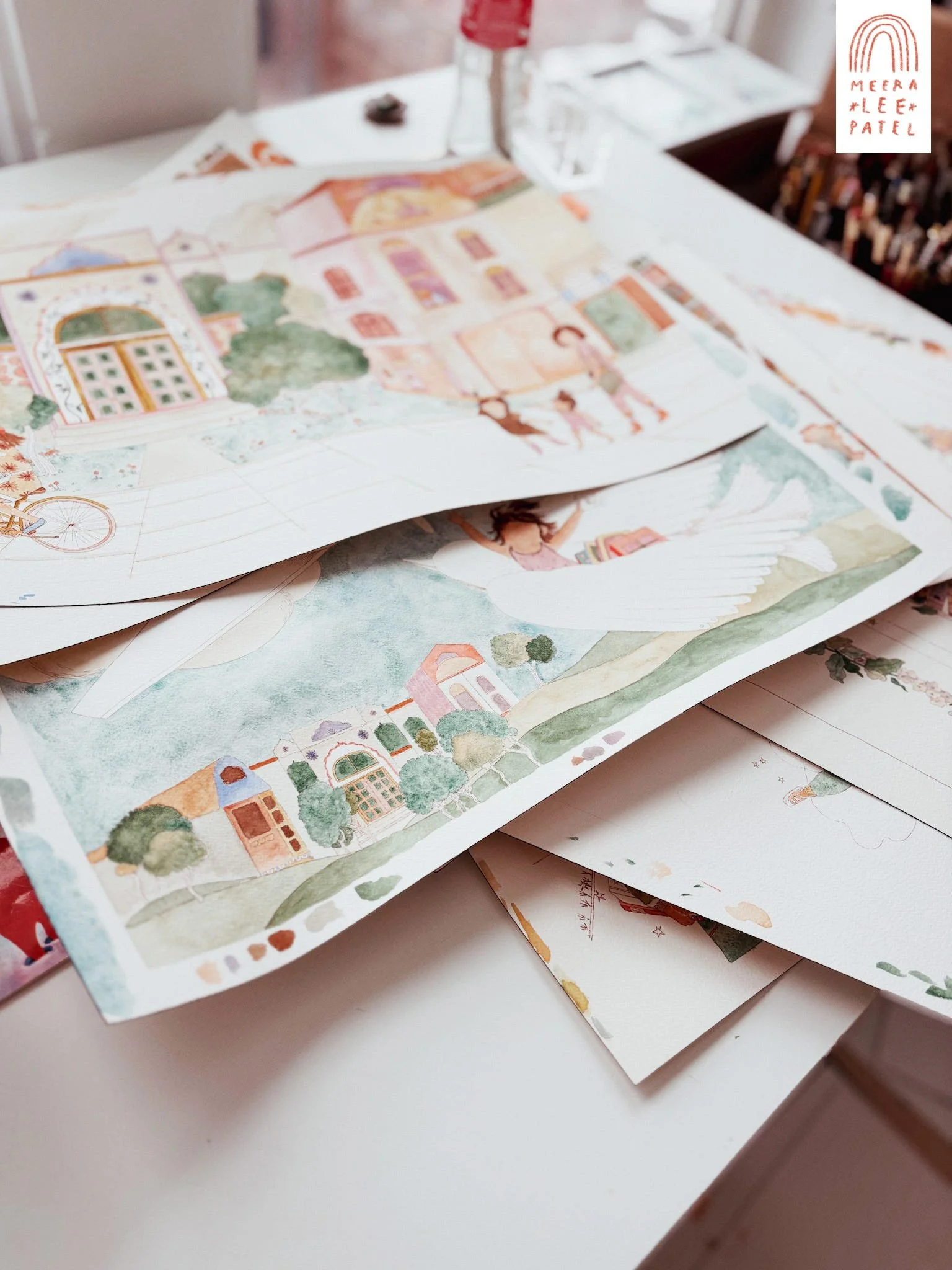
A photo from my studio as I work on wrapping up the interior art for Dear Library. Messy, full of mistakes, and long stretches of quiet work. The scratch scratch scratch of pen against paper; the strange, metallic smell of fresh watercolor paint; the white noise of my space heater; the various audiobooks I dip in and out of, droning on and on. I’ll miss this project when it’s done.
FRIDAY
We would climb the highest dune,
from there to gaze and come down:
the ocean was performing;
we contributed our climb.
Waves leapfrogged and came
straight out of the storm.
What should our gaze mean?
Kit waited for me to decide.
Standing on such a hill,
what would you tell your child?
That was an absolute vista.
Those waves raced far, and cold.
'How far could you swim, Daddy,
in such a storm?'
'As far as was needed,' I said,
and as I talked, I swam.
—With Kit, Age 7, At The Beach by William Stafford
Of all the things you can put in front of your eyes, I’m grateful that my little letter is one of them.
If you’d like to support me, please buy my books. My art prints and line of greeting cards make excellent gifts for yourself or a friend. You can also hire me for your next project—I’d love to work together.
xx,
M
To sign up for my weekly newsletter, Dear Somebody, please subscribe here.
Dear Somebody: More Than Machine.
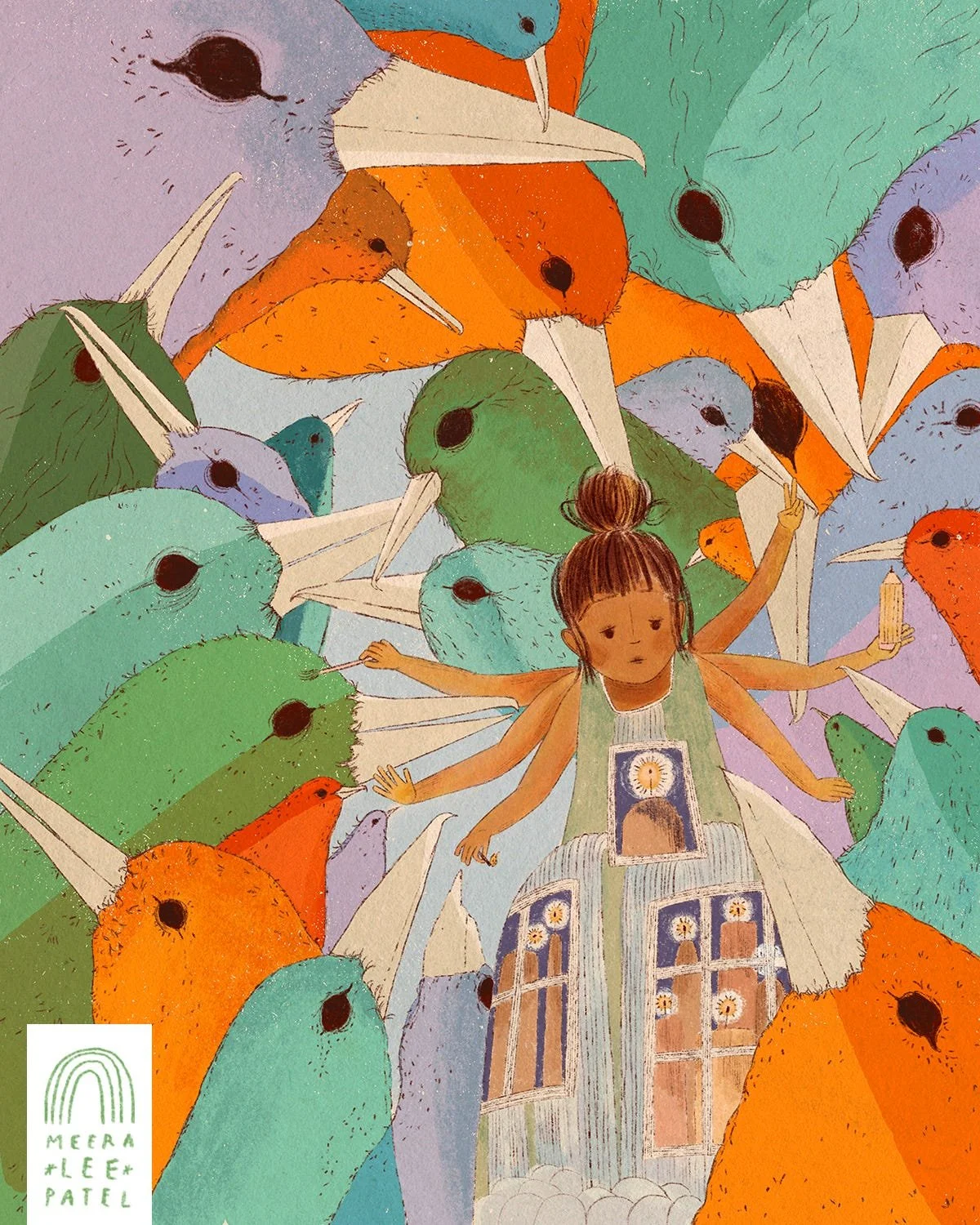
“More Than Machine” for Issue #68 of Uppercase Magazine (2025)
A year from now, here are five things from this week that I'd like to remember:
MONDAY
I sit on Zoom with three friends, all of us hoping to connect after the slog of winter holidays and time away from ourselves. I look forward to our monthly calls—we are all four South Asian, all four book-makers, all four interested in bringing our identities to the forefront of an industry that, with all of its promise, still resists a bend towards change.
One friend lives in Minneapolis. Her life is grocery deliveries and running escort for those too frightened to leave their homes; her life is organizing and comforting her community; her life is checking social media to see where it’s safe to go; her life is trying not to fall prey to the horrors of social media; her life is carrying her papers on her person, though she is a US citizen, though she knows her papers may not spare her. When you look eye to eye into a gun, it’s a roll of the dice. How generous or angry or sad is the gunman today?
Another friend lost a parent swiftly, unexpectedly, during a personal season reserved for joy. Our hearts explode with the conflict of emotion. Our faces contort with grief while we listen to her story. I feel tiny muscles in my face move involuntarily. For hours, we listen. We speak sparingly, holding space for each other to exist in this liminal space between the reality of our lives and the memory this call will soon be. The tears fall rapidly.
I cry for two days after. I am not unfamiliar with death. It is not hidden in our culture: We hold the bodies close, we help the spirit go on. Still, the sadness I feel seems to double in size. The anger burns me up inside. I call my parents and ask them to explain Hindu death rituals to me, why the dead are cared for more lovingly than those who are still alive. I can’t stop thinking about violence—in life, and death, and then again while we escort the dead to the afterlife. Why I am so shaken? For a few days, I interrogate myself for my weakness. Why am I so affected by another person’s pain? Why can’t I let it go? How will I ever handle this grief when it is my own?
It’s a few weeks later now. My mind is beginning to sing, rather than scold, as I have instructed it to do. I do not feel shame for my sensitivity; rather, I recognize the barbaric nature of having ever asked myself to detach from another person’s grief. From a community’s grief. From our country’s grief. My children are five and two. Already, they feel the discomfort of observing pain in each other’s eyes. They ask questions. They move towards each other. They try to help. Though they feel discomfort, they do not avert their eyes. They do not look away.
I stretch and check the walls of my body, the home that houses this mind. I exercise to keep my head on straight. I draw so that I can care for my children and husband. I sleep so the anger doesn’t burn me up from inside. I call my representatives. I donate to the cause. I chisel away our resistance towards change.
T opens the back door to collect N, and the cold air soars into me like a stone. It is six degrees this morning. I shake the cold off and head upstairs to write, to call, to help, to do whatever I can to keep the lights on inside this home of mine.
TUESDAY
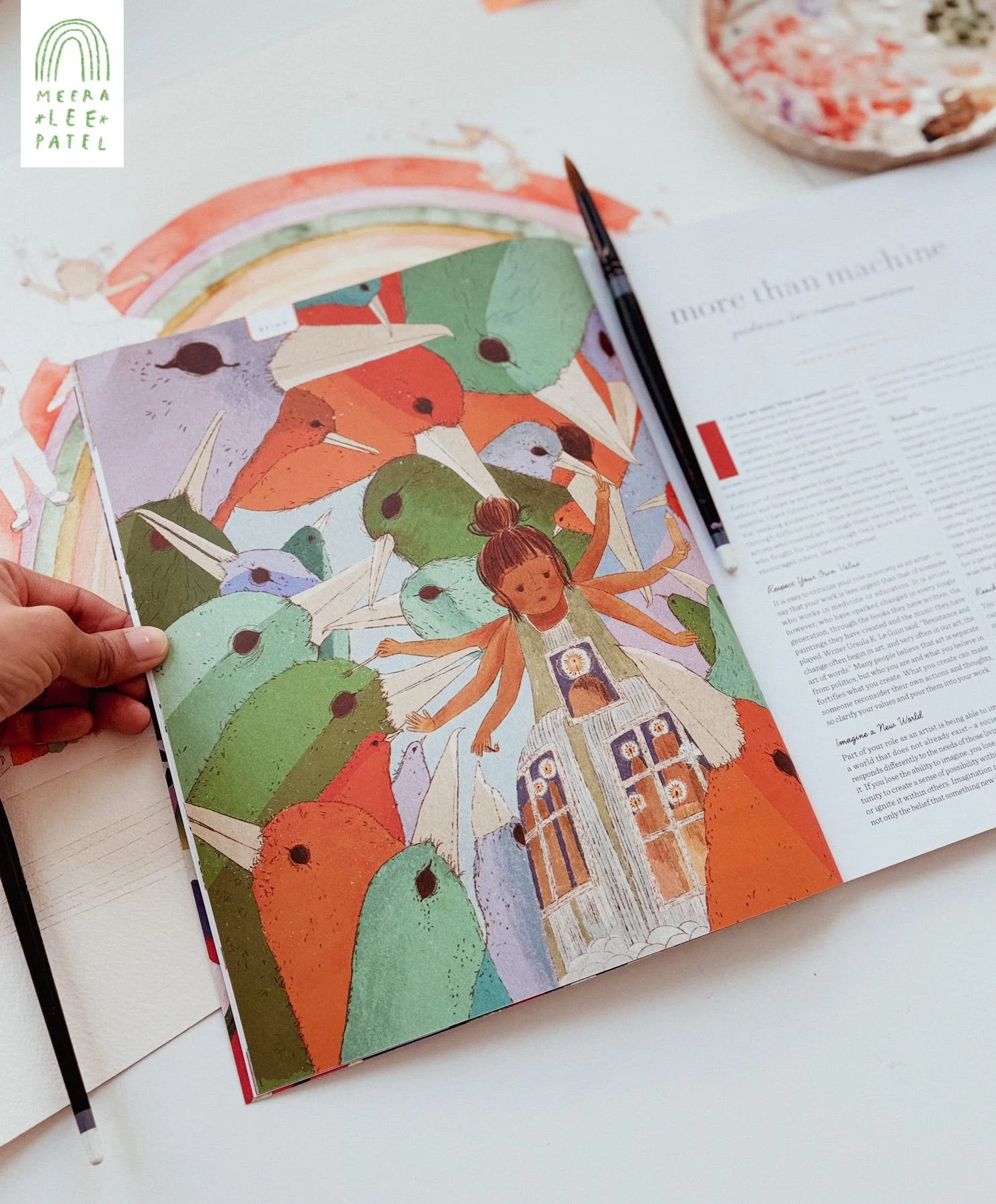
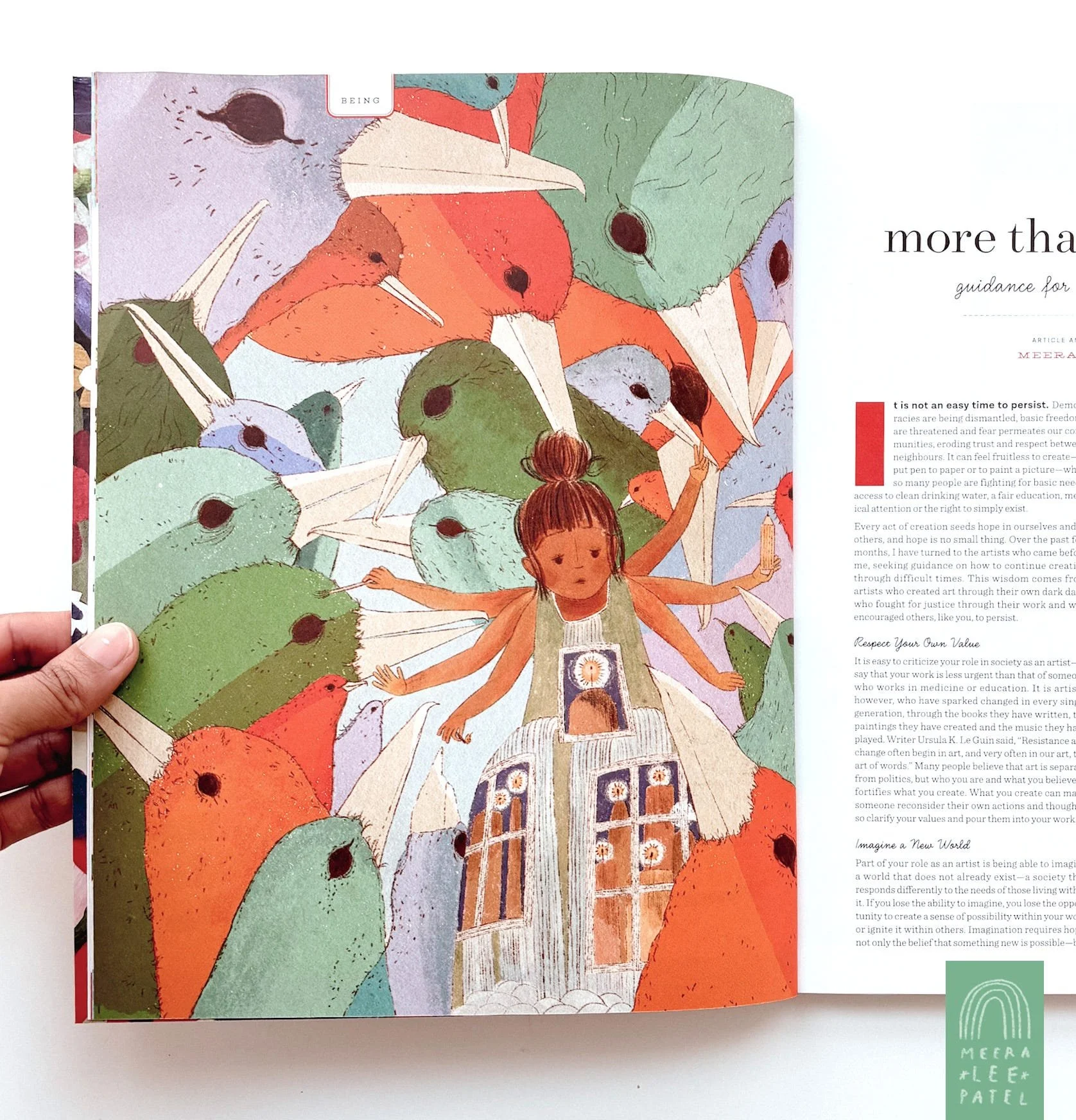
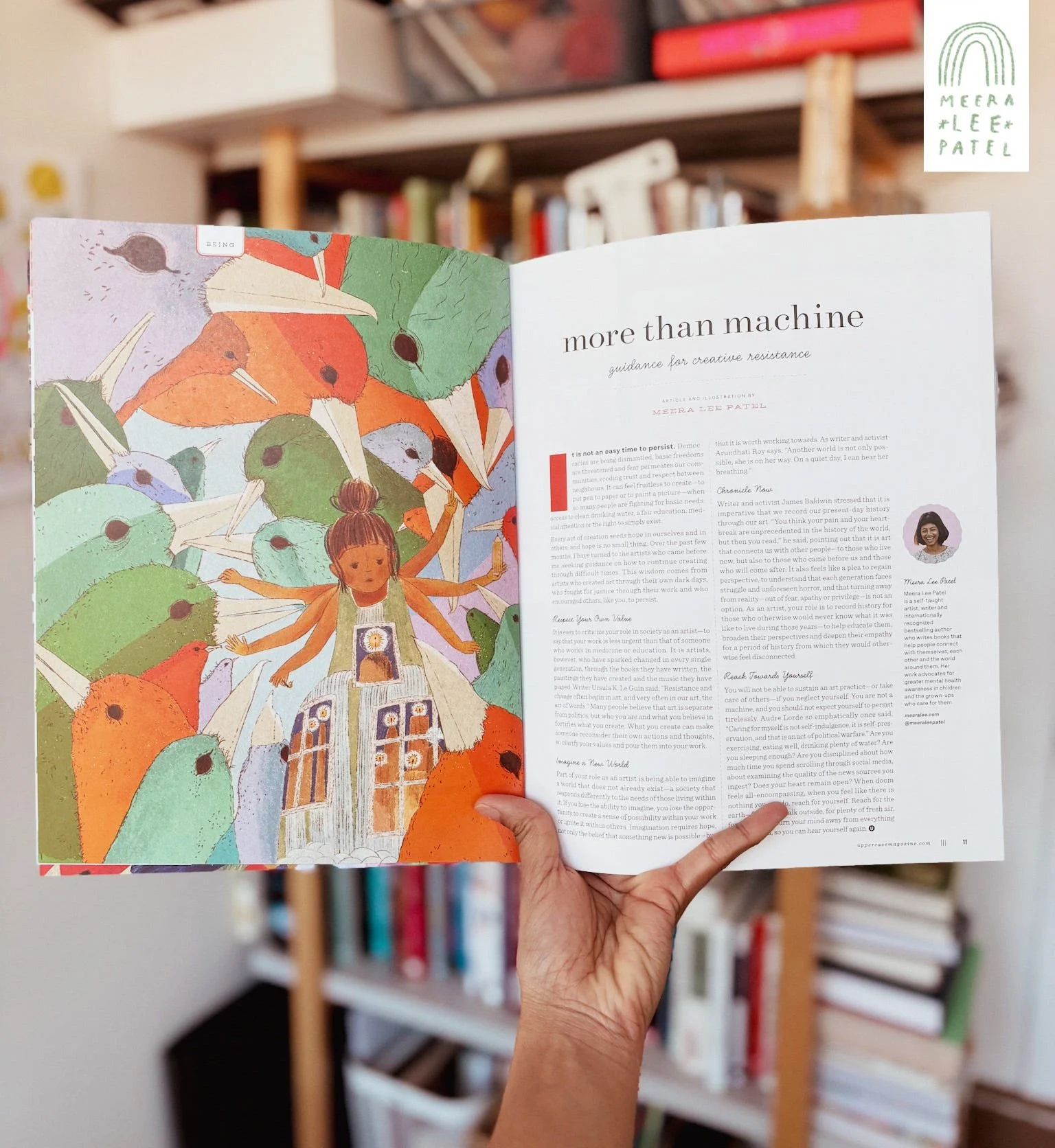
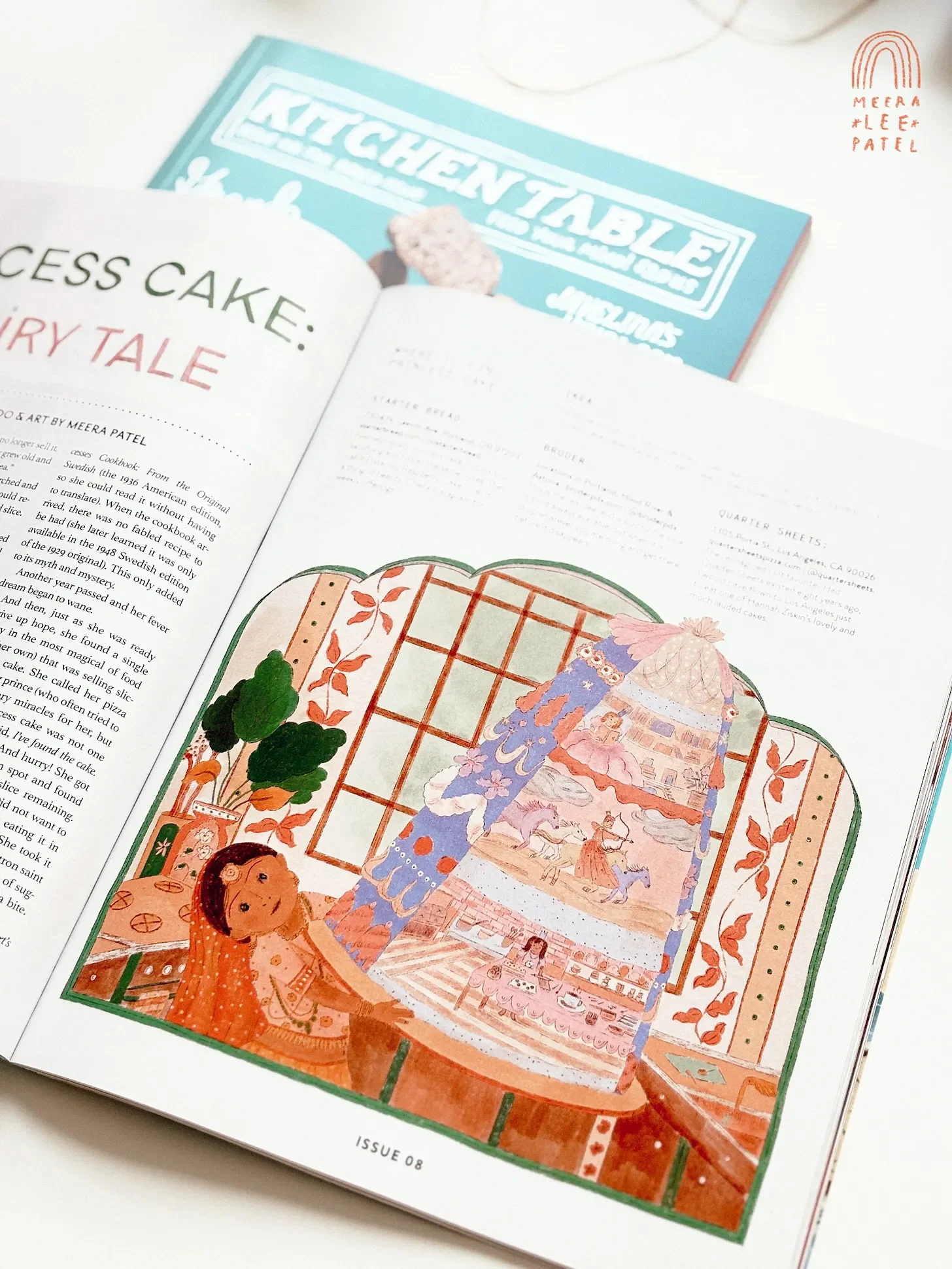
A photo of my essay and illustration, “More Than Machine” for Issue #68 of Uppercase Magazine (2025)
I wrote about making art when it feels hopeless to do for my column, Being, in the current issue of Uppercase Magazine:
“It is easy to criticize your role in society as an artist—to say that your work is less urgent than that of someone who works in medicine or education. It is artists, however, who have sparked change in every single generation, through the books they have written, the paintings they have created and the music they have played. Writer Ursula K. Le Guin said, “Resistance and change often begin in art, and very often in our art, the art of words.” Many people believe that art is separate from politics, but who you are and what you believe in fortifies what you create. What you create can make someone reconsider their own actions and thoughts, so clarify your values and pour them into your work.
Part of your role as an artist is being able to imagine a world that does not already exist—a society that responds differently to the needs of those living within it. If you lose the ability to imagine, you lose the opportunity to create a sense of possibility within your work or ignite it within others. Imagination requires hope, not only the belief that something new is possible—but that it is worth working towards.”
A photo of my illustration and essay, “More Than Machine”, for Issue #68 of Uppercase Magazine (2025)
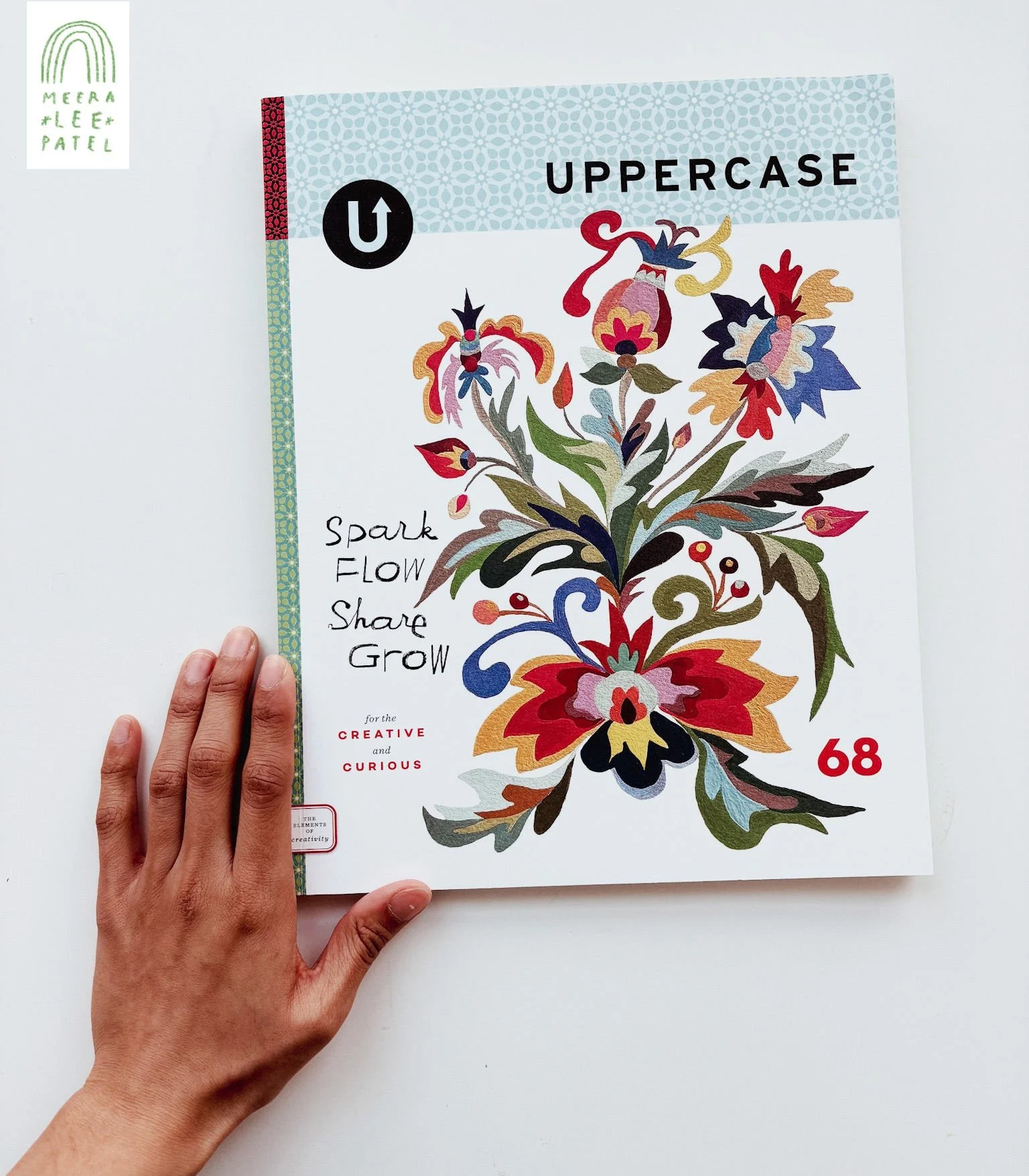
Issue #68 of Uppercase Magazine (2025)
You can read the entire essay, More Than Machine: Guidance for Creative Resistance in Issue 68 of Uppercase Magazine.
P.S. As for resistance on a more personal level, I wrote about how creating this illustration helped me understand and process my own life in last week’s letter.
WEDNESDAY
Monarca offers training in becoming a legal observer; Publishing for Minnesota is offering original art, manuscript crits, and business resources and more; Immigrant Rapid Response Fund from the Women’s Foundation of Minnesota will direct your money to where it’s needed most. Stand with Minnesota. Call your representatives.
THURSDAY
“To draw yourself back into being” by Charlotte Ager.
FRIDAY
All goes back to the earth,
and so I do not desire
pride of excess or power,
but the contentments made
by men who have had little:
the fisherman’s silence
receiving the river’s grace,
the gardener’s musing on rows.
I lack the peace of simple things.
I am never wholly in place.
I find no peace or grace.
We sell the world to buy fire,
our way lighted by burning men,
and that has bent my mind
and made me think of darkness
and wish for the dumb life of roots.
—The Want of Peace by Wendell Berry
Of all the things you can put in front of your eyes, I’m grateful that my little letter is one of them.
If you’d like to support me, please buy my books. My art prints and line of greeting cards make excellent gifts for yourself or a friend. You can also hire me for your next project—I’d love to work together.
xx,
M
To sign up for my weekly newsletter, Dear Somebody, please subscribe here.
Dear Somebody: New beginnings.
A completed exercise from LEARN TO LET GO: A JOURNAL FOR NEW BEGINNINGS (2026)
A year from now, here are five things from this week that I'd like to remember:
MONDAY
This year, I didn’t do any sort of round-up: no list of achievements to close out 2025, no more/less lists to begin 2026, no resolutions, no catalog of what went right or wrong. This is a break from my usual tradition: I love taking inventory, assessing which path led to where, considering how to build a different future than the one hurtling straight towards me.
Despite all of the good reflection does, I feel tired of, and from, looking back. I want to look forward, I only want the light of what can be…to be.
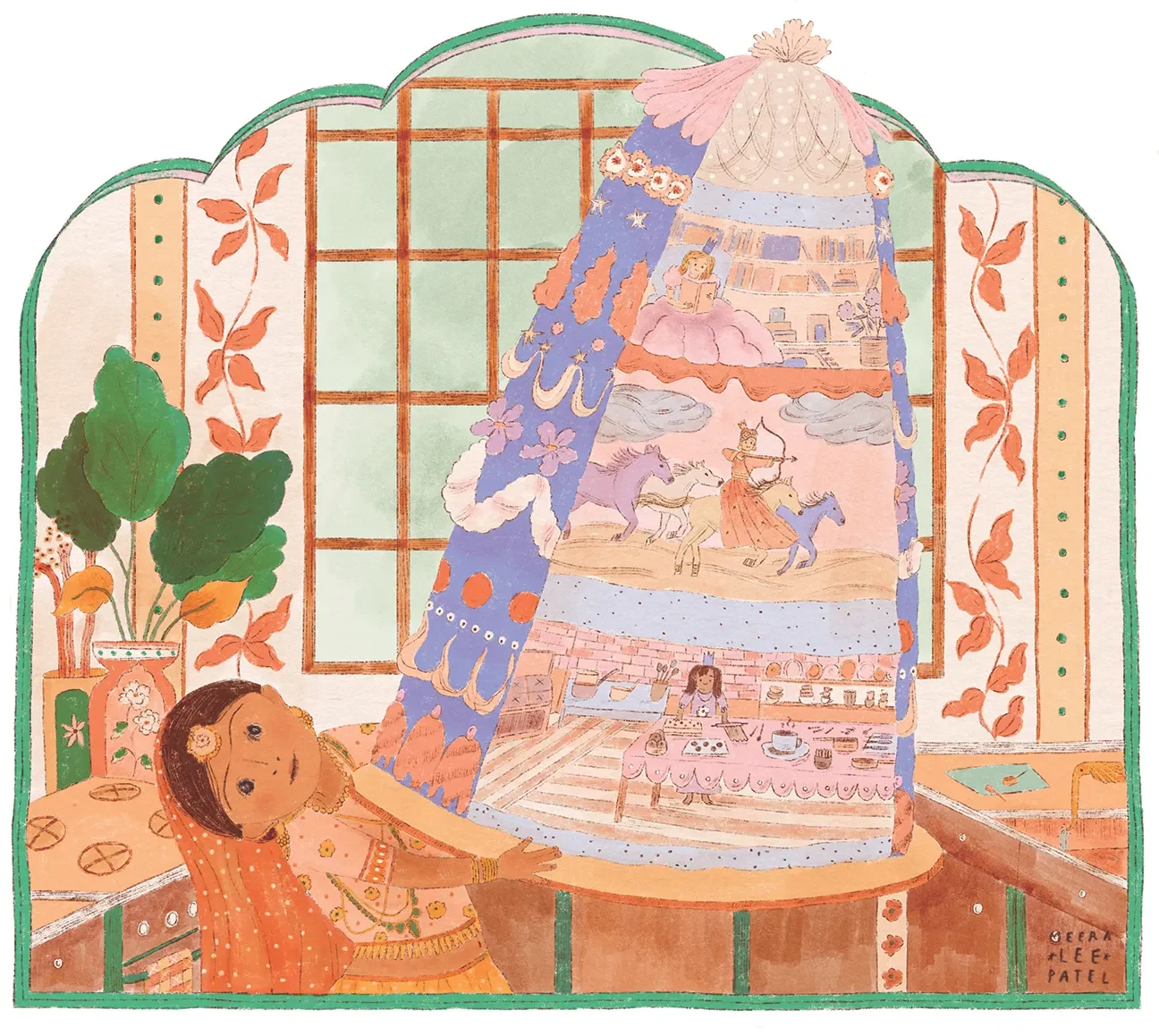
A few days ago I received Issue #68 of Uppercase Magazine in the mail. I love writing and illustrating for this magazine, and year after year, I feel lucky that I get to. When I opened the pages, a smile rang in me. This illustration is one of my favorite drawings I made last year, to accompany an essay I wrote titled More Than Machine: Guidance for Creative Resistance. It might not be the best thing I made, but it is the most meaningful because it is proof of self-doubt and personal growth. It is a sharp claw towards hard change; it is finding a light in dark times. I am deeply connected to it, and by making it, I processed tough experiences and saw myself more clearly.
“More Than Machine” for Issue #68 of Uppercase Magazine (2025)
I love that art can help us chronicle, understand, and heal. For me, it is a medicine I take as often as I can. It requires no skill or prescription, and asks nothing of us other than our willingness to take a look inside. For this, I am grateful.
TUESDAY
This week, through Nicole Cardoza’s newsletter REIMAGINED, I learned that in 1980, Stevie Wonder wrote Happy Birthday to promote the establishing of Martin Luther King Jr. Day as a federal holiday. The song became the anthem of the movement led by Coretta Scott King, and Wonder joined her at rallies across the nation.
WEDNESDAY
Sometimes I forget the magic of it all.
My mind is on the pink soccer jersey we’re searching for. While T tries them on, I keep the girls occupied, pushing the red Target cart down the shiny white aisles. No, we have enough toys, I say; No, we have enough clothes, I say; No, no no. The girls are whiny. I am, too.
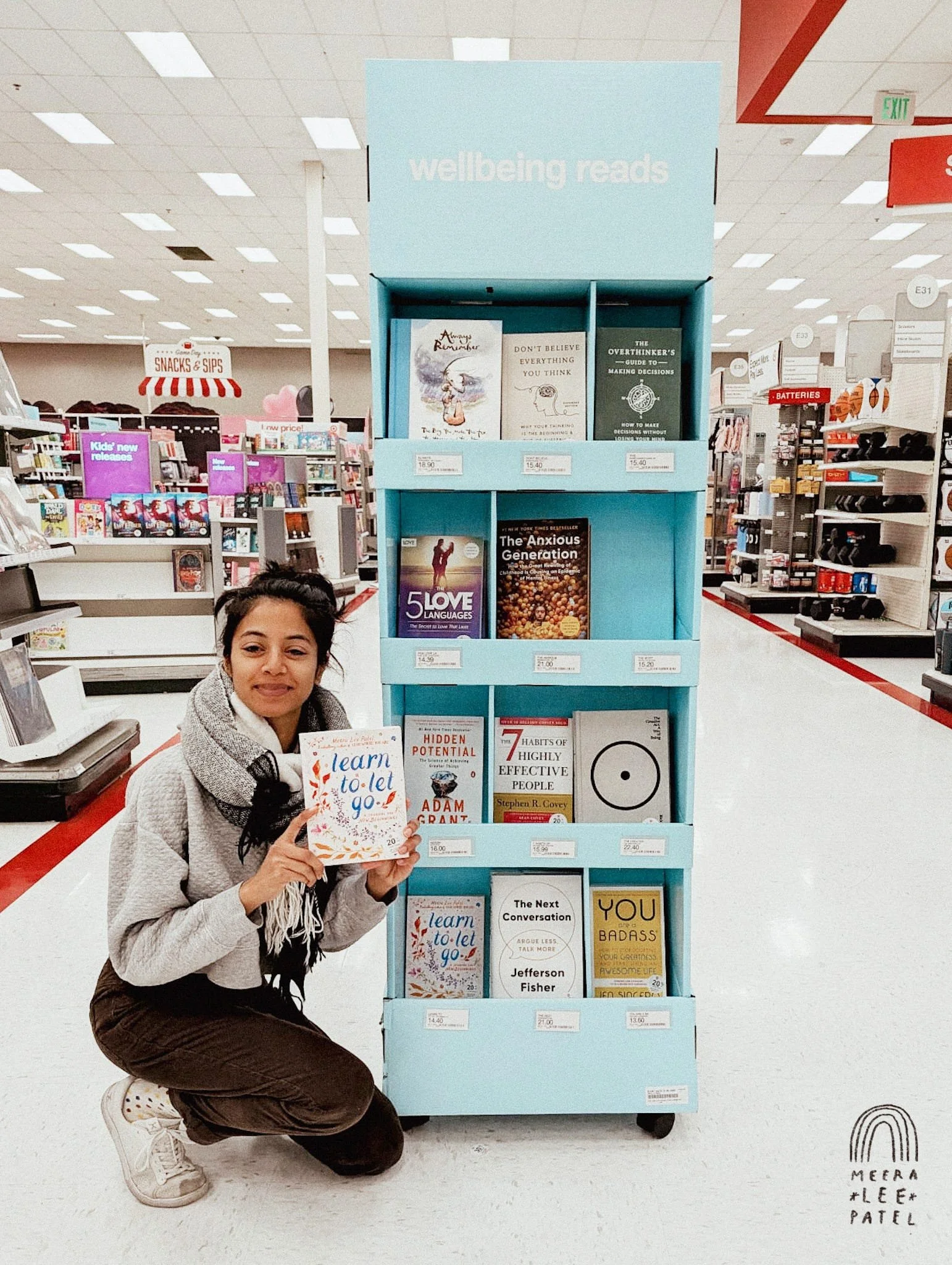
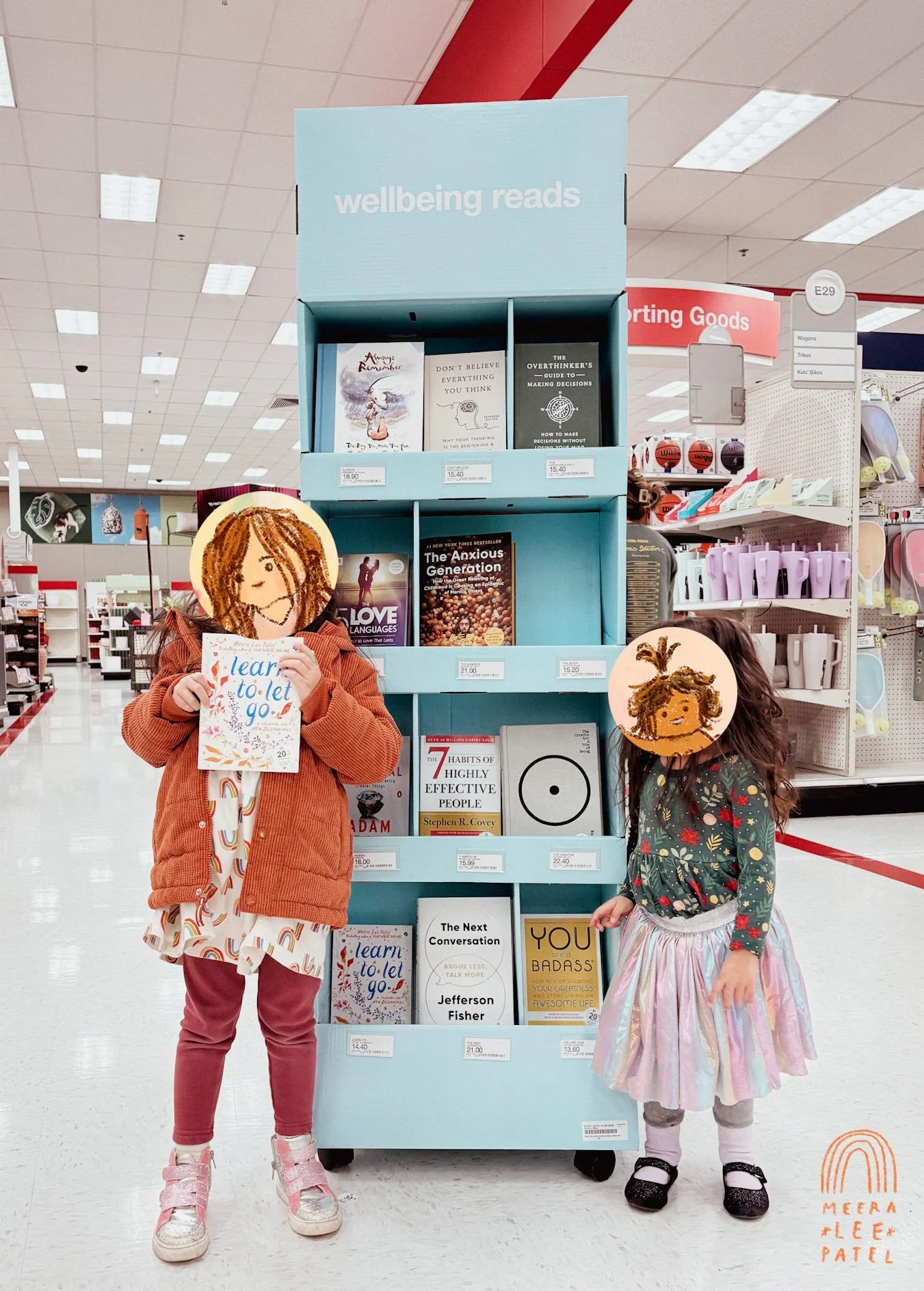
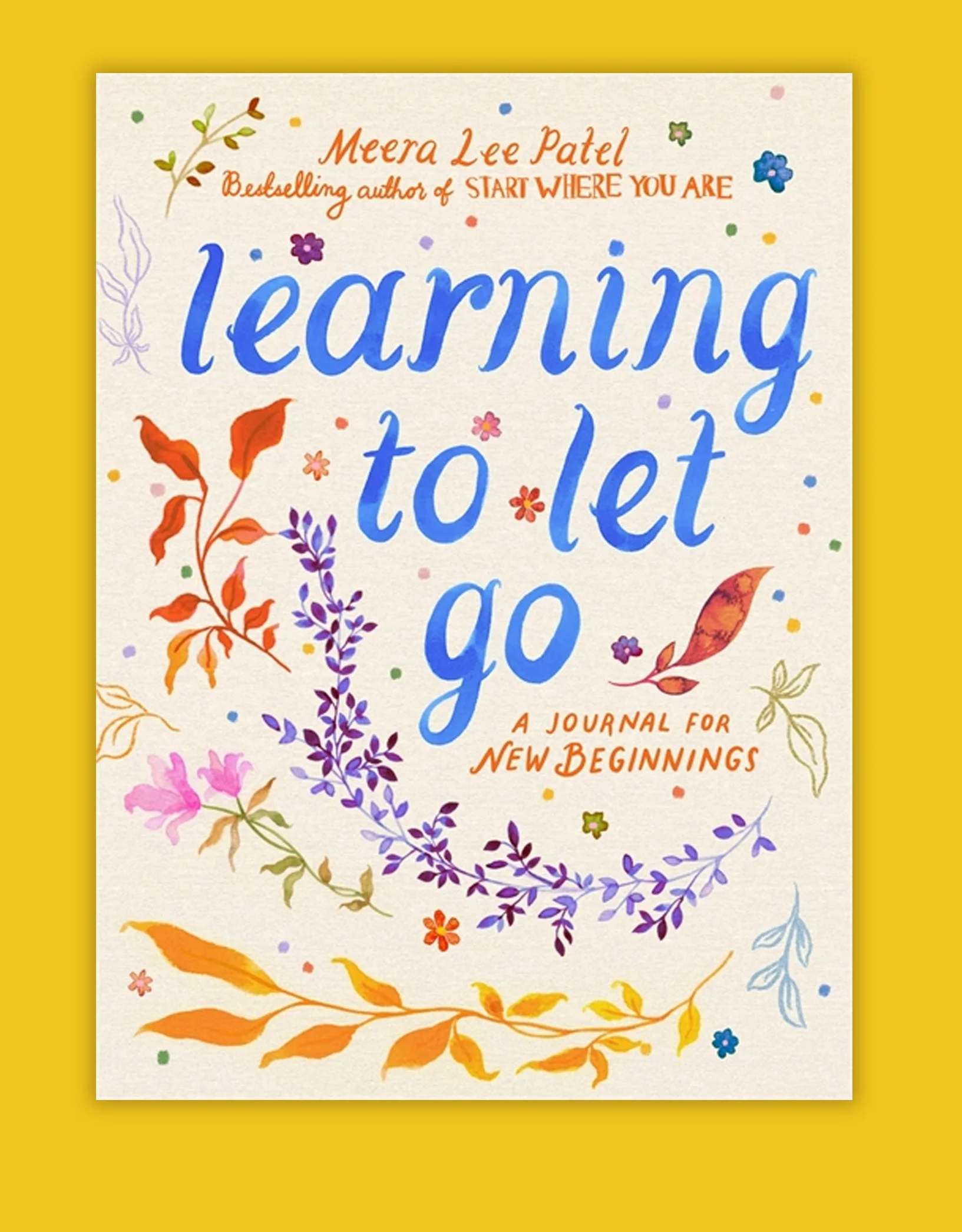
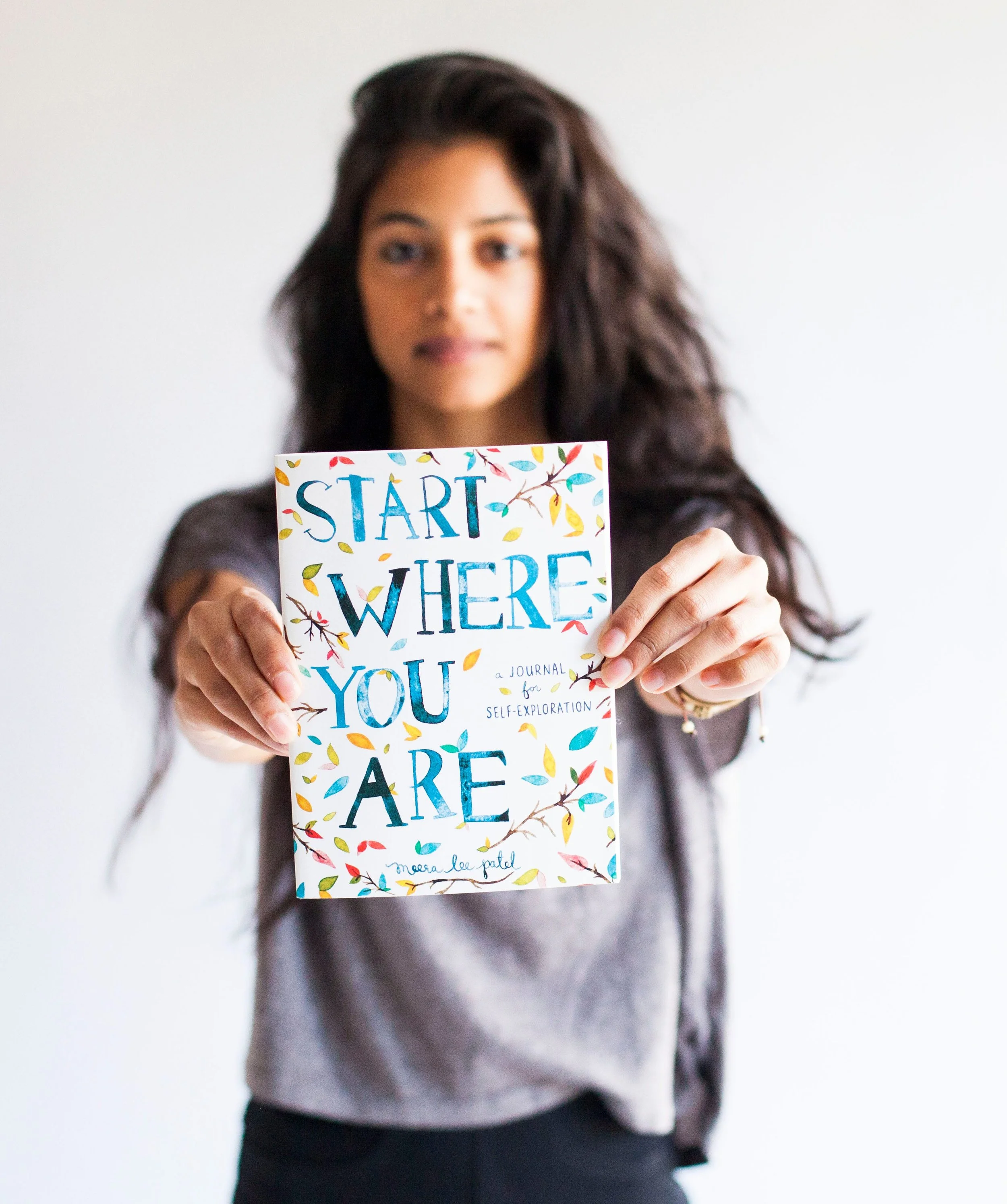
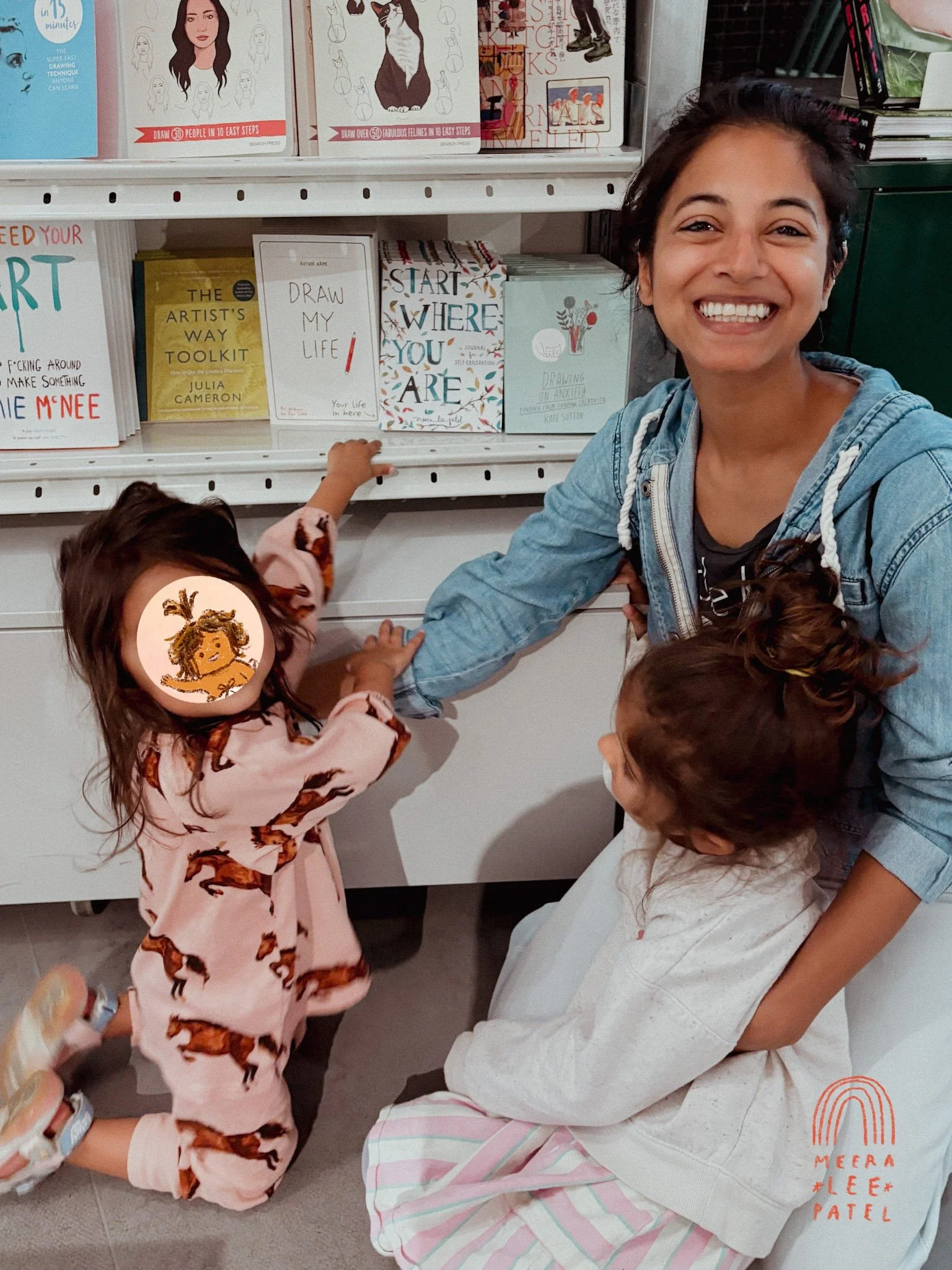
We turn the corner and there it is: the new Wellbeing Reads display, and there I am—or a little part of me, at least—on the bottom left row. I beam, wishing I looked more human. The girls squeal and pick up copies, they attempt to take selfies. T arrives a few minutes later—nothing having fit correctly—and takes photos of a wintering me, and then a few more with the girls.
Me kneeling in front of Target’s WELLBEING READS display, holding a copy of LEARN TO LET GO (2026)
The Ladies in front of Target’s WELLBEING READS display; N holding a copy of LEARN TO LET GO (2026)
I sit at my desk for hours on end, painting or writing or throwing drafts in the trash. The days turn into weeks, then months. The years peel by. A book comes into the world years after I’ve first sat down to write it, years after I’ve learned enough to put the words to paper. A book comes out into the world and slowly, caught up in the details of everyday life, I forget the magic of it all.
A book comes out into the world, and months later, as I shop with my small family, we run right into it—and I remember, once again, how magical it is to make something that someone else can hold. To make something that my own children can hold, and read, and one day write in.
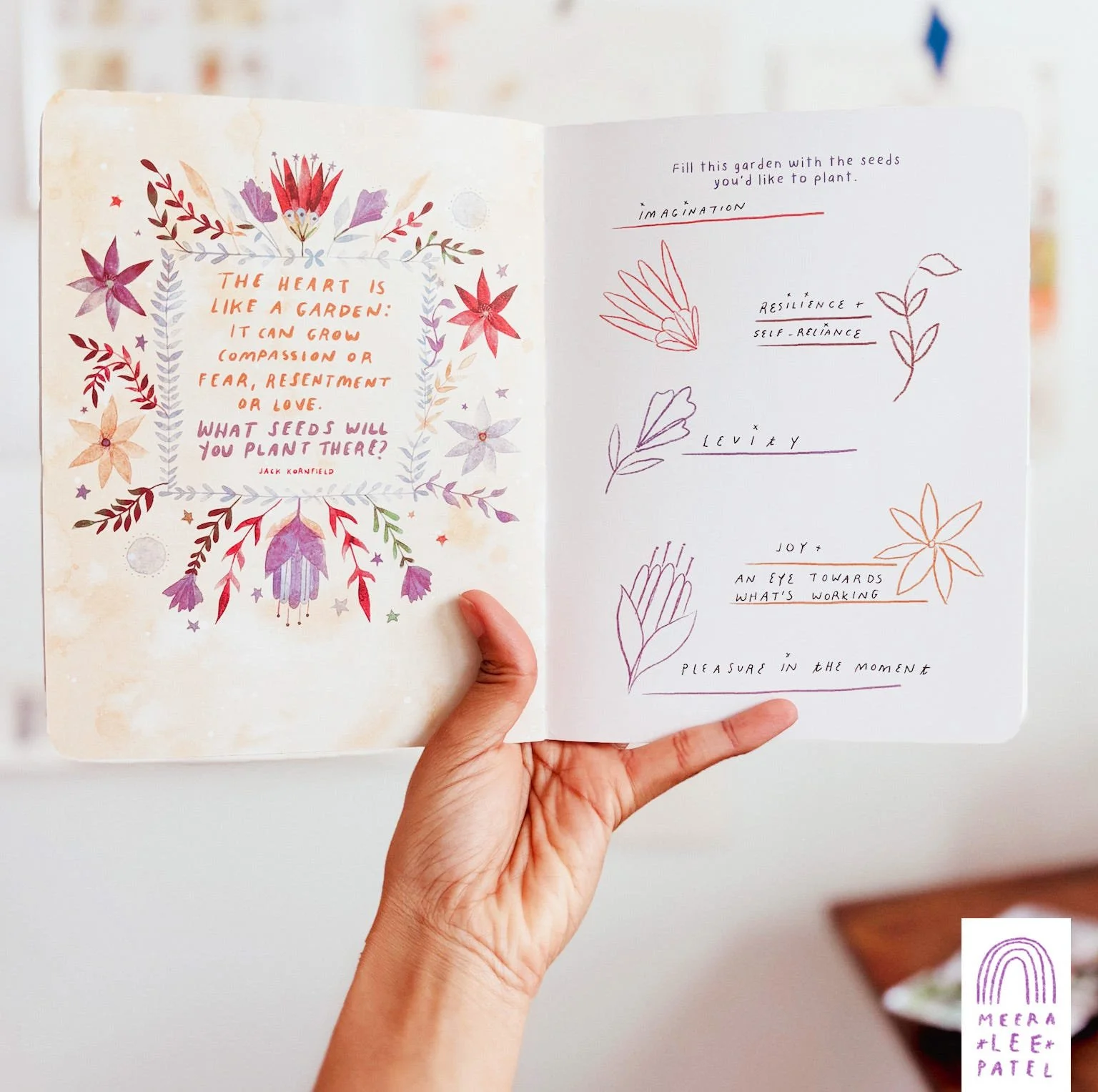
One of my completed exercises from LEARN TO LET GO (2026)
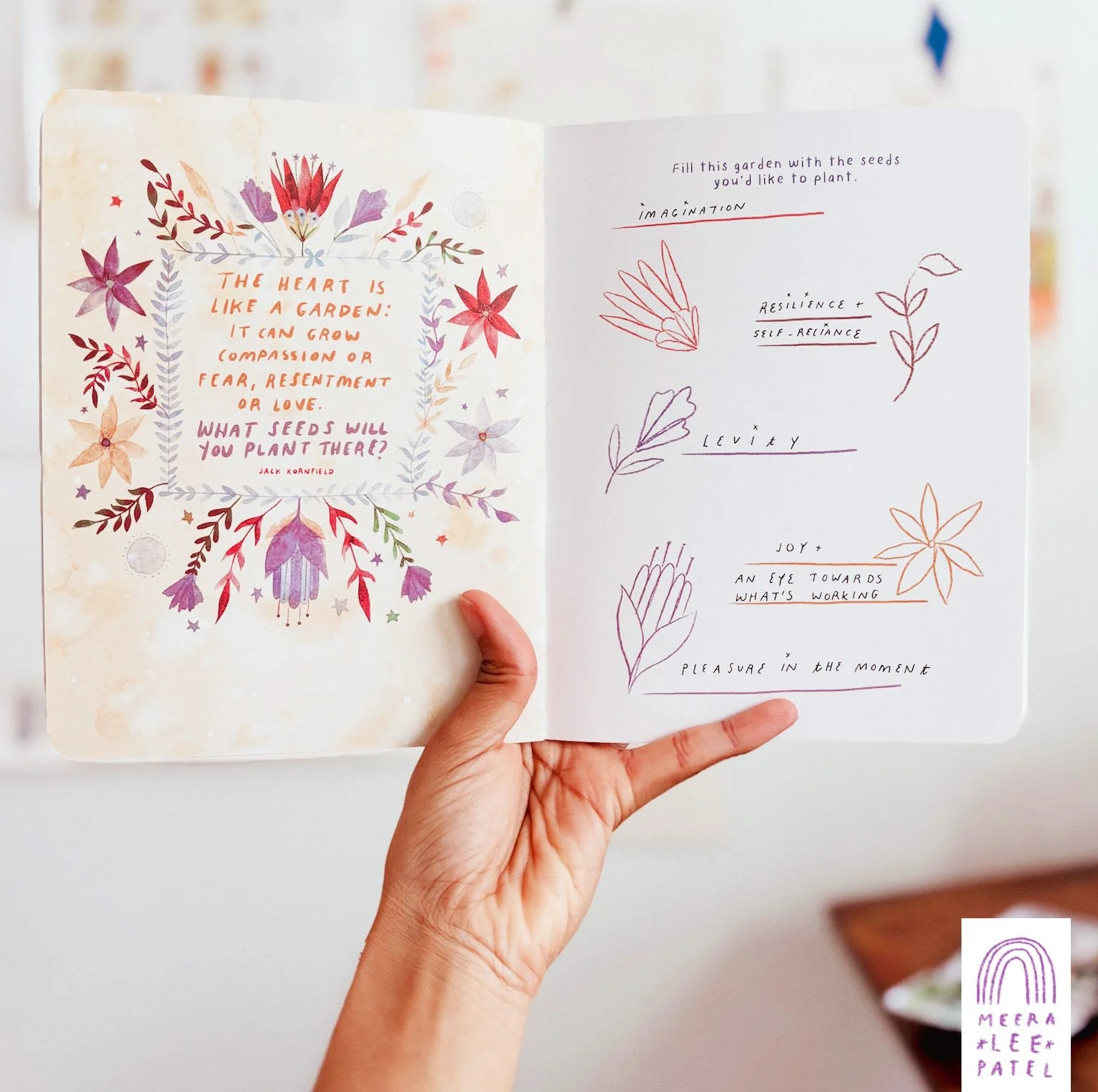
I’m working through my own copy of LEARN TO LET GO at the moment. I haven’t worked through one of my own journals in a very long time, and I’m eager to plant new seeds for change in the pages of this book.
One of the reasons I make these journals is because there is no end point for personal growth. It is with humility that I complete the exercises that I long ago wrote, seeing how far I have come—and how much further I still have to go.
“Helped are those who are content to be themselves,” Alice Walker said. “They will never lack mystery in their lives and the joys of self-discovery will be constant.”
Each day, when I open a new page, I’m reminded by the magic of it all.
THURSDAY
Ruth Franklin writes about Paul Simon and the horrifying state of our country; my very favorite New Year’s poem; Judit Orosz makes paper poetry; I’ll Try Anything by The Strokes; Denny’s in Japan.
FRIDAY
I remember all the different kinds of years.
Angry, or brokenhearted, or afraid.
I remember feeling like that
walking up the mountain along the dirt path
to my broken house on the island.
And long years of waiting in Massachusetts.
The winter walking and hot summer walking.
I finally fell in love with all of it:
dirt, night, rock and far views.
It’s strange that my heart is as full
now as my desire was then.
—Arriving Again and Again Without Noticing by Linda Gregg
Of all the things you can put in front of your eyes, I’m grateful that my little letter is one of them.
If you’d like to support me, please buy my books. My art prints and line of greeting cards make excellent gifts for yourself or a friend. You can also hire me for your next project—I’d love to work together.
xx,
M
To sign up for my weekly newsletter, Dear Somebody, please subscribe here.
Dear Somebody: The space between.
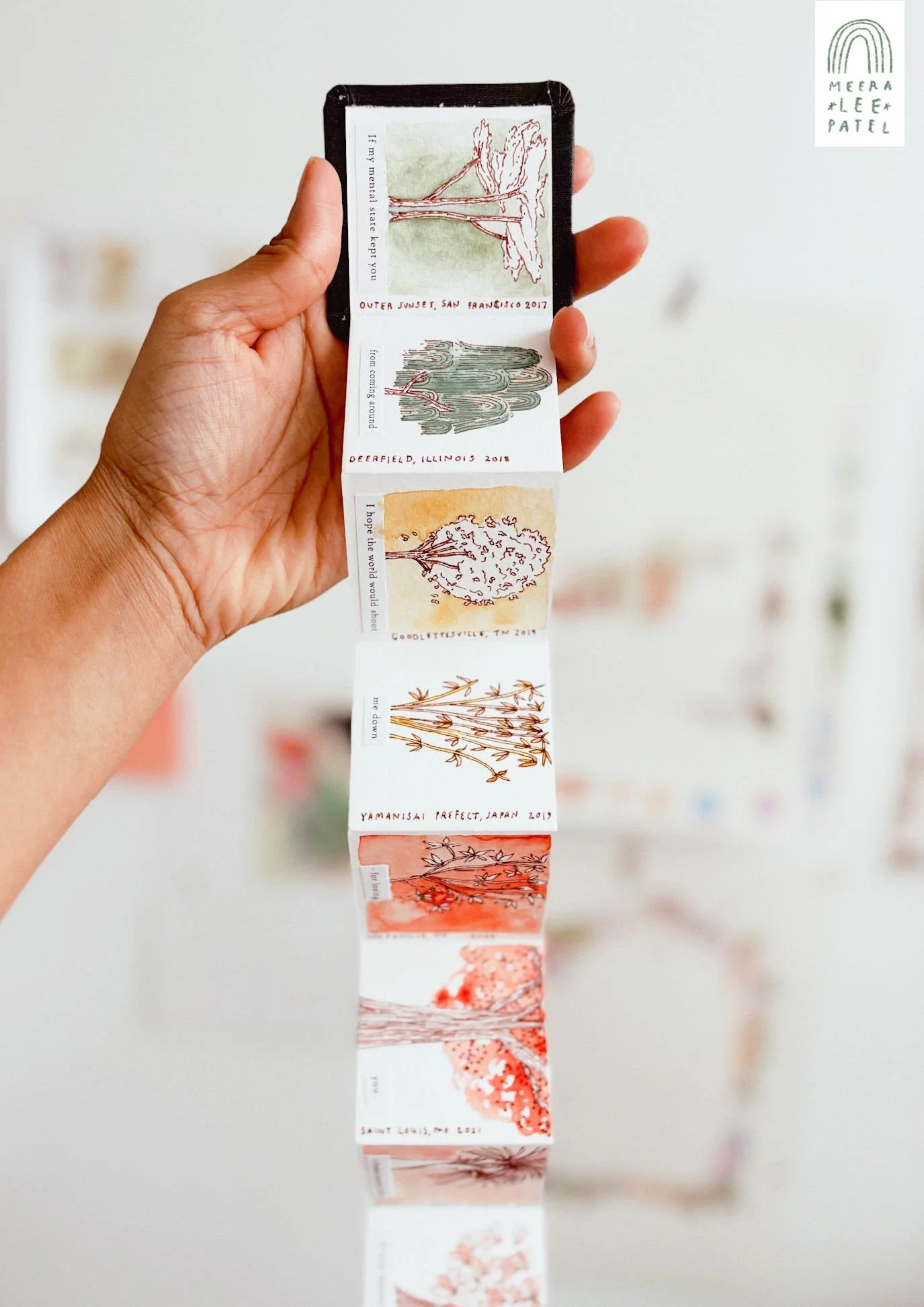
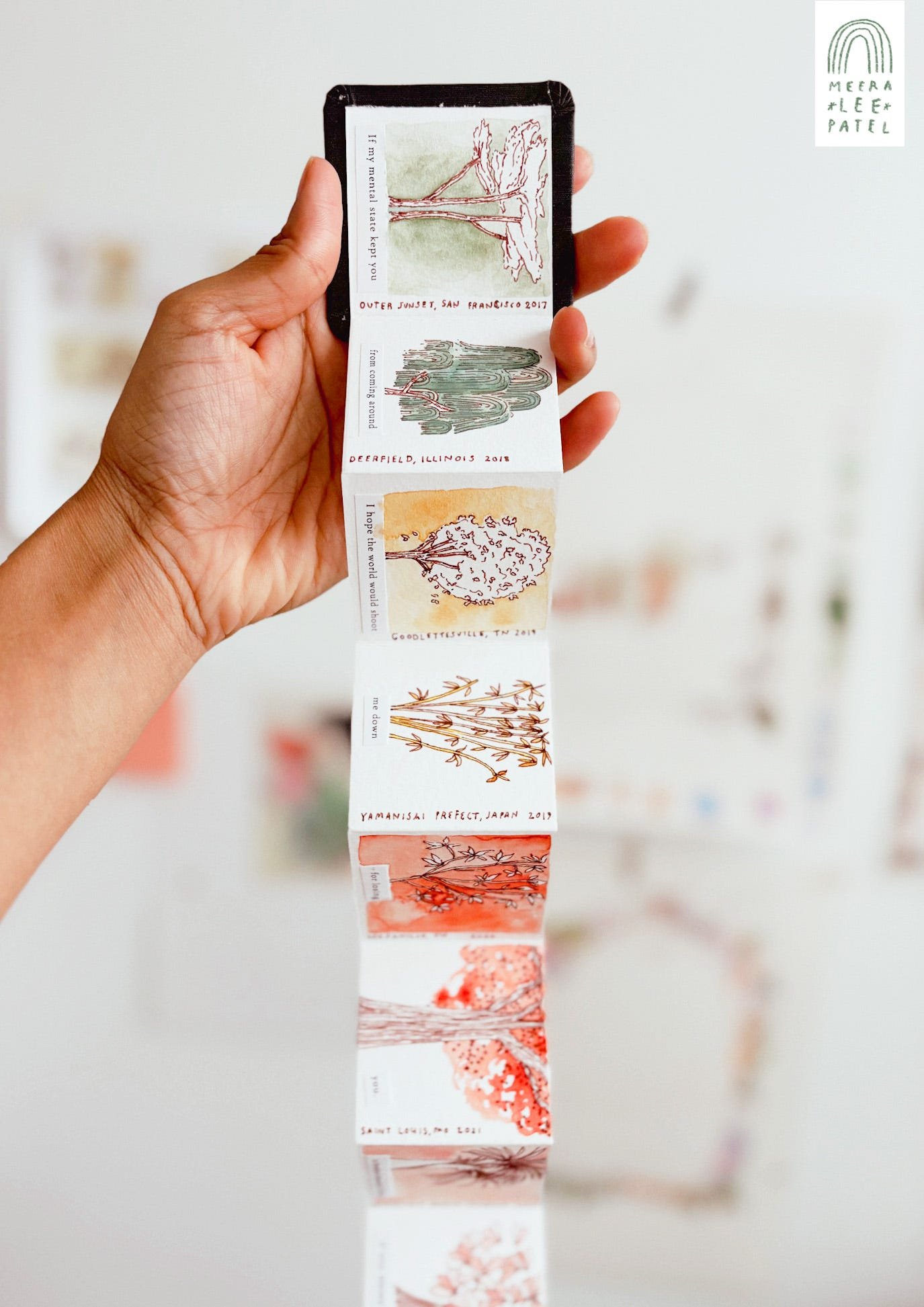
Tiny Book of Trees (watercolor and ink, 2025)
A year from now, here are five things from this week that I'd like to remember:
MONDAY
When L married us in April of 2019, I’d known him for nearly 10 years. We’d met on Tumblr, back when Tumblr was a place where your art was seen and your thoughts were read and responded to. I was pleased to meet a friend who lived overseas but with whom I connected to well, and overlapped with on the points that mattered to me: creativity, personal values, a desire (and fear of) new adventures.
Our friendship bloomed easily. Years later, it was with L that I adventured through Iceland, making new friends and peeling back the years of fear and anxiety that kept me huddled inside my home. Years later, it is L that I have to thank for getting me through much of my twenties: years that were full of self-doubt and loneliness, years that I didn’t feel would ever amount to very much.
It is L that I thank for introducing me to my long-time editor, with whom I have published an oeuvre of work that aids readers in more deeply connecting with themselves and the world. It is L that I have to thank for introducing me to my agent, who helped me build a career that can withstand the ripples of time.
It is L that I thank for marrying me and T on the steps of our farm in Nashville, having flown from Germany to bring us together; having written the ceremony in pencil, in his signature tiny, handwriting on a piece of white paper that I wish I had.
In August, we go to London. L, who I haven’t seen in 6 years, since my wedding, is flying from Berlin to meet us. I am excited and nervous. So much has changed since we saw each other last, with marriages and children and shifting values; with the insular nature of our isolated American life. Time has sped up into an unrecognizable blur and blurred so much around me that I no longer assume a friendship will feel the way it always has. Things change, and quickly. Often imperceptibly.
When the doorbell rings and my children answer it, it is L standing in the doorway, carrying a friendship that hasn’t changed. T hugs him tightly and my children scamper towards him, drawn to this stranger they’ve never met. Children are sharp, unencumbered by social etiquette. They sense uneasiness in the places we’ve learned to numb, they know when they’re being spoken about or spoken down to, they surround themselves with good energy and shrug off the rest.
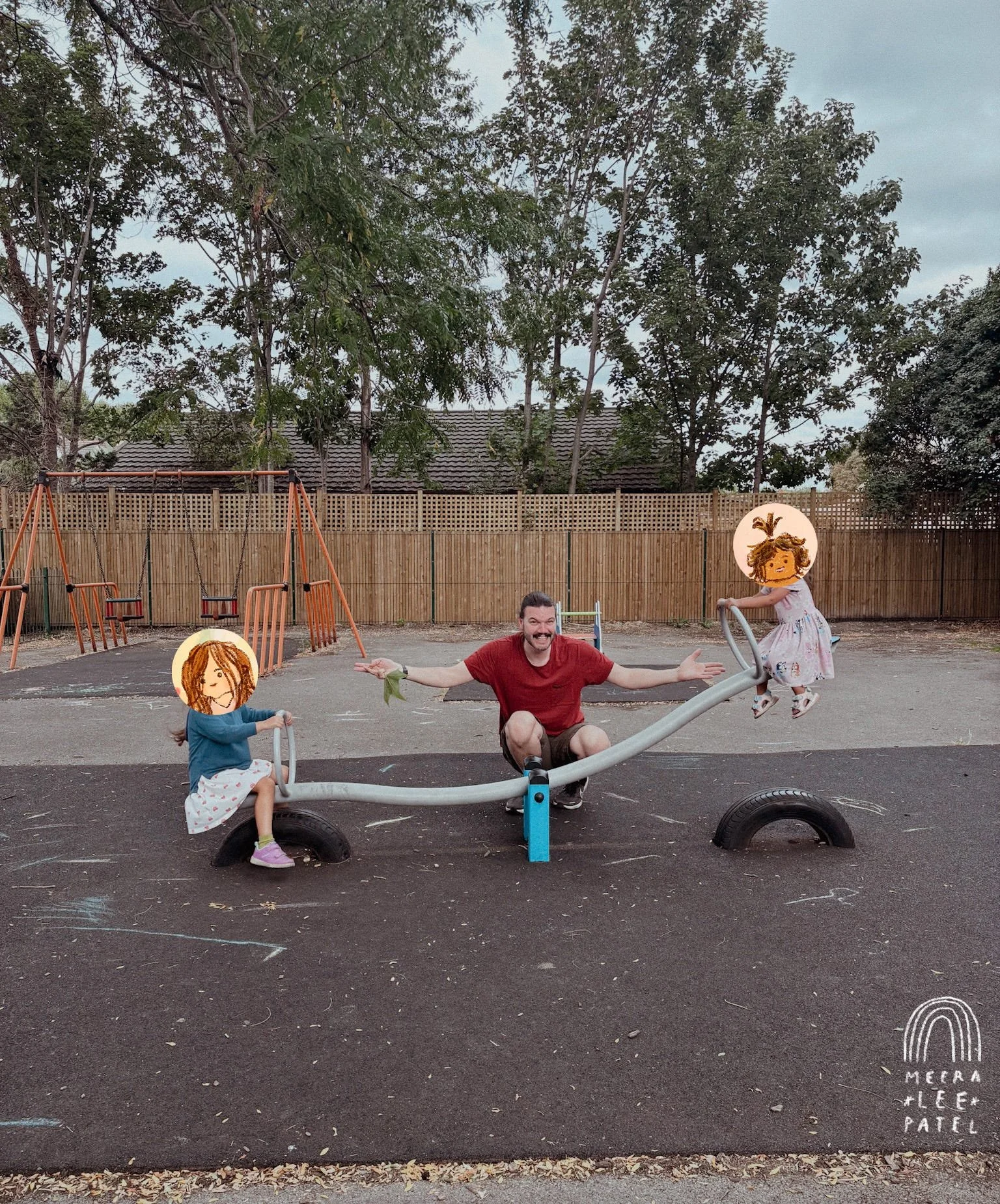
L with Thing 1, Thing 2, and a seesaw (London, 2025)
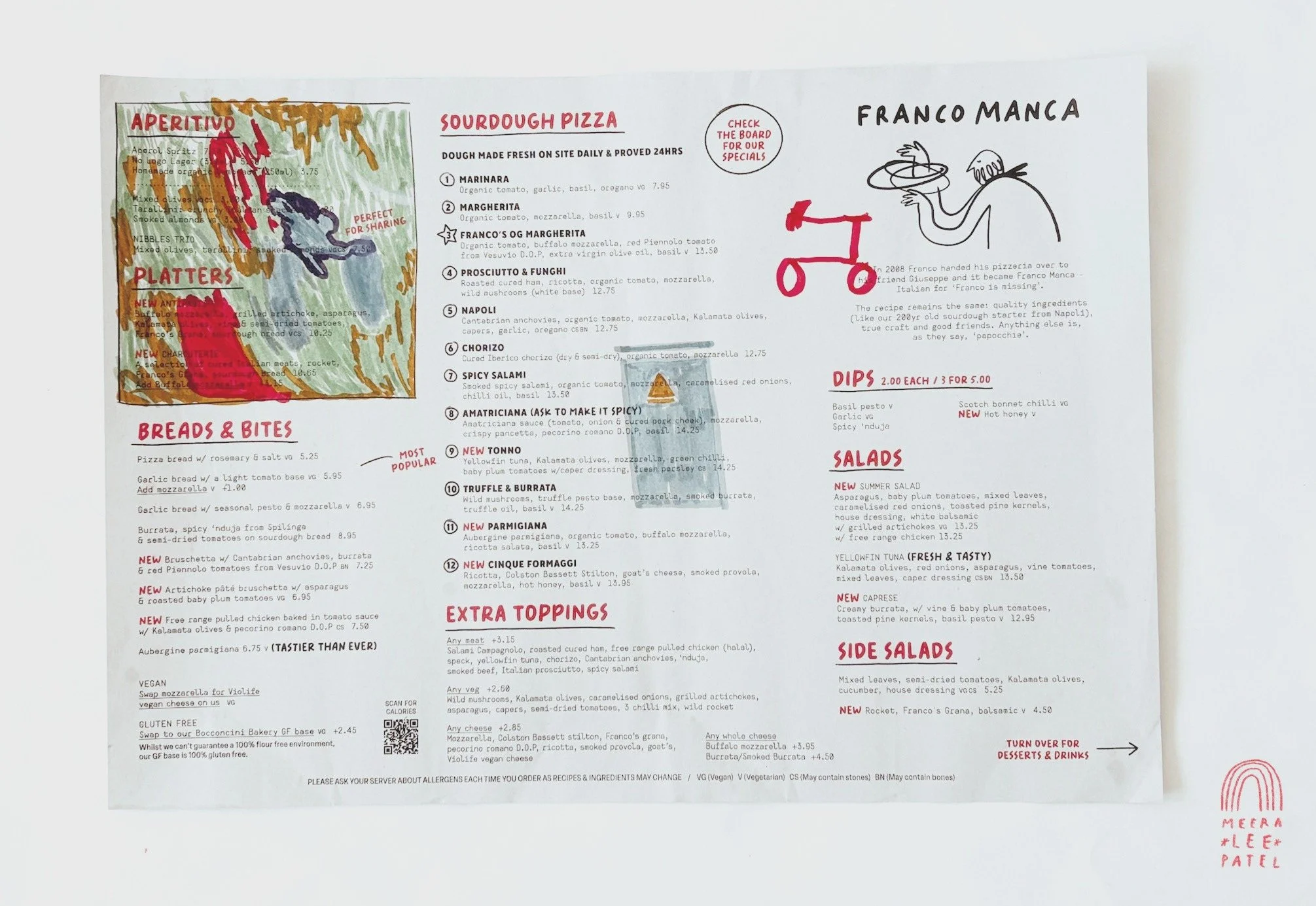
For a few days, I have my friend back. The five of us watch the changing of the guard, we have lunches, we draw on menus with N while F takes her sleep. We eat dinners and have evening drinks, but mostly, we walk to the playground. We swing on the swings and chase the kids around and do boring everyday things, each of us knowing the monotony of life is always better with a friend.
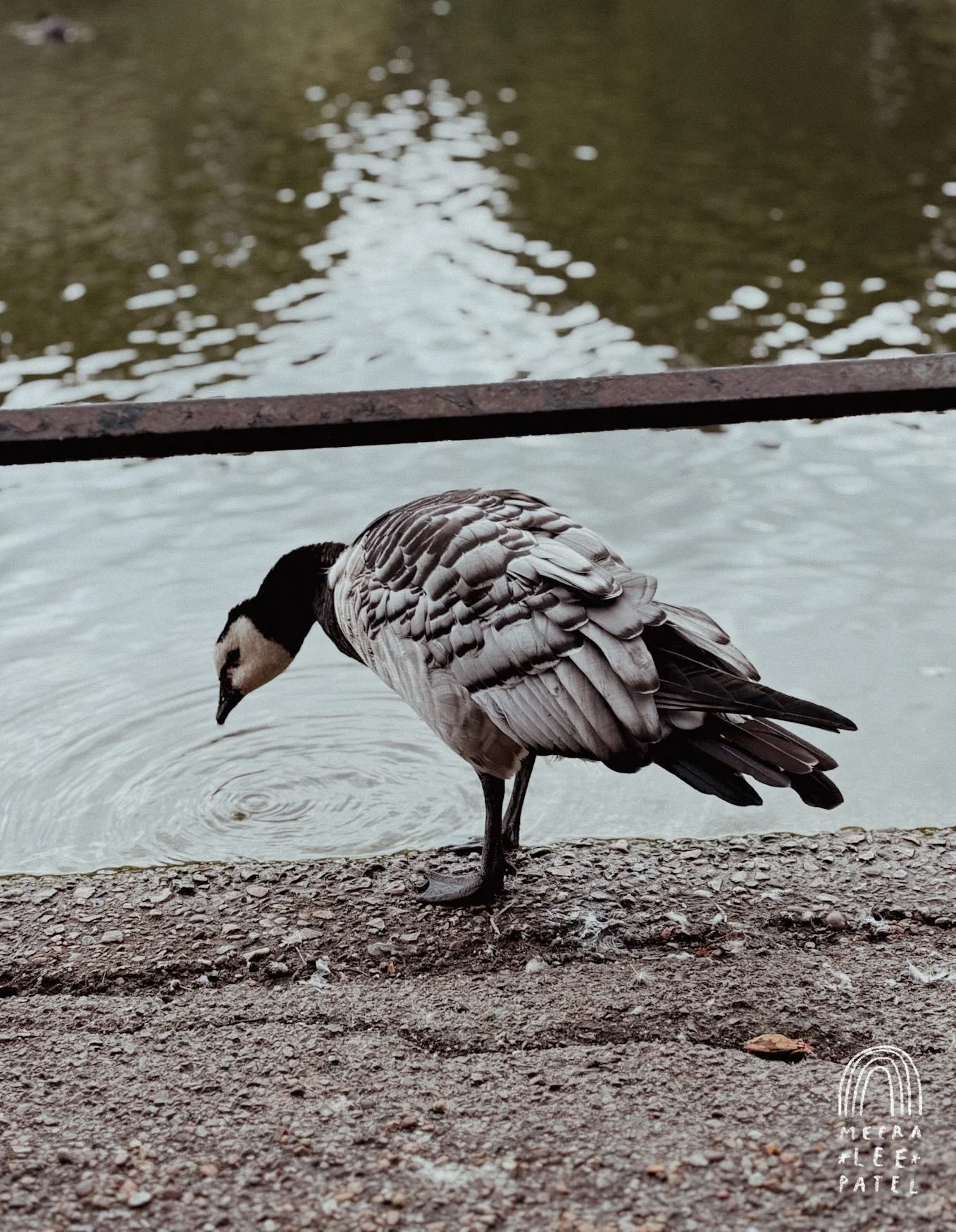
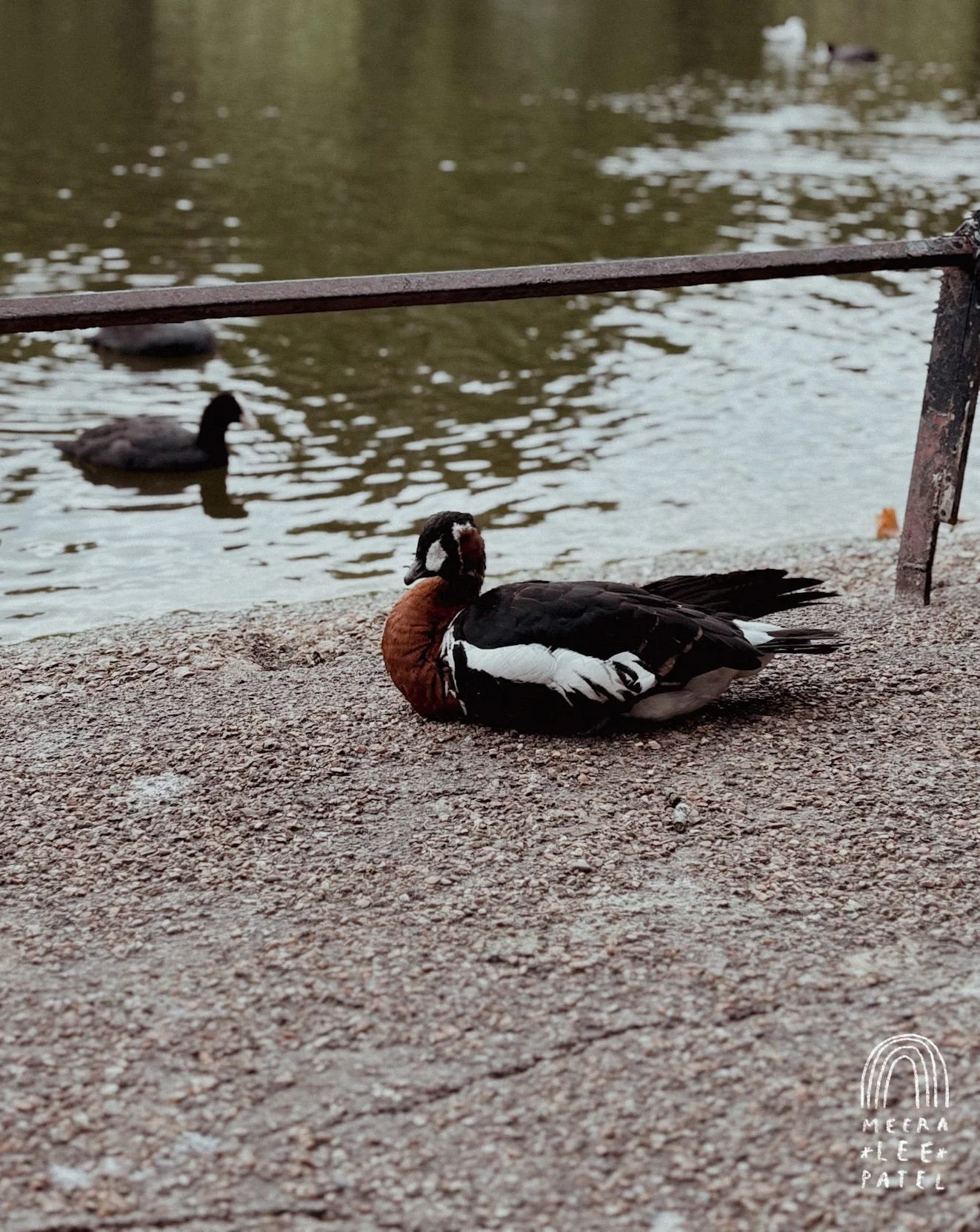
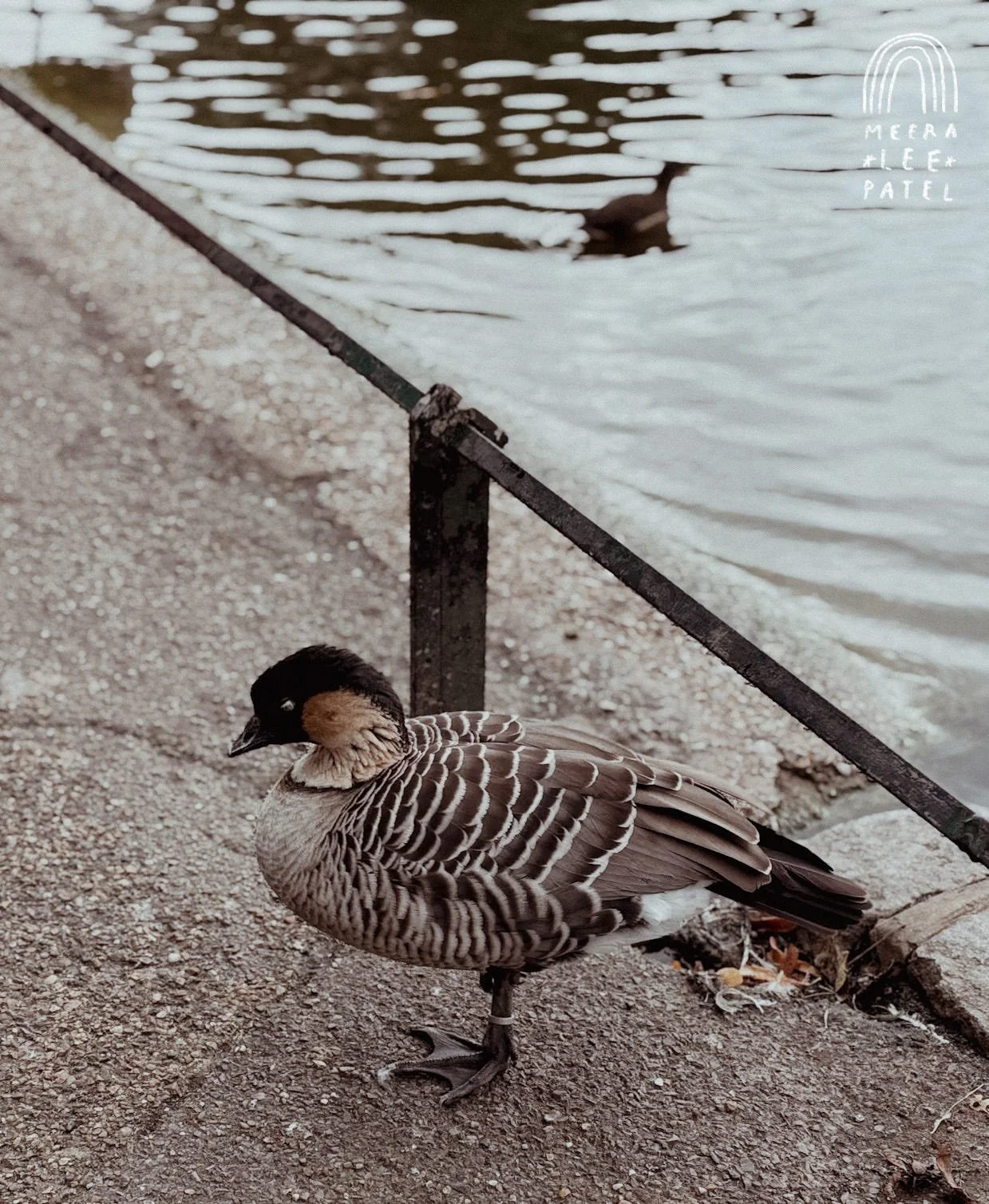
Today, I find myself thinking of a moment that still hasn’t left me. As we walked through St. James’ Park, N stopped to watch every bird. What’s that one? she asked L and he answered. How about this one? And this one? He named each one and together, they walked on. I didn’t know you knew so much about birds, I told him, surprised. Yeah, I know a fair bit, he said.
St. James Park #1 (photographed by N in London, 2025)
St. James Park #2 (photographed by N in London, 2025)
St. James Park #3 (photographed by N in London, 2025)
In this moment, I become acutely aware of how much I don’t know about my friend. This small, benign fact unsettles me: I think about how much more I never will know, because L and I don’t inhabit the same places; most likely, we never will. We see each other for a few days every handful of years. We speak regularly, but words alone are not a replacement for shared time. I think about how many facets of my friends are hidden, never to be realized because we simply don’t share enough of life together.
Nearly fifteen years ago, during my Tumblr days, one of the first pieces of art I offered for sale was a drawing of an astronaut on the moon. I NEED MORE SPACE, the astronaut said, and for a long time, I believed the astronaut was me.
Now, space is a divider. It divides us in terms of distance but also depth. It sets a limit for how deeply I can know another person, of how many layers I’m able to cut through and under. Here—in January, in an entirely new year, I remain full of sadness, staring out into the space that lives between me and the people I love.
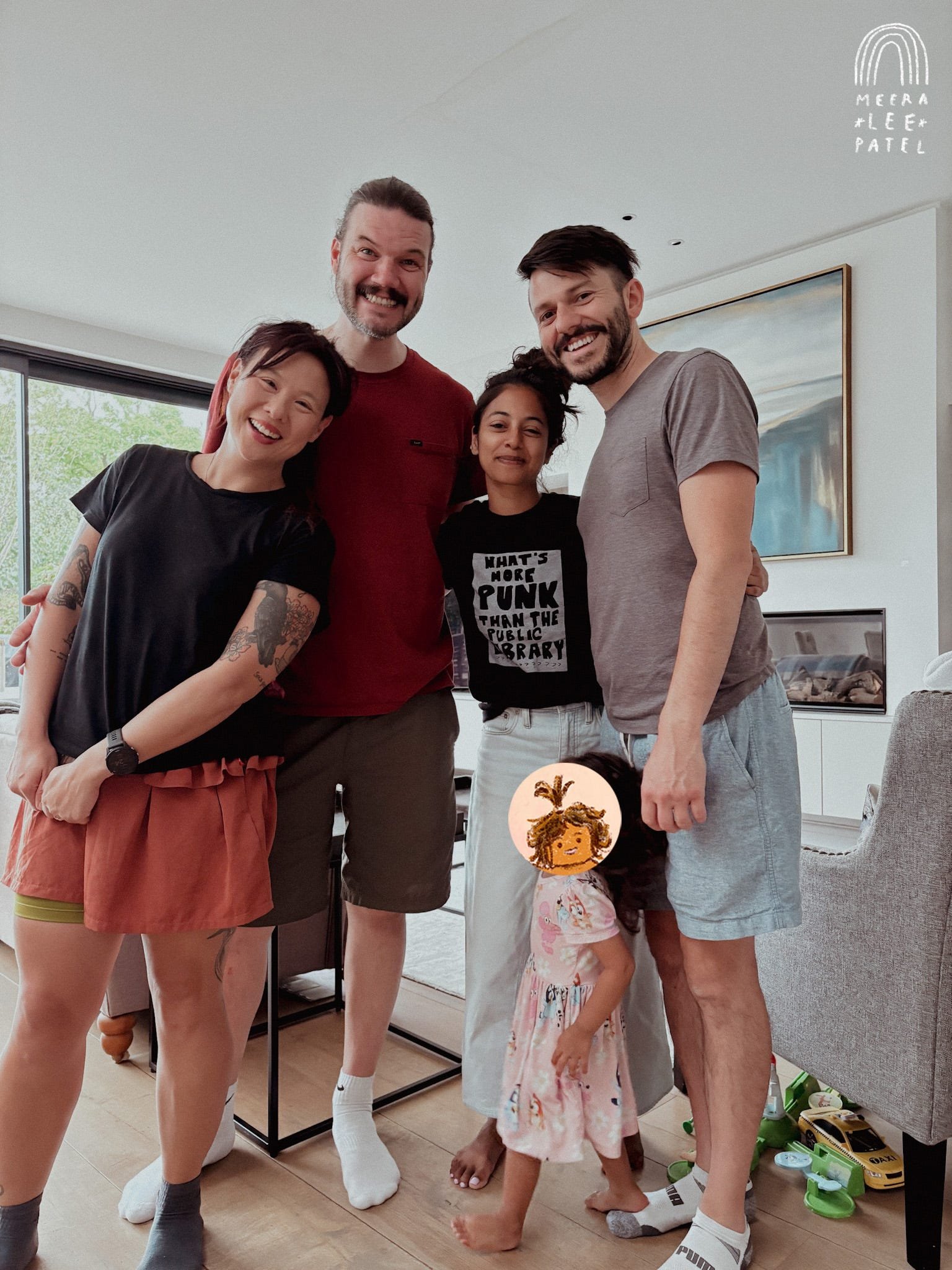
J, L, Me, T, and F (London, 2025)
TUESDAY
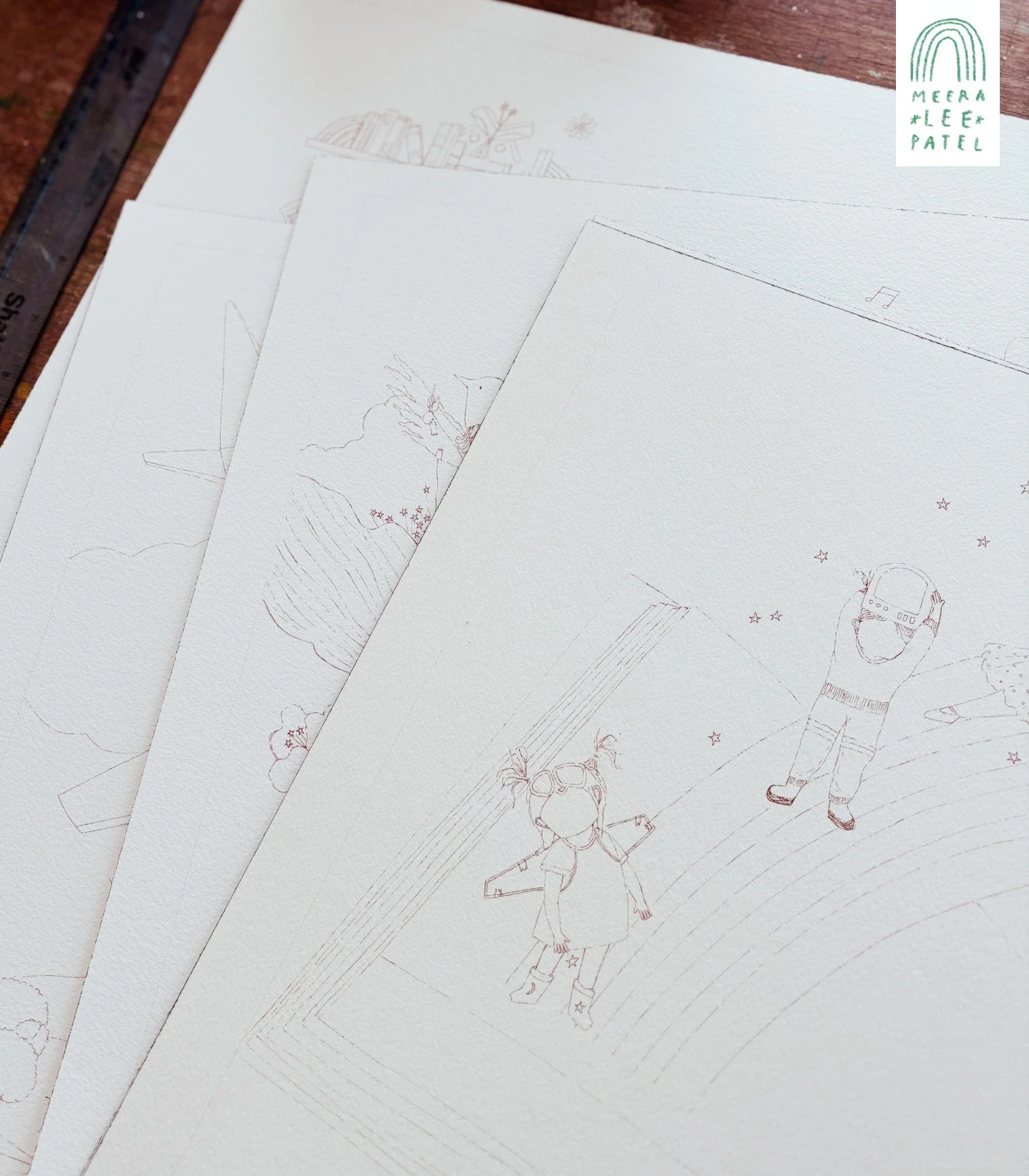
The beginnings of final artwork for DEAR LIBRARY (ink on Arches, 2025)
Here’s a look at where I am in my DEAR LIBRARY process: laying down the very delicate linework for my pages in ink. It’s a tedious, time-consuming process, and I’ve questioned whether I should’ve gone the route I have with this artwork a few times—but the facts are that I did, and I am. I only have a couple of weeks to turn these pencils into final ink-and-watercolor paintings, but instead of filling myself up with stress, I’m simply believing I can, and will. It’s a refreshing change of mind for me after nearly three decades (maybe more?) of I can’t I can’t I can’t. Maybe I can’t—but maybe, I can.
“I’m just, you know, kind of happy in the doing of things. Even just having a great cup of coffee is happiness. Getting an idea, or realizing an idea. Working on a painting…working on a piece of sculpture, working on a film. One thing I noticed is that many of us, we do what we call work for a goal. For a result. And in the doing, it’s not that much happiness. And yet that’s our life going by. If you’re transcending every day, building up that happiness, it eventually comes to: it doesn’t matter what your work is. You just get happy in the work. You get happy in the little things and the big things. And if the result isn’t what you dreamed of, it doesn’t kill you, if you enjoyed the doing of it. It’s important that we enjoy the doing of our life.” —David Lynch
Along with believing I can, I’ve been ruminating on my immersion of the process and less on the outcome I produce. All I can do is the best I can do right now with the skills and time I have now. I’ve always believed it’s hard to be in the present and to focus on the process, but the way David Lynch has lived his life makes me feel like maybe it isn’t. Maybe it is a switch I can just turn off. More and more, it feels like I already have.
WEDNESDAY
Tiny Book of Trees (watercolor and ink, 2025)
Over the holidays, I made T a tiny book of trees. This marks my second tiny book in two months (here’s the first!) and I have ideas for so many more—including a new year’s tiny book where I envision the next ten years of my life. Stay tuned.
Instead of thinking big, this year I’m determined to think tiny: tiny steps forward, tiny ideas, tiny stories, tiny books. Tiny cells turning over, slowly leading to a new brain and body. Tiny bids for connection, actively building stronger relationships. The tiniest of pieces, eventually coming together to form a whole. Stay tuned.
THURSDAY
“When we love the Earth, we are able to love ourselves more fully. I believe this. The ancestors taught me it was so. As a child I loved playing in dirt, in that rich Kentucky soil, that was a source of life. Before I understood anything about the pain and exploitation of the Southern system of sharecropping, I understood that grown-up Black folks loved the land. I could stand with my grandfather Daddy Jerry and look out at fields of growing vegetables, tomatoes, corn, collards, and know that this was his handiwork. I could see the look of pride on his face as I expressed wonder and awe at the magic of growing things. I knew that my grandmother Baba’s backyard garden would yield beans, sweet potatoes, cabbage, and yellow squash, that she too would walk with pride among the rows and rows of growing vegetables showing us what the earth will give when tended lovingly.”
—from Touching the Earth by bell hooks in Orion Magazine
FRIDAY
I am so busy. I am practicing
my new hobby of watching me
become someone else. There is
so much violence in reconstruction.
Each minute is grisly, but I have
to participate. I am building
what I cannot break.
—from The Sun is Still A Part of Me by Jennifer Willoughby
Of all the things you can put in front of your eyes, I’m grateful that my little letter is one of them.
If you’d like to support me, please buy my books. My art prints and line of greeting cards make excellent gifts for yourself or a friend. You can also hire me for your next project—I’d love to work together.
xx,
M
To sign up for my weekly newsletter, Dear Somebody, please subscribe here.
Dear Somebody: How to get back up.
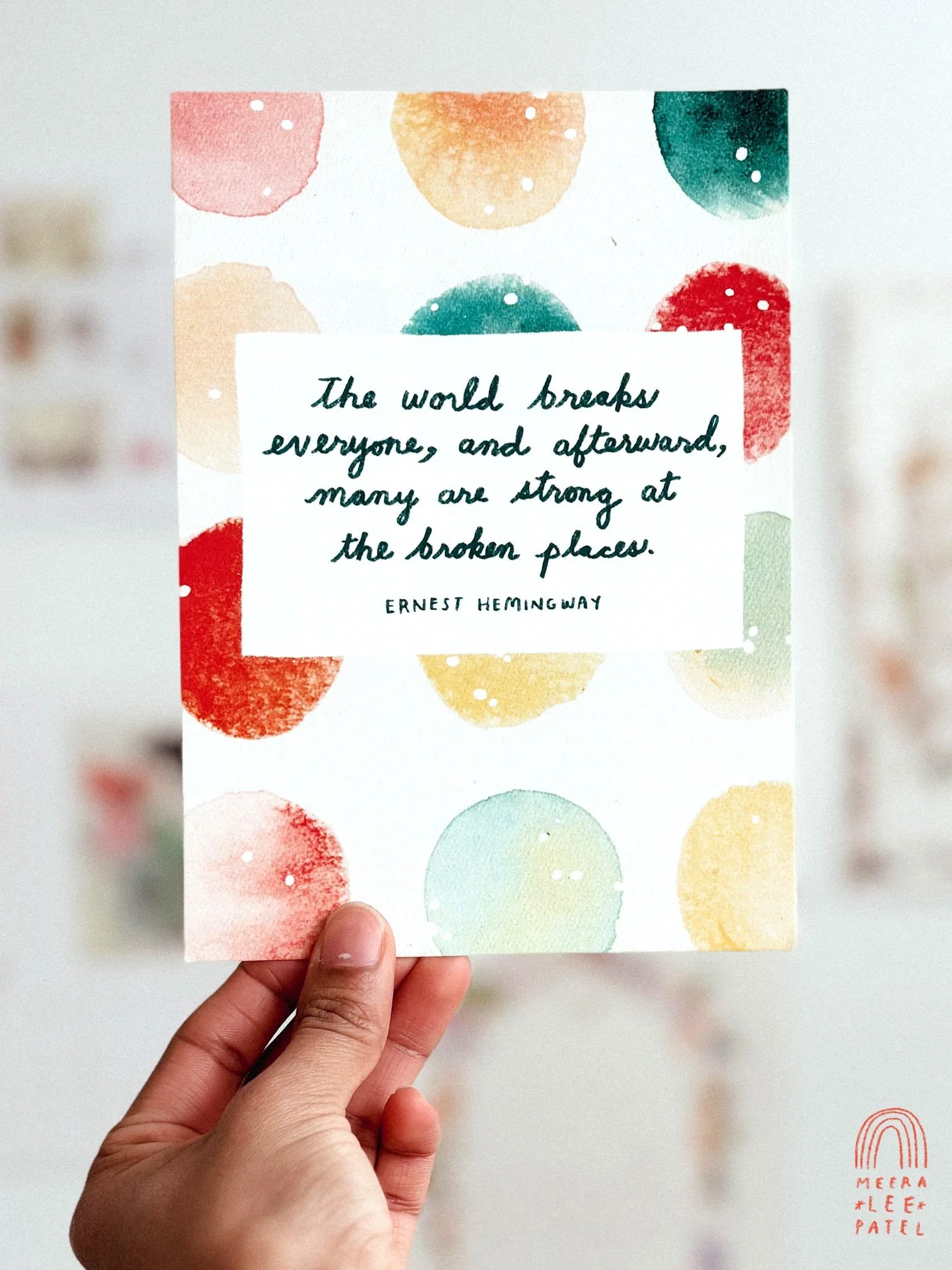
An illustration from LEARN TO LET GO which reads “The world breaks everyone, and afterward, many are strong at the broken places.” —Ernest Hemingway (watercolor, 2025)
A year from now, here are five things from this week that I'd like to remember:
MONDAY
In the month since I last wrote, I’ve wanted to write: about our trip to Mexico City, the first time T and I have gone anywhere, alone, since having N five years ago. The sights, smells, and sounds of a country so vibrant with culture and opinion and loyalty; how our two children missed us but were loved and cared for by hands that weren’t ours; of the new, incredible rush of knowing I can step outside of my own life without it falling apart.
In the month since I last wrote, I’ve wanted to write: about K’s visit the first week of November; about our children who are growing to know and think of each other daily, though they are hundreds of miles apart; of a friendship that grows and changes, no longer dependent on daily connection; of friendship that runs on an underground rail line, traveling under arbitrary state lines and handfuls of years spent apart; of friendship that moves forward, steadily, through fallen rock, waste, and insult.
In the month since I last wrote, I’ve wanted to write: about N’s first time seeing The Nutcracker, her eyes lit up by sugar plum fairies and the pure strength of a ballerina; about our Thanksgiving and the best part of N’s day; about F’s desire for everyone to be together, always, smushed inside a giant group hug; about how my two small children seem bigger and bigger each day—the roundness draining from their cheeks, the language falling from their mouths cleaner than Winter herself.
In the month since I last wrote, I’ve wanted to write. But I haven’t. Instead, like a genealogist, I’ve studied family trees, and how each of us carries what we inherit, including a good amount of rot. I can cut the rot away, if I have what it takes to do the cutting. Like an engineer, I’ve taken myself apart. Like an artist, I’ll put myself back together—not from the ground up, but from pretty far down, without all of the pieces I once thought I needed.
I want to write more—for you, for myself. In the new year, I hope to. But in case I don’t, I’m writing to remind myself that a full life—one that is truly bursting with adventure and risk and joy, requires a lot of falling down and a lot of getting back up.
Right now, I’m getting back up. And I’m taking my time.
TUESDAY
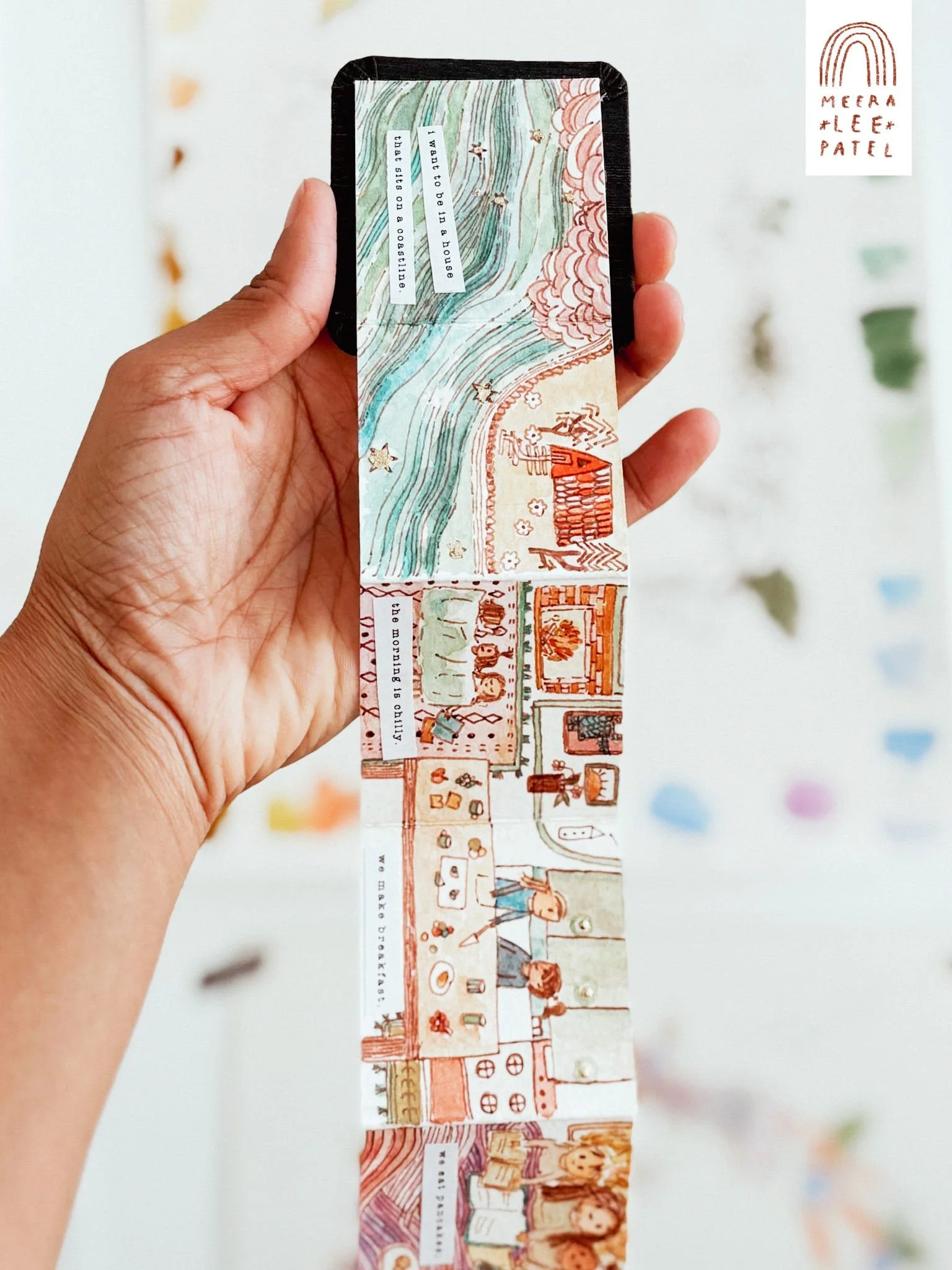
For K’s birthday, I made her a tiny book:
Our House: A Tiny Book (watercolor and ink, 2025)
This was a joyful experience. I want to write a more in-depth process post about the making of this book early next year, but for now, I’ll say that making continues to be the foundation of my joy, hope, and health. The more I focus on the process of making, the less I focus on what I’ve made—and that makes all the difference.
WEDNESDAY
My annual joys include re-reading, watching, and listening to Raymond Briggs’ The Snowman—this year, we added The Bear to our watchlist. I’ve been listening to Elvis’ Christmas Album on repeat and sadly, I love it more and more with each listen. I still like watching the snow come down; I still like turning the space heater on; I still like drawing pictures on cold windows with my fingertips.
THURSDAY
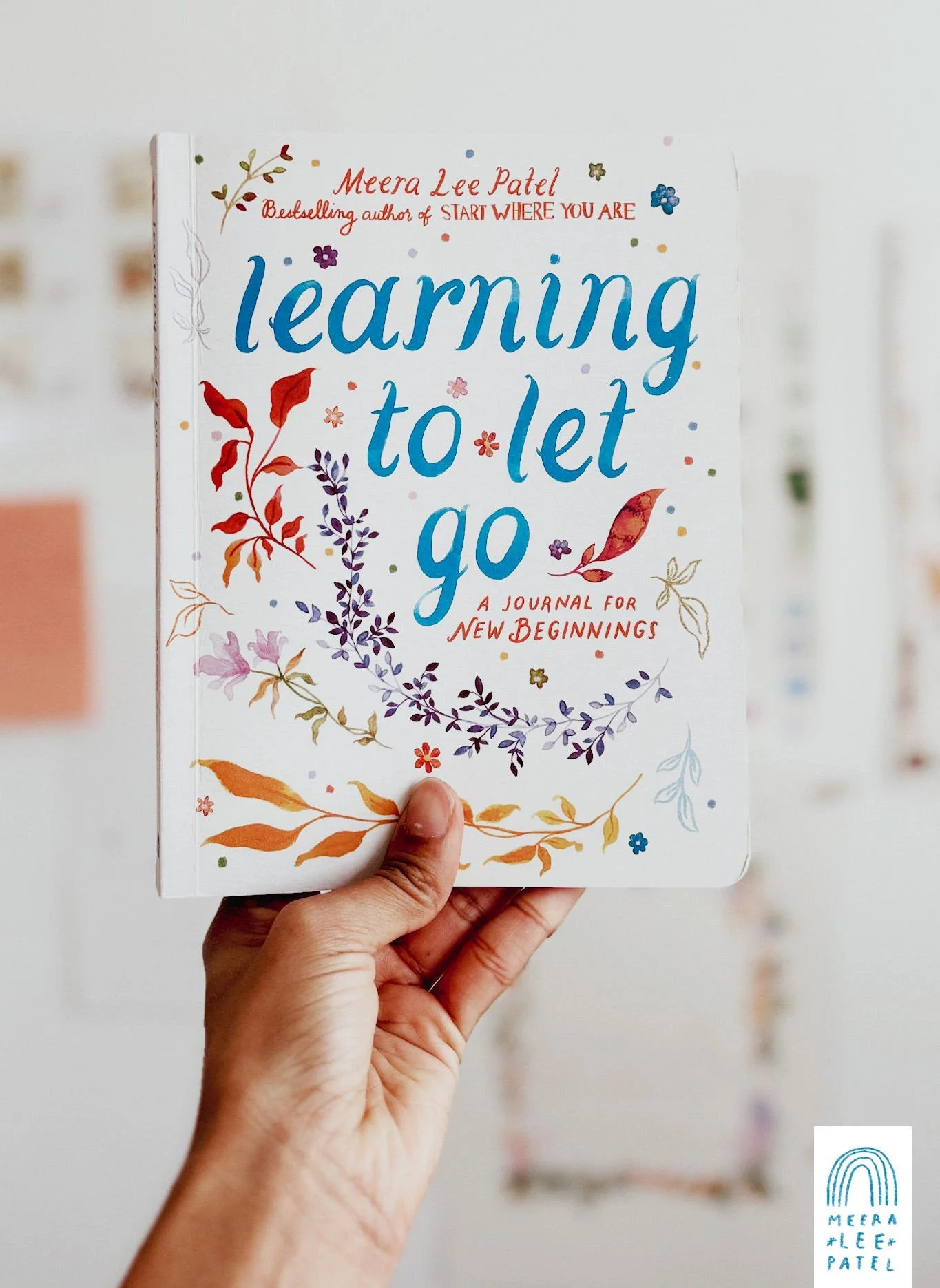
I received a few copies of the UK edition of LEARN TO LET GO, titled LEARNING TO LET GO from my publisher Michael O’Mara, and I’m stunned by how beautiful it is.
Learning to Let Go, published by Michael O’Mara Books (2025)
I love the large format, with generous amounts of space for writing, the rounded edges, and the beautiful, thick paper they used.
If you live overseas and are looking for a thoughtful, encouraging gift for yourself or a friend—I ask you to please consider purchasing a copy of the UK edition. It’s available through numerous outlets: LEARNING TO LET GO (UK EDITION).
For my friends who live here in the United States, please consider purchasing a copy of LEARN TO LET GO (US EDITION) from any of the following locations:
Amazon, Barnes & Noble, Bookshop.org, Books A Million, BuyOlympia (*includes special limited edition print!), Hudson Booksellers, Target, Walmart.
Please also consider leaving a review so this book can reach more hands and help those who need it most.
Thank you, always, for supporting my work and for being here. I look forward to writing this newsletter each week (even on the weeks I don’t manage to send one out!) and that’s because of you. <3
FRIDAY
I am learning to abandon the world
before it can abandon me.
Already I have given up the moon
and snow, closing my shades
against the claims of white.
And the world has taken
my father, my friends.
I have given up melodic lines of hills,
moving to a flat, tuneless landscape.
And every night I give my body up
limb by limb, working upwards
across bone, towards the heart.
But morning comes with small
reprieves of coffee and birdsong.
A tree outside the window
which was simply shadow moments ago
takes back its branches twig
by leafy twig.
And as I take my body back
the sun lays its warm muzzle on my lap
as if to make amends.
—I Am Learning to Abandon the World by Linda Pastan
See you next week!
xx,
M
To sign up for my weekly newsletter, Dear Somebody, please subscribe here.
Dear Somebody: Taking creative inventory.
Three Sisters Make a Wish for Uppercase Issue #67 (2025)
A year from now, here are five things from this week that I'd like to remember:
MONDAY
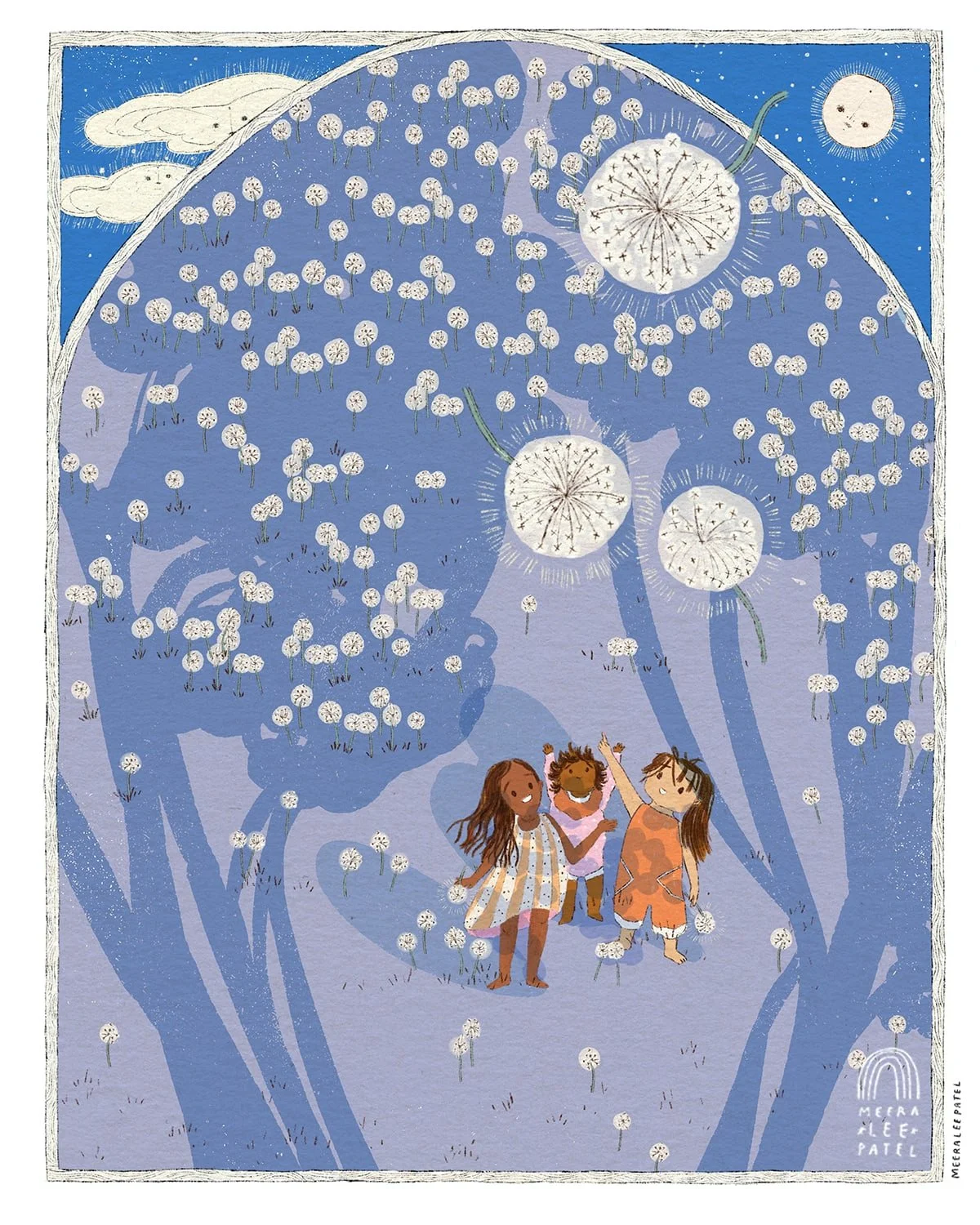
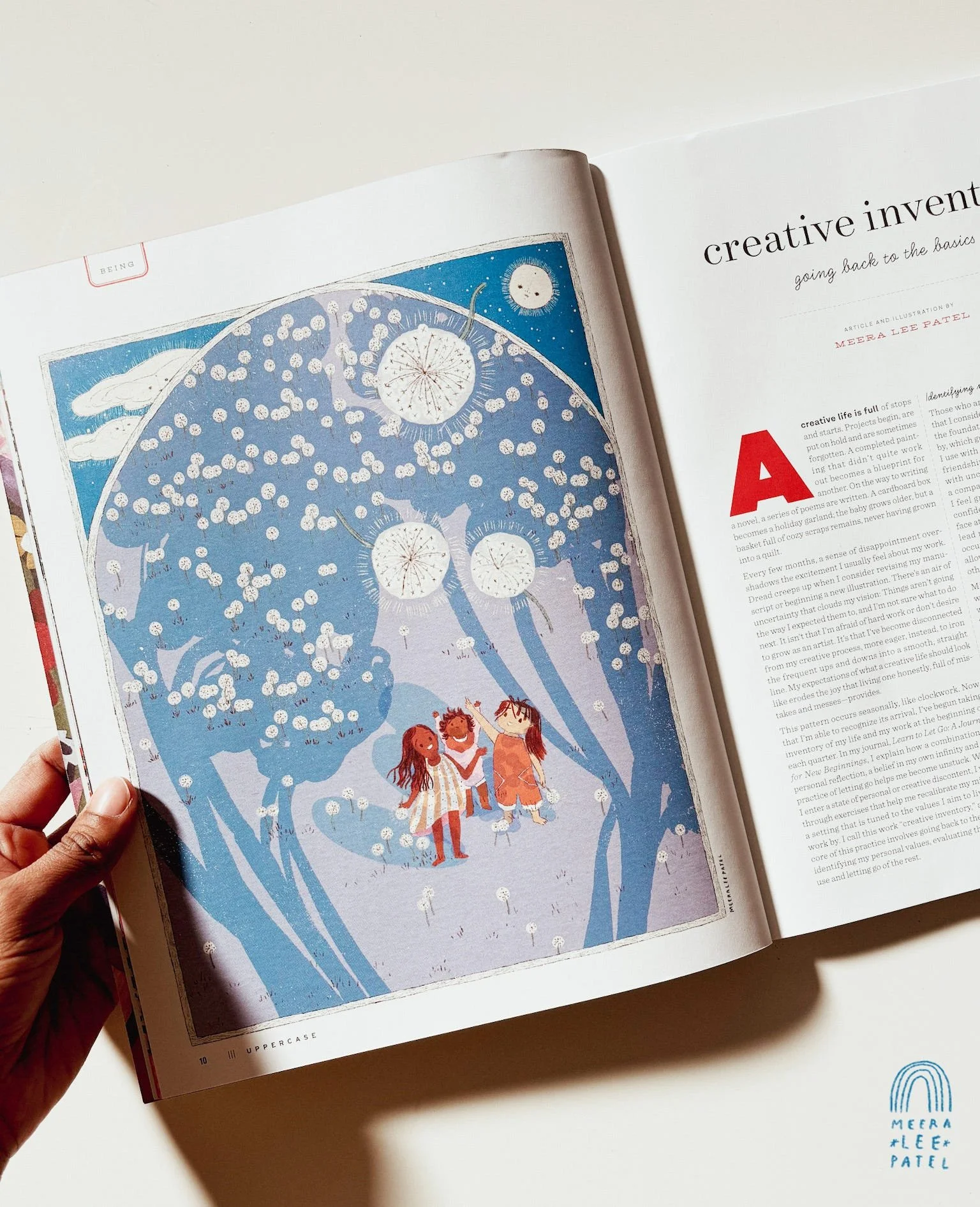
For my current Being column, I wrote about taking creative inventory. I make an effort to do this at the beginning of ever quarter, in order to re-align my creative work with my evolving values. An excerpt is below; the entire article is available for reading in the current issue of Uppercase Magazine.
Three Sisters Make a Wish, published in Issue 67 of Uppercase Magazine (2025)
“On a rudimentary level, this means disengaging with behavior where other people’s lives and work stamps out the value of mine. I stop scrolling Instagram, where it becomes easy to believe that everyone else is better at everything—from parenting to painting—than me. I stop reading books by artists I love if I find that I’m comparing my voice to theirs. Instead of turning to Pinterest—or even the books in my studio, for inspiration, I head to the library. I turn back 100 years or so and usually find the most exciting inspiration in work that was created prior to the Internet’s existence—before the allure of someone else’s life and creativity became more important than my own.
On a more conscious level, this work means recognizing my true voice—my values, stories, and desires, deeply enough to separate it from the rest. When self-doubt creeps in and tells me my work isn’t good enough, I recognize that it’s the voice of my fear, who can’t bear to see me fail. When the pressure of producing more work than is sustainable grinds at me, I recognize that it’s the voice of my immigrant upbringing that tells me I must succeed to be worthy, even of my own love.”
—from Creative Inventory: Going Back to the Basics for Issue 67 of Uppercase Magazine
TUESDAY
“My grandmother says that mango trees used to belong to everyone”; tracing the removal of Confederate monuments across the American south; the principles of patience.
WEDNESDAY
The cover of LEARNING TO LET GO, published by Michael O’Mara Books (2025)
The UK edition of LEARN TO LET GO, titled LEARNING TO LET GO, came out this week! I’m thrilled to have this edition available for overseas readers, and very grateful to Michael O’Mara for supporting this book.
If you’re in the UK or overseas, please support this edition of the journal buy purchasing directly through Michael O’Mara, Amazon UK, Waterstones, or at your local independent bookstore.
For a limited time, Bookshop.org is offering 10% off with the code LOVEBOOKSHOPS — it’s the perfect time to pick a copy or two for the upcoming holiday season. Thank you, always, for your support and encouragement.
THURSDAY
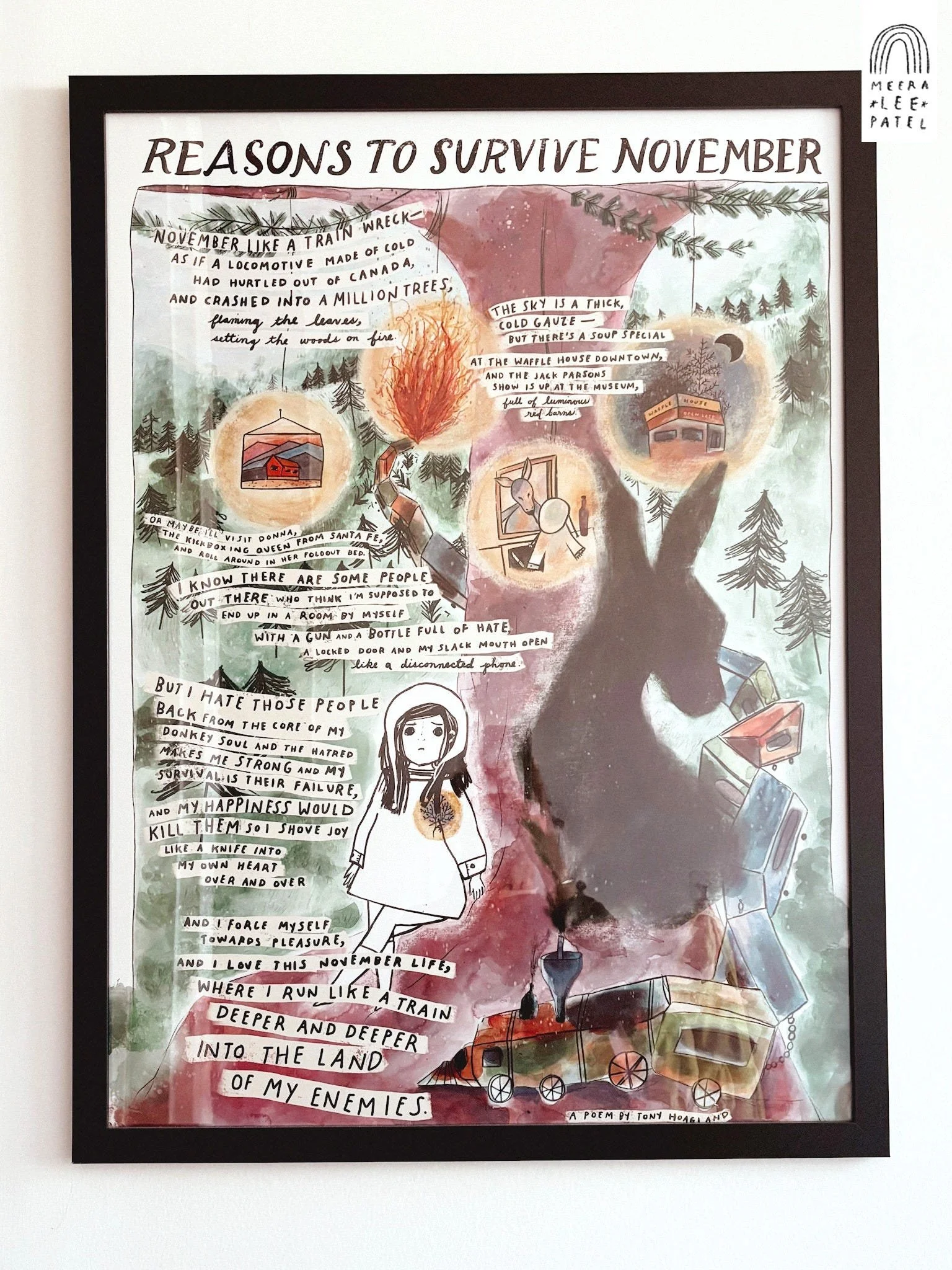
Some of you may remember that I painted Tony Hoagland’s Reasons to Survive November during my MFA program three years ago. I was introduced to the poem by Laura Olin and from the moment I read the first line, the poem has never left my brain.
To me, the mark of good art is if it propels the reader to do something. Hoagland’s poem did that for me; it inspired me to pick up a paintbrush and create something new. The poem itself speaks of an enemy, and in my early years of motherhood, the enemy felt external: the many obstacles that stood in between me and the art I so desperately wanted—needed, to make.
Over the past handful of years, I’ve worked myself up into a fever trying to make emotive work—not work based on an emotional subject or experience, but work that made the viewer feel. How can I use colors to better express certain emotions? How can I use texture to create an emotional landscape? How can word and image come together to create something otherwise inexplicable? How can I make a simple drawing that beckons a feeling otherwise unseen, a feeling that can only survive deep inside the heart?
Years later, the questions above are still the questions I ask myself each time I sit down to make. And years later, Hoagland’s poem still inspires me to take action: to pick up a paintbrush and create. But as I grow as a person and as an artist, my enemy looks less like someone or something outside of me. The more I make, the more deeply I understand that my biggest obstacle isn’t balancing motherhood and career, finding clients, or growing an online platform: it’s reducing the volume of the voice inside me that says I’m destined to fail.
Reasons to Survive November hanging in our mudroom (2025)
This painting now hangs in our mudroom; N refers to it as The November Poem. Most days, I walk right past it in an effort to tidy the mountain of shoes, pack backpacks, or shove tiny feet into even tinier socks. But when I do look up, I see much more than a strange painting laden with young brushstrokes and skewed perspective. I see myself in a kaleidoscope, through a million different lenses, every version of myself eager to help the next survive.
FRIDAY
November like a train wreck—
as if a locomotive made of cold
had hurtled out of Canada
and crashed into a million trees,
flaming the leaves, setting the woods on fire.
The sky is a thick, cold gauze—
but there’s a soup special at the Waffle House downtown,
and the Jack Parsons show is up at the museum,
full of luminous red barns.
—Or maybe I’ll visit beautiful Donna,
the kickboxing queen from Santa Fe,
and roll around in her foldout bed.
I know there are some people out there
who think I am supposed to end up
in a room by myself
with a gun and a bottle full of hate,
a locked door and my slack mouth open
like a disconnected phone.
But I hate those people back
from the core of my donkey soul
and the hatred makes me strong
and my survival is their failure,
and my happiness would kill them
so I shove joy like a knife
into my own heart over and over
and I force myself toward pleasure,
and I love this November life
where I run like a train
deeper and deeper
into the land of my enemies.
—Reasons to Survive November by Tony Hoagland
See you next week!
xx,
M
To sign up for my weekly newsletter, Dear Somebody, please subscribe here.
Dear Somebody: N turns five years old.
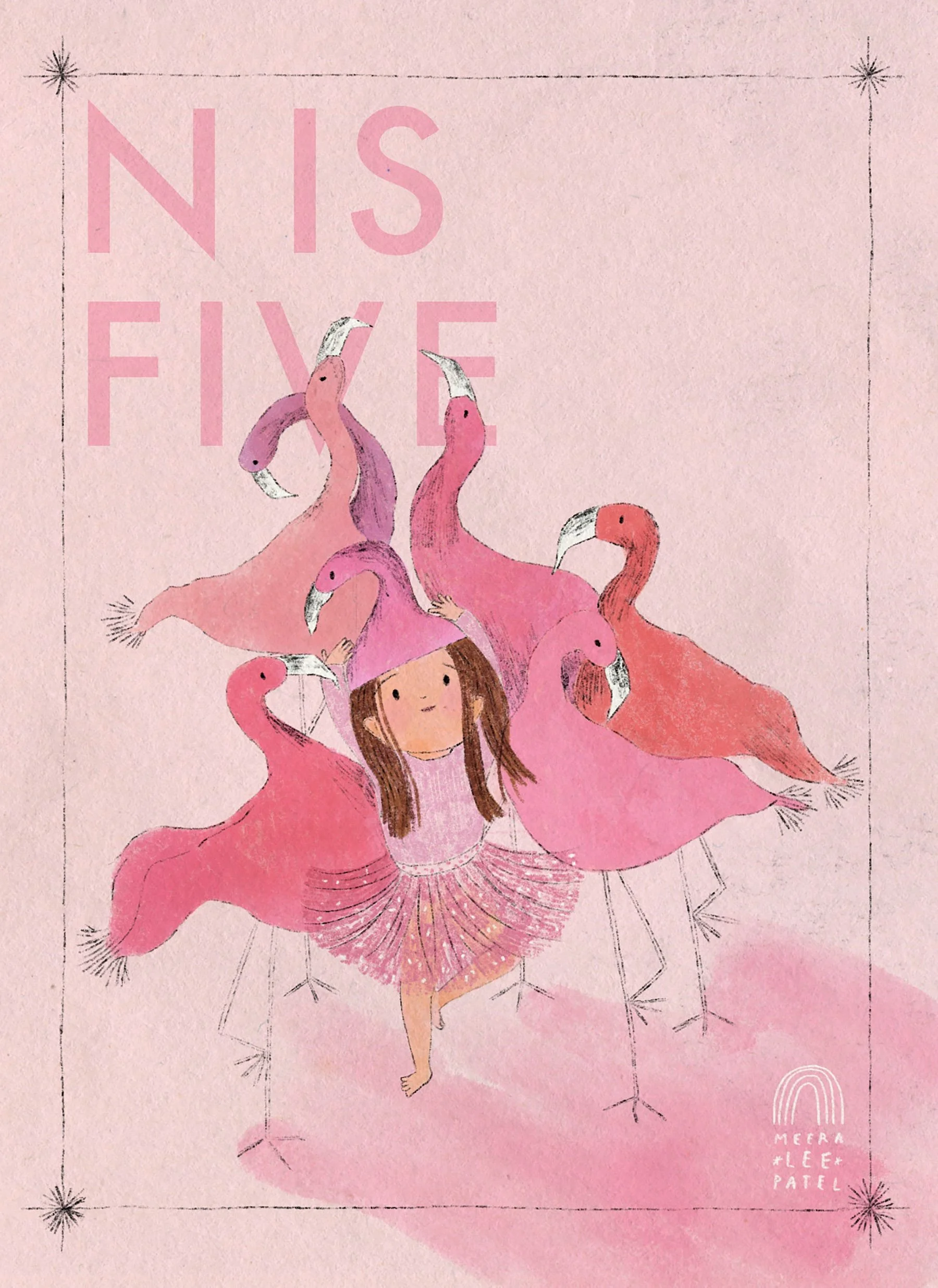
N is five (mixed media, 2025)
A year from now, here are five things from this week that I'd like to remember:
MONDAY
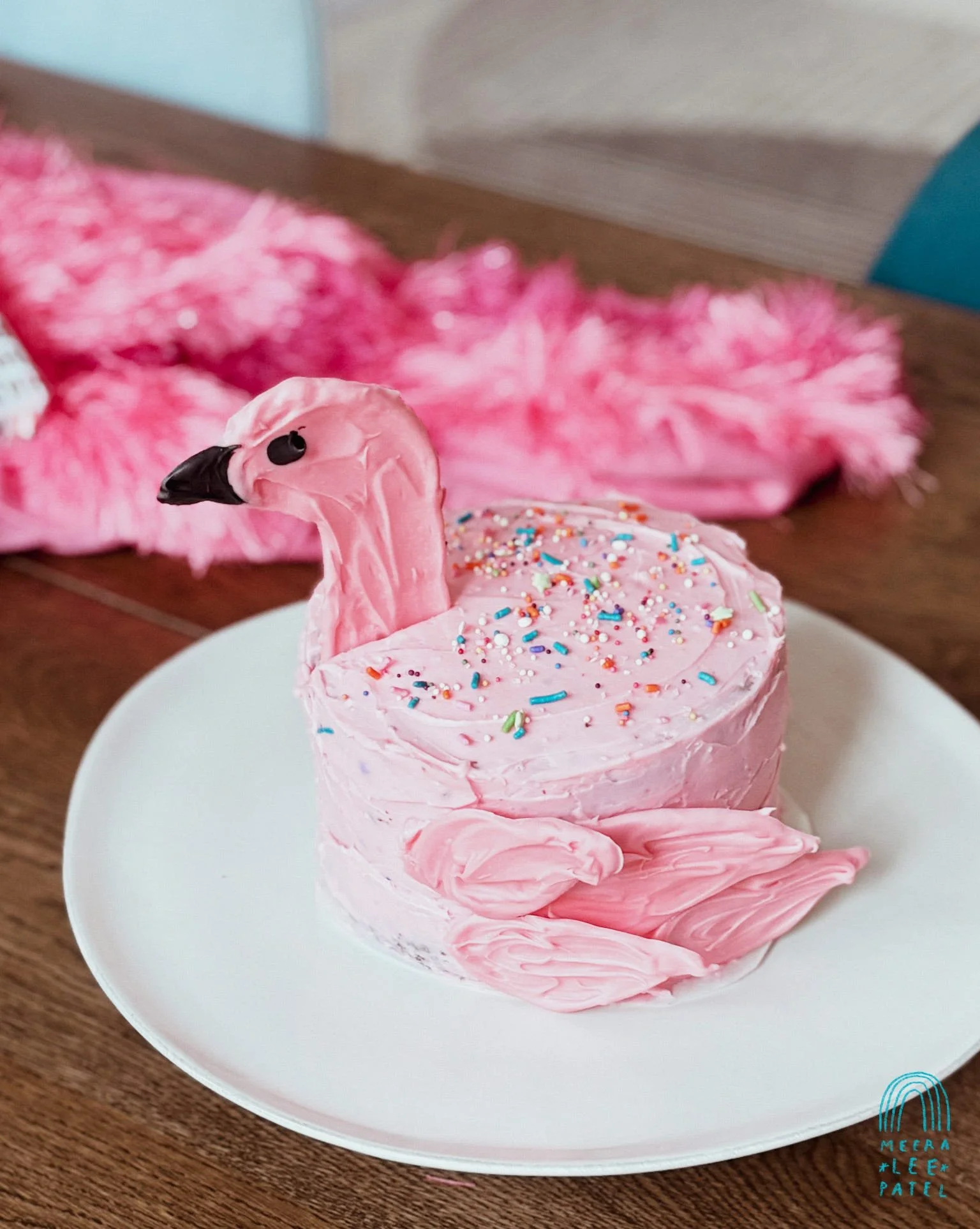
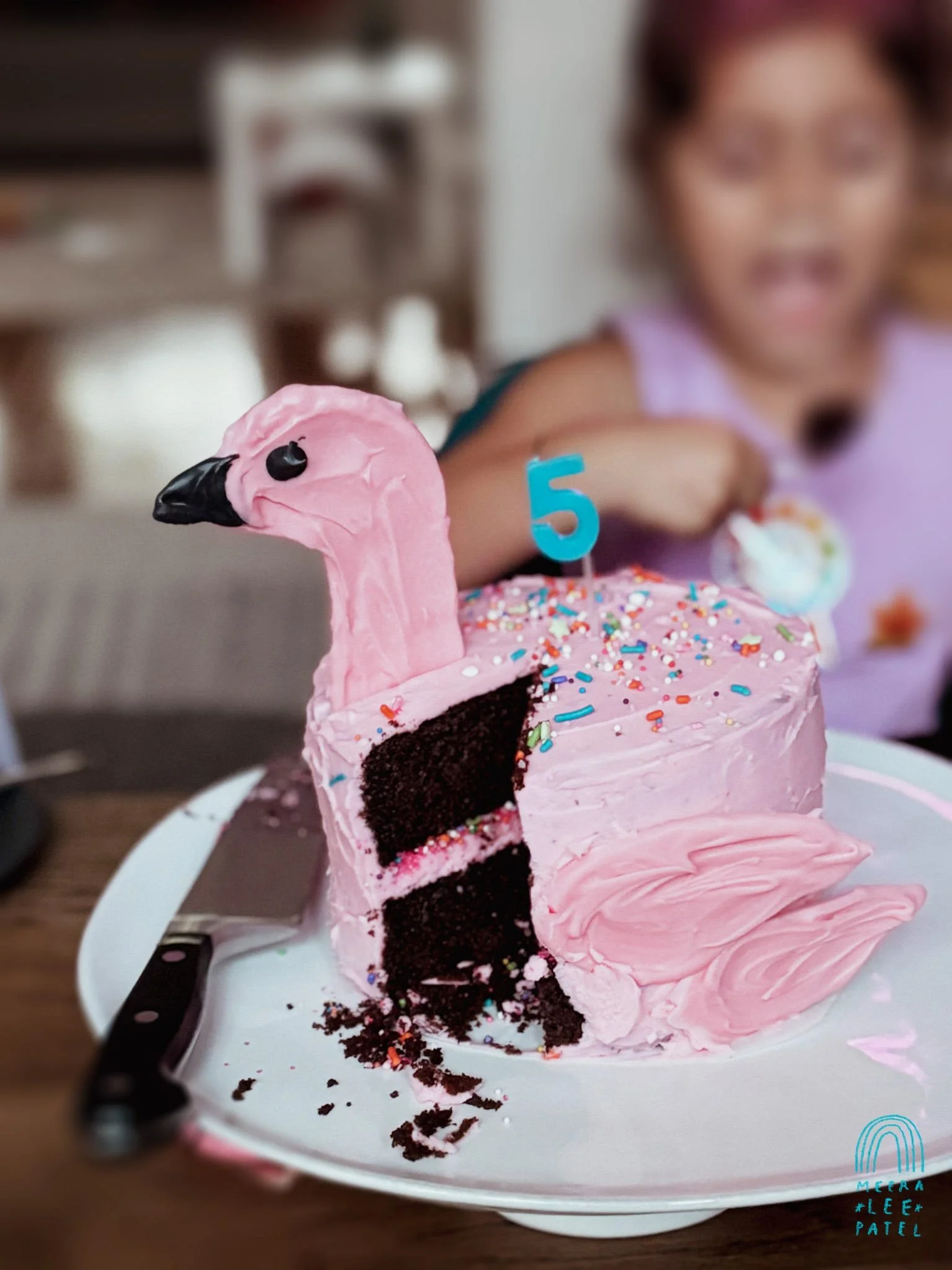
When N wakes up on her fifth birthday, the morning is ready. The sparkly lights have been hung, dangling over the bannister. The pom poms have been hung, twirled around the sparkly lights and the felted banner that reads happy birthday. The gifts are piled on top of the squishy yellow chair, waiting to be opened. The flamingo cake is baked and assembled, waiting to be eaten. The birthday breakfast is cooked and plated, a tiny candle on top, waiting to be blown out.
When N wakes up on her fifth birthday, her sister is ready. F follows her around with arms outstretched, longing to place them around her big sister. Happy birthday, N. Birthday huggie time! she screams over and over again, in the only pitch volume she knows: loud. F follows N from room to room, struggling to hug her while N struggles to walk away, struggling to hug her while N brushes her teeth. That’s enough hugs! N says, annoyed, and F, finally giving up, turns to me and says: I want my birthday to come out now.
When N wakes up on her fifth birthday, her father and I are ready. We’ve been talking about it for days now: how it’s been five years since we first became parents, how five is a milestone, how five means something. I recall every moment in the past five years when I have faltered under the weight of parenthood, and wish I’d been more present for the sweet child in front of me. I remind myself that all I can do is offer N who I am; give her the space necessary to dissent, grow, and learn; and to try—genuinely try, to live a little more graciously. A little more in the present.
When N climbs into bed on the night of her fifth birthday, her bedroom is ready. The ceiling fan whirls. Her sparkly canopy gently sways. The stars on her walls twinkle and swirl. When I tuck her in, she asks me to stay and snuggles into me. She clutches my body like a toddler during drop off, so closely that I forget she’s five years old. So closely that I forget that next year she’ll be six, then twelve, and then out of my arms altogether. N is quiet. Her eyes are closed, but I know she’s awake because her hand moves so closely in mine. Quite suddenly, I don’t feel ready anymore.
TUESDAY
N’s flamingo cake, on her fifth birthday (2025)
N requests a flamingo cake for her birthday and although I fret about it for weeks, it comes together quite nicely and with little difficulty. Five years into making birthday cakes for my kids, I feel something I rarely feel, which is pride: for taking on a task and accomplishing it, for making a young kid’s wish come true, for enjoying the process and letting the mistakes show.
N eats a flamingo on her fifth birthday (2025)
Past cakes include F’s bluey cake, F’s rainbow cake, N’s rainbow cake, N’s painted cake.
WEDNESDAY
“A writer is a person who cares what words mean, what they say, how they say it. Writers know words are their way towards truth and freedom, and so they use them with care, with thought, with fear, with delight. By using words well they strengthen their souls. Story-tellers and poets spend their lives learning that skill and art of using words well. And their words make the souls of their readers stronger, brighter, deeper.” ―Ursula K. Le Guin
THURSDAY
To celebrate the publication of my journal, Learn to Let Go, I invited a few people I admire to share what they’re letting go of, and what they’re learning in the process.
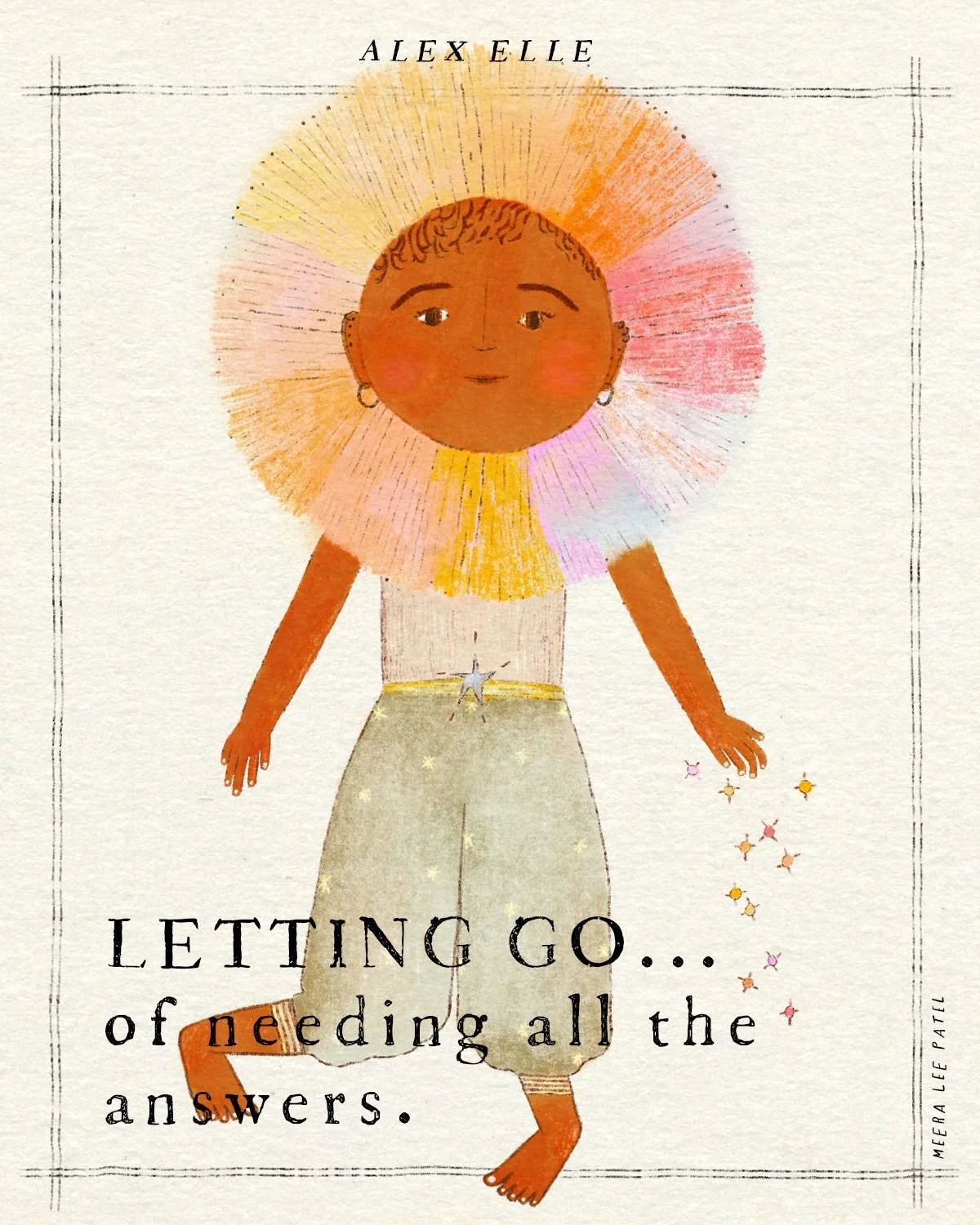
Today, I’m featuring New York Times Bestselling Author, wellness educator, and Restorative Writing teacher Alex Elle. Alex is also the author of How We Heal, a practical and empowering guide to self-healing.
I’ve known Alex since my Brooklyn days, and it’s been stunning to see her growth over the years—as an author and artist, but also as a mother, partner, and friend. I’m so happy to share this space with her today.
What have you let go of?
AE: I’ve let go of the belief that I have to prove my worth through overextending myself—creatively or personally. I no longer chase validation by saying yes when I mean no, or by holding onto relationships and projects that no longer align. Letting go of people-pleasing and performance has made space for deeper honesty, more intentional work, and a steadier connection to my own voice. What’s mine won’t require me to betray myself to keep it.
What did you gain when you released it?
AE: I gained a grounded sense of self-trust and the freedom to create, connect, and care from a place of alignment—not obligation.
What are you letting go of?
AE: I’m learning to let go of urgency—the need to have all the answers, fix what’s broken, or rush my healing..
What are you learning from this process?
AE: I’m learning that the more I unfurl, the more I bloom.
Many thanks to Alex for sharing a little bit of her journey with us. You can learn more about Alex’s work and subscribe to her newsletter, Gratitude Journal.
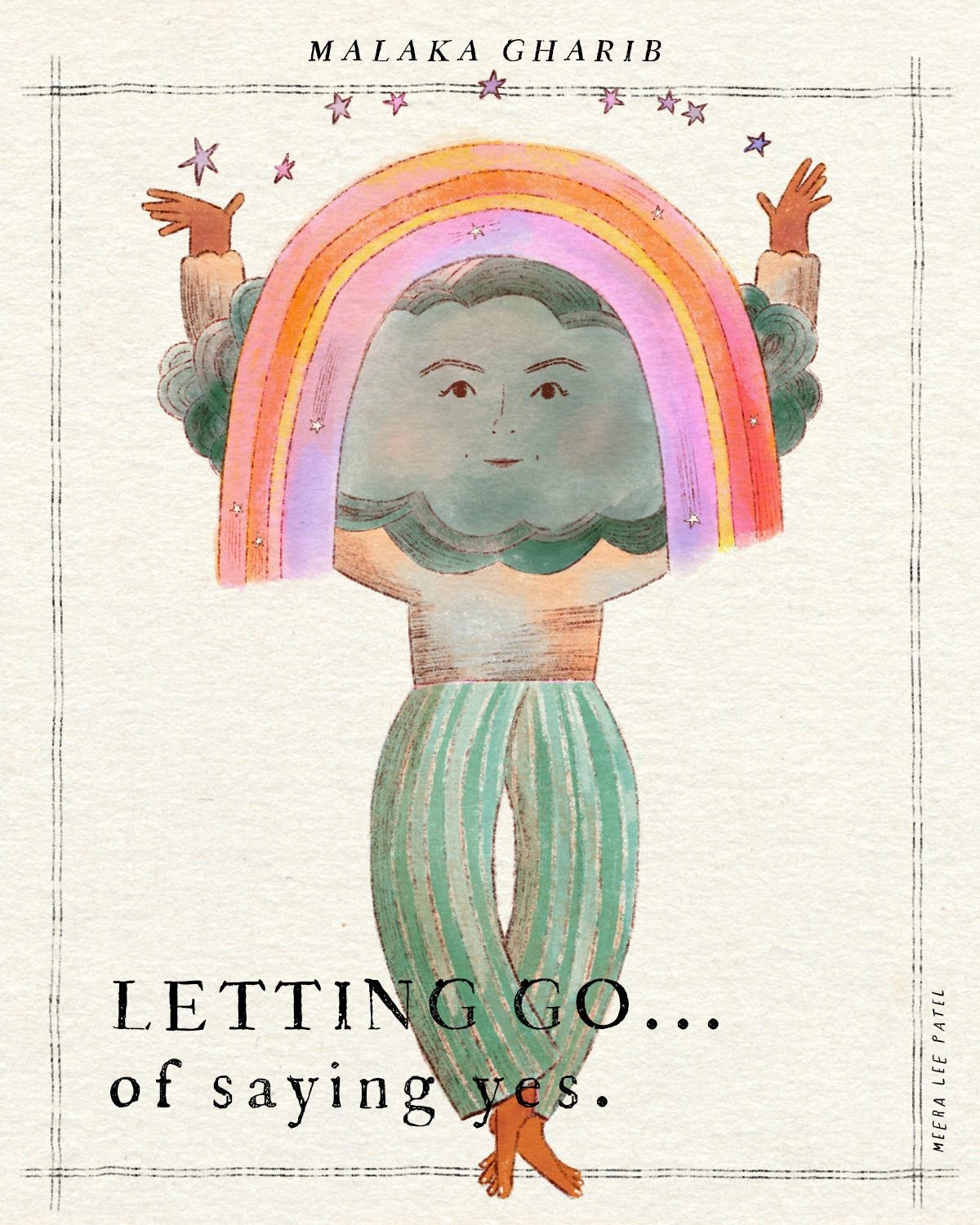
P.S. Past interviews include Carolyn Yoo on letting go of artistic identity, and Malaka Gharib, on letting go of yes.
Learn to Let Go came out last week! Thank you to everyone who has bought, shared, and celebrated the release of this special book.
In case you missed it, I spoke about acceptance, letting go, and making books with Radim Malinic on the Daring Creativity podcast. I joined my friend Kena Paranjape for a really lovely conversation about the book in the Supernova community. The book is featured in the latest issue of Uppercase Magazine (thank you, Janine!), and I joined Jessica Swift for a conversation about letting go in our creative practices at her Art Oasis retreat.
As a reminder, Bookshop.org is offering a 15% on all orders with the code LTLG15 for a limited time. This is a good time to grab a copy or two or five, especially for upcoming holiday gifts. You can also purchase from another shop listed here, or if you’re overseas, the UK edition. Thank you, always, for supporting my work.
FRIDAY
On the bridge
A village witch
Tells me
You see nothing
Clearly, since in all your eyes
A fog gathers generations
—The Witch by Ye Hui
See you next week!
xx,
M
To sign up for my weekly newsletter, Dear Somebody, please subscribe here.
Dear Somebody: It's publication day!
Hi, friends.
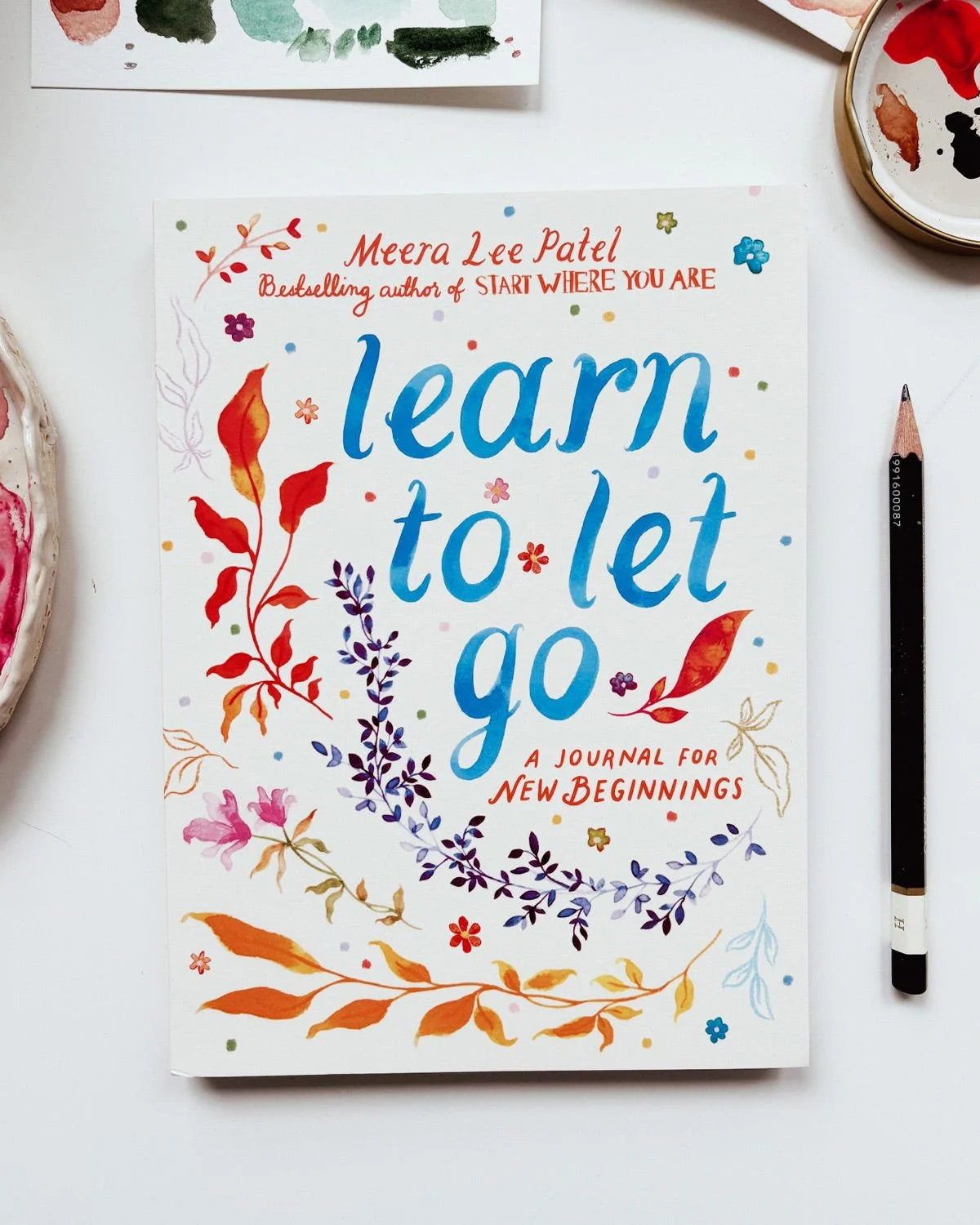
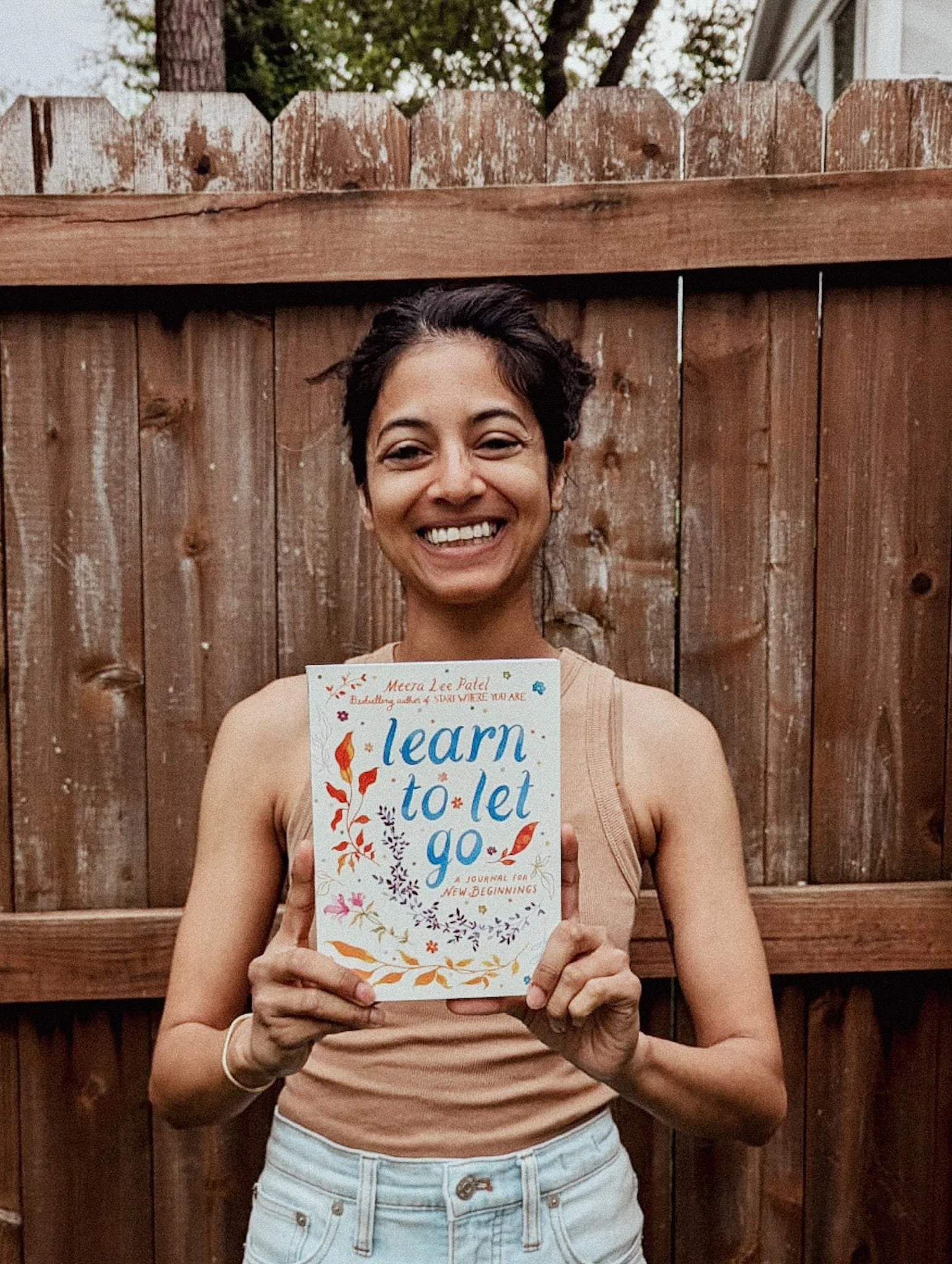
I’m sending out a special note today because it’s publication day for Learn to Let Go!
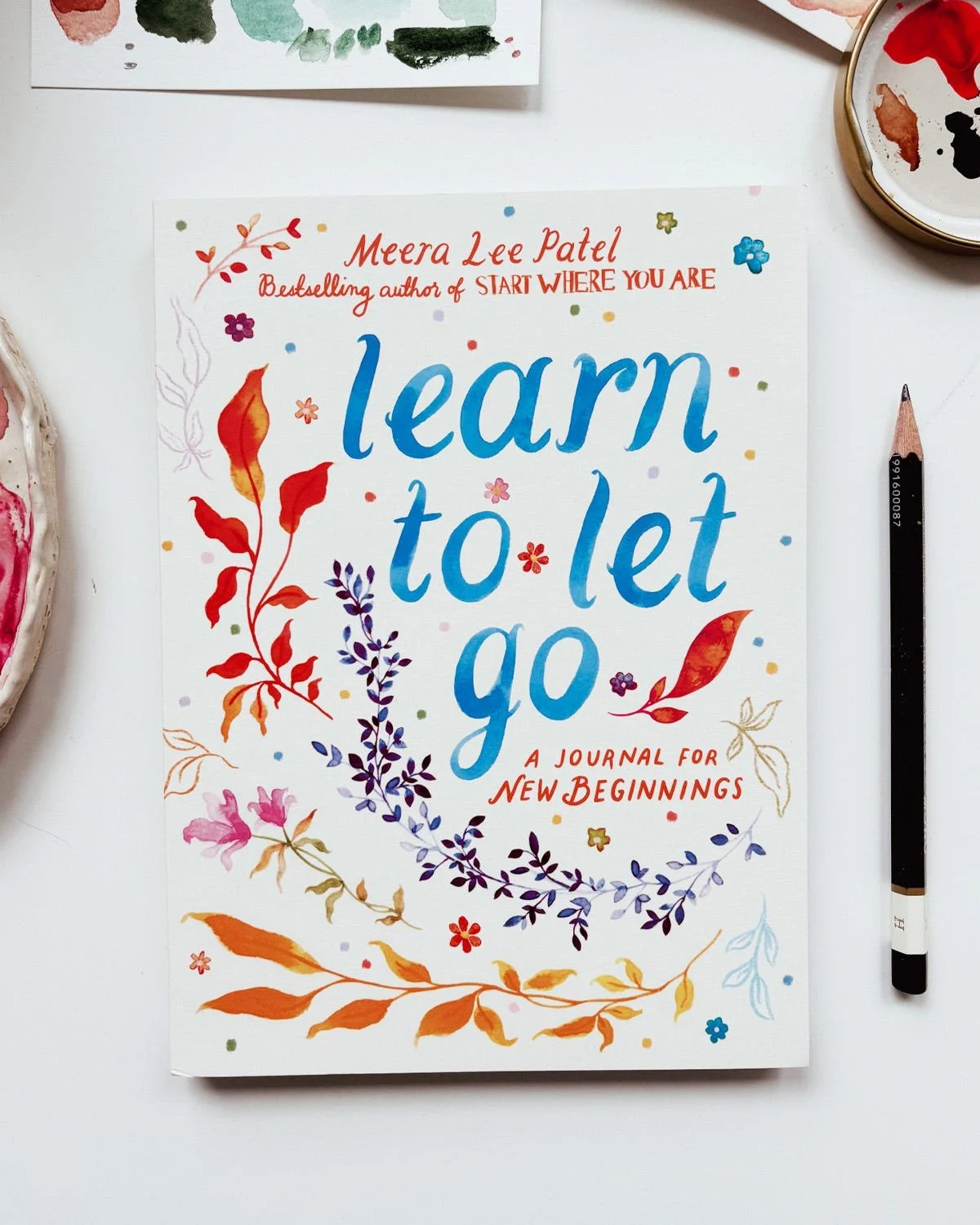
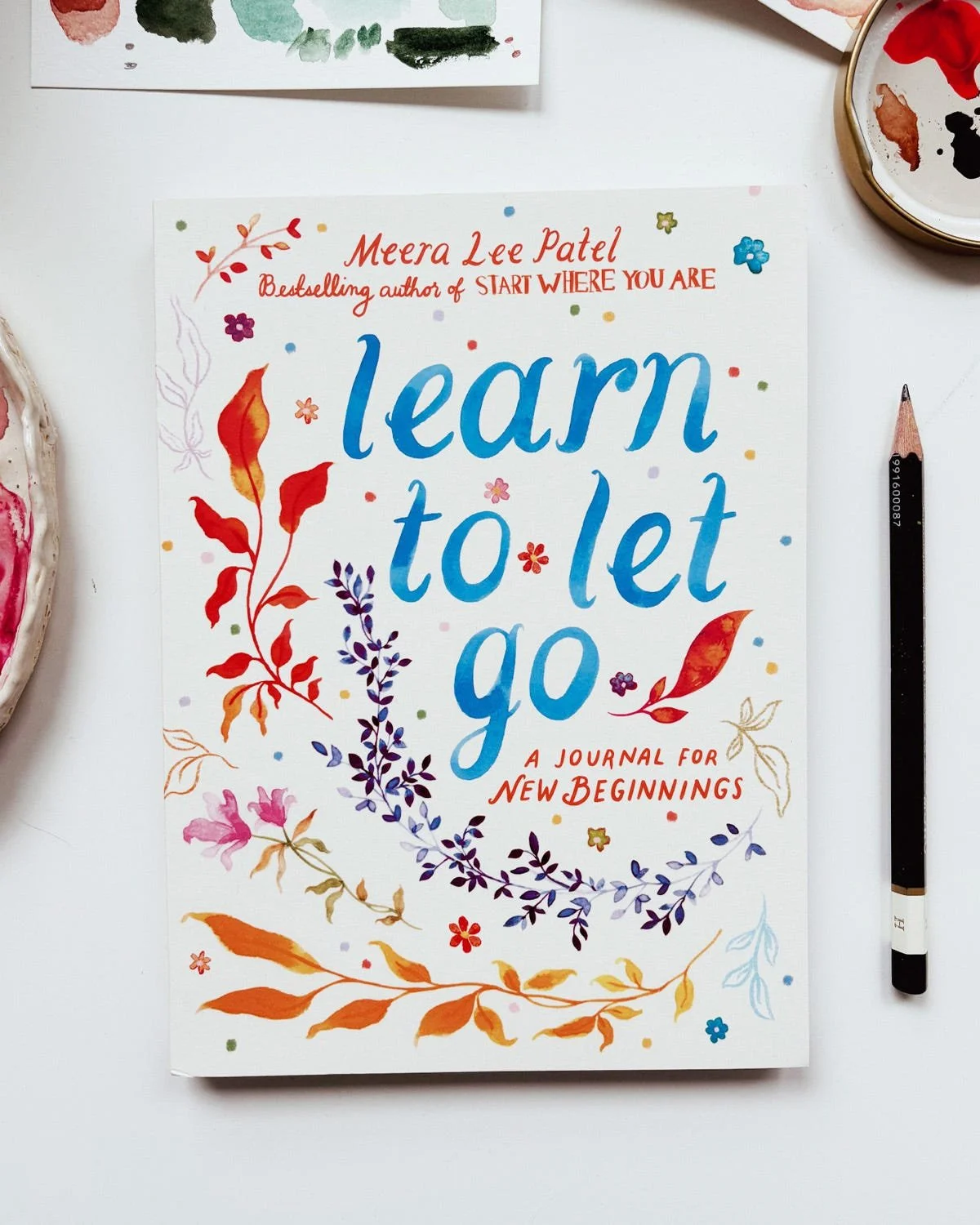
Learn to Let Go: A Journal for New Beginnings publishes today through TarcherPerigee (Penguin Random House) and is available through BuyOlympia, Bookshop.org (15% off , Barnes & Noble, Target, and Amazon.
The UK edition is available through Michael O’Mara Books and is in Waterstones bookstores everywhere.
Learn to Let Go: A Journal for New Beginnings (2025)
This journal has been a long time coming. I’ve spent my entire life carrying baggage that’s too heavy: resentment, conversations that went wrong, anger, one-sided friendships, beliefs that don’t quite fit, the idea that I don’t have what it takes. It wasn’t until a few years ago—when N first came into the world, that I decided to put some of this weight down.
As a first-time mother, I carried a lot of unfair expectations for myself. I wanted to get it right—to be the best possible parent to this tiny little being. I owed that much to a child who didn’t ask to come into this world. The weight of this pressure caused me to buckle, more and more until I finally broke. I couldn’t be the best mother and the best writer. I couldn’t be the best partner and the best friend. I couldn’t keep a clean house and make progress on my work. I couldn’t cook healthy, fresh meals and meet my deadlines. What I wanted, above all else, was to be somebody who could.
The biggest source of anger, the most heartbreaking source of friction during these years wasn’t my new role as a mother, the new responsibility of a child, or the countless sources of exhaustion that this new chapter presented: it was my simple inability to let go.
I didn’t realize that the pressure I placed on myself to be a great mother was preventing me from stepping into this new role with confidence, with assurance. I didn’t realize that dwelling on all that had changed kept me from seeing the good blossoming in those very same spaces. I didn’t realize that resenting myself for who I no longer was prohibited me from seeing how I had grown and become someone new: someone that I didn’t recognize yet, but that I would soon grow to love—and to admire and respect, if I gave myself the chance to.
In writing this journal, I learned that although I resented myself for not being able to let go of more sooner, letting go isn’t a practice to rid myself of discomfort or dynamics that cause me pain. Instead, pursuit of acceptance—of myself and the circumstances I find myself in—is a much more practical journey. It provides room for growth, encourages me to maintain perspective, and naturally allows me to let go of what no longer fits.
LEARN TO LET GO is a fully-illustrated journal for opening the door to new beginnings, designed to help you clarify the values necessary for accepting who you are now, so you can grow into the person you want to be. The book becomes more challenging as you work through it, ensuring that you’ve completed the self-reflection necessary for letting go of the more difficult sources of pain, frustration, and confusion.
Each page of this journal is filled with encouraging quotes by world leaders, creatives, and activists who have faced their own challenges with acceptance and compassion; thoughtful exercises that encourage you to find the value and strength in yourself; and challenging prompts that will help you face your current challenges, navigate difficult transitions, and leave what no longer serves you behind.
This book is guided by four core beliefs: a belief in one’s own infinity; forgiveness, for yourself and others; a commitment to self-reflection and flexibility, and letting go as a practice of health maintenance. It encourages you to clarify your values; to strengthen your resources by exercising them; to accept and acknowledge your circumstances; and to remain open-hearted and brave.
Here’s how you can support Learn to Let Go:
Order a copy (or like, five) of Learn to Let Go: A Journal for New Beginnings
Forward this newsletter to someone who will appreciate this book!
Ask your local library to carry the book if you can’t afford to purchase it—knowing that your entire neighborhood will now have access to it!
Ask your local bookstore to carry the book. I love local bookstores and want to support them as much as possible throughout this launch.
Write a review on Amazon so more people can find this book
If you want to review or write about Learn to Let Go (or know someone who might), feature it in your publication/podcast/etc., or interview me — just reply to this email to reach me. Every little bit helps.
THANK YOU for reading and for all of your support and encouragement. It means the world to me.
See you on Friday with a new edition of Dear Somebody, when I’ll talk a little more about letting go, have a new illustrated interview ready for you—and, of course, a poem.
xx,
M
To sign up for my weekly newsletter, Dear Somebody, please subscribe here.
Dear Somebody: Letting go of yes.
October desk (2025)
A year from now, here are five things from this week that I'd like to remember:
MONDAY
There is a thought that I keep close to my heart and consider often: There are so many beautiful things waiting for me on the other side of my fear. I am careful to welcome new people and experiences, despite the chance of rejection, because just as likely is the chance that my vulnerability will introduce me to a brighter world—one where I feel comfortable being fully seen and understood.
I’ve built up resilience against rejection knowing that if someone is incapable of accepting my honesty, it’s because they are engaged in a battle against themselves, not against me. Vulnerability creates a renewable energy—each time I open myself up, I am encouraged by how this simple act can bring me closer to someone else. When I give another person the chance to see me, I also give myself the opportunity to love myself more. The wins are worth the wounds—each time I share a part of myself and see the hint of recognition in someone else’s eyes, I see myself, again, for the very first time.
—from How it Feels to Find Yourself: Navigating Life’s Changes with Clarity, Purpose, and Heart, my book of illustrated essays
TUESDAY
On Artists and Hopelessness by Beth Pickens; Helen Keller’s moment of realization; the artwork of ATAK.
WEDNESDAY
Words by Georgia O’Keefe that have stayed by my side this week:
“I have already settled it for myself so flattery and criticism go down the same drain and I am quite free.”
“Nobody sees a flower - really - it is so small it takes time - we haven’t time - and to see takes time, like to have a friend takes time.”
“I wish people were all trees and I think I could enjoy them then.”
My studio mate Georgia O’Keefe, made by artist Krista Coons (2025)
THURSDAY
To celebrate the upcoming publication of my journal, Learn to Let Go, I invited a few people I admire to share what they’re letting go of, and what they’re learning in the process.
Today, I’m featuring journalist, cartoonist, and graphic novelist Malaka Gharib. Malaka is the author of the beloved I Was Their American Dream and It Won’t Always Be Like This.
What are you letting go of?
MG: I became a parent two and a half years ago and I’ve had to learn how to say no a lot more…to hanging out with friends, to the social life I was used to, to a lot of the free time I had to making art, reading, writing and seeking inspiration through art, music and film.
What did you gain?
MG: I learned I was spending a lot of time with people who didn’t matter—and actually, I was learning for the first time to seek inspiration from the present and to live fully in the moment. In a lot of my artwork and writing, I am writing about the past, but with a child, you learn to appreciate the joys of every passing moment because my time with him is so fleeting.
Many thanks to Malaka for sharing so intimately with us. You can follow Malaka’s work here and check out her books here.
P.S. Last week’s interview was with the lovely Carolyn Yoo:
In case you missed it, I spoke about acceptance, letting go, and making books with Radim Malinic on the Daring Creativity podcast.
We’re only one week away from the publication of Learn to Let Go, and I’m happy to share that for a limited time, Bookshop.org is offering a 15% on all orders with the code LTLG15. A good time to grab a copy or two or five!
You can also purchase from another shop listed here, or if you’re overseas, the UK edition. Thank you, always, for supporting my work.
FRIDAY
One: from The First Elegy
Yes—springtime needed you. Often a star
was waiting for you to notice it. A wave rolled toward you
out of the distant past, or as you walked
under an open window, a violin
yielded itself to your hearing. All that was mission.
But could you accomplish it? Weren’t you always
distracted by expectation, as if every event
announced a beloved? (Where can you find a place
to keep her, with all the huge strange thoughts inside you
going and coming and often staying all night.)
—The First Elegy by Rainer Maria Rilke
See you next week!
xx,
M
To sign up for my weekly newsletter, Dear Somebody, please subscribe here.
Dear Somebody: Speckles and streamers.
A beautiful Midwestern ripped sky, in September (2025)
A year from now, here are five things from this week that I'd like to remember:
MONDAY
When I pick N up from school lately, the conversation is minimal. She’s tired; I’m tired; we drive along in silence, each of us held quiet by our own thoughts. Every so often, I check on her in the rearview mirror. She catches me looking and gives me a small smile. Sometimes the smile is genuine, pleased at being noticed. Other times, I get the feeling that the smile is for me—obligatory, a response to my unasked questions. It reminds me that, day by day, she’s growing up: growing accustomed to social rules and performances, growing aware of another person’s gaze on her, growing an invisible shield between her mind and mine. Slipping through my fingers.
Today is different. From the moment I buckle her into the carseat, N’s mind and eyes are locked into one thing only: the clouds. Mom, she says. Did you notice the clouds today? I squint around the sunlight striking my windshield and look at the sky. The clouds are in tatters, sprinkling the blue sky in bits and patches, like an animal tearing its way through a fresh carpet. Others streak across the wide sky in ribbons, long lines that travel as far as we can see.
Streamer clouds (2025)
Speckle clouds (2025)
What kind of clouds are those? N asks me, curious. Prompted to remember what little I know about clouds, I recall three of the four main classifications and I consider them aloud. They don’t look like cumulus clouds, I reason. Those are…popcorn-like? I remember that cirrus clouds are wispy, which none of these are, and stratus? No idea there.
While I’m busy talking to myself, N classifies the clouds herself. The long ones are streamers, she says, like the kind you bring to a party. And the rest are ripped out of the sky, like speckles. Speckles and streamers.
There’s little else that excites me more than hearing N describe the world. Her use of language is extremely visual; it isn’t difficult for me to imagine what she sees. Her choice of words feels intimate, considered. Though her vocabulary is smaller than mine, she chooses words carefully, with affection.
For the next thirty minutes, we drive on in excitement. N points out each unusual cloud she sees and takes photos of them with my phone. There’s a few cloud-shaped ones,she says, spotting a cumulus. There’s a spaceship one. And that one is a sea streamer, because it waves up at the end. Like a whale.
As we grow closer to the intersection where I make a left for F’s school, she laments: the cloud she loves most will disappear from her view. Mom, make sure you look at this cloud before you turn, she says, her cheeks pressed to the window. Isn’t the sky really just so beautiful today? I turn around and look at her, my sweet stormy cloud. Often full of rain and a bolt or two. In a few weeks, she’ll be five.
Yeah, I say, staring at her staring out the window. The most beautiful thing I can see.
TUESDAY
On the value of shame, which I hadn’t considered before:
“Very few of us are moral saints—certainly not me. Unlike everlasting, lofty, abstract principles, we who try feebly to live up to them down in the muck of reality face mucky obstacles: we get tired, impatient, envious, and angry. Our values and principles ask more than most of us are able to give—if they don’t, they are probably too weak to be worth holding. But we don’t have to celebrate our failures or, worse still, confuse them with our successes. This is one valuable function of shame: it reminds us of who we want to be when we fall short, a goalpost that is necessarily anchored to the lofty height that our conduct fell beneath. We also encourage and defend these general social standards when we hold others to them, and not just ourselves.”
—from How Can We Live Together? by Olúfẹ́mi O. Táíwò
WEDNESDAY
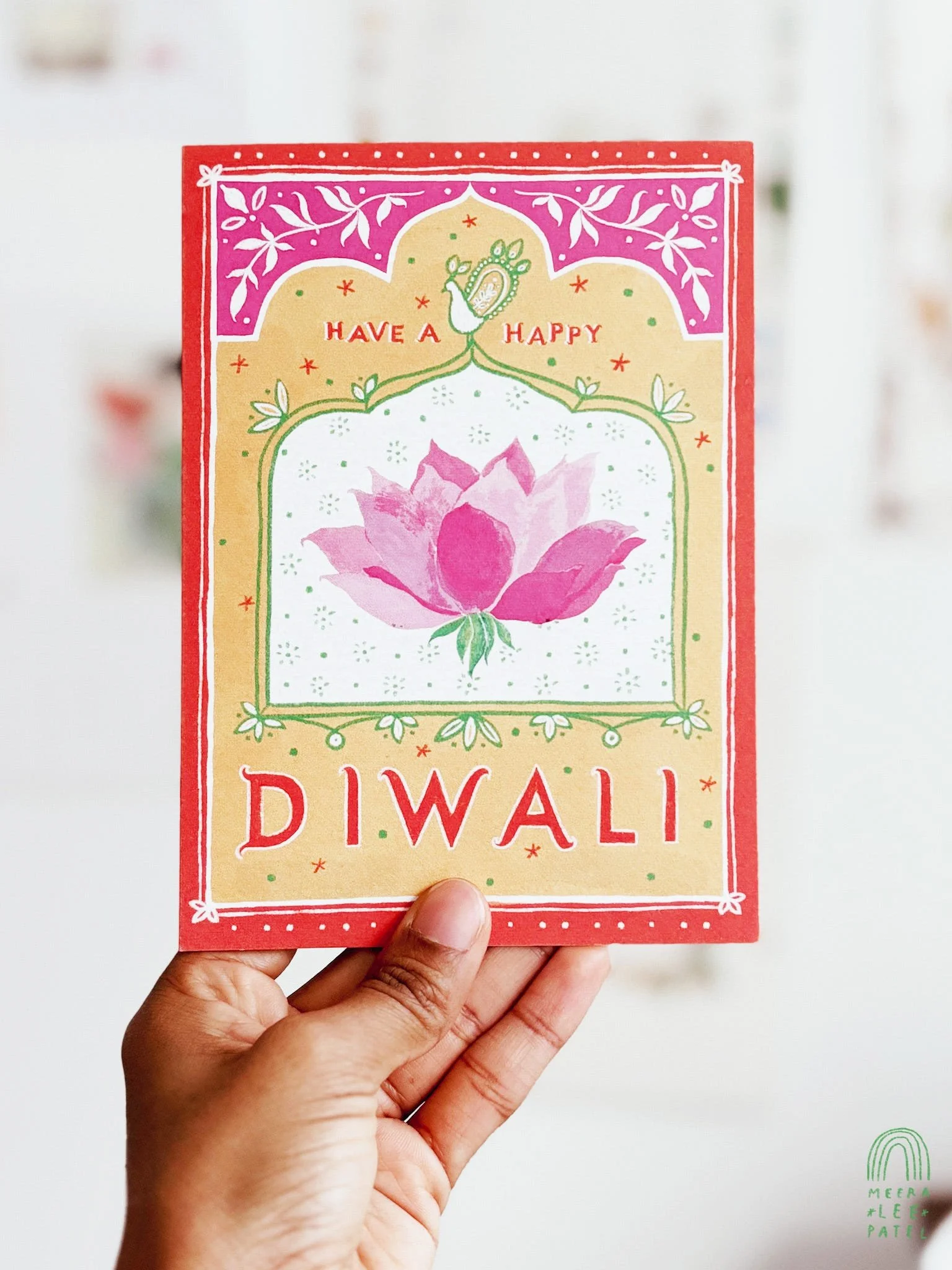
My first Diwali card with Biely & Shoaf! (2025)
I’m very excited to share my first Diwali card with you, made in collaboration with Biely & Shoaf! When I began my career a decade ago, no publisher would consider creating a Diwali card with me—really—and so, many years later, this feels like a small win. A win: for me, for the culture, for the field of illustration, for all of us.
You can purchase this card on the Biely & Shoaf website.
THURSDAY
To celebrate the upcoming publication of my journal, Learn to Let Go, I invited a few people I admire to share what they’re letting go of, and what they’re learning in the process.
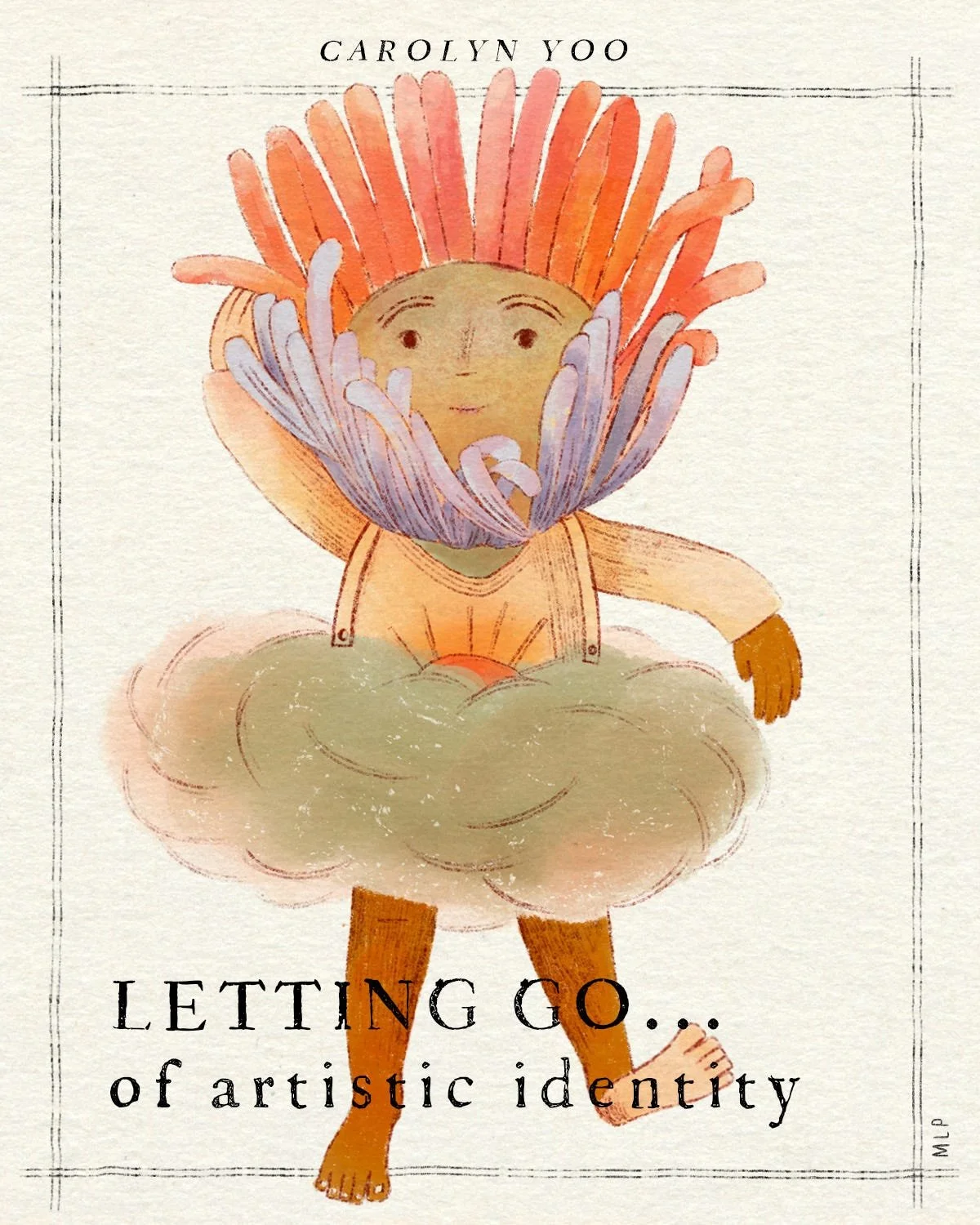
Today, I’m featuring art, illustrator, and writer Carolyn Yoo. She writes the newsletter SEE YOU, which focuses on the intersection of creativity and self-discovery. I particularly enjoy the way Carolyn views creativity: holistically, as an integral component of good health. Her writing often provides me with something useful to consider or implement into my own creative routine.
A Portrait of Carolyn Yoo (2025)
What are you letting go of?
CY: A clear artistic identity.
What is this process teaching you?
CY: I’m allowing myself to inhabit the mystery of my interior mind, paying attention to what I’m drawn to and letting all of it percolate into my work with self-trust, without worrying if I make sense to others.
Many thanks to Carolyn for offering a glimpse into her current practice of letting go—a practice that many of us creatives may find useful. You can see Carolyn’s work hereand sign up for her newsletter here.
In case you missed it, I spoke about acceptance, letting go, and making books with Radim Malinic on the Daring Creativity podcast.
We’re only two weeks away from the publication of Learn to Let Go, and I’m happy to share that for a limited time, Bookshop.org is offering a 15% on all orders with the code LTLG15. A good time to grab a copy or two or five!
Thank you, always, for supporting my work.
FRIDAY
it rained in my sleep
and in the morning the fields were wet
I dreamed of artillery
of the thunder of horses
in the morning the fields were strewn
with twigs and leaves
as if after a battle
or a sudden journey
I went to sleep in the summer
I dreamed of rain
in the morning the fields were wet
and it was autumn
—September by Linda Pastan
Two years ago, these were the five things I most wanted to remember:
See you next week!
xx,
M
To sign up for my weekly newsletter, Dear Somebody, please subscribe here.
Dear Somebody: The only book worth writing.
Favorite warning (London, 2025)
A year from now, here are five things from this week that I'd like to remember:
MONDAY
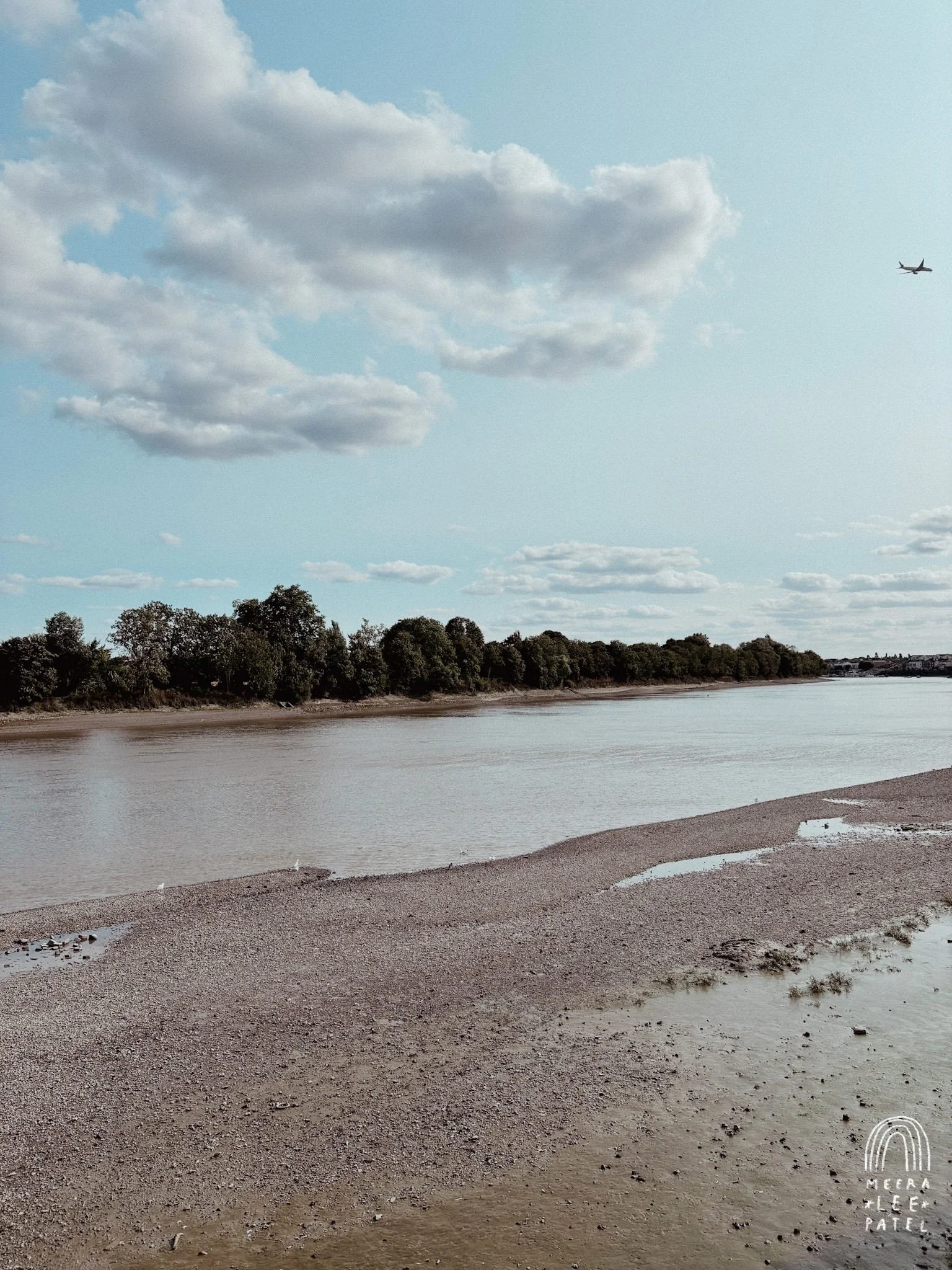
After our usual English breakfast, we start a long, leisurely walk to Bishop’s Park along the river. I’m meeting V, a fellow writer (and editor), for the first time. We first entered each other’s orbit nearly a decade ago, when she commented on an Instagram post of one of my books. I was honored then, as I am now, to have my work read by someone I so deeply admire.
I drag the kids along, half-pulling N, half-carrying F. We left plenty of time to walk, but the children pause to kiss every dog and wave at every gull and before I know it, I’m already late, nowhere near the park. Go on ahead, T tells me, and I do, half-walking and half-running, now pulling myself along faster than my feet prepared for.
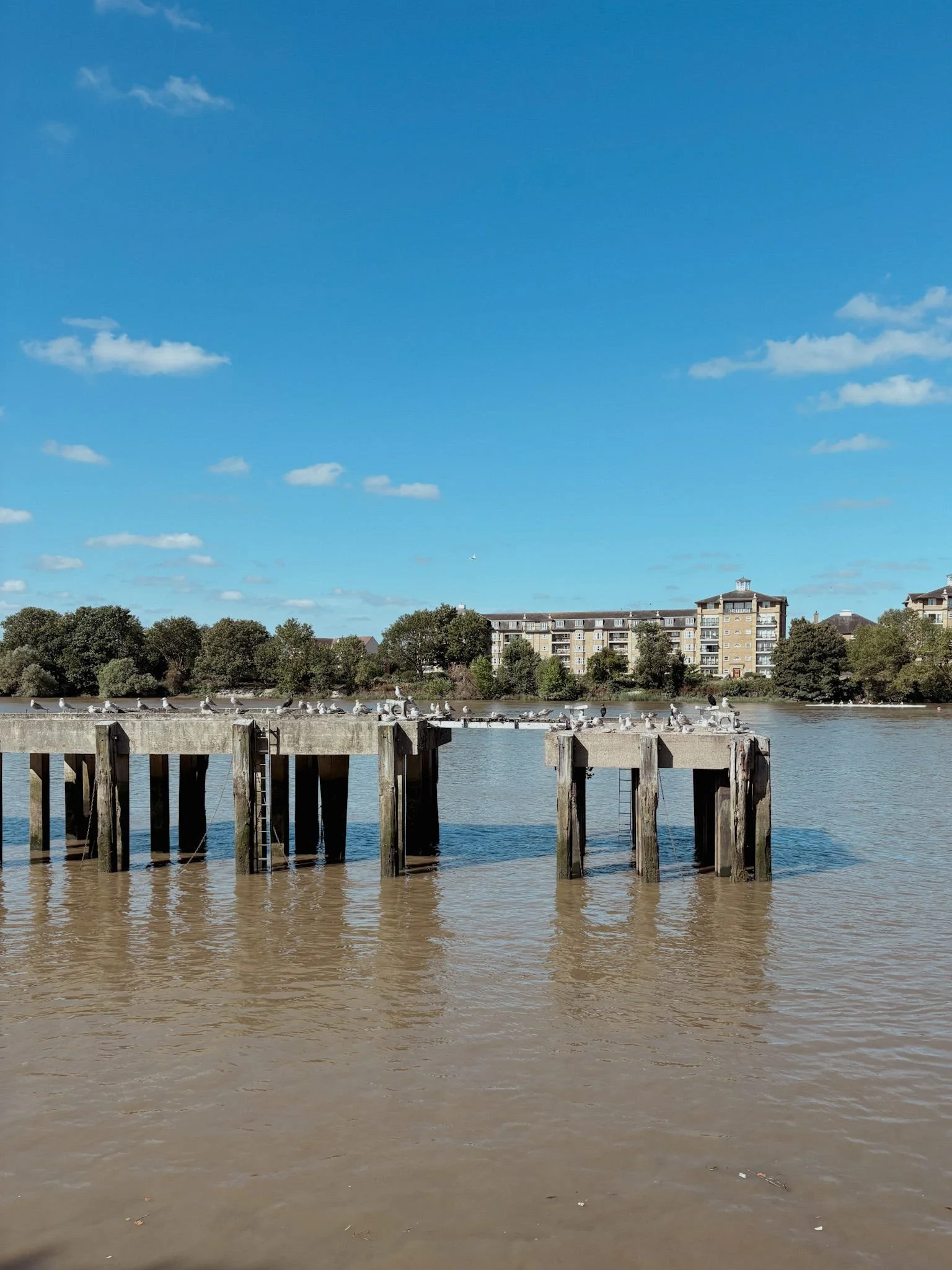
Gulls congregating along River Thames (2025)
When I finally arrive, we get drinks and move over to a bench facing the river. After the initial few moments, we fall into conversation quickly and easily. I am so comfortable with this stranger, in fact, that although it gushes a mere few feet away, I never look away from V and back towards the river. Not once.
I am reminded, once again, about how expansive life becomes when I allow others in—how, no matter how small or routine my life may feel at any particular moment, opening myself up to the right person will immediately buoy it. The right person reminds me of my own possibility, my own effervescence, my own value. The right person reminds me that the right people are worth the effort: the hundreds of lackluster coffees and playdates and one-sided creative collaborations that led me, eventually, to this moment in Bishop’s Park.
For two hours, I am engulfed in conversation with another creative, another mother, another writer who I don’t have to explain myself to—because she already knows. For two hours, my brain buzzes with interest, with joy. I am invigorated in a way only possible when sharing meaningful conversation: when the conversation itself is the meal, the food and drink and river all forgotten. All this from a chance meeting with a stranger? All this from a comment on an Instagram post many moons ago? All this from a text message, a kind word, a hello? All this.
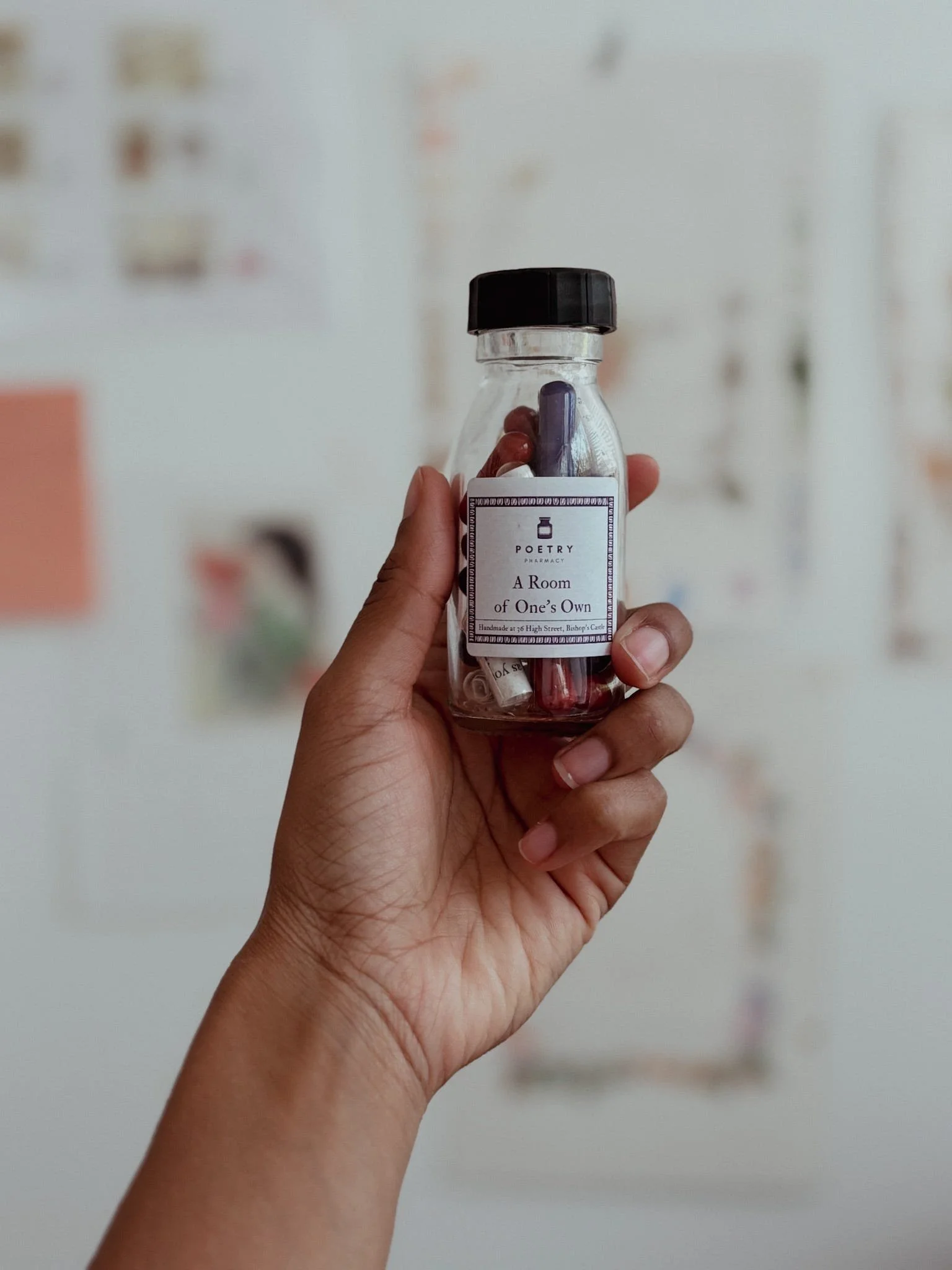
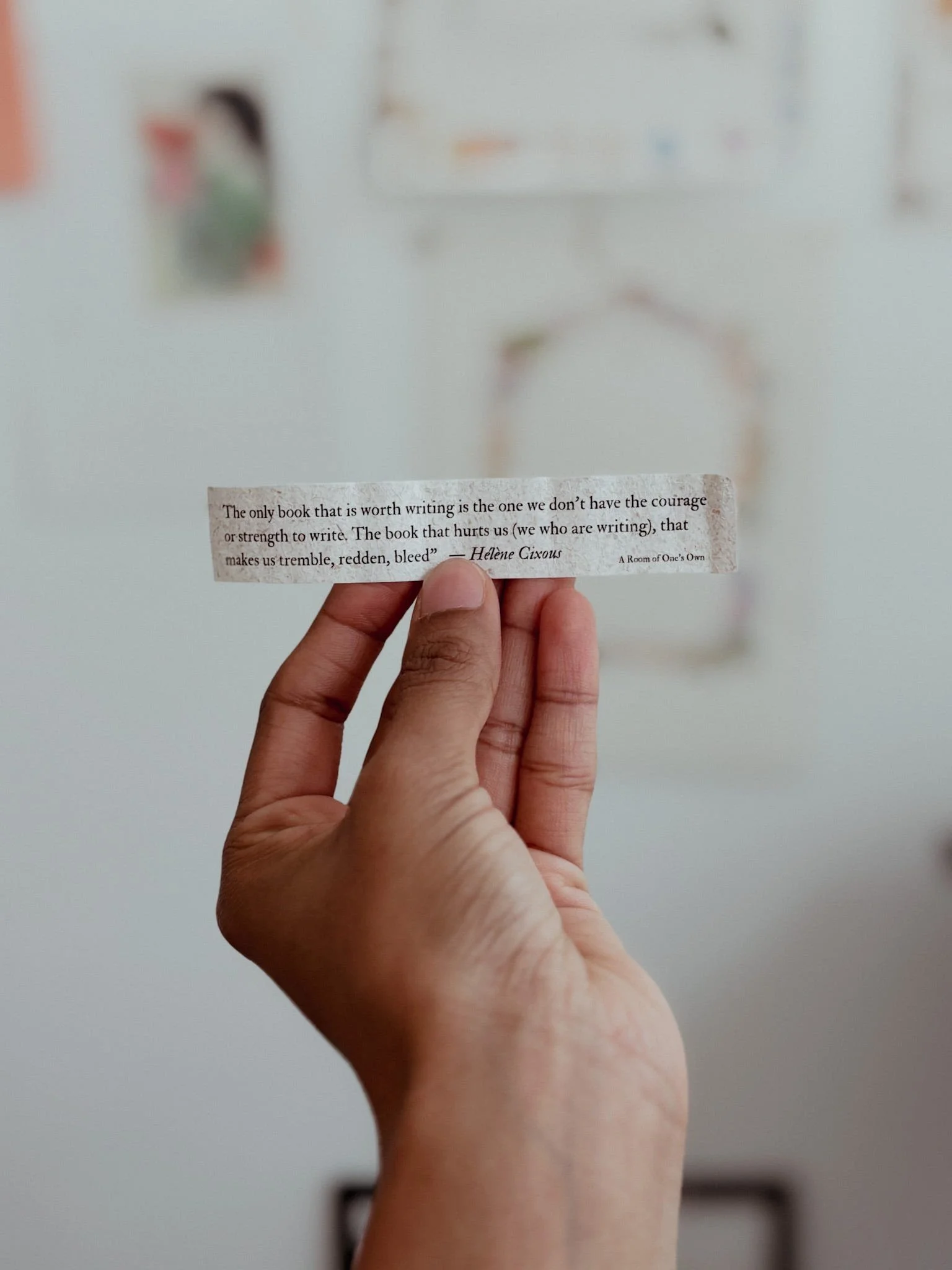
T and the kids arrive to collect me. I sign books for V’s friends and daughter, I place the gift she’s brought me—a prescription bottle of poetry, labeled A Room of One’s Own, in my bag. Hugs are exchanged, letters are promised, and I walk away satiated, wondering if this the beginning of a new friendship.
It’s now been four weeks since our time together in the park; I think of V often. At this age, there is so much space and strangeness between me and anybody else, lifetimes of moments and memories that we’ll never share. How do new friendships begin? How do they sustain when so much life has already been lived? V lives in london, I live in Saint Louis. Her daughter began college this fall; mine beg me to ensure no monsters take them away. Our day-to-day lives? Different. Our faces and brains and cultures? Different. Our upbringings? Our thoughts and fears and desires? Different, different, different. Life is a series of unfinished roads, dozens of bricks piled up and forgotten.
A gift from V: A prescription from The Poetry Pharmacy (2025)
A month to the day I placed the bottle of poems inside my bag, I finally open it. The pill I shake out is indigo, my favorite color. It’s a quote by Hélène Cixous, that reads: The only book that is worth writing is the one we don’t have the courage or strength to write. The book that hurts us (we who are writing), that makes us tremble, redden, bleed.”
Poetry prescription from my bottle of medicine (2025)
I know this is true of my work and I want it to be true of my life. After all, what’s the difference between writing a book and writing a friendship? Both require a little bit of vulnerability. Both require a knock. Both require you to stand at the door, asking to be let in. I’m afraid of many things, but I know that fear is a costume that courage wears often—so I pick up my pencil and begin to write.
TUESDAY
I’ve recently seen the cyanometer, an instrument for measuring blueness, make its rounds on the internet. It was invented by Horace Benedict de Saussure, a Swiss physicist and mountain climber in 1789.
I was reminded of Sophie Blackall’s recent creations of her own four cyanometers, which she used to measure the blueness of the sea. I don’t know what to call it, but I’d like to make a meter to measure the color of clouds.
WEDNESDAY
My Start Where You Are 2026 weekly planners and wall calendars (2025)
For those of you who haven’t seen, my 2026 wall calendar and weekly planners are now available, and they are bright, lovely, and a joy to use. This will be my last calendar collection, so if you’ve been wanting to hang a calendar of mine, now’s the time to grab one.
You can order them directly from Andrews McMeel/Amber Lotus Publishing or in my BuyOlympia shop, as well as your local book shop or Amazon.
THURSDAY
I haven’t recorded a podcast in a few years now, so it was especially enjoyable to break my recording fast with a really, really lovely conversation with designer and author Radim Malinic.
We discuss all things creativity and books, but I especially loved how easy it was to sink into a meaningful conversation about letting go: life is a continual series of transformations—and if you’re going to grow, you have to let go of the person you used to be. You can listen to the episode here.
A bonus episode, that focuses on a few especially meaningful moments (including my belief that letting go isn’t something you do, it’s simply the byproduct of acceptance) is available here.
My gratitude to Radim for having me on, and for such a pleasurable conversation. And! If you haven’t already, you can pre-order Learn to Let Go: A Journal for New Beginnings.
FRIDAY
That time
we all heard it,
cool and clear,
cutting across the hot grit of the day.
The major Voice.
The adult Voice
forgoing Rolling River,
forgoing tearful tale of bale and barge
and other symptoms of an old despond.
Warning, in music-words
devout and large,
that we are each other’s
harvest:
we are each other’s
business:
we are each other’s
magnitude and bond.
—Paul Robeson by Gwendolyn Brooks
A year ago, these were the five things I most wanted to remember:
See you next week!
xx,
M
To sign up for my weekly newsletter, Dear Somebody, please subscribe here.
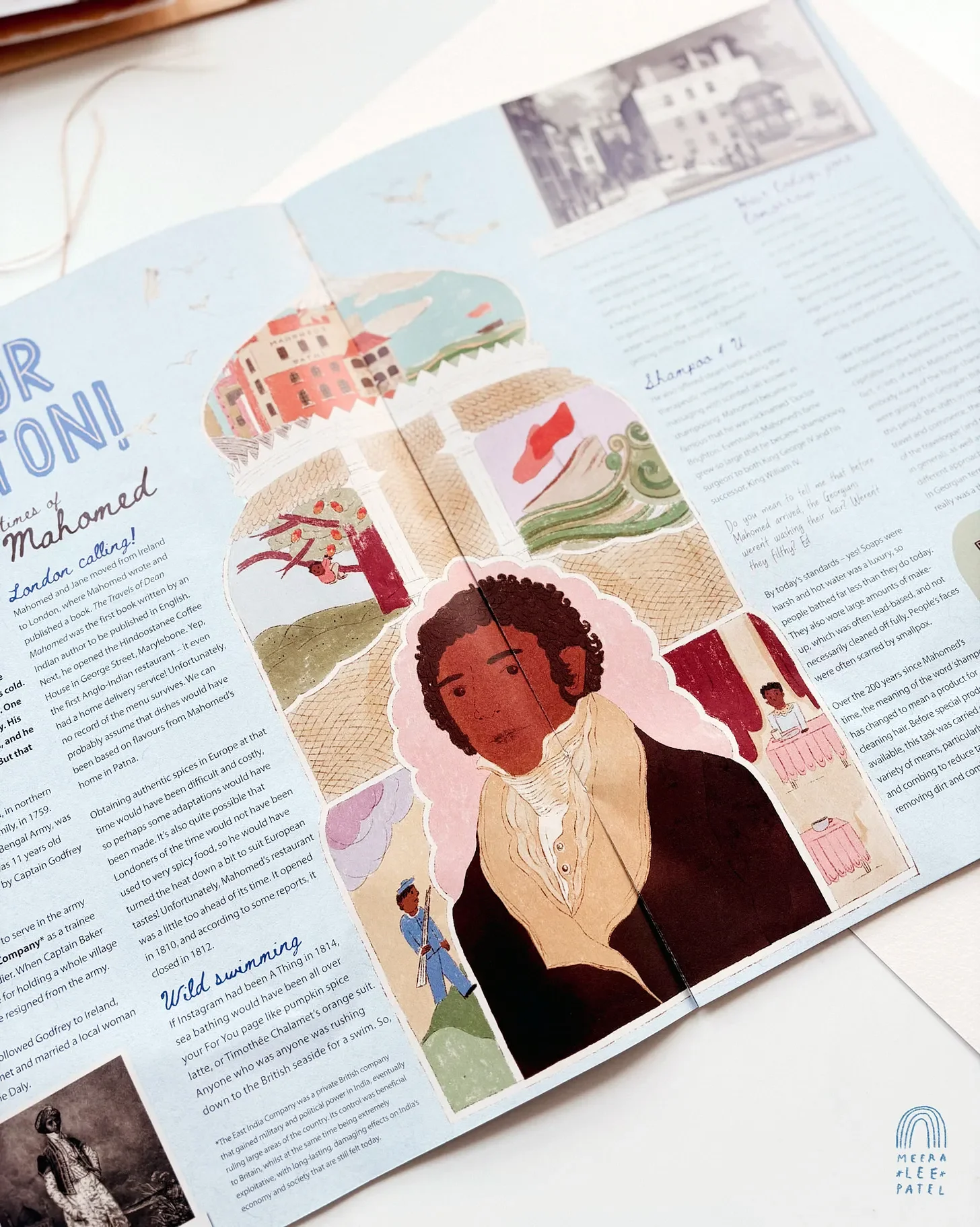
Dear Somebody: I'm on my way.
River Thames (London, 2025)
A year from now, here are five things from this week that I'd like to remember:
MONDAY
After our standard London breakfast (coffee from Tamp, chocolate croissant from Gail’s, a banana from the street vendor) we walk to the train and board for Blackfriars. We’re going to Tate Modern to meet Honee, a friend I made in 2022 when she attended our Visual Journaling retreat in the south of France.
I haven’t seen her since then, but our time together feels easy. We catch up on our present lives and then we visit our past ones: I learn about her childhood and upbringing, we exchange notes on our familial relationships, on art-making, on daily evolution. When we hug goodbye, it doesn’t feel like it’ll be for the last time.
Afterwards, I meet up with T and the girls and we venture into the Tate Modern bookstore. I haven’t stepped inside this gorgeous room since 2019, and the selection is always so tempting: dozens and dozens of beautiful books, all of which I want to purchase and take back home.
T immediately spots Start Where You Are on the shelves and excitedly shows our girls. He makes such a big deal out of it that I feel sheepish. I feel demure—after all, it’s been a full decade since this, my first book, was published—does it still deserve such fanfare? My relationship with deserve is a sticky one, conflated with dangerous notions of self-worth and how I must earn it.
Start Where You Are: A Journal for Self-Exploration (2015!)
It’s been 10 years since Start Where You Are was published—with well over a million copies in print, it’s sold hundreds of thousands of copies worldwide, has been translated into a dozen languages, and continues to help people all over this earth learn more about themselves. Seeing that it’s still stocked in one of the most prestigious museums in the world, a decade later, is validating.
Finding Start Where You Are at Tate Moden with N and F :) (2025)
This book changed my life. It began my career as an author; it invited me into the world of publishing—and allowed me to build my life around my love of books; it gave me my first real reason to take a chance on me. It has a very dear place in my heart, and if I consider it quite clearly, it’s disappointing to know that over time, I have learned to push all of my achievements away.
Luckily, T forces me to recognize my success, regularly, and for that I am grateful. Celebrating this book with my young girls is beautiful. I’m grateful for the chance to show them, first hand, that making things from the heart, with honesty and integrity, can take you to incredible places—to places that once, they weren’t even allowed to go.
I want to raise young girls who don’t feel the constant need to minimize their achievements, and believing that I deserve good things is fundamental for doing that. Believing that I deserve good things is hard—but I’m on my way.
TUESDAY
I’m On My Way by Ben Kweller, obviously, for the aforementioned reasons.
WEDNESDAY
A peek into N’s London sketchbook, which was made inside an actual sketchbook but also on various paper menus throughout the neighborhood. This one, that she made while we had lunch at Franco Manca’s with a dear old friend, is one of my favorites:
N’s London sketchbook (2025)
THURSDAY
A few sketchbook pages from my time in London, including (in order): St. James’ park, colors as memories, the girls walking to Homefield Park, N in front of a cobbled doorway, and the greens of London.
London sketchbook (2025)
FRIDAY
Starting here, what do you want to remember?
How sunlight creeps along a shining floor?
What scent of old wood hovers, what softened
sound from outside fills the air?
Will you ever bring a better gift for the world
than the breathing respect that you carry
wherever you go right now? Are you waiting
for time to show you some better thoughts?
When you turn around, starting here, lift this
new glimpse that you found; carry into evening
all that you want from this day. This interval you spent
reading or hearing this, keep it for life –
What can anyone give you greater than now,
starting here, right in this room, when you turn around?
—You Reading This, Be Ready by William Stafford
A year ago, these were the five things I most wanted to remember:
Dear Somebody: I am not a machine. (September 6, 2024)
Dear Somebody: Losing a penguin. (September 20, 2024)
See you next week!
xx,
M
To sign up for my weekly newsletter, Dear Somebody, please subscribe here.
Dear Somebody: A pair of wings.
Observing Mont Blanc in Chamonix, France (2025)
A year from now, here are five things from this week that I'd like to remember:
MONDAY
As we approach Chamonix, I see Mont Blanc rising in the distance, rising up out of the ground as it once rose out of the sea. The only time I ever felt the word majestic come alive with meaning was in the Yamanashi Prefecture, when, after days, the clouds petered for a few minutes and let Mt. Fuji materialize before our eyes.
I felt awe then, as I do now.
Moon! F says, pointing at the sky, and we all look up. Dozens of moons sway in the sky, so tiny they look like colorful pinpricks in the clouds. They slowly drift closer, and as they do, we realize that each pinprick is a person falling from the sky.
Falling from the sky in Chamonix, France (2025)
I’m going to do that, says T, watching each paraglider careen over mountains and pine trees. Some pirouette as they come towards earth, some swing back and forth, many simply glide. Each one is attached to their own pair of wings, in hues of bright yellows or pinks or reds. As the ground swells up before them, they quickly find their legs again, no longer able to rely on pockets of air to help them move.
Every time I look up, I see tiny pinpricks in the clouds: red, yellow, pink. Our eyes follow each person as they slowly come into view; we hold our breath until we see them land; we cheer as their feet touch the ground. Each flight is staggering, a feat of engineering that allows a person, who will never possess the splendor of a bird or a mountain, to momentarily gain wings.
All week, T talks about paragliding. He asks me to go with him, but I have little desire to fall from the sky. I have no interest in jumping off a cliff, or a plane, or a bridge. I like being on the ground. By the end of the week, it becomes evident that no one else is up for the risk, either. The only person adventurous enough to accompany T is N, who, at four years old, simply isn’t allowed. When I’m five, I’m going to fall out of the sky, too, she stubbornly vows. Like dad.
Two days before we leave France, I tell T I’ll join him. I know we simply can’t go home without him having flown. I make peace with knowing that for my wings to take flight, I’ll first have to fall.
In the morning, I feel calm—detached, even, but as our gondola begins the steep incline up Mont Blanc, the familiar rush of anxiety washes over me. We climb higher and higher. After a few minutes, I stop looking down. At the foot of Aiguille du Midi, I’m 8,000 feet above ground. My gliding instructor, Luciolle, is serious and kind. He asks me what my name is.
OK, Meera, he says. When I tell you to run, you run quickly, with strength. You run until you run off the mountain. Don’t slow down. Don’t stop running. Can you do that?
Yes, I say. I can do that.
Luciolle clips me into the harness, and then clips himself in behind. He untangles our wings and makes sure our wires aren’t crossed. He checks that the impending storm brewing in the clouds isn’t heading our way. Then: he tells me to run.
The foot of Aiguille du Midi, Chamonix, France (2025)
I turned my brain off in preparation for this moment, so when I hear his shout in my ear, I don’t hesitate or think or ask questions. I just run, really fast. I run off the edge of the mountain.
Suspended 9,000 feet in the air in Chamonix, France (2025)
Suspended 8,000 feet in the air, I try not to let the anxiety in my stomach turn into nausea. We catch thermals and climb higher, to 9,000 feet, and then higher still. I tell myself I’m a bird, and I am. I tell myself to breathe slowly and I do. Luciolle teaches me to steer, and I take us over a sea of pine trees, emerald crayon marks against a bright sky. If I go east, I’ll head towards the storm, and if I go west, I’ll scale Mont Blanc, the crest of its face covered in glittering show. At 10,000 feet in the air, I make choices I never dreamed I’d have.
The air is cool against my face. Up this high, the world is quiet, and calm, and sweet. I feel the silence of everything; freedom from thought. It’s my one chance to fly—to do what man isn’t supposed to do—and I do.
T jumps into flight in Chamonix, France (2025)
Even now, weeks later, I’m not certain of why I decided to fly. All I know is that my desire for T to get his wish is greater than my desire to keep my feet on the ground. I recognize that the thrill, for me, isn’t in becoming a bird or in surprising myself by doing something I’d never imagined I’d do. It isn’t even in the joy of seeing my small children run to me upon landing, their sweet faces split into wide grins. For me, the thrill is in seeing T get his wish—in knowing that because of our companionship, a person I love won’t later feel regret.
I joke about it now—how I begrudgingly ran off a cliff for a person I love. But I know that every now and then, in order to become the person I wish to be, I, too, will need a gentle prod—or maybe, a pair of wings.
TUESDAY
The portrait of a young artist in Annecy, France (2025)
Lake Annecy is stunning—so turquoise and clear that it’s easy, for a moment, to believe it won’t always be this way. Dozens of summering families mill about, sunbathing or sleeping or wading out into the water. For once, summer feels easy—like the simple glories provided by the earth are finally enough.
As is her way, F makes friends with a local street artist who invites her to paint with him. As we leave, he gifts her their collaboration, which now hangs proudly in her room.
WEDNESDAY
I promise myself I’ll work in my sketchbook while traveling, and though I did here and there, I mostly take notes and photos, save scraps, and make scribbles to revisit later.
France sketchbook (2025, colored pencil and marker on paper)
France sketchbook (2025, crayon and marker on paper)
I find that I work in my sketchbook more when I give myself a break: get to it when I can, make peace with the drawing that appears, and demand less of myself when I’m in the present moment—other than simply being there.
THURSDAY
“Imagine the places you grew up, the places you studied, places that belonged to your people, burned. But I should stop pretending that I know you. Perhaps you do not have to imagine. Perhaps your library, too, went up in smoke.
You must understand: There is no single day on which a war begins. The conflict will collect around you gradually, the way carrion birds assemble around the vulnerable, until there are so many predators that the object of their hunger is not even visible. You will not even be able to see yourself in the gathering crowd of those who would kill you.” —from V. V. Ganeshananthan’s Brotherless Night
I listen to Brotherless Night, which is set during the Sri Lankan civil war, over the course of a week. Each time I stop to tend to the realities of my life, I find myself unable to stop considering the reality of a life—and a family, splintered by war. There is nothing I didn’t love about this book, but Nirmala Rajasingam’s eloquent, perfectly-paced narration makes listening to it an absolute pleasure.
FRIDAY
By the first of August
the invisible beetles began
to snore and the grass was
as tough as hemp and was
no color—no more than
the sand was a color and
we had worn our bare feet
bare since the twentieth
of June and there were times
we forgot to wind up your
alarm clock and some nights
we took our gin warm and neat
from old jelly glasses while
the sun blew out of sight
like a red picture hat and
one day I tied my hair back
with a ribbon and you said
that I looked almost like
a puritan lady and what
I remember best is that
the door to your room was
the door to mine.
—I Remember by Anne Sexton
A year ago, these were the five things I most wanted to remember:
See you next week!
xx,
M
To sign up for my weekly newsletter, Dear Somebody, please subscribe here.
Dear Somebody: How do I start this day?
Dear Somebody,
My family has spent most of this month traveling: Chicago, London, Geneva, Chamonix, Geneva again, London again, Phoenix, and back home again. It’s been wonderful and exhausting; astonishing in different ways. I’ve come back feeling untethered, which is, for once, a pleasant feeling. This, too, is a surprise.
I’ve missing writing to you, but I have been writing: in my Notes app, in my sketchbook, in the margins of takeaway menus and ticket stubs. I have a series of letters to send from our time overseas, and you can expect the first one next week.
In the meantime, a few of my favorite past letters are below. I enjoyed revisiting these. I hope you do, too.
A year from now, here are five things from this week that I'd like to remember:
MONDAY
Dear Somebody: Cutting out the rot.
“Over the past decade, my relationship with my work twisted itself into a rotting mass—one where I searched for the proof of my own self-worth in my work. When my ability to work very hard was the only thing I still liked about myself, I knew it was time for a change. So I cut the rot out.
Part of this excavation process involves consciously expanding my love for working into a broader love for everything outside of it. I know that my work will only be as thoughtful, as intelligent, and as full as my actual life is. I also know that I live in a country where no one really cares if a mother has a room or time of her own to put towards developing her mind, spirit, or craft. I live in a country with a supremely unhealthy work culture, where there’s little desire to separate a human being from their production value. I know the history and lineage behind my harmful admiration of debilitating independence and relentless hard work. And yet, I love my work. I am lucky to have found it, lucky to love it so. But I want to love myself more.”
TUESDAY
Dear Somebody: Losing a Penguin.
“In the morning, N makes the shape of a penguin with her arms. Mom, last night when I didn’t have penguin, I closed my eyes and it felt like I was holding him. I am grateful for her brilliant imagination, for its ability to comfort her. I am disappointed that memory—as shoddy and unreliable as it is, with all its faulty limitations—is still the next best thing to the actual presence of something we love.”
WEDNESDAY
Dear Somebody: When all is quiet.
“On the other side of worry, I divert my energy towards developing a trust between myself, my work, and the world: things will work out. I can move towards my goals andbelieve they will be achieved. I can build creative growth and hope. I can feel forgotten and be excited to one day reemerge. I can choose to feel good—and the more I do, the more meaningful my subsequent choices are.
Back on the porch, I chew slowly. A small breeze comes along and my napkin flutters, a thin pair of two-ply wings. The tulip poplar tree across from our front yard has grown so large in the few years I’ve lived here. Now, green leaves burst forth, invigorated by our recent rains. The branches stretch towards me like the future does, like the past used to before I closed the door on it. In a few hours, my kids will thunder down these sidewalks, begging me to jump rope with them. We’ll walk down to the nearby bridge, press our faces through the windows in the cement walls, and wait for the city trains to rush by. It doesn’t matter if the conductor looks up or not; we always wave.”
THURSDAY
“I don’t optimize. It doesn’t make sense anymore. In the past, I have worried, having convinced myself that worrying is doing something and therefore, at least, still productive. Of course, I was wrong; each day, I continue to be. If there’s a purpose to life, maybe this is it—to constantly unlearn until, at the end, I am stripped of all belief, leaving the way I came in: honest, unharmed, full of possibility.”
FRIDAY
It’s ripe, the melon
by our sink. Yellow,
bee-bitten, soft, it perfumes
the house too sweetly.
At five I wake, the air
mournful in its quiet.
My wife’s eyes swim calmly
under their lids, her mouth and jaw
relaxed, different.
What is happening in the silence
of this house? Curtains
hang heavily from their rods.
Ficus leaves tremble
at my footsteps. Yet
the colors outside are perfect--
orange geranium, blue lobelia.
I wander from room to room
like a man in a museum:
wife, children, books, flowers,
melon. Such still air. Soon
the mid-morning breeze will float in
like tepid water, then hot.
How do I start this day,
I who am unsure
of how my life has happened
or how to proceed
amid this warm and steady sweetness?
—August Morning by Albert Garcia
See you next week!
xx,
M
To sign up for my weekly newsletter, Dear Somebody, please subscribe here.
Dear Somebody: On this side of the lake.
Planting a Garden (sketchbook, 2025)
Yesterday, I wrote to my representatives and senator requesting we shut the Everglades detention camps—you can, too.
A year from now, here are five things from this week that I'd like to remember:
MONDAY
Lake Michigan on the Milwaukee side (2025)
We pile into the car evenly—three children and three adults, a dozen books and crayons shoved into backpacks, grocery bags of assorted snacks. We sing songs and have nonsensical conversations; we count how many hours, then minutes, there are left. W cries from the numbness that settles into her unused limbs, F cries that my hand is too far away to hold. From her perch in the third row, N watches with detached amusement. Nearly seven hours later, we arrive in Milwaukee. Though K and I have been friends for 30 years now, this trip together with our young children is our first.
After unpacking and settling in, we feed the restless children and tuck them in. The next morning, we head to the beach. On this side of the lake, the cold water is clear. I wade in after N and look down at my toes. Though they are two feet below water, I find them easily. I don’t know if the water is clean, but I pretend it is, the transparency of it inviting me to look more closely. My toes curve over hundreds of stones, mostly Basalt and Septarian, smoothed over hundreds of years in the sea. Each one is the perfect shape. It’s easy for me to love—to seek out, even, the blemishes in natural materials. It’s much harder for me to accept the flaws in people, the flaws in myself—but I am working on it. I look for Yooperlites, but find none.
The morning passes easily. The sun is hot; the lake is cold. The girls oscillate between joy, fatigue, and hunger. N and I build a sand castle; F knocks it down. W has a qualm; no one knows what it is. The children cry and then move on. We do, too. When it’s time to pack up and head home for lunch, all three girls protest, having fallen in love with the lake. My heart is close to bursting, for all I want is for my girls to love the water, themselves, and each other. We’ll come back tomorrow, we promise, brushing the sand from their bodies. On this side of the lake, multiple friendships are forming.
On the deck of our rental house, I hang up our wet things. Our three girls sprawl over the wooden slats and eat. It’s odd to see how much F and W resemble the younger versions of K and I—how these incarnates will have their own chance for a lifetime of friendship with each other. How N, maybe, will look after them the way my own sister does. Long car rides, conversations late into the night. Tears, arguments, the inevitable periods of silence. The first phone call after. The acceptance of each others’ flaws. I hope they will take turns holding on and letting go, but mostly, I hope, they’ll spend their time making each other feel known.
We spend a few more days at the lake. Our three girls play and chatter, sometimes together, sometimes apart. Like the stones I reach for, each is strange and wonderful. We build more sand castles, and this time, it’s the water that knocks them down. On this side of the lake, we don’t mind, because the water teaches us about friendship: it ebbs and flows, but always, in the end, it goes on.
TUESDAY
For Issue 66 of Uppercase Magazine, I wrote about my recently revived journaling practice, and the effects it’s made on my life and creative work.
A photo of my latest essay for Uppercase Magazine on daily journalling
A photo of my latest essay for Uppercase Magazine (2025)
Issue 66 of Uppercase Magazine (2025)
“Over the past 8 months, I’ve changed how I approach journaling. This desire sprang from a cycle of emptiness: I found my attention was compromised, tired of being pelted by constant news, memes, and even the latest popular works in art and literature. Perhaps most alarming, I felt an uncomfortable urge to adopt whichever creative trend was flavor of the week. To challenge myself, I began writing daily in one of the many blank notebooks I’ve acquired over the past decade. I kept my expectations low to guarantee success: write about anything I want, for any amount of time, every day. There was no minimum page or word count (I’d fallen out of the morning pages routine years ago), no restrictions on content or format (I could vent, make lists, or write poetry), and I had little expectation of where this practice would lead me. The satisfaction was meant to be found in the act of writing itself—and it was.”
—from Daily Journalling: A Practice that Forever Altered My Work (and My Life) for Issue 66 of Uppercase Magazine
WEDNESDAY
I’m excited to announce that now, when you pre-order Learn to Let Go through BuyOlympia, you’ll receive this limited-edition LETTING GO art print, too! Get yours here—and consider ordering a few for some friends, too. We could all use a little encouragement in the places we feel stuck.
Many thanks to my friends at BuyOlympia for putting this together.
THURSDAY
While in Milwaukee, we spend time at the Grohmann Museum. Surprisingly, it is a place where all four of us fall in love. The museum showcases the evolution of labor and work throughout history and it was easy to see that nearly everything is possible using the two hands in front of me. Writing about it now, I see—again, quite easily, how much good it would do for me to remember this.
I was surprised by how N gravitated towards the depictions of household labor: how she seemed enchanted by skilled trade as much as I am. Some of our favorite pieces showed ordinary people transforming ordinary materials into something more: cork shaped into stoppers, glass blown into bottles, chemicals mixed into medicines.
The Happy Gardener by Hermann Kem (oil on panel)
The Breton Spinner by Eugene Feyen (oil on panel)
Glass Blower (artist unknown) (2025)
Although I’ve always been a crafts person, age encourages me to learn as many skills as I can—to be less reliant on corporations for my needs, to spend more time creating the objects that surround me. They are usually less beautiful, and sometimes less useful, but they mean more—and these days, meaning goes a long way.
FRIDAY
Tomorrow when the farm boys find this
freak of nature, they will wrap his body
in newspaper and carry him to the museum.
But tonight he is alive and in the north
field with his mother. It is a perfect
summer evening: the moon rising over
the orchard, the wind in the grass.
And as he stares into the sky, there
are twice as many stars as usual.
—The Two-headed Calf by Laura Gilpin
See you next week!
xx,
M
To sign up for my weekly newsletter, Dear Somebody, please subscribe here.
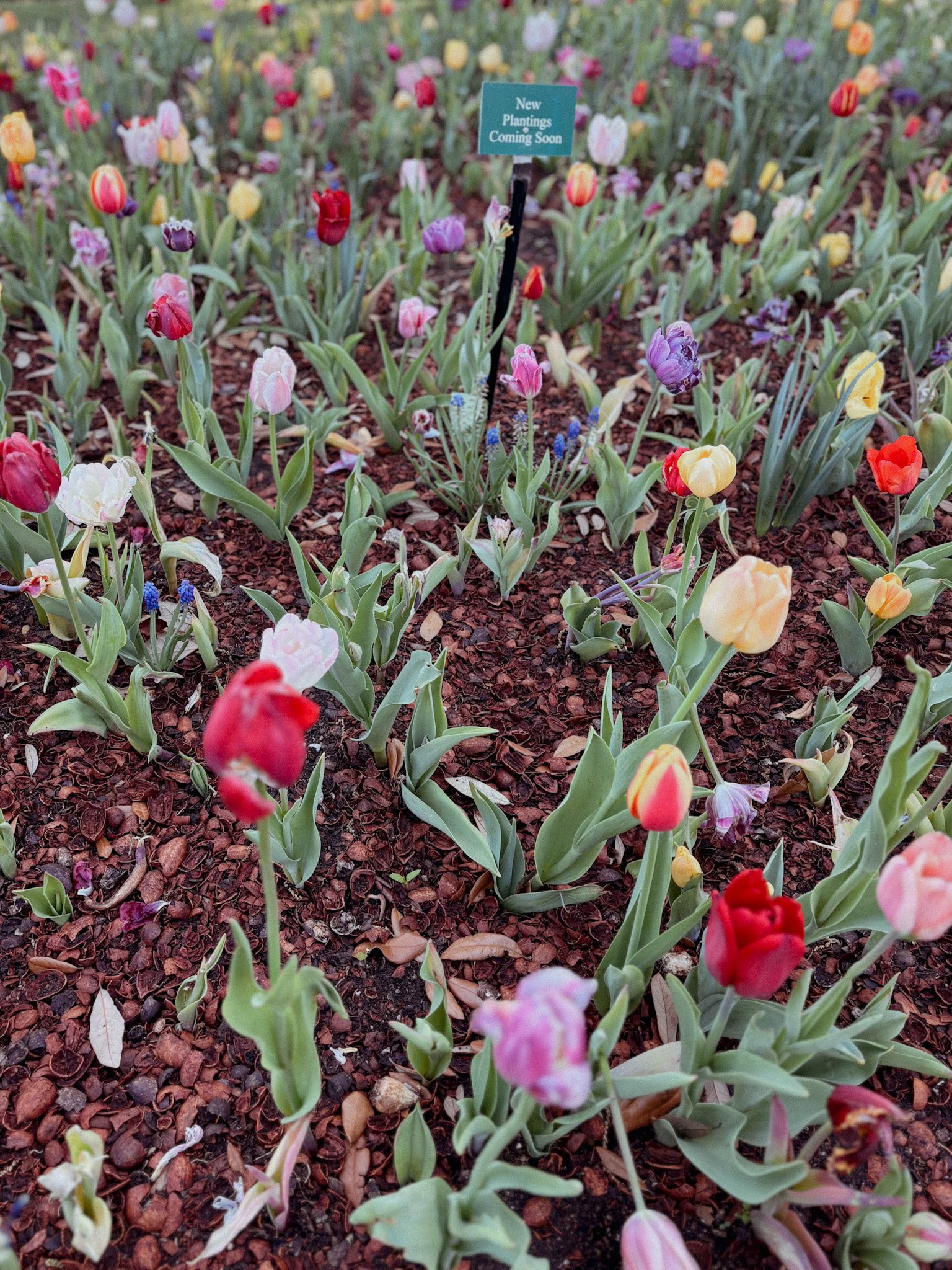
Dear Somebody: The car ride home.
A glimpse at some of the finished and in-process paintings on my desk (watercolor and ink, 2025)
A year from now, here are five things from this week that I'd like to remember:
MONDAY
My new commute to pick both girls up from school closes in on an hour and forty minutes. I was sour the first week, grumbling about my shortened workday, grumbling about the traffic, grumbling about the other drivers. I worried about N sitting for such long car rides, I worried about her falling asleep, I worried about both of us surviving F’s relentless car screams.
A couple of weeks in, N and I have settled into our new rhythm. She slowly climbs into her car seat and asks if I brought her a snack, knowing I did. I drive, she eats. Sometimes she tells me about her day and asks about mine; sometimes we call my sister and N chats with her cousins; sometimes we listen to whatever book I’m listening to until N asks me to turn it off. Nearly everyday, we call T and ask how long until he’ll be home.
Today, N is quiet. I dodge drivers who shouldn’t be on the road, and N dodges the sunlight searching for her eyes. She asks for penny on the train tracks and we both sing to ourselves. I watch her eyes close in the rearview mirror, her head drooping like an overgrown flower. She falls asleep with a sigh of relief, soft and inviting, a strawberry still in her mouth.
I drive along the strip malls and sun-bleached strips of grass. I’m driving through the suburbs of St. Louis, my four-year-old daughter in tow, but all of a sudden I’m the four-year-old, nodding along to sounds of a rolled-down window while my dad drives, falling asleep the instant the key hits the ignition. I am filled with nostalgia for the feeling of absolute safety one feels as a child being driven around by someone who loves her most.
On these drives, I feel solidly like a parent, able to give my daughter a feeling of security and trust. My past becomes my present, and my daughter’s future—and I find myself comforted by the continuous cycle of life, by the mundanity of parenting and all of its tedious chores—which gives me one long drive, every day, with someone I love most.
TUESDAY
100% of sales from Little U, Uppercase Magazine’s books for the young at heart, are donated to UNICEF for humanitarian aid in the Gaza crisis; the new Asian American Literary Archive; risography for Gaza; the surprising ways siblings shape our lives; call it fate, call it karma.
WEDNESDAY
“HELPED are those who are content to be themselves; they will never lack mystery in their lives and the joys of self-discovery will be constant.
HELPED are those who love the entire cosmos rather than their own tiny country, city, or farm, for to them will be shown the unbroken web of life and the meaning of infinity.
HELPED are those who live in quietness, knowing neither brand name nor fad; they shall live every day as if in eternity, and each moment shall be as full as it is long.
HELPED are those who create anything at all, for they shall relive the thrill of their own conception, and realize a partnership in the creation of the Universe that keeps them responsible and cheerful.” —from Alice Walker’s The Temple of My Familiar
THURSDAY
I originally bought Elizabeth Haidle’s Drawing is… as a fun book for me and N to work through together. After reading it on and off for the past few weeks, however, it’s found its way out of N’s room and into my studio, where it sits next to my drawing desk as a symbol of encouragement.
I write about my experience as a working artist often: the process, the sound of my creativity, the small joys, the breakthroughs. The feeling of being forgotten. I’m not sure what I expected Drawing is…to be, but I’m surprised by what it actually is: a thoughtful meditation on discovering the creative, imaginative artist hiding inside you. It has plenty of technical information to help N (and me!) experiment and use different materials, which I expected, and plenty of prompts and exercises for thinking more deeply about your art-making, which I’m excited to try.
What I was most surprised, however, is how Haidle corralled all of this information under the umbrella of a very healthy artist philosophy: that every step you take as an artist—however messy or seemingly insignificant, will lead you somewhere new—somewhere, certainly, worth going.
You can purchase Drawing is… and learn more about Beth’s work.
FRIDAY
I am pulling myself together.
Don’t want to go on a trip.
I have painted the living room white
and taken out most of my things.
The room has never been so empty.
Just now a banging thunder
and suddenly falling rain.
I leave the typewriter and run
outside in my nightgown and take
the cotton blanket off the line.
It is summer and I am in the middle
of my life. Alone and happy.
—Grinding the Lens by Linda Gregg
See you next week!
xx,
M
To sign up for my weekly newsletter, Dear Somebody, please subscribe here.
Dear Somebody: When all is quiet.
A recent sketchbook page (watercolor and ink, 2025)
A year from now, here are five things from this week that I'd like to remember:
MONDAY
I sit on the front porch eating a sandwich slapped together with whatever is left in the fridge. I need to go grocery shopping, I need to unpack my kids’ summer clothes, I need to clean the kitchen, I need to take a shower. I’ve been working nonstop towards my current picture book deadline. I’m rewriting a manuscript I care deeply about, I have a new journal coming out this fall, I’ve begun strength training. This fall, I’m determined to learn how to sew. There is so much I want to make, but I am so slow. One day flickers into the next, and then the next, and still, it feels like I’m going nowhere.
My friend Dan Blank calls me to catch up. I confess, with embarrassment, that I don’t have very much to share: life is quiet, almost entirely consumed by my young children, and work is, too. It’s been a few years since I’ve quit the game of social media, and my world feels much smaller because of it. Quieter. I don’t receive many work inquiries because I don’t share as much online. No one can hire you if they don’t know you exist, I tell myself before emailing editors and art directors to remind them. I hold my breath and wait; I listen to the familiar song of crickets. Everyone I know is worried about work, so when my ego flares up in front of me, I stamp it out. As any artist knows, the ongoing quiet can feel suffocating. It plays tricks on you, messing with your sense of worth. It causes you to lose sight of what’s important. It is strong enough to crush your spirit.
When I hang up the phone, I sit still, sifting through this quiet. I feel ashamed of my embarrassment, for several reasons I can’t separate, quite possibly because there is no separating them. Continuing my career at the same pace, with the same fervor postpartum was simply not a viable option for me. I made conscious decisions to restructure my career and life in a way that made healthier, more meaningful sense. Yet, at times, I feel shame for not barreling ahead at the same pace—for not being able to, for not wanting to, for not wringing myself out in order to simply keep going. Though I know it’s a symptom of the culture we live in, occasionally, I still feel shame for how much I’ve changed.
Though lonely, the past few years have been good for my brain. Instead of documenting every step of my process for social media, I sink into my craft, remembering why this is the life I chose for myself. I’ve grown and solidified. I am more capable, I require less from others. And inside me, life continues to hum steadily. Joyfully. I feel far more grounded in my creative values. I’m proud of the work I make, however slow the progress is. I’m more present with my children, who, for now, still believe that their inherent worth isn’t dependent on what or how much they produce. I’m beginning to believe I’m a good mother.
On the other side of worry, I divert my energy towards developing a trust between myself, my work, and the world: things will work out. I can move towards my goals andbelieve they will be achieved. I can build creative growth and hope. I can feel forgotten and be excited to one day reemerge. I can choose to feel good—and the more I do, the more meaningful my subsequent choices are.
Back on the porch, I chew slowly. A small breeze comes along and my napkin flutters, a thin pair of two-ply wings. The tulip poplar tree across from our front yard has grown so large in the few years I’ve lived here. Now, green leaves burst forth, invigorated by our recent rains. The branches stretch towards me like the future does, like the past used to before I closed the door on it. In a few hours, my kids will thunder down these sidewalks, begging me to jump rope with them. We’ll walk down to the nearby bridge, press our faces through the windows in the cement walls, and wait for the city trains to rush by. It doesn’t matter if the conductor looks up or not; we always wave.
On this street lined with grandparents, grandchildren, and shiny blue grackles, there isn’t a single soul who cares what I look like or what my next achievement is, including me. I love living on this street instead of on social media, so I give myself over to the silence. I am grateful for my sandwich, the porch I sit on, and every small, quiet breeze.
TUESDAY
“In its simplest form, a whale’s death becomes a source of life for years beyond its time. It is a transformation that turns death into life on an almost incomprehensible scale. Beyond its biological importance, the concept of a whale fall also holds a poetic significance. It reflects themes of loss and renewal, reminding us that even in its most tragic forms, what’s happened in the past can sustain life in the present in ways we are only beginning to understand.
This haunting question reframed my understanding of land and sea as intertwined repositories of history. The ocean, like the soil, bears witness to lives lost and transformed. It warranted asking: What happens to our bodies, to their essence, when they are claimed by the ocean? How do we reconcile the ocean as both a site of loss and a source of life?”
—Omnia Said on contemporary American artist Ellen Gallagher’s Accidental Records series in Atmos
WEDNESDAY
The extremely unassuming frame I ordered for The Wedding Sari finally came, so I framed this piece and am shipping it to my aunt this week. The Wedding Sari is an essay and illustration I created for my column, Being, in Issue #65 of Uppercase Magazine. It explores the history of the Gujarati panetar, or wedding sari, and the one I wore on my wedding day, which was previously also worn by my mother and her older sister, my aunt.
Three prints of this piece exist: one hangs in my home, one hangs in my mother’s home, and now, one is somewhere on its way to my aunt’s. An excerpt of my column was included in a past letter.
THURSDAY
I’m reading: Long Way Down by Jason Reynolds, an excellent novel-in-verse about the choices we make and the choices we’re taught to make; I finished listening to Solito by Javier Zamora, a heartbreaking tale of a young child’s migration to the States; I began The One and Only Ivan by Katherine Applegate; I began My Friends by Hisham Matar.
FRIDAY
Now we will count to twelve
and we will all keep still
for once on the face of the earth,
let’s not speak in any language;
let’s stop for a second,
and not move our arms so much.
It would be an exotic moment
without rush, without engines;
we would all be together
in a sudden strangeness.
Fishermen in the cold sea
would not harm whales
and the man gathering salt
would not look at his hurt hands.
Those who prepare green wars,
wars with gas, wars with fire,
victories with no survivors,
would put on clean clothes
and walk about with their brothers
in the shade, doing nothing.
What I want should not be confused
with total inactivity.
Life is what it is about;
I want no truck with death.
If we were not so single-minded
about keeping our lives moving,
and for once could do nothing,
perhaps a huge silence
might interrupt this sadness
of never understanding ourselves
and of threatening ourselves with death.
Perhaps the earth can teach us
as when everything seems dead
and later proves to be alive.
Now I’ll count up to twelve
and you keep quiet and I will go.
—Keeping Quiet by Pablo Neruda
See you next week!
xx,
M
To sign up for my weekly newsletter, Dear Somebody, please subscribe here.