• Learn to Let Go
  • Books for Everyone
  • Work
  • newsletter
  • Journal
  • Shop
  • About
Menu

Meera Lee Patel

ARTIST, WRITER, BOOK MAKER
  • Learn to Let Go
  • Books for Everyone
  • Work
  • newsletter
  • Journal
  • Shop
  • About

Dear Somebody: On this side of the lake.

July 25, 2025

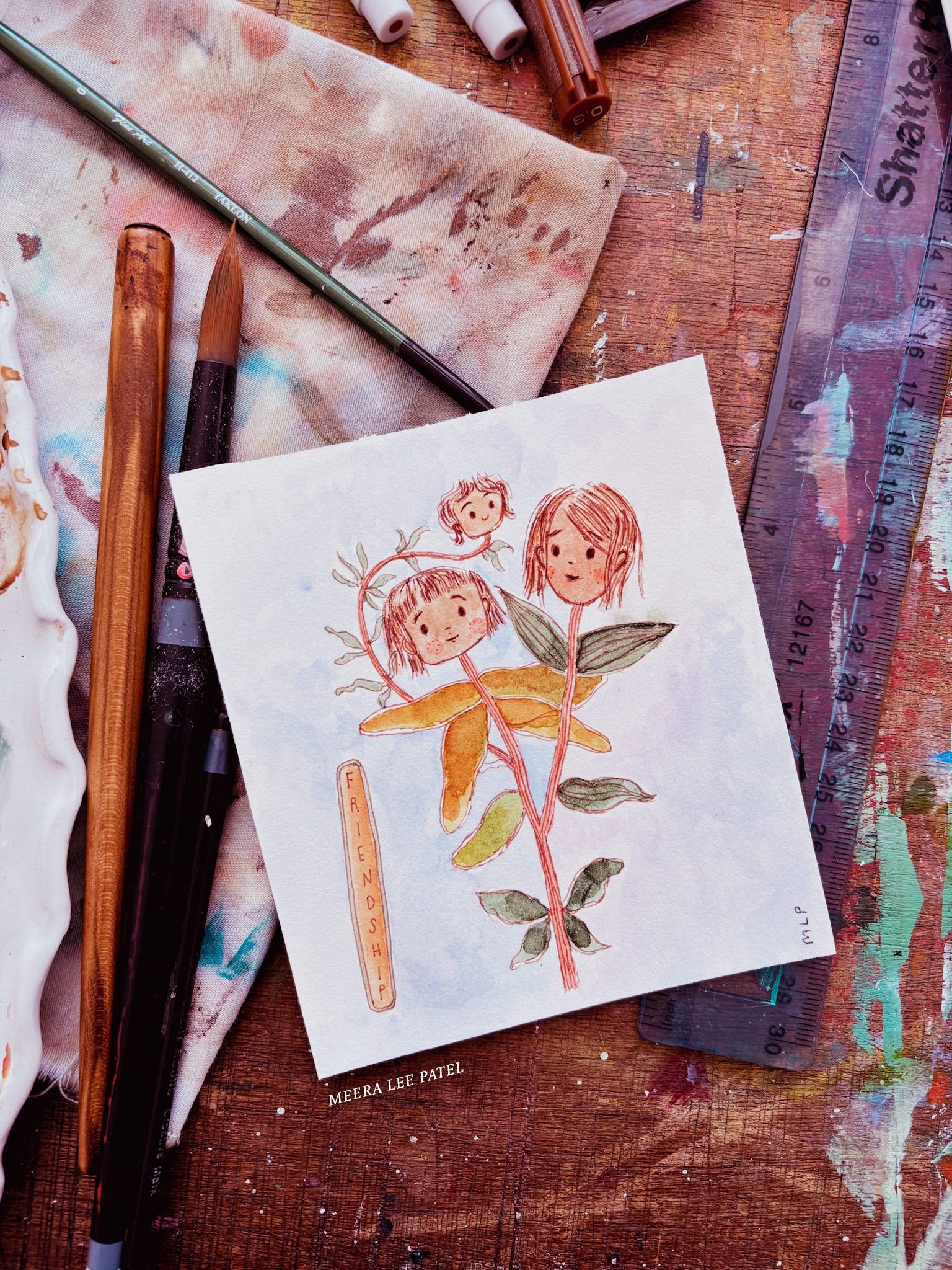
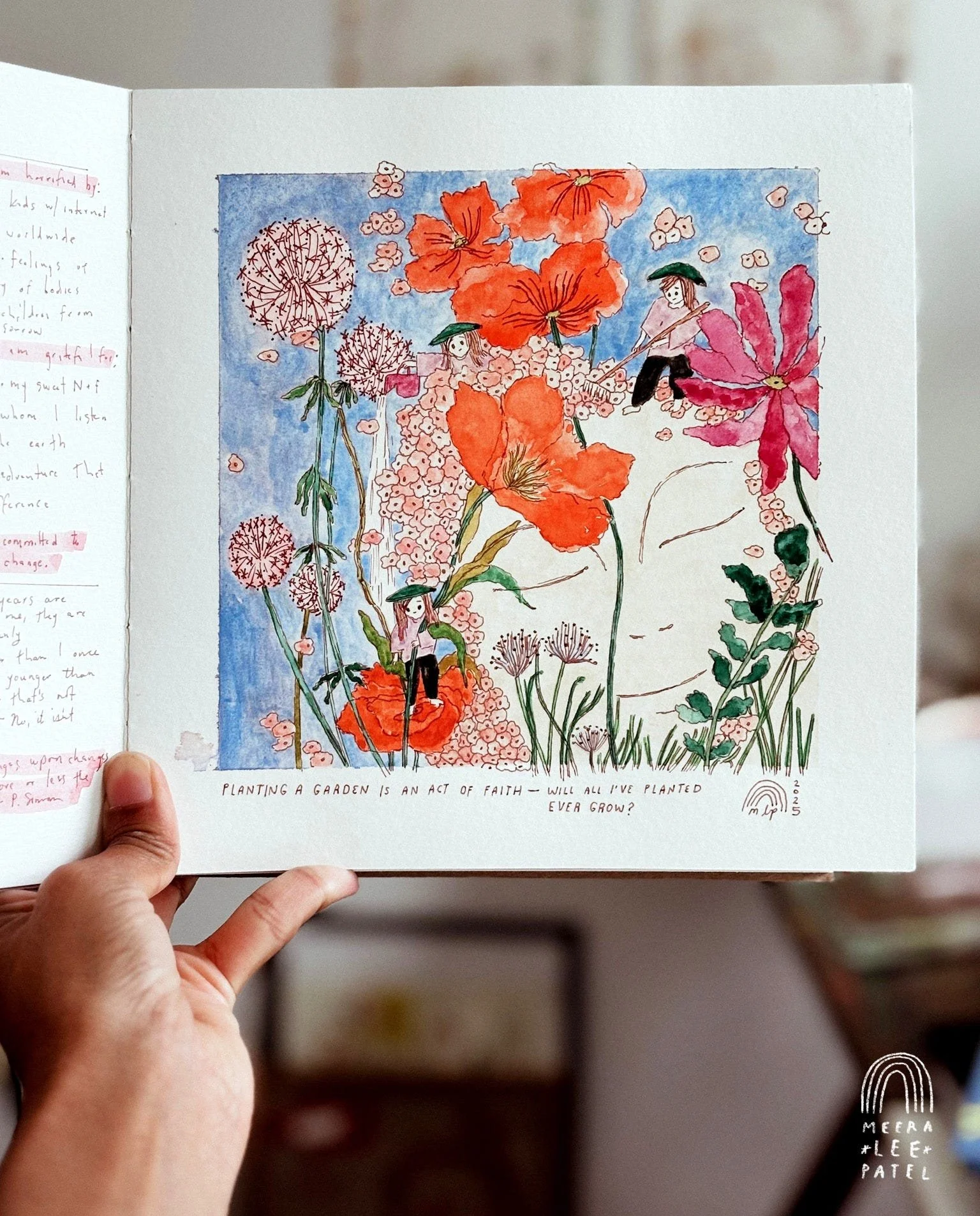
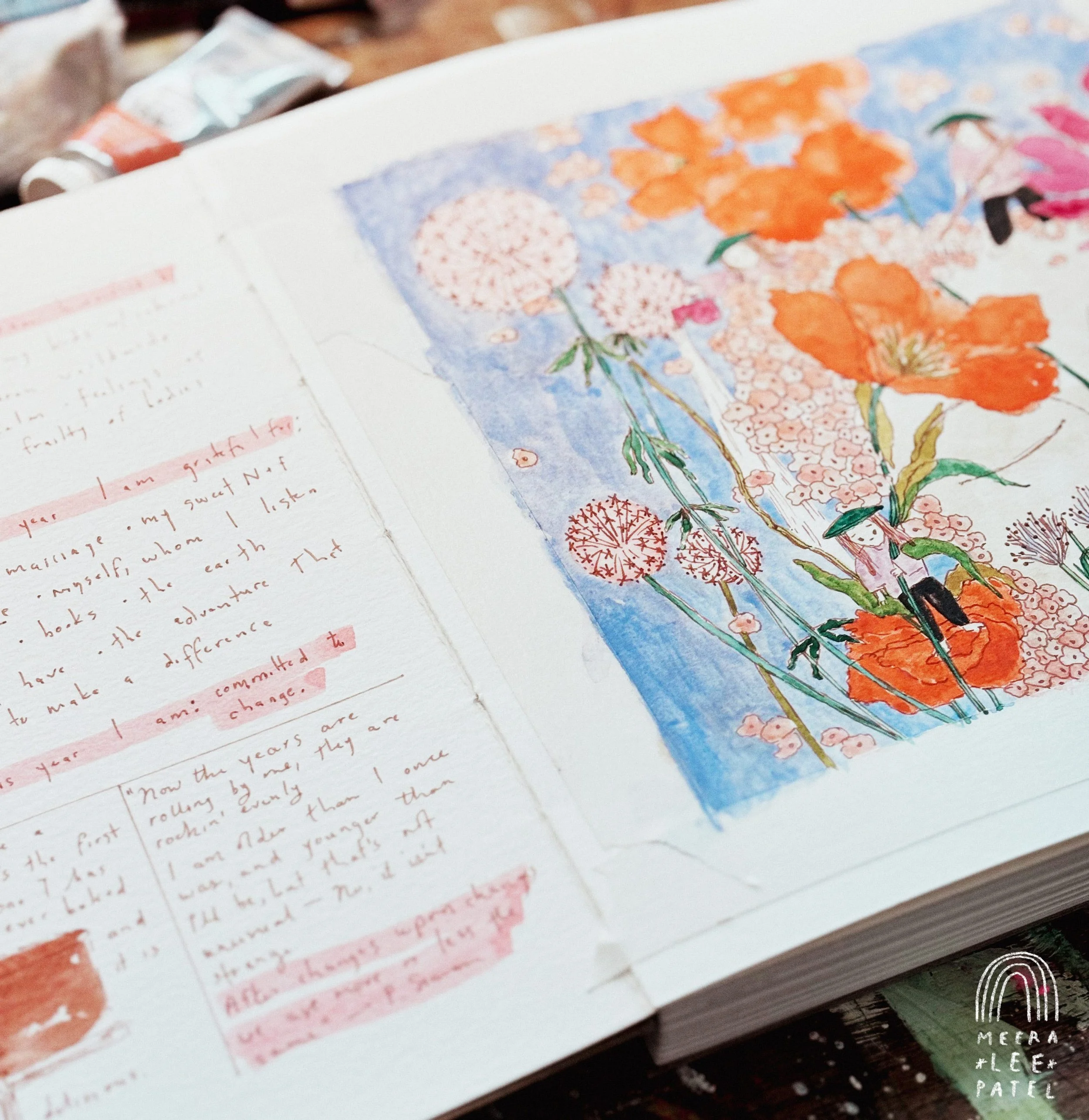
Planting a Garden (sketchbook, 2025)

Yesterday, I wrote to my representatives and senator requesting we shut the Everglades detention camps—you can, too.

A year from now, here are five things from this week that I'd like to remember:

MONDAY 
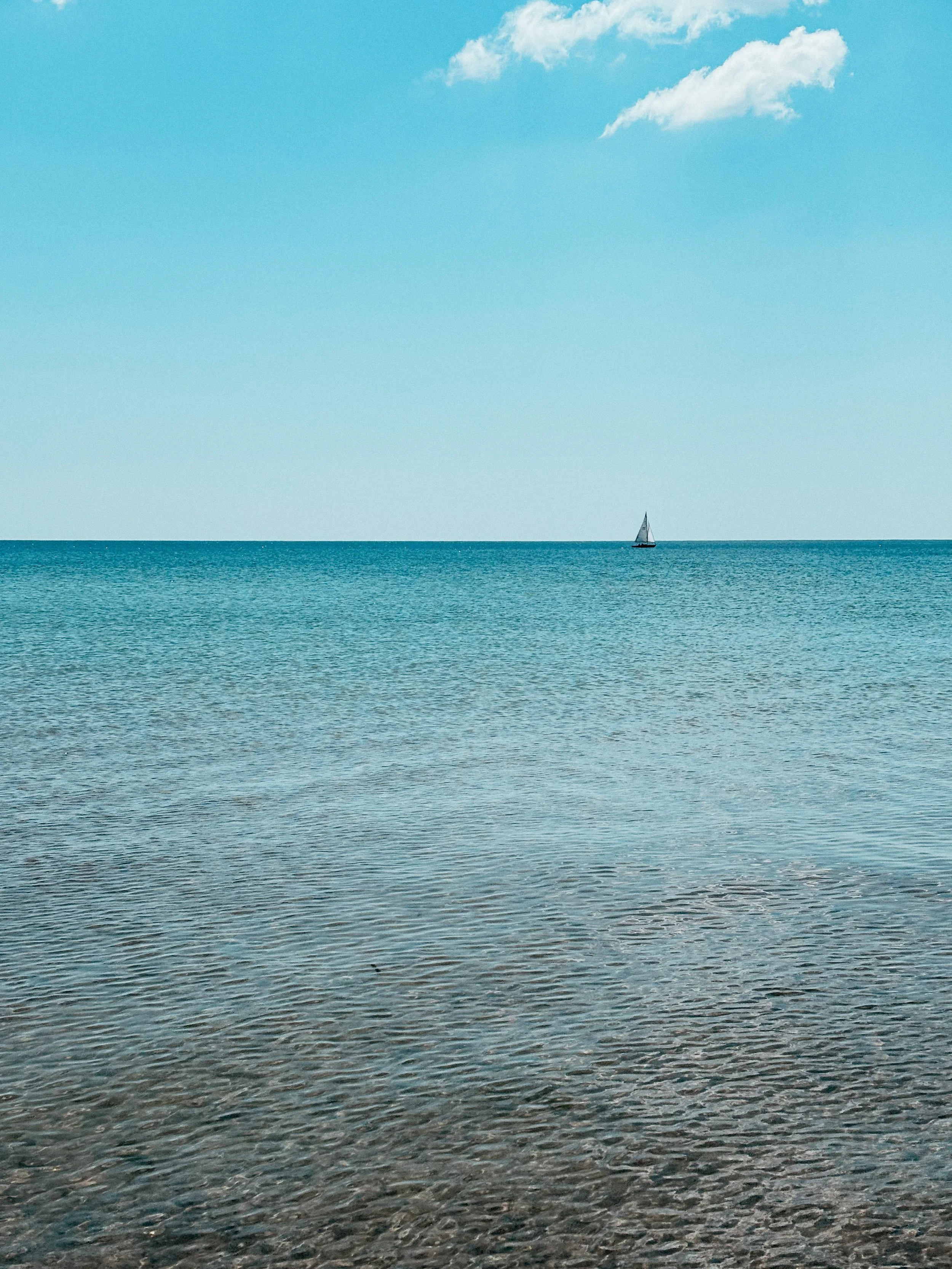
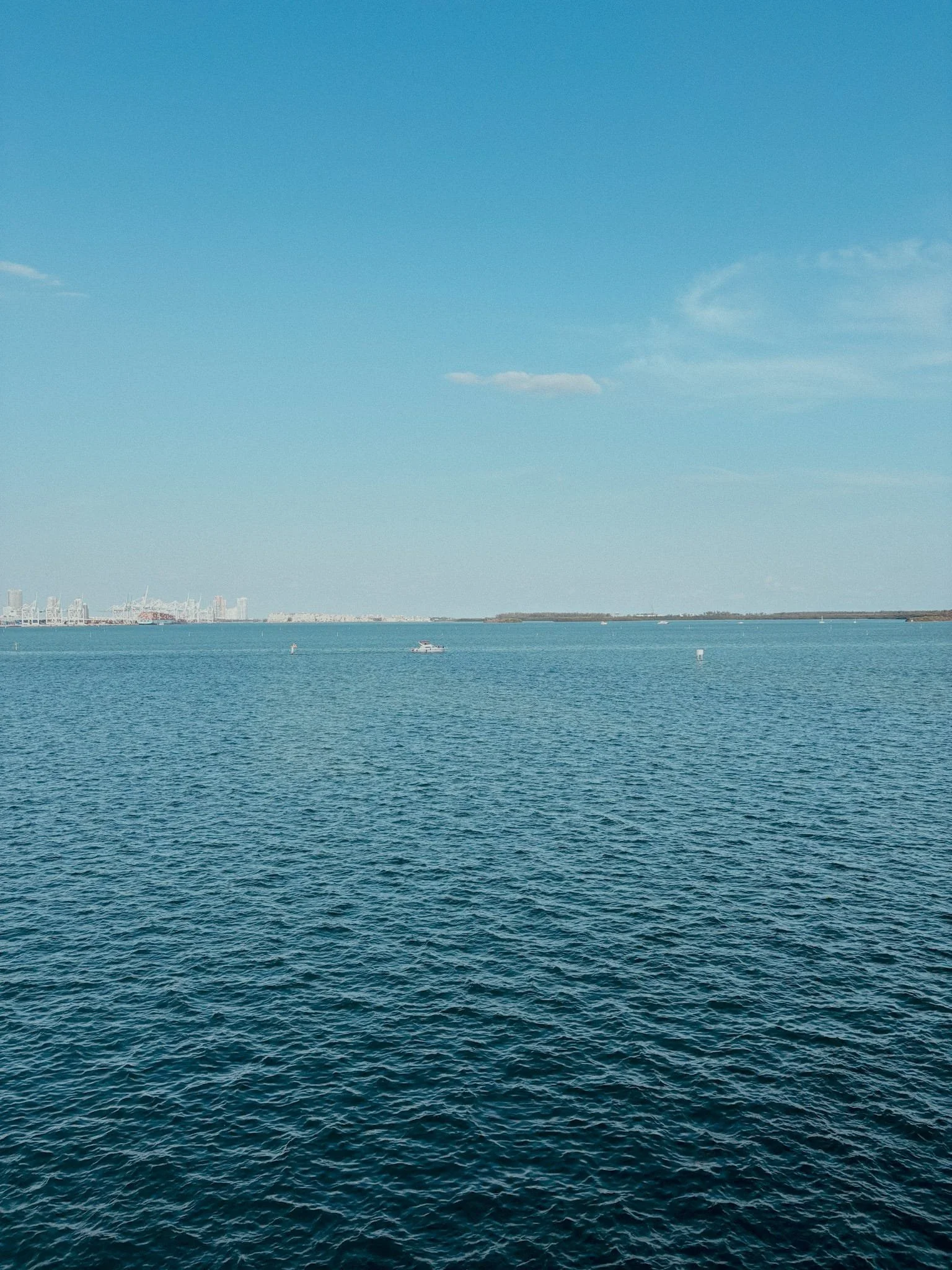
Lake Michigan on the Milwaukee side (2025)

We pile into the car evenly—three children and three adults, a dozen books and crayons shoved into backpacks, grocery bags of assorted snacks. We sing songs and have nonsensical conversations; we count how many hours, then minutes, there are left. W cries from the numbness that settles into her unused limbs, F cries that my hand is too far away to hold. From her perch in the third row, N watches with detached amusement. Nearly seven hours later, we arrive in Milwaukee. Though K and I have been friends for 30 years now, this trip together with our young children is our first.

After unpacking and settling in, we feed the restless children and tuck them in. The next morning, we head to the beach. On this side of the lake, the cold water is clear. I wade in after N and look down at my toes. Though they are two feet below water, I find them easily. I don’t know if the water is clean, but I pretend it is, the transparency of it inviting me to look more closely. My toes curve over hundreds of stones, mostly Basalt and Septarian, smoothed over hundreds of years in the sea. Each one is the perfect shape. It’s easy for me to love—to seek out, even, the blemishes in natural materials. It’s much harder for me to accept the flaws in people, the flaws in myself—but I am working on it. I look for Yooperlites, but find none. 

The morning passes easily. The sun is hot; the lake is cold. The girls oscillate between joy, fatigue, and hunger. N and I build a sand castle; F knocks it down. W has a qualm; no one knows what it is. The children cry and then move on. We do, too. When it’s time to pack up and head home for lunch, all three girls protest, having fallen in love with the lake. My heart is close to bursting, for all I want is for my girls to love the water, themselves, and each other. We’ll come back tomorrow, we promise, brushing the sand from their bodies. On this side of the lake, multiple friendships are forming. 

On the deck of our rental house, I hang up our wet things. Our three girls sprawl over the wooden slats and eat. It’s odd to see how much F and W resemble the younger versions of K and I—how these incarnates will have their own chance for a lifetime of friendship with each other. How N, maybe, will look after them the way my own sister does. Long car rides, conversations late into the night. Tears, arguments, the inevitable periods of silence. The first phone call after. The acceptance of each others’ flaws. I hope they will take turns holding on and letting go, but mostly, I hope, they’ll spend their time making each other feel known. 

We spend a few more days at the lake. Our three girls play and chatter, sometimes together, sometimes apart. Like the stones I reach for, each is strange and wonderful. We build more sand castles, and this time, it’s the water that knocks them down. On this side of the lake, we don’t mind, because the water teaches us about friendship: it ebbs and flows, but always, in the end, it goes on.

TUESDAY

For Issue 66 of Uppercase Magazine, I wrote about my recently revived journaling practice, and the effects it’s made on my life and creative work.
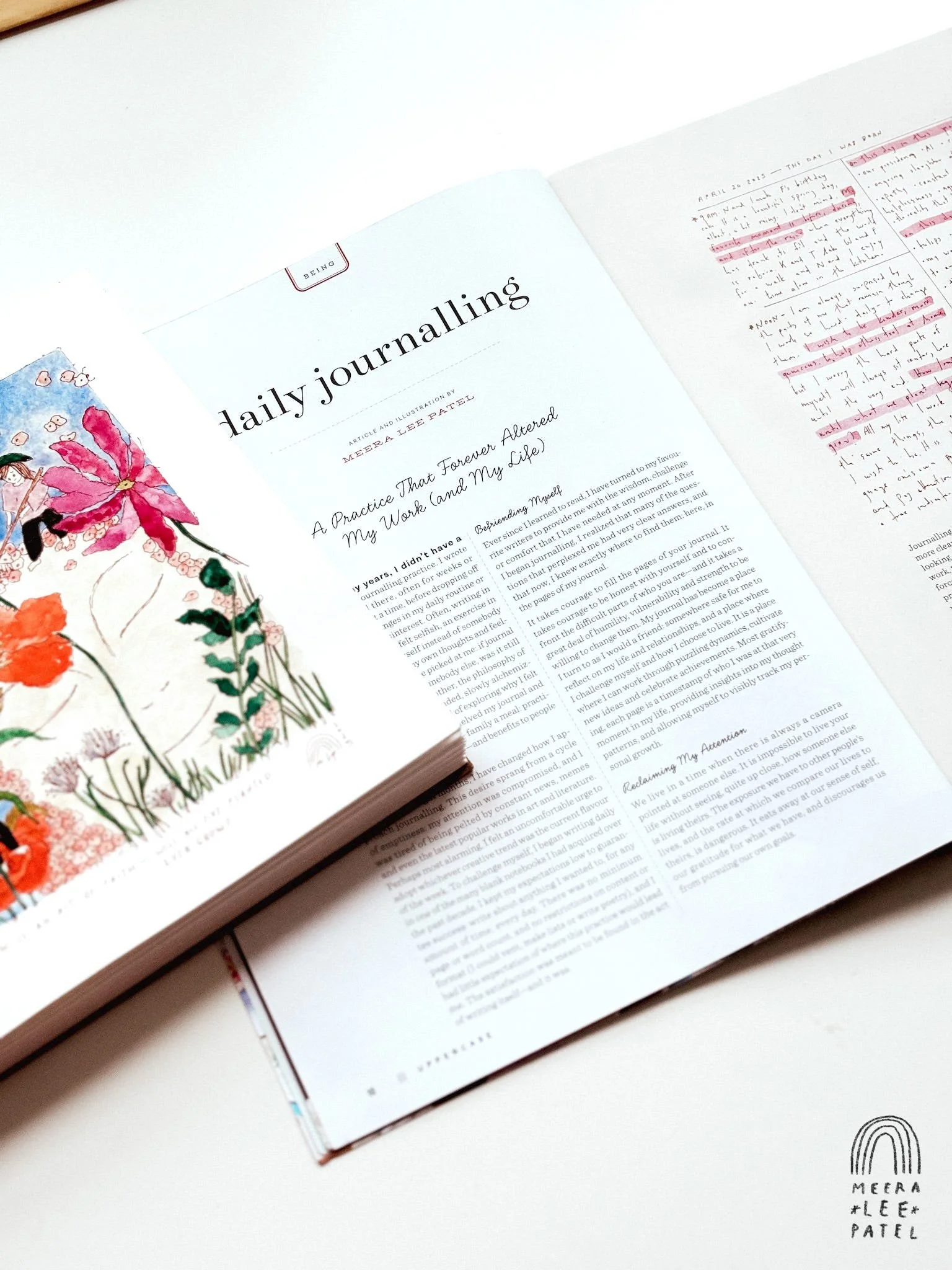
A photo of my latest essay for Uppercase Magazine on daily journalling
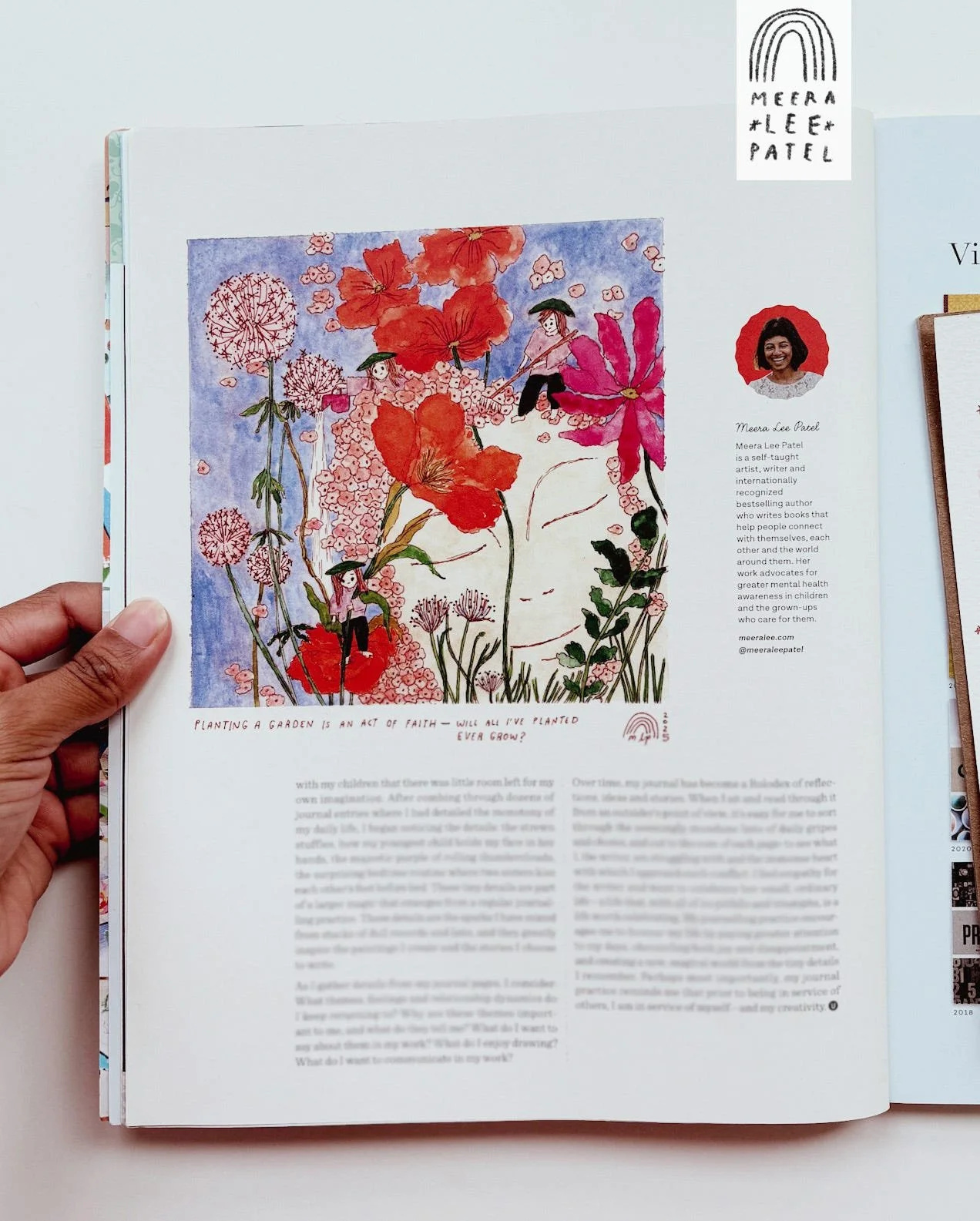
A photo of my latest essay for Uppercase Magazine (2025)
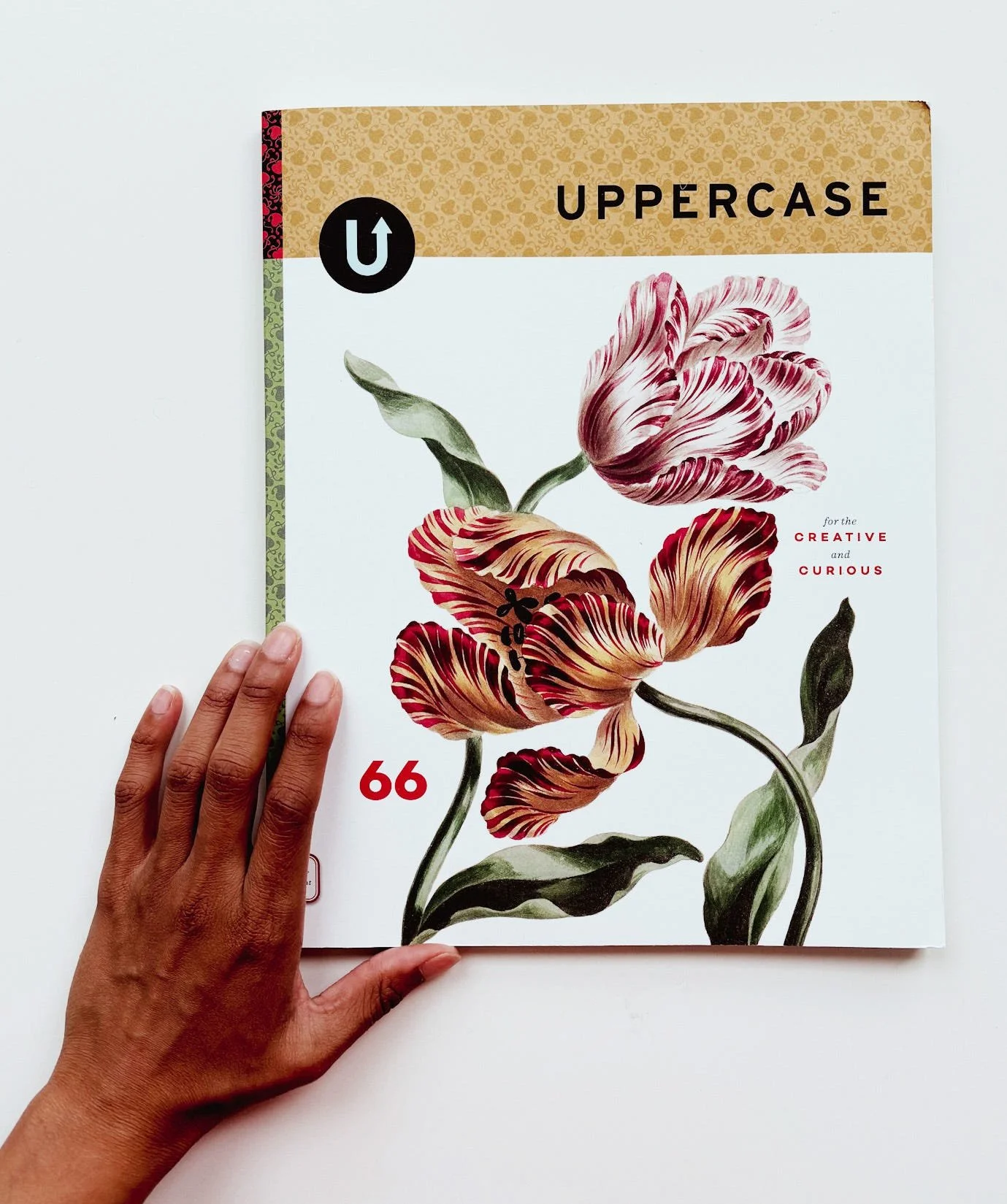
Issue 66 of Uppercase Magazine (2025)

“Over the past 8 months, I’ve changed how I approach journaling. This desire sprang from a cycle of emptiness: I found my attention was compromised, tired of being pelted by constant news, memes, and even the latest popular works in art and literature. Perhaps most alarming, I felt an uncomfortable urge to adopt whichever creative trend was flavor of the week. To challenge myself, I began writing daily in one of the many blank notebooks I’ve acquired over the past decade. I kept my expectations low to guarantee success: write about anything I want, for any amount of time, every day. There was no minimum page or word count (I’d fallen out of the morning pages routine years ago), no restrictions on content or format (I could vent, make lists, or write poetry), and I had little expectation of where this practice would lead me. The satisfaction was meant to be found in the act of writing itself—and it was.” 

—from Daily Journalling: A Practice that Forever Altered My Work (and My Life) for Issue 66 of Uppercase Magazine

WEDNESDAY
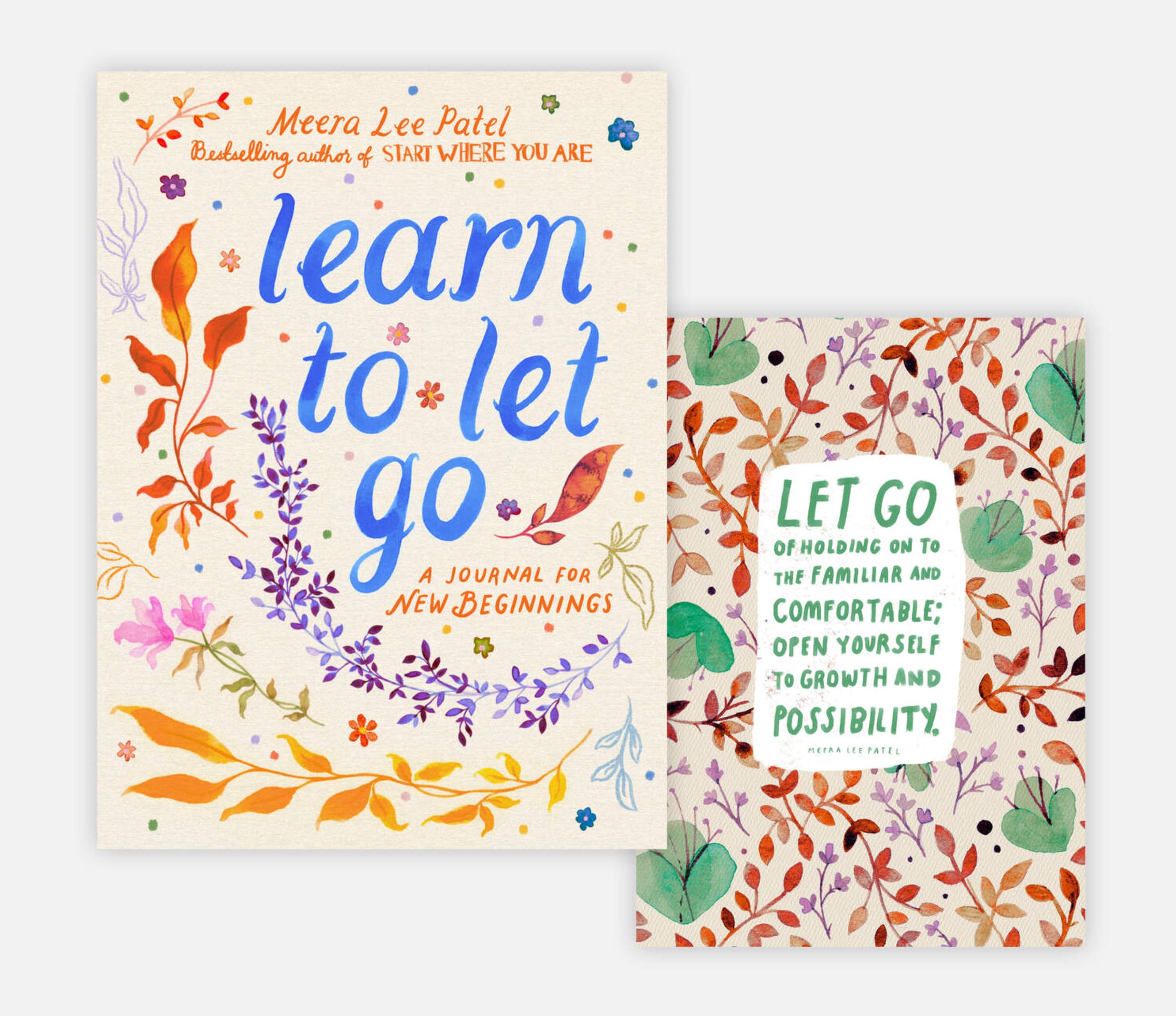
I’m excited to announce that now, when you pre-order Learn to Let Go through BuyOlympia, you’ll receive this limited-edition LETTING GO art print, too! Get yours here—and consider ordering a few for some friends, too. We could all use a little encouragement in the places we feel stuck. 

Many thanks to my friends at BuyOlympia for putting this together.

THURSDAY

While in Milwaukee, we spend time at the Grohmann Museum. Surprisingly, it is a place where all four of us fall in love. The museum showcases the evolution of labor and work throughout history and it was easy to see that nearly everything is possible using the two hands in front of me. Writing about it now, I see—again, quite easily, how much good it would do for me to remember this. 

I was surprised by how N gravitated towards the depictions of household labor: how she seemed enchanted by skilled trade as much as I am. Some of our favorite pieces showed ordinary people transforming ordinary materials into something more: cork shaped into stoppers, glass blown into bottles, chemicals mixed into medicines. 
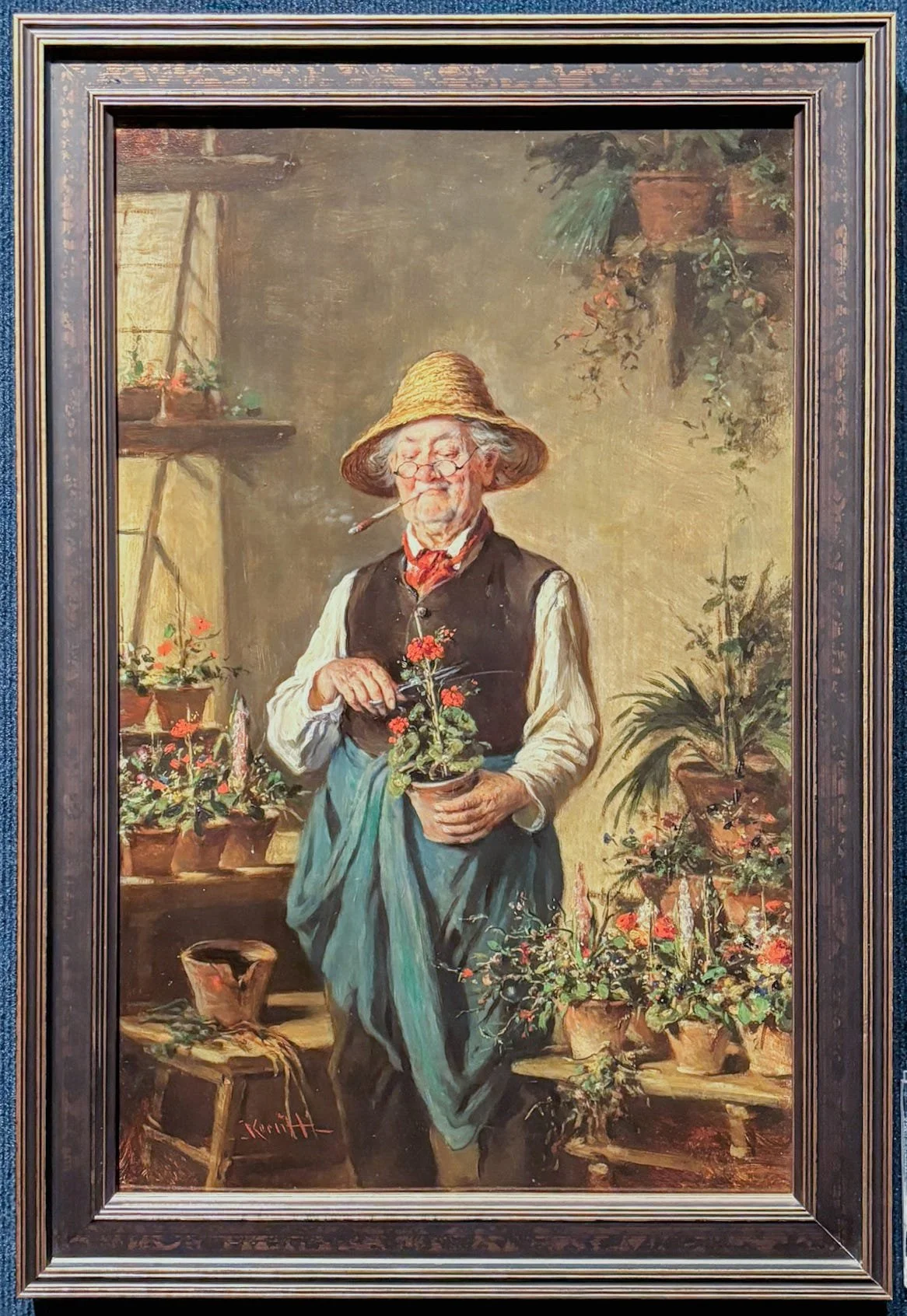
The Happy Gardener by Hermann Kem (oil on panel)
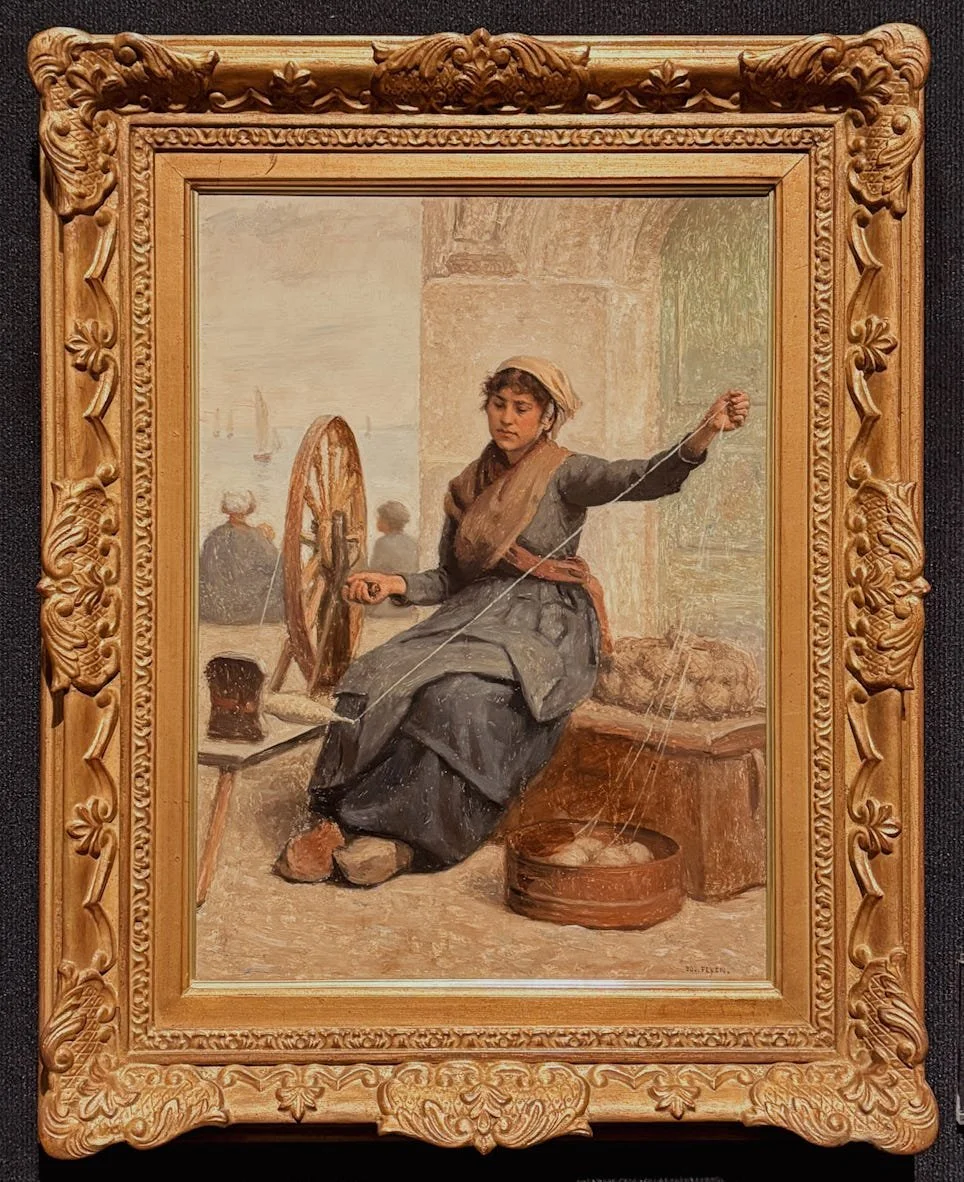
The Breton Spinner by Eugene Feyen (oil on panel)
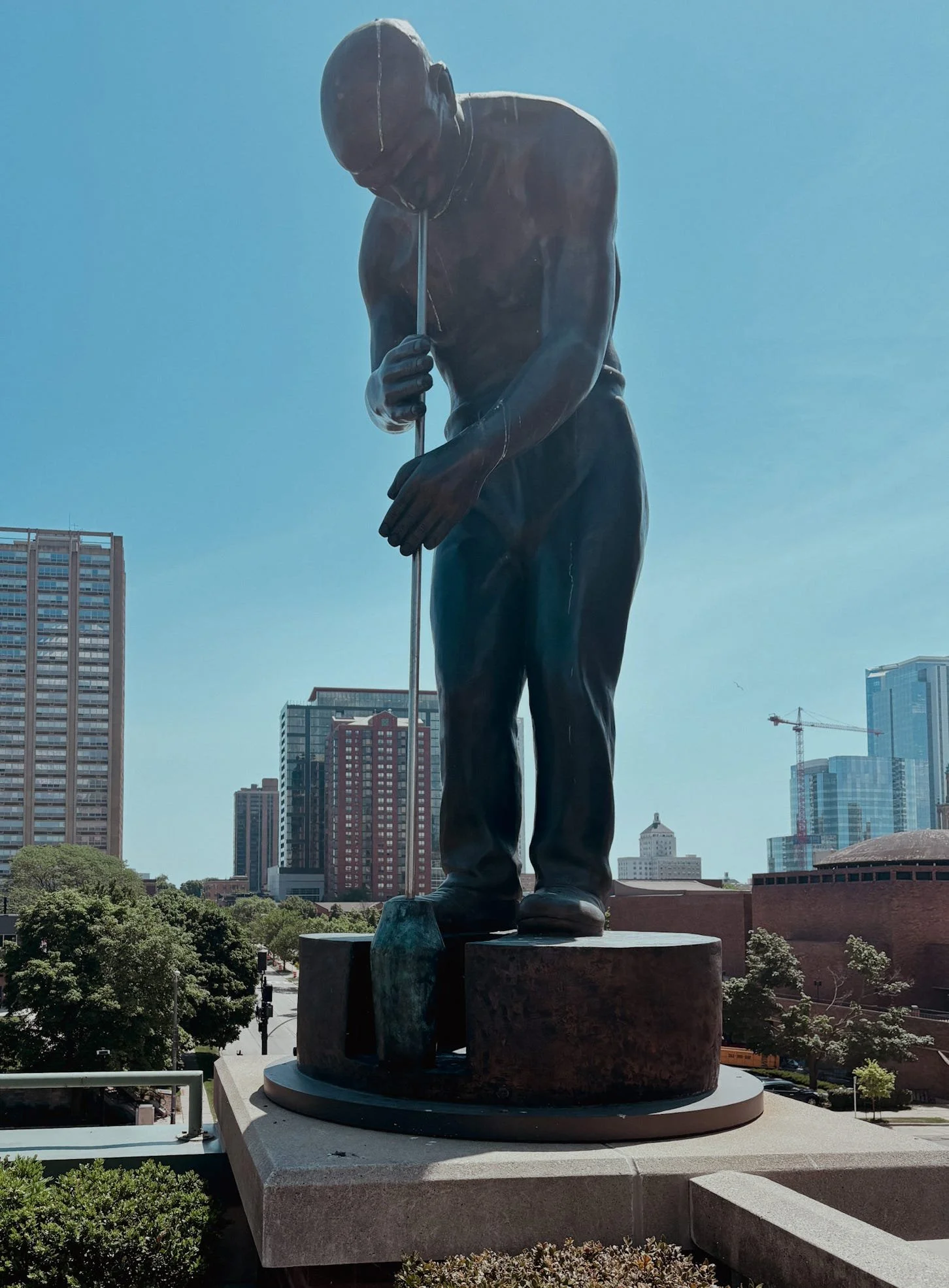
Glass Blower (artist unknown) (2025)

Although I’ve always been a crafts person, age encourages me to learn as many skills as I can—to be less reliant on corporations for my needs, to spend more time creating the objects that surround me. They are usually less beautiful, and sometimes less useful, but they mean more—and these days, meaning goes a long way. 

FRIDAY

Tomorrow when the farm boys find this
freak of nature, they will wrap his body
in newspaper and carry him to the museum.

But tonight he is alive and in the north
field with his mother. It is a perfect
summer evening: the moon rising over
the orchard, the wind in the grass.
And as he stares into the sky, there
are twice as many stars as usual.

—The Two-headed Calf by Laura Gilpin

See you next week!

xx,

M


To sign up for my weekly newsletter, Dear Somebody, please subscribe here.
In Sketchbook Tags Sketchbook, Lake Michigan, Parenting, Parenthood, Uppercase Magazine, Learn to Let Go, BuyOlympia, Grohmann Museum, Hermann Kem, Eugene Feyen, Laura Gilpin
Comment

Dear Somebody: The car ride home.

June 27, 2025

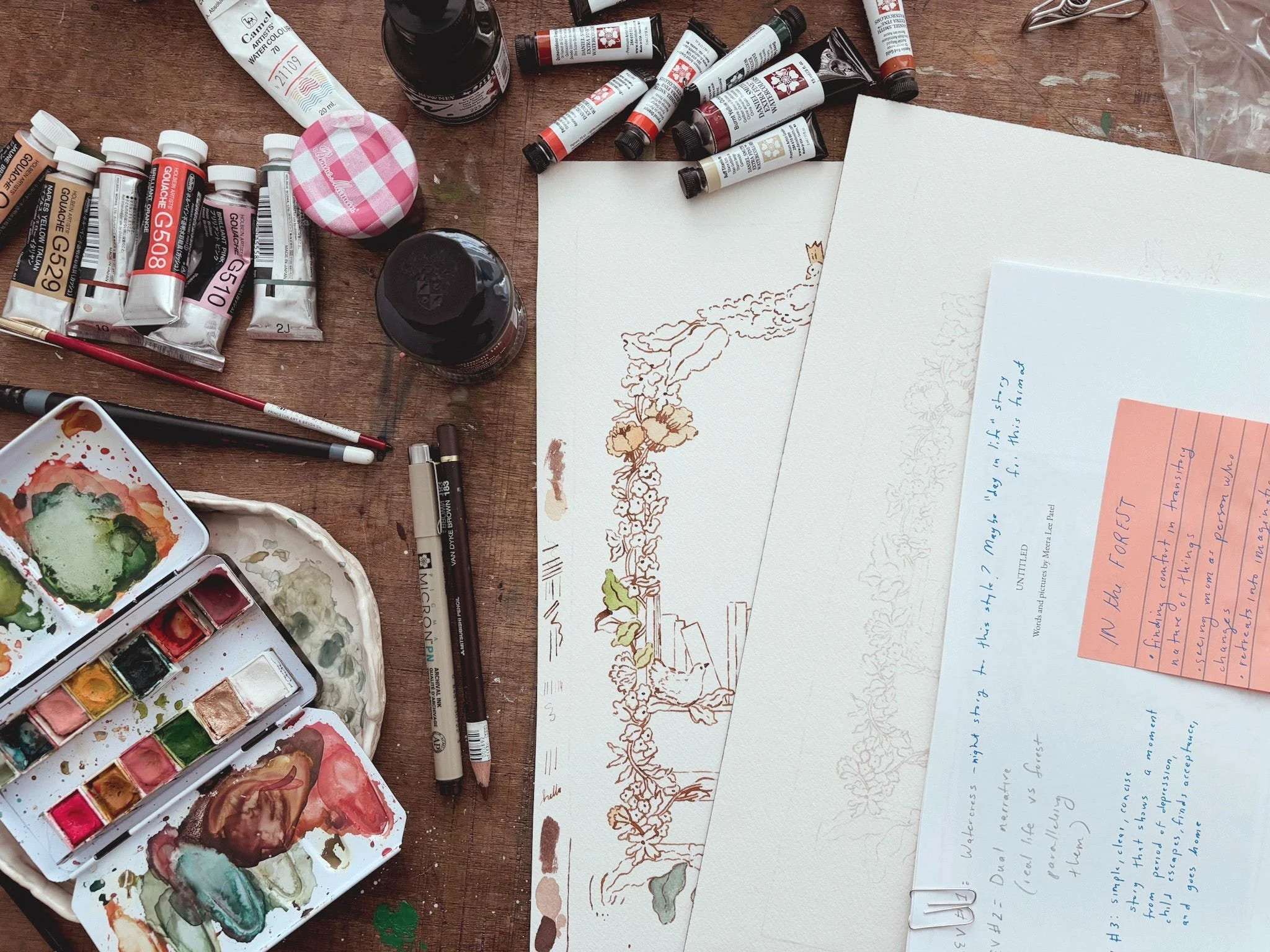
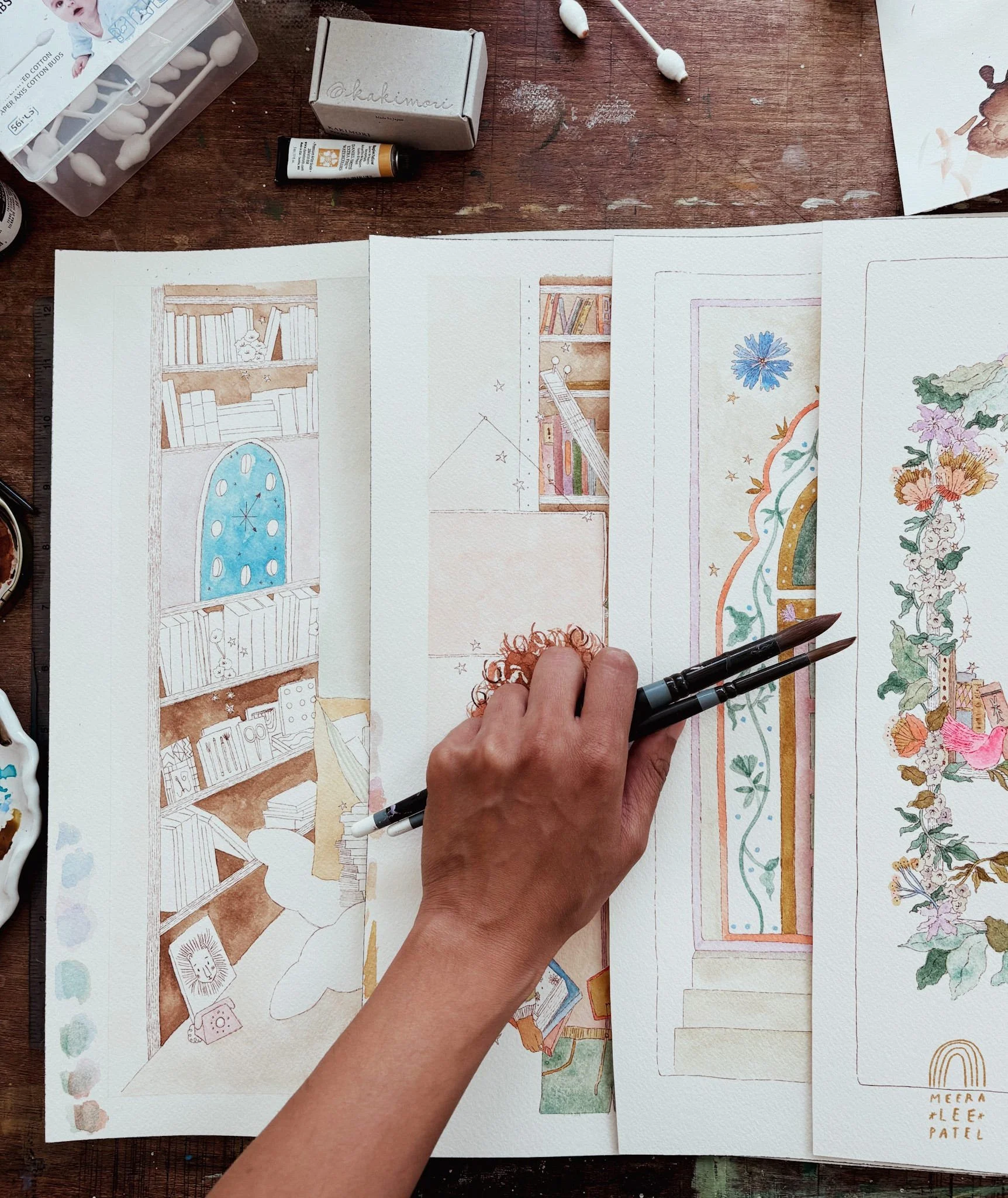
A glimpse at some of the finished and in-process paintings on my desk (watercolor and ink, 2025)

A year from now, here are five things from this week that I'd like to remember:

MONDAY 

My new commute to pick both girls up from school closes in on an hour and forty minutes. I was sour the first week, grumbling about my shortened workday, grumbling about the traffic, grumbling about the other drivers. I worried about N sitting for such long car rides, I worried about her falling asleep, I worried about both of us surviving F’s relentless car screams. 

A couple of weeks in, N and I have settled into our new rhythm. She slowly climbs into her car seat and asks if I brought her a snack, knowing I did. I drive, she eats. Sometimes she tells me about her day and asks about mine; sometimes we call my sister and N chats with her cousins; sometimes we listen to whatever book I’m listening to until N asks me to turn it off. Nearly everyday, we call T and ask how long until he’ll be home. 

Today, N is quiet. I dodge drivers who shouldn’t be on the road, and N dodges the sunlight searching for her eyes. She asks for penny on the train tracks and we both sing to ourselves. I watch her eyes close in the rearview mirror, her head drooping like an overgrown flower. She falls asleep with a sigh of relief, soft and inviting, a strawberry still in her mouth.

I drive along the strip malls and sun-bleached strips of grass. I’m driving through the suburbs of St. Louis, my four-year-old daughter in tow, but all of a sudden I’m the four-year-old, nodding along to sounds of a rolled-down window while my dad drives, falling asleep the instant the key hits the ignition. I am filled with nostalgia for the feeling of absolute safety one feels as a child being driven around by someone who loves her most. 

On these drives, I feel solidly like a parent, able to give my daughter a feeling of security and trust. My past becomes my present, and my daughter’s future—and I find myself comforted by the continuous cycle of life, by the mundanity of parenting and all of its tedious chores—which gives me one long drive, every day, with someone I love most. 

TUESDAY

100% of sales from Little U, Uppercase Magazine’s books for the young at heart, are donated to UNICEF for humanitarian aid in the Gaza crisis; the new Asian American Literary Archive; risography for Gaza; the surprising ways siblings shape our lives; call it fate, call it karma. 

WEDNESDAY

“HELPED are those who are content to be themselves; they will never lack mystery in their lives and the joys of self-discovery will be constant.

HELPED are those who love the entire cosmos rather than their own tiny country, city, or farm, for to them will be shown the unbroken web of life and the meaning of infinity.

HELPED are those who live in quietness, knowing neither brand name nor fad; they shall live every day as if in eternity, and each moment shall be as full as it is long.

HELPED are those who create anything at all, for they shall relive the thrill of their own conception, and realize a partnership in the creation of the Universe that keeps them responsible and cheerful.” —from Alice Walker’s The Temple of My Familiar

THURSDAY

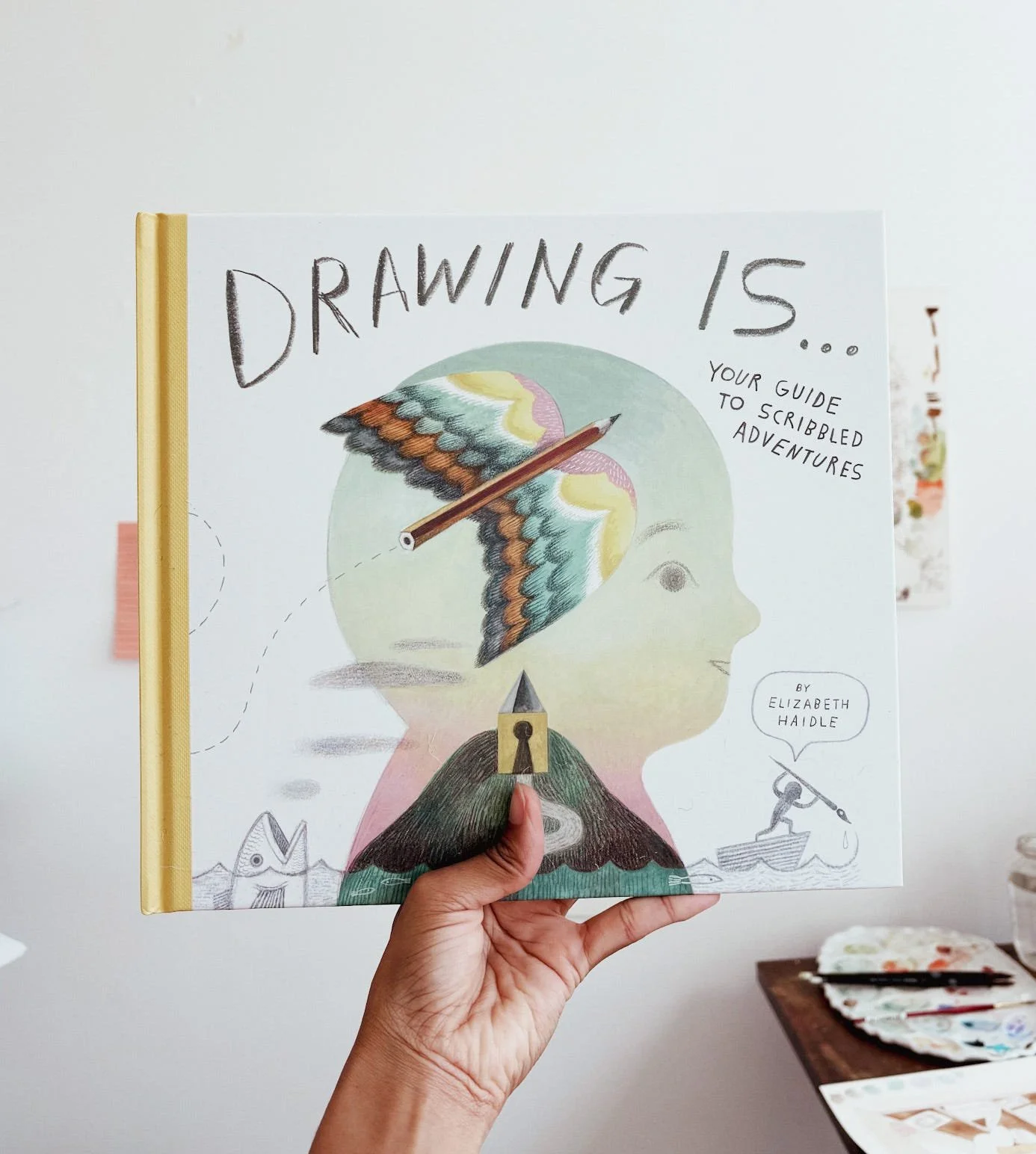
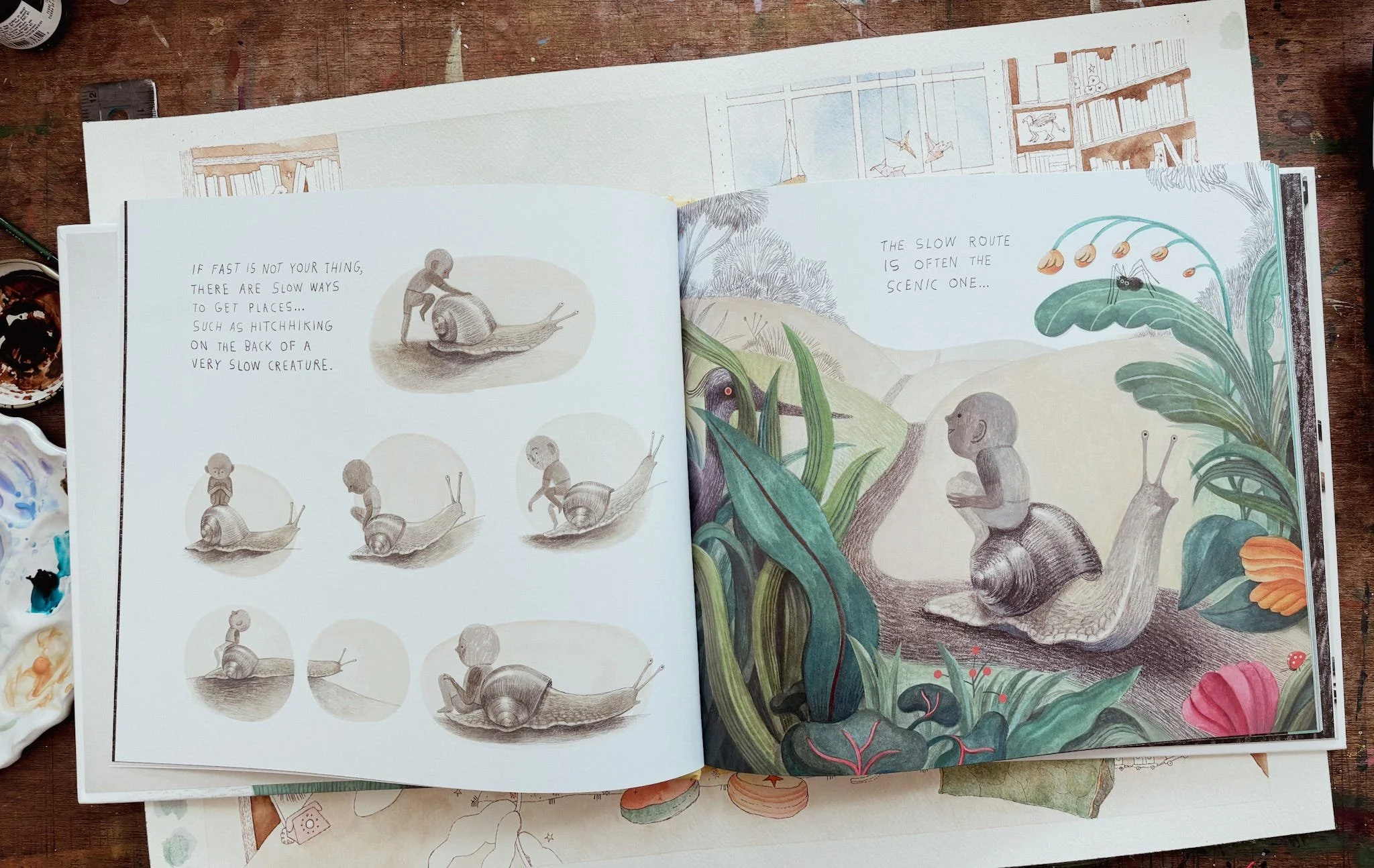
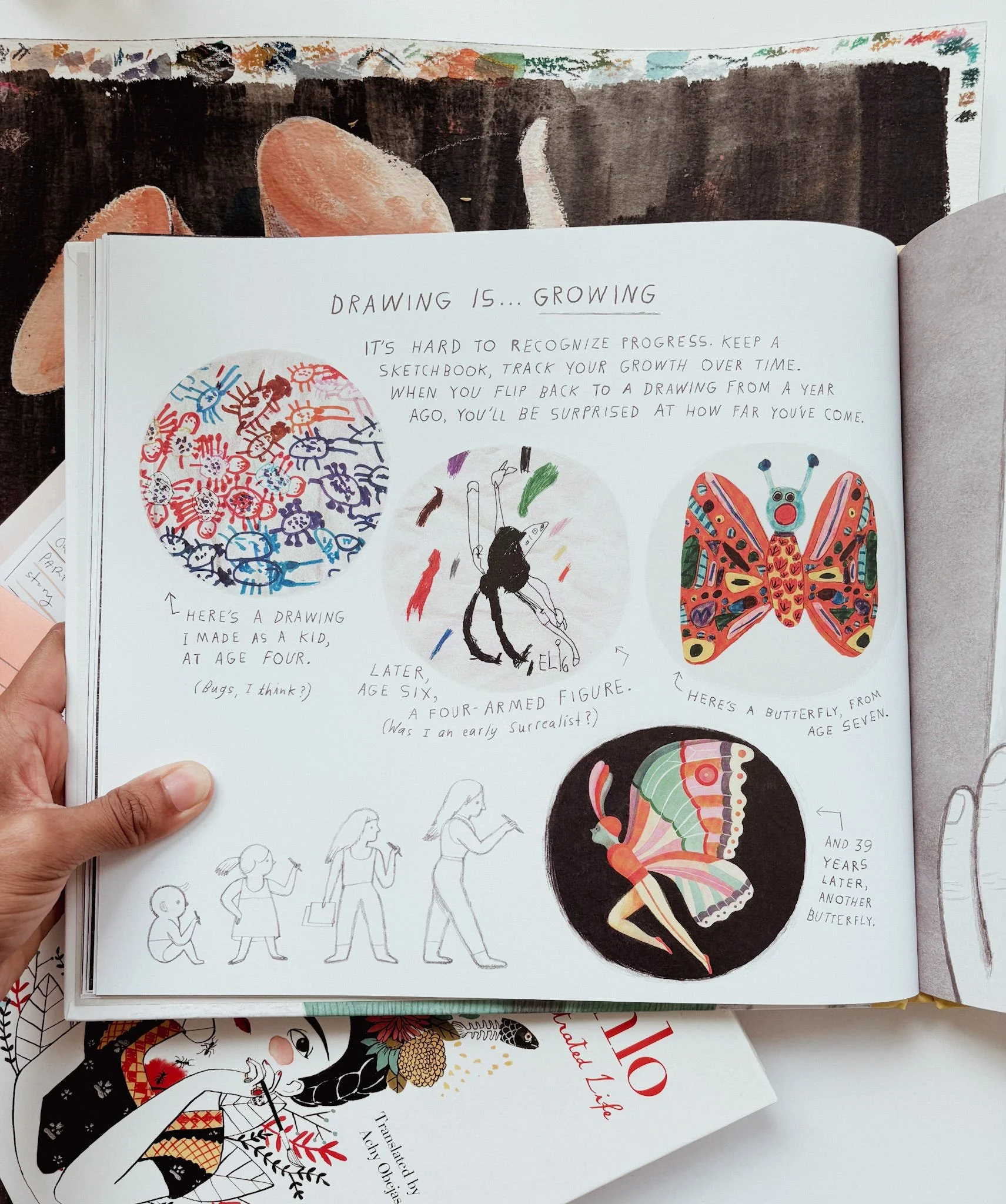
I originally bought Elizabeth Haidle’s Drawing is… as a fun book for me and N to work through together. After reading it on and off for the past few weeks, however, it’s found its way out of N’s room and into my studio, where it sits next to my drawing desk as a symbol of encouragement. 

I write about my experience as a working artist often: the process, the sound of my creativity, the small joys, the breakthroughs. The feeling of being forgotten. I’m not sure what I expected Drawing is…to be, but I’m surprised by what it actually is: a thoughtful meditation on discovering the creative, imaginative artist hiding inside you. It has plenty of technical information to help N (and me!) experiment and use different materials, which I expected, and plenty of prompts and exercises for thinking more deeply about your art-making, which I’m excited to try. 

What I was most surprised, however, is how Haidle corralled all of this information under the umbrella of a very healthy artist philosophy: that every step you take as an artist—however messy or seemingly insignificant, will lead you somewhere new—somewhere, certainly, worth going. 

You can purchase Drawing is… and learn more about Beth’s work. 

FRIDAY

I am pulling myself together.
Don’t want to go on a trip.
I have painted the living room white
and taken out most of my things.
The room has never been so empty.
Just now a banging thunder
and suddenly falling rain.
I leave the typewriter and run
outside in my nightgown and take
the cotton blanket off the line.
It is summer and I am in the middle
of my life. Alone and happy.

—Grinding the Lens by Linda Gregg

See you next week!

xx,

M


To sign up for my weekly newsletter, Dear Somebody, please subscribe here.
In Process Tags Parenting, Parenthood, Uppercase Magazine, Little U, UNICEF, Gaza, Asian American Literary Archive, Alice Walker, Elizabeth Haidle, Linda Gregg
Comment

Dear Somebody: When all is quiet.

June 20, 2025

A recent sketchbook page (watercolor and ink, 2025)

A year from now, here are five things from this week that I'd like to remember:

MONDAY 

I sit on the front porch eating a sandwich slapped together with whatever is left in the fridge. I need to go grocery shopping, I need to unpack my kids’ summer clothes, I need to clean the kitchen, I need to take a shower. I’ve been working nonstop towards my current picture book deadline. I’m rewriting a manuscript I care deeply about, I have a new journal coming out this fall, I’ve begun strength training. This fall, I’m determined to learn how to sew. There is so much I want to make, but I am so slow. One day flickers into the next, and then the next, and still, it feels like I’m going nowhere.

My friend Dan Blank calls me to catch up. I confess, with embarrassment, that I don’t have very much to share: life is quiet, almost entirely consumed by my young children, and work is, too. It’s been a few years since I’ve quit the game of social media, and my world feels much smaller because of it. Quieter. I don’t receive many work inquiries because I don’t share as much online. No one can hire you if they don’t know you exist, I tell myself before emailing editors and art directors to remind them. I hold my breath and wait; I listen to the familiar song of crickets. Everyone I know is worried about work, so when my ego flares up in front of me, I stamp it out. As any artist knows, the ongoing quiet can feel suffocating. It plays tricks on you, messing with your sense of worth. It causes you to lose sight of what’s important. It is strong enough to crush your spirit. 

When I hang up the phone, I sit still, sifting through this quiet. I feel ashamed of my embarrassment, for several reasons I can’t separate, quite possibly because there is no separating them. Continuing my career at the same pace, with the same fervor postpartum was simply not a viable option for me. I made conscious decisions to restructure my career and life in a way that made healthier, more meaningful sense. Yet, at times, I feel shame for not barreling ahead at the same pace—for not being able to, for not wanting to, for not wringing myself out in order to simply keep going. Though I know it’s a symptom of the culture we live in, occasionally, I still feel shame for how much I’ve changed. 

Though lonely, the past few years have been good for my brain. Instead of documenting every step of my process for social media, I sink into my craft, remembering why this is the life I chose for myself. I’ve grown and solidified. I am more capable, I require less from others. And inside me, life continues to hum steadily. Joyfully. I feel far more grounded in my creative values. I’m proud of the work I make, however slow the progress is. I’m more present with my children, who, for now, still believe that their inherent worth isn’t dependent on what or how much they produce. I’m beginning to believe I’m a good mother. 

On the other side of worry, I divert my energy towards developing a trust between myself, my work, and the world: things will work out. I can move towards my goals andbelieve they will be achieved. I can build creative growth and hope. I can feel forgotten and be excited to one day reemerge. I can choose to feel good—and the more I do, the more meaningful my subsequent choices are.

Back on the porch, I chew slowly. A small breeze comes along and my napkin flutters, a thin pair of two-ply wings. The tulip poplar tree across from our front yard has grown so large in the few years I’ve lived here. Now, green leaves burst forth, invigorated by our recent rains. The branches stretch towards me like the future does, like the past used to before I closed the door on it. In a few hours, my kids will thunder down these sidewalks, begging me to jump rope with them. We’ll walk down to the nearby bridge, press our faces through the windows in the cement walls, and wait for the city trains to rush by. It doesn’t matter if the conductor looks up or not; we always wave.

On this street lined with grandparents, grandchildren, and shiny blue grackles, there isn’t a single soul who cares what I look like or what my next achievement is, including me. I love living on this street instead of on social media, so I give myself over to the silence. I am grateful for my sandwich, the porch I sit on, and every small, quiet breeze.

TUESDAY

“In its simplest form, a whale’s death becomes a source of life for years beyond its time. It is a transformation that turns death into life on an almost incomprehensible scale. Beyond its biological importance, the concept of a whale fall also holds a poetic significance. It reflects themes of loss and renewal, reminding us that even in its most tragic forms, what’s happened in the past can sustain life in the present in ways we are only beginning to understand.

This haunting question reframed my understanding of land and sea as intertwined repositories of history. The ocean, like the soil, bears witness to lives lost and transformed. It warranted asking: What happens to our bodies, to their essence, when they are claimed by the ocean? How do we reconcile the ocean as both a site of loss and a source of life?”

—Omnia Said on contemporary American artist Ellen Gallagher’s Accidental Records series in Atmos

WEDNESDAY

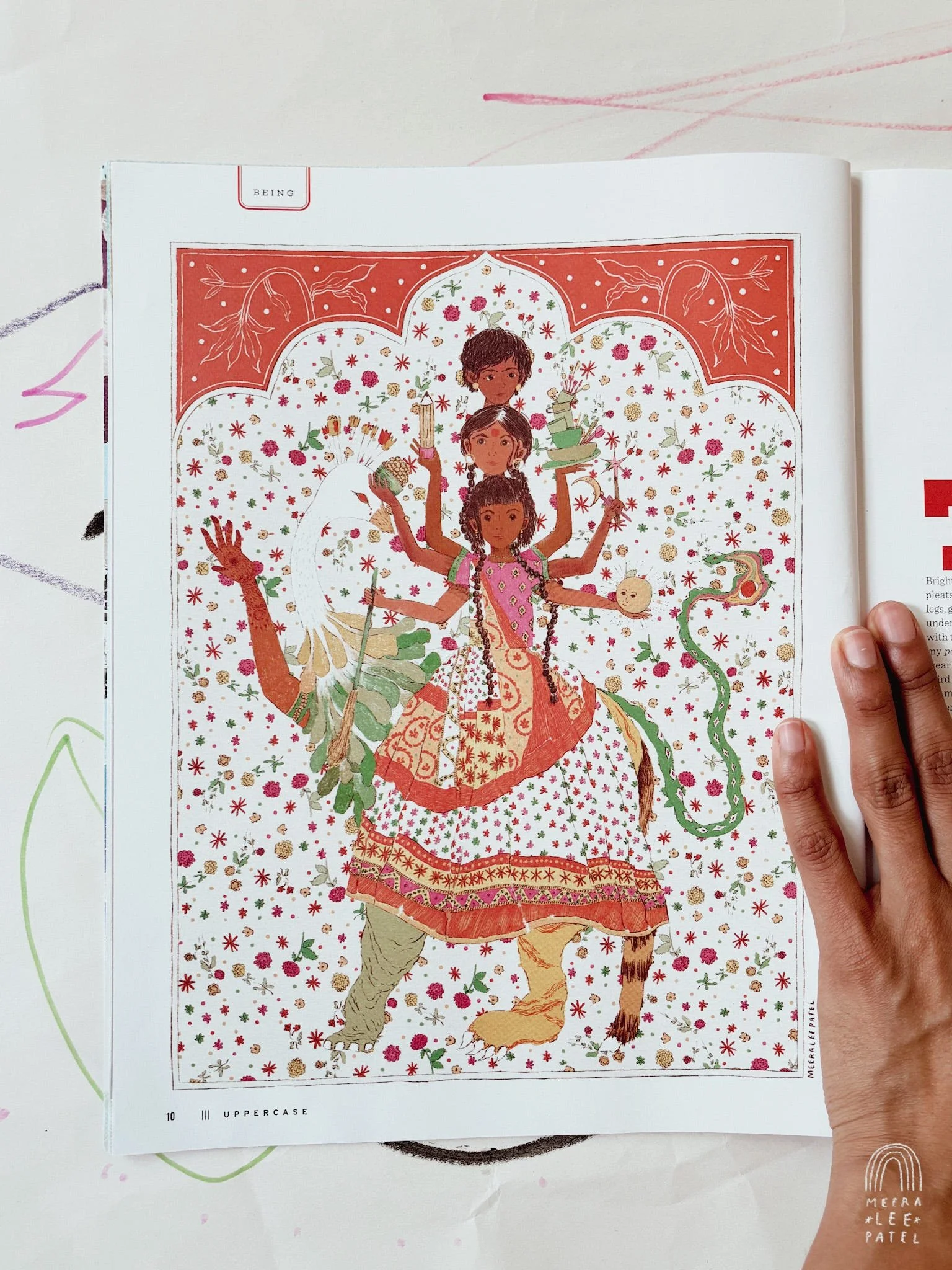
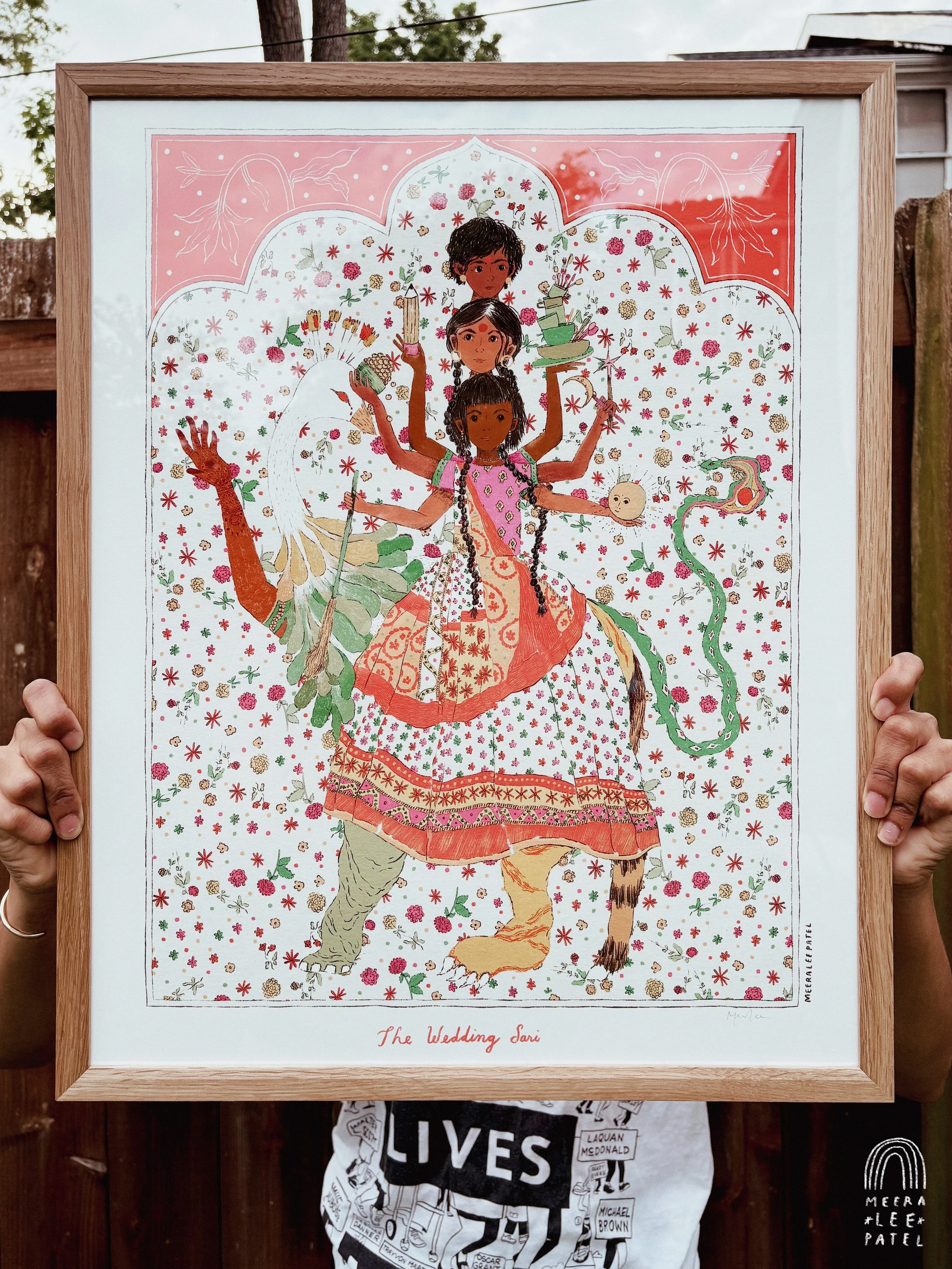
The extremely unassuming frame I ordered for The Wedding Sari finally came, so I framed this piece and am shipping it to my aunt this week. The Wedding Sari is an essay and illustration I created for my column, Being, in Issue #65 of Uppercase Magazine. It explores the history of the Gujarati panetar, or wedding sari, and the one I wore on my wedding day, which was previously also worn by my mother and her older sister, my aunt.

Three prints of this piece exist: one hangs in my home, one hangs in my mother’s home, and now, one is somewhere on its way to my aunt’s. An excerpt of my column was included in a past letter. 

THURSDAY

I’m reading: Long Way Down by Jason Reynolds, an excellent novel-in-verse about the choices we make and the choices we’re taught to make; I finished listening to Solito by Javier Zamora, a heartbreaking tale of a young child’s migration to the States; I began The One and Only Ivan by Katherine Applegate; I began My Friends by Hisham Matar. 


FRIDAY

Now we will count to twelve
and we will all keep still
for once on the face of the earth,
let’s not speak in any language;
let’s stop for a second,
and not move our arms so much.

It would be an exotic moment
without rush, without engines;
we would all be together
in a sudden strangeness.

Fishermen in the cold sea
would not harm whales
and the man gathering salt
would not look at his hurt hands.

Those who prepare green wars,
wars with gas, wars with fire,
victories with no survivors,
would put on clean clothes
and walk about with their brothers
in the shade, doing nothing.

What I want should not be confused
with total inactivity.
Life is what it is about;
I want no truck with death.

If we were not so single-minded
about keeping our lives moving,
and for once could do nothing,
perhaps a huge silence
might interrupt this sadness
of never understanding ourselves
and of threatening ourselves with death.
Perhaps the earth can teach us
as when everything seems dead
and later proves to be alive.

Now I’ll count up to twelve
and you keep quiet and I will go.

—Keeping Quiet by Pablo Neruda

See you next week!

xx,

M


To sign up for my weekly newsletter, Dear Somebody, please subscribe here.
In Sketchbook, Process Tags Sketchbook, Dan Blank, Process, Ellen Gallagher, Uppercase Magazine, Jason Reynolds, Javier Zamora, Katherine Applegate, Hisham Matar, Pablo Neruda
Comment

Dear Somebody: Looking for the good.

June 6, 2025

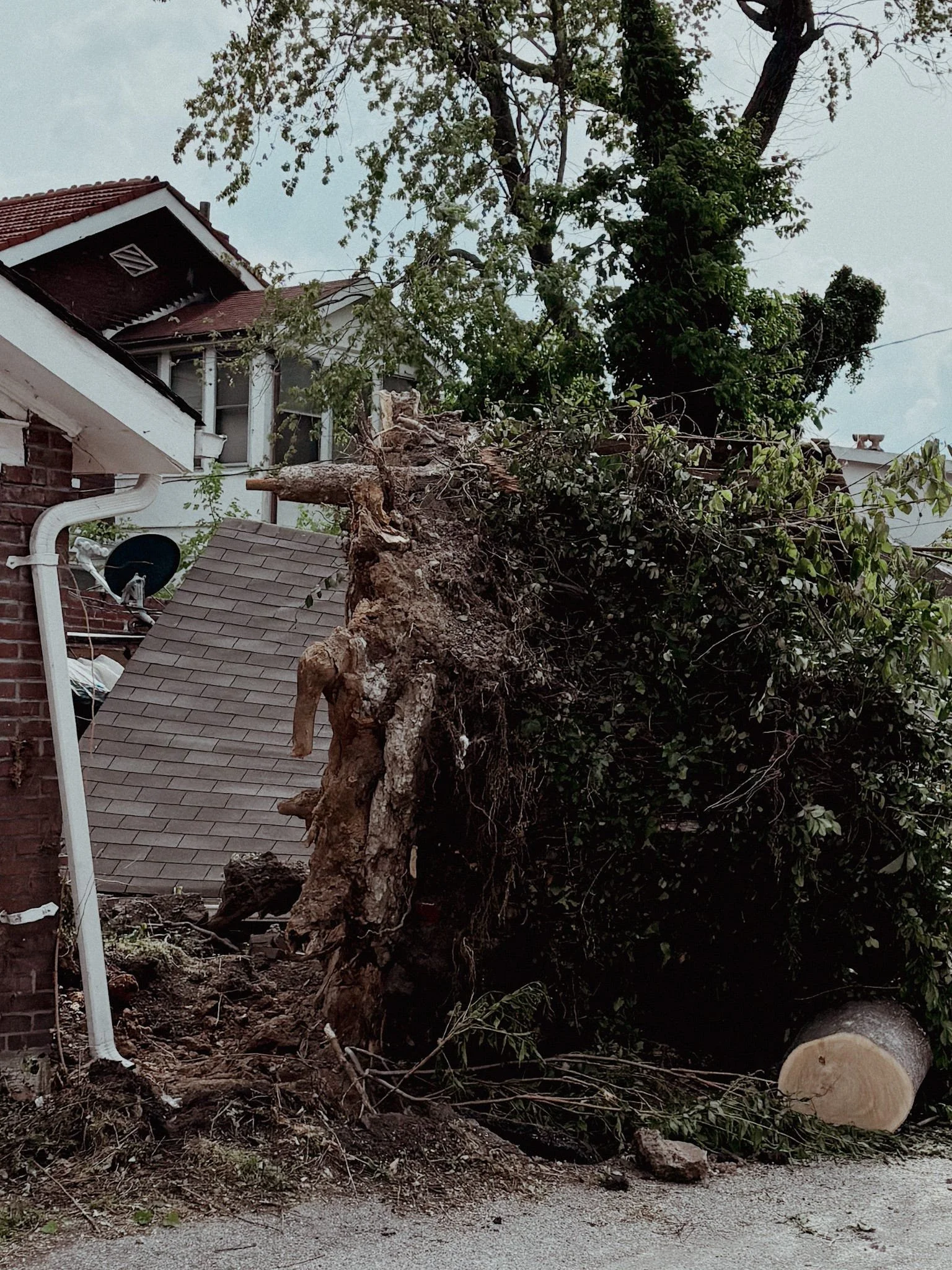
A fallen tree and garage (Saint Louis, 2025)

A year from now, here are five things from this week that I'd like to remember:

MONDAY 

Two days after the tornado, N and I take a walk around our neighborhood. The pieces of it are everywhere: hundred-year-old red clay roofing tiles broken and littered across our backyard; downed electric wires strewn in the alley, their bodies snaking across crushed dumpsters and cement stairs. Broken windows glint where they lay—the light reaching and then snapping back from each jagged edge. The amount of glass is endless. It glitters on and on like the sea. 

Look at all the missing roofs, I tell N. All of these people without homes. 

But look at all the people helping, she tells me. I count three people on that roof. They will fix it. 

My heart aches for the trees. 100, 150, 200 years old—now split at the torso, their beautiful rings exposed for us all to see. Our sidewalks are hidden, covered either by whatever’s left of their massive trunks, or hundreds of their smaller limbs. The arms bend this way or that, but still they reach up, up towards the sky. Roots and the earth that once held them have risen like mountains. Now they stand beside us. The sky itself is bigger now, with less leaf and limb in its face. It’s still blue. It’s still beautiful. 

I can’t believe all of these trees are gone, I tell N. They were here for so long. 

We will plant new ones, she tells me. They will grow again.

My heart aches for our neighbors. We walk past our neighbor’s front yard, now covered in the hundreds of bricks that used to compose his second story.  At first, there was nothing, he tells me. This was just a tree in my yard. Now it’s a tree in my house.

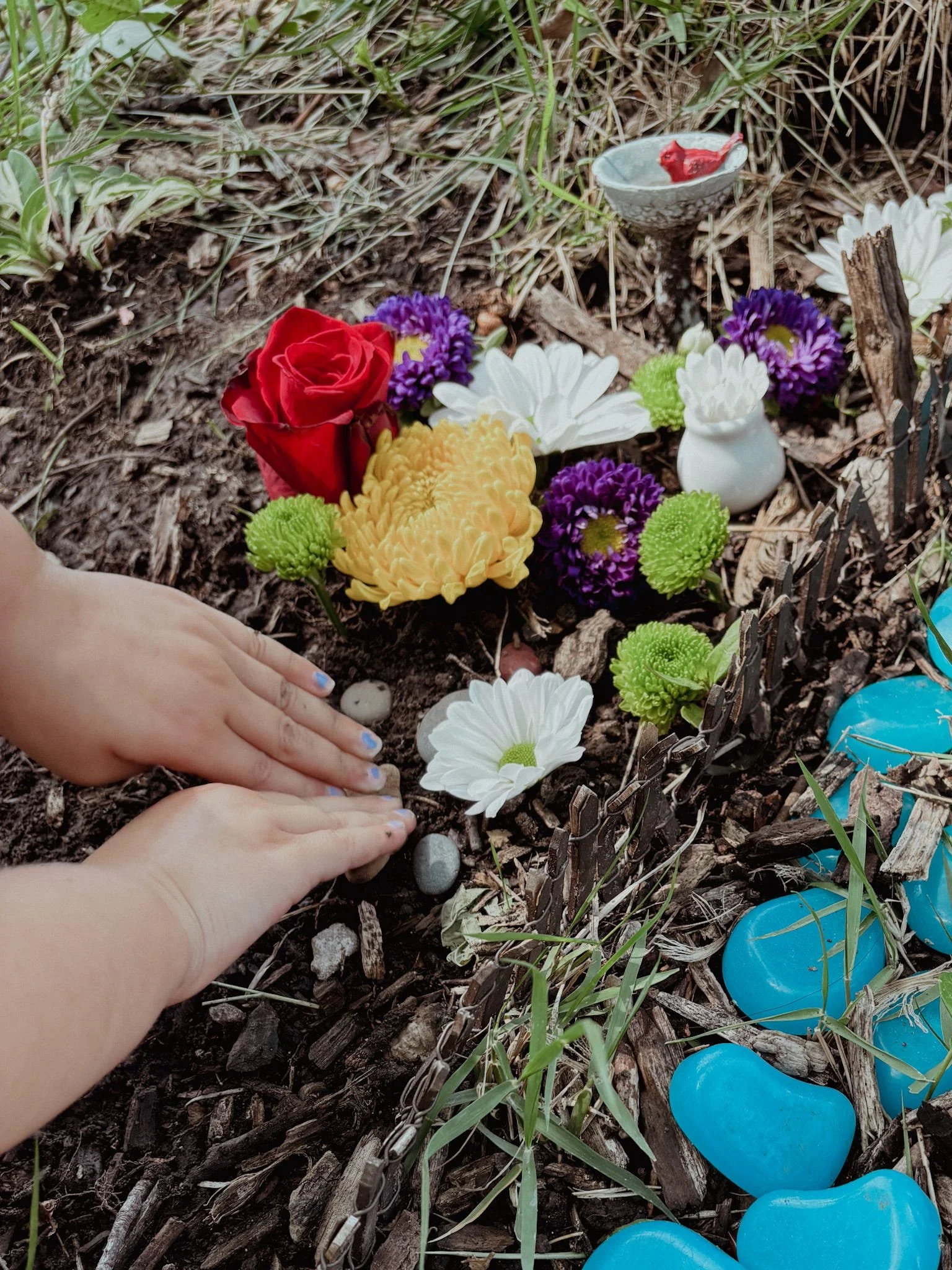
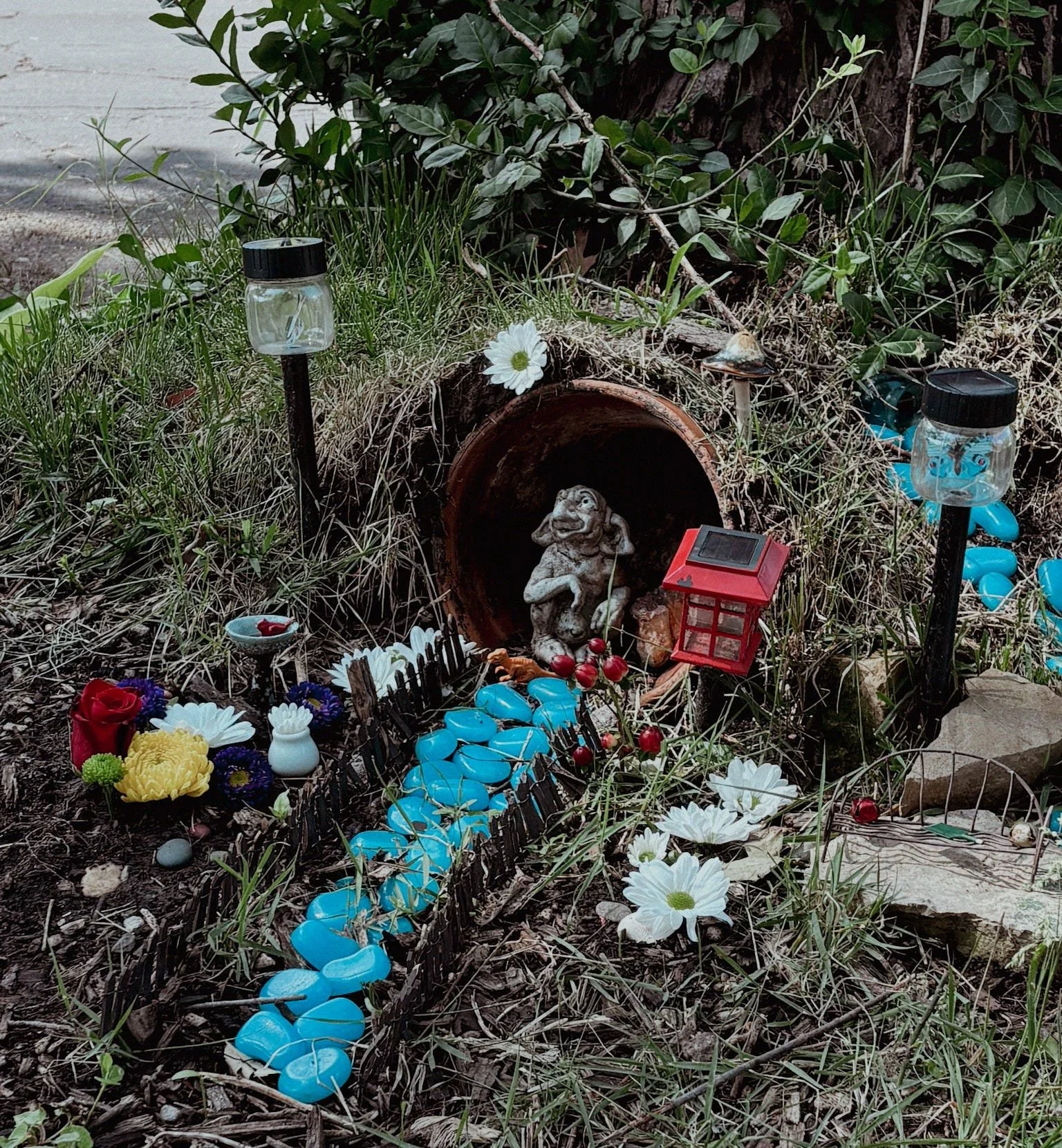
N checks on the fairy garden he’d built into the base of another tree which still stands. Elfis is okay, she assures me, pointing to the tiny toy elf. But his fence fell down. And the bird bath is upside down. I’m going to help. She stands the fence back up, and I go back into our home for supplies. I emerge with a fresh bouquet of flowers, a bowl, some water, some scissors, and a few beloved seashells from our trip to Pensacola. 

N helps the fairy garden (2025)

My neighbor and I discuss insurance policies. We discuss how the sirens failed, how there wasn’t enough time to get to the basement. How he crouched in the stairwell with his arms protecting his head. We discuss how lucky we all are. 

Meanwhile, N snips and presses. She fusses and fixes. She fills the tiny bird bath with a teaspoon of water. She digs holes to plant new flowers. She decorates Elfis’ home with the heart of a child who wants to help. I hope he likes it, she whispers to me, as our neighbor goes back inside. I think we did good. I think this will help him smile. 

Elfis and his home (2025)

Donate to the City of St. Louis Tornado Response Fund here; learn about opportunities to volunteer your time and efforts here. The 100 Roofs project is looking for volunteers here. 

TUESDAY

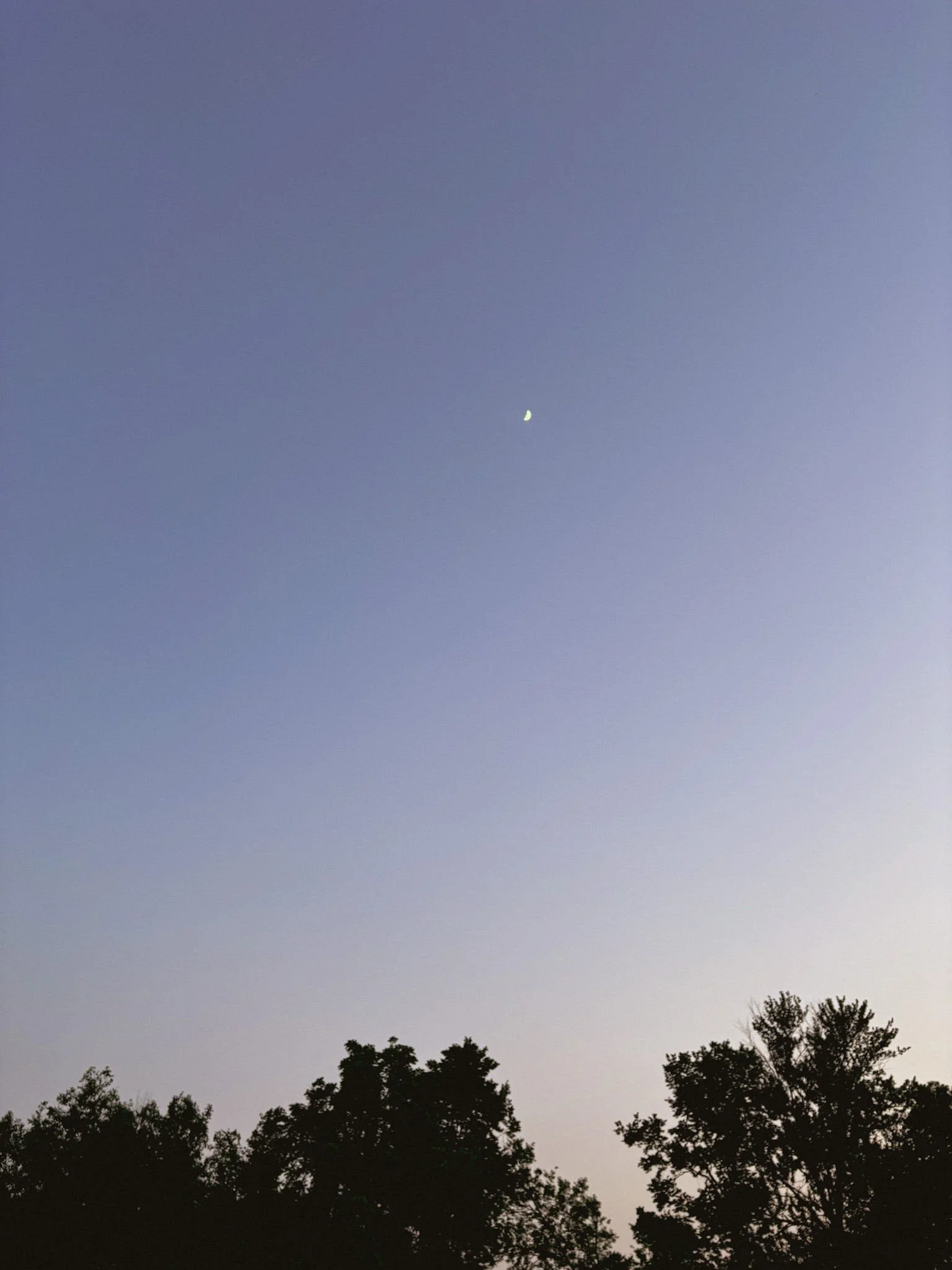
A perfect moon (Cincinatti, 2025)

A perfect moon in Cincinnati. 

WEDNESDAY

Fred Rogers on imagination in dreams and how to imagine better ways of discussing reality with our children—and of course, on learning to look for the helpers. 

THURSDAY

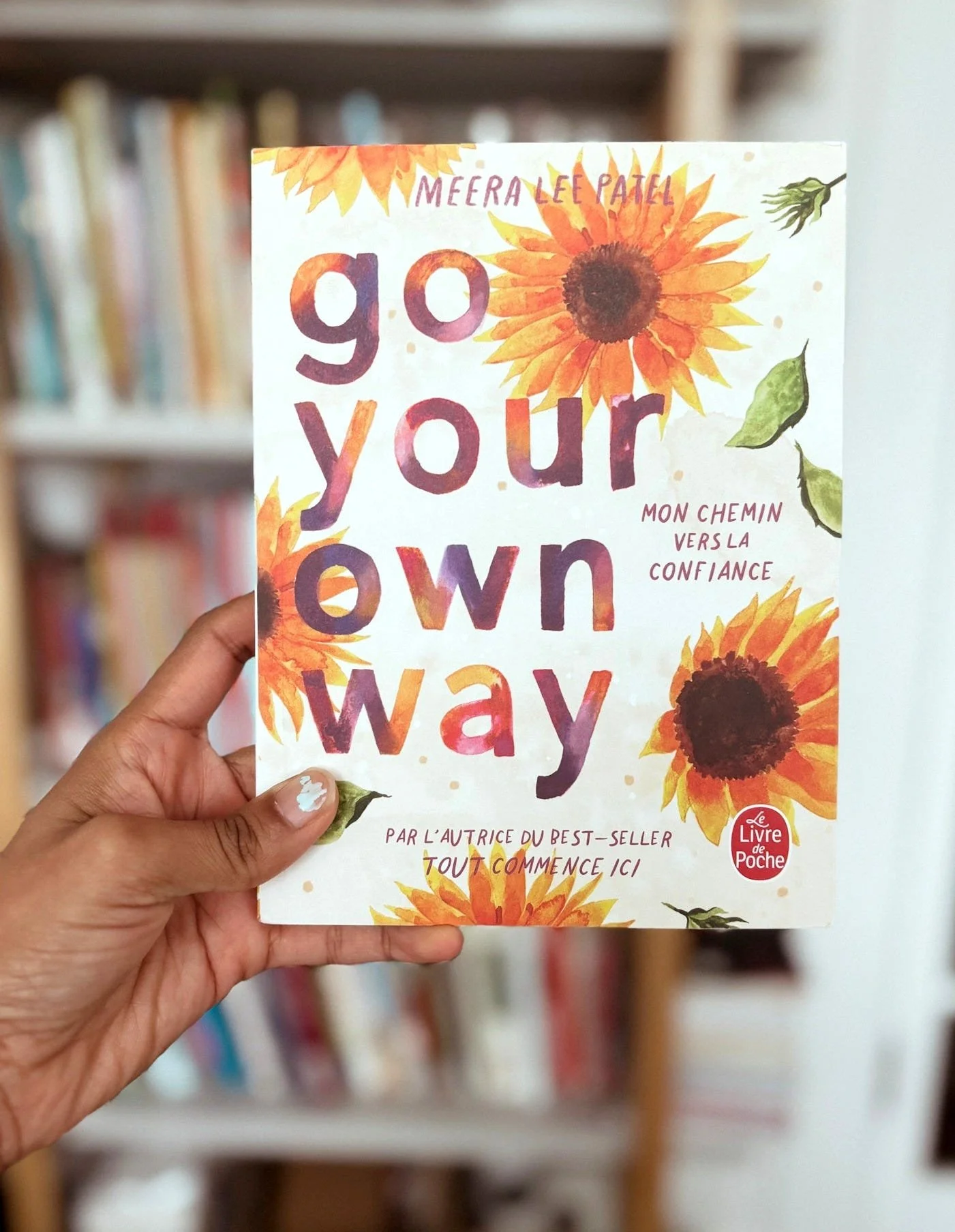
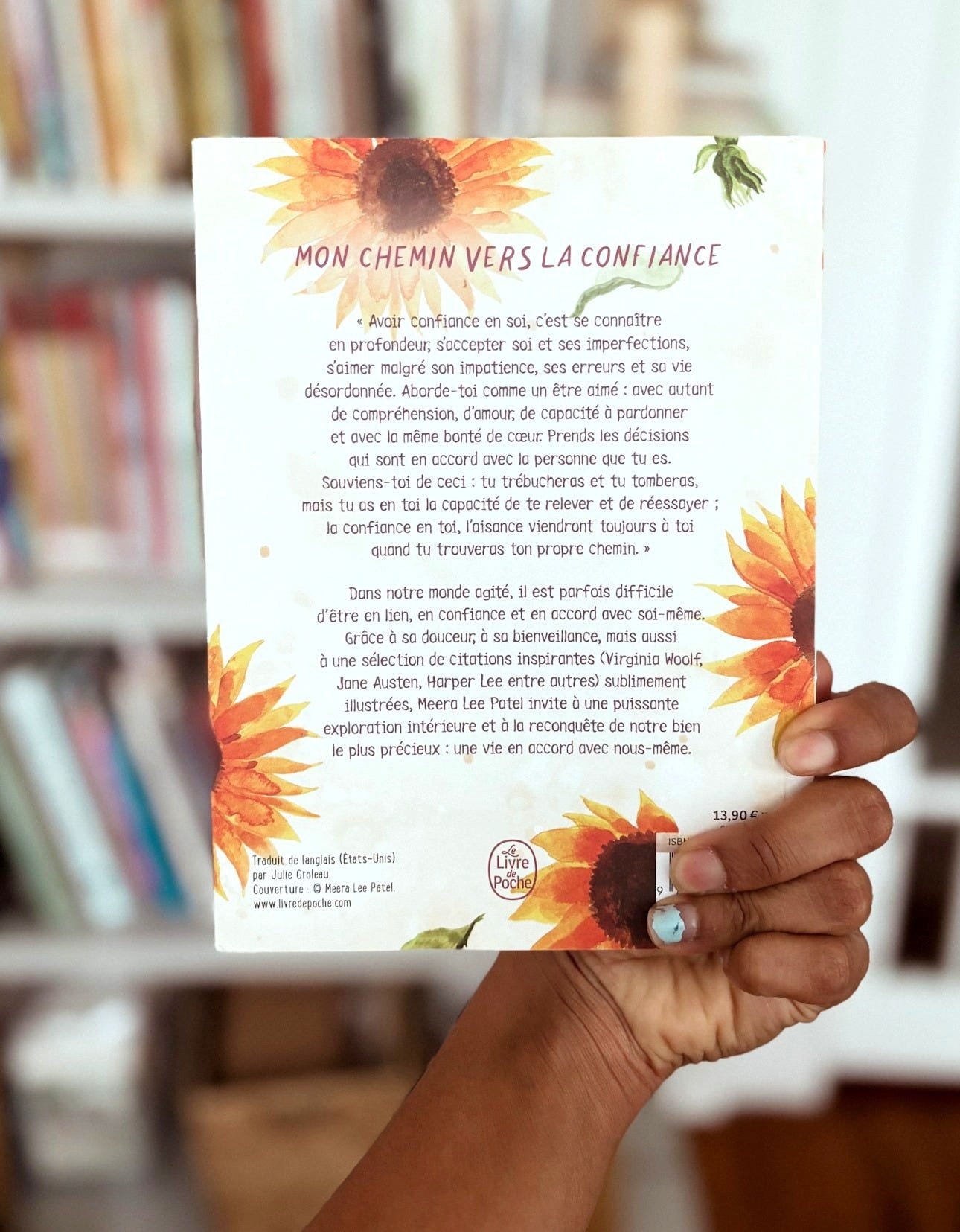
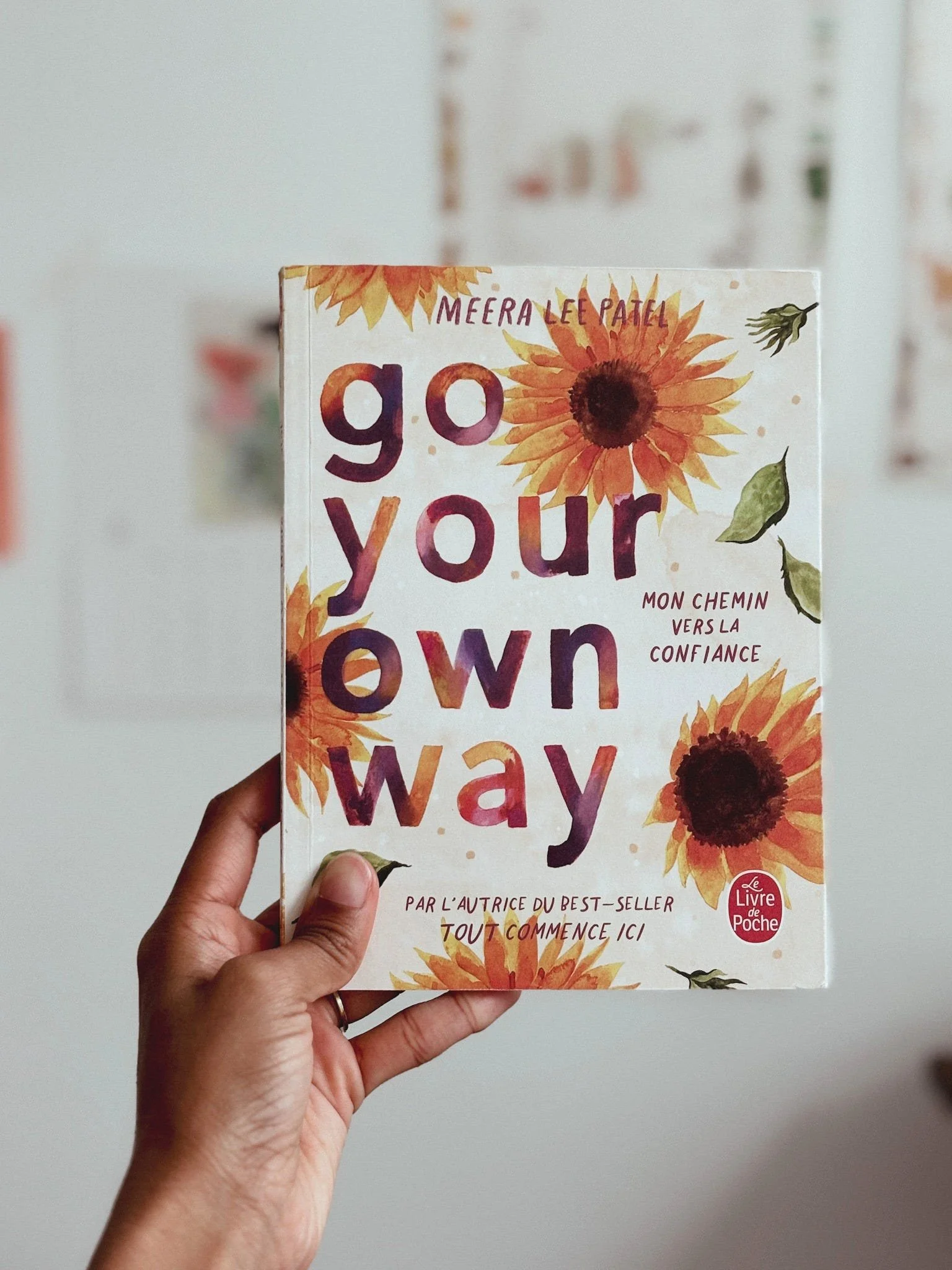
The French cover of GO YOUR OWN WAY, published by Le Livre de Poche

The French edition of GO YOUR OWN WAY, published by Le Livre de Poche

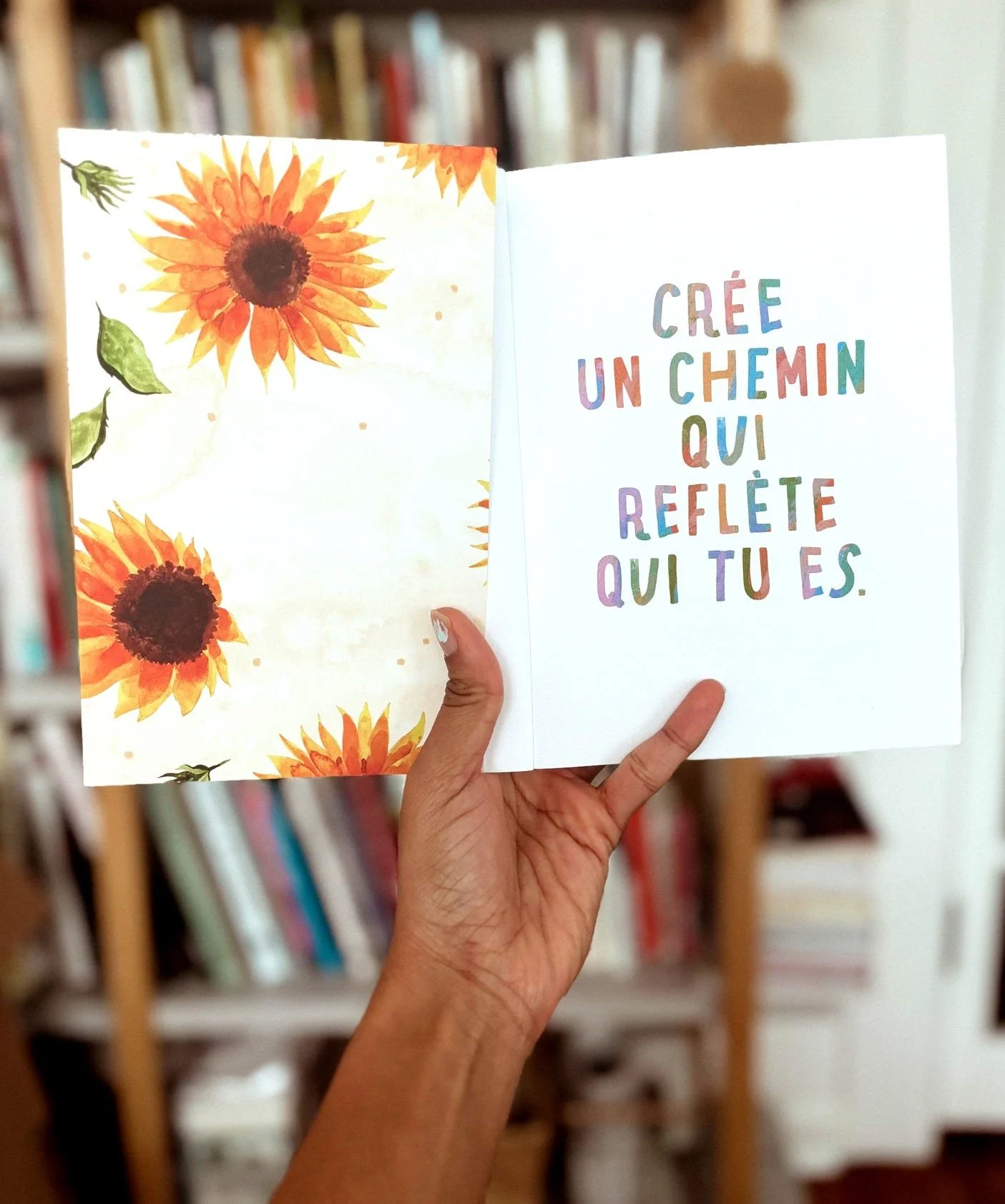
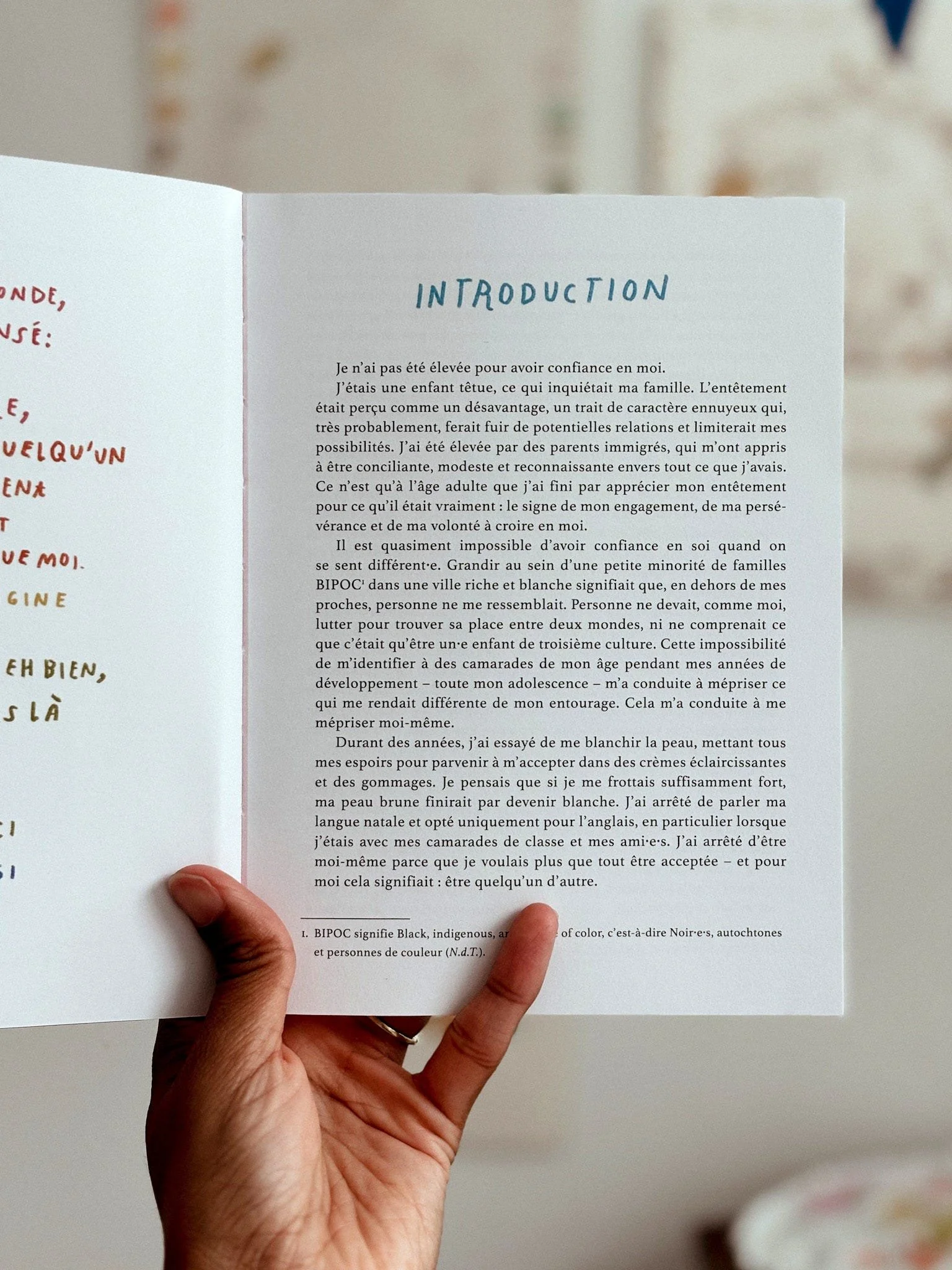
An interior painting from the French edition of GO YOUR OWN WAY

I was thrilled to receive the French edition of Go Your Own Way, sent to me by my French publisher, Le Livre de Poche. The French edition is available here.

Other editions include: the UK edition (Penguin Random House UK), Arabic edition(Jarir), and of course, the original English edition (Tarcher). 

FRIDAY

Sit down. Inhale. Exhale.
The gun will wait. The lake will wait.
The tall gall in the small seductive vial
will wait will wait:
will wait a week: will wait through April.
You do not have to die this certain day.
Death will abide, will pamper your postponement.
I assure you death will wait. Death has
a lot of time. Death can
attend to you tomorrow. Or next week. Death is
just down the street; is most obliging neighbor;
can meet you any moment.
You need not die today.
Stay here--through pout or pain or peskyness.
Stay here. See what the news is going to be tomorrow.
Graves grow no green that you can use.
Remember, green's your color. You are Spring.

—To The Young Who Want to Die by Gwendolyn Brooks

See you next week!

xx,

M


To sign up for my weekly newsletter, Dear Somebody, please subscribe here.
Tags Tornado, Parenting, Parenthood, Trees, Fairies, Fairy Garden, Fred Rogers, Go Your Own Way, Le Livre de Poche
Comment

Dear Somebody: Rules to live by.

May 16, 2025

Five Rules for Artistic Integrity for RULES TO LIVE BY Zine (2025)

A year from now, here are five things from this week that I'd like to remember:

MONDAY 

As a mother, my priority isn’t to be liked by my children. I want to be liked by them, and I hope that hundreds of moons from now, when they don’t have to call or visit or care, they still choose to—but it isn’t a need, the way their safety or ability to respect themselves is. 

My actions don’t waver. They march to the tune of my priorities, even as my heart falters—even as my mind, alert to my own fallibility, nicks me like a sharpened blade. Ten years from now, when they have friendships and interests and independence, will my children still want to be near me? 

Yesterday, N and I sit outside for hours and draw: first, me on my iPad, working on final drawings for Dear Library and N in her sketchbook, working on self-portraits; then me, in my sketchbook, working on my diary comics and N on my iPad, experimenting with different brushes. Then: both of us together, concrete under our knees, squished together on the old, emerald bedsheet used to protect the porch. 

It’s quiet between us. Our work is important and we take it seriously. It is no small task turning a large cardboard box into a rocket. After some time, N breaks the silence. “Mama, you draw me and I’ll draw you,” she says, and I agree. I choose neon yellow, she chooses blue. I draw her sweet face, she draws my topknot. “I like listening to nature’s music,” N says. “And did you notice that breeze? I like drawing with you, mama. I like when it’s just us.” 

I wish I were more like the earth, who rolls along on her axis and grows her great trees and recycles her sweet air and demands nothing—not to be loved, not even to be liked, in return. I don’t know what life will be ten years from now. I don’t know who my children will become, or whether I’ll have found my road towards self-actualization. Lately, it feels like I’ve only taken wrong turns. 

Still, I am aware enough to recognize love when it’s in front of me. In this moment, it is here, on this porch. It is in this child who once lived in the belly of her mother, and upon her escape, grew into her own person who can also feel and express love. It is in her valuing of birdsong, a fresh sketchbook, and, for now, time alone with her mama. 

TUESDAY

An image of Rules to Live By, a risograph zine (2025)

I was honored to contribute to the Rules to Live By zine organized by Carolyn Yoo, which is a collection of creative manifestos written by 18 fellow artists: Coleen Baik, Dan Blank, Anna Brones, Lian Cho, Kristen Drozdowski, Kelcey Ervick, Petya K. Grady, amelia hruby, Nishant Jain, Adam Ming, Jenna Park, Michelle Pellizzon Lipsitz, Beth Spencer, Nina Veteto, Mitchell Volk, and Seth Werkheiser. 

I contributed my 5 Rules for Artistic Integrity, which is something I’ve considered more deeply over the past few years as I’ve felt the consequences of living as a working artist in the age of social media:

5 Rules for Artistic Integrity by Meera Lee Patel, as part of the Rules to Live Byzine (2025)

The zine was printed, assembled, and bound by hand. Carolyn generously wrote about her entire process for making this zine, including the inspiration behind it, and several contributors wrote about their own experiences with this project:

  • Dan Blank wrote about 5 Rules for Sharing Your Creative Voice

  • Kelcey Ervick wrote about 5 Rules for Dreaming

  • Nishant Jain wrote about 5 Rules for Making Sneaky Art of Your World

  • Kristen Drozdowski wrote about 5 Rules for Creative Authenticity

  • Mitchell Volk wrote about 5 Rules for Collaborating with Yourself (and made an amazing GIF cycling through all the pages of the zine!)

Many thanks to Carolyn for including me in this thoughtful project which was a joy to consider and illustrate. 

WEDNESDAY

I was pleased to see How it Feels to Find Yourself awarded in theSkimm’s 2025 GOOD FOR YOU AWARDS as the best book for self-discovery.

I finished reading We Do Not Part by Han Kang; I started listening to Demon Copperfield by Barbara Kingsolver; I started re-reading—with a new appreciation for the beautiful writing—Tuck Everlasting by Natalie Babbitt.

I’m over my own heels for Japanese illustrator Rokuro Taniuchi’s work, which is difficult to find. I’d love to own a copy of Taniuchi Rokuro Gensouki (Shinshindo, 1981) one day. 

THURSDAY

Portraits of N and Mama (Mother’s Day 2025)

FRIDAY

We said she was a negative image of me because of her lightness.
She's light and also passage, the glory in my cortex.
Daughter, where did you get all that goddess?
Her eyes are Neruda's two dark pools at twilight.
Sometimes she's a stranger in my home because I hadn't imagined her.
Who will her daughter be?
She and I are the gradual ebb of my mother's darkness.
I unfurl the ribbon of her life, and it's a smooth long hallway, doors flung open.
Her surface is a deflection is why.
Harm on her, harm on us all.
Inside her, my grit and timbre, my reckless.

—The Daughter by Carmen Gimenez Smith

See you next week!

xx,

M


To sign up for my weekly newsletter, Dear Somebody, please subscribe here.
In Process Tags Parenting, Parenthood, DEAR LIBRARY, Sketchbook, Rules to Live By, risograph, Coleen Baik, Dan Blank, Anna Brones, Lian Cho, Kristen Drozdowski, Kelcey Ervick, Petya K. Grady, amelia hruby, Nishant Jain, Adam Ming, Jenna Park, Michelle Pellizzon Lipsitz, Beth Spencer, Nina Veteto, Mitchell Volk, Seth Werkheiser, Carolyn Yoo, How it Feels to Find Yourself, Barbara Kingsolver, Natalie Babbitt, Han Kang, Rokuro Taniuchi, Carmen Gimenez Smith
Comment

Dear Somebody: Learn to let go.

May 9, 2025

The first time I held a printed copy of Learn to Let Go (Saint Louis, 2025)

A year from now, here are five things from this week that I'd like to remember:

MONDAY 

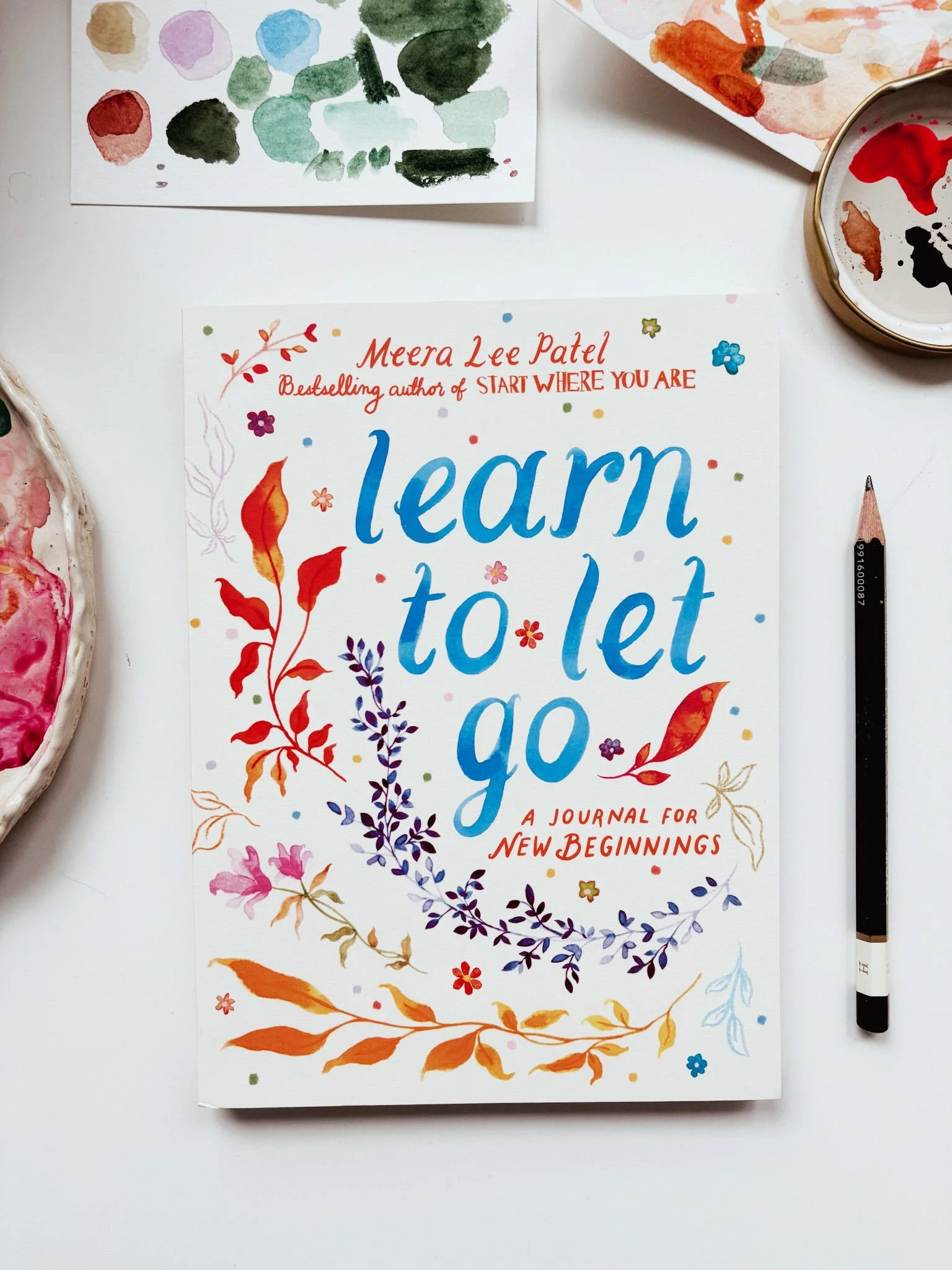
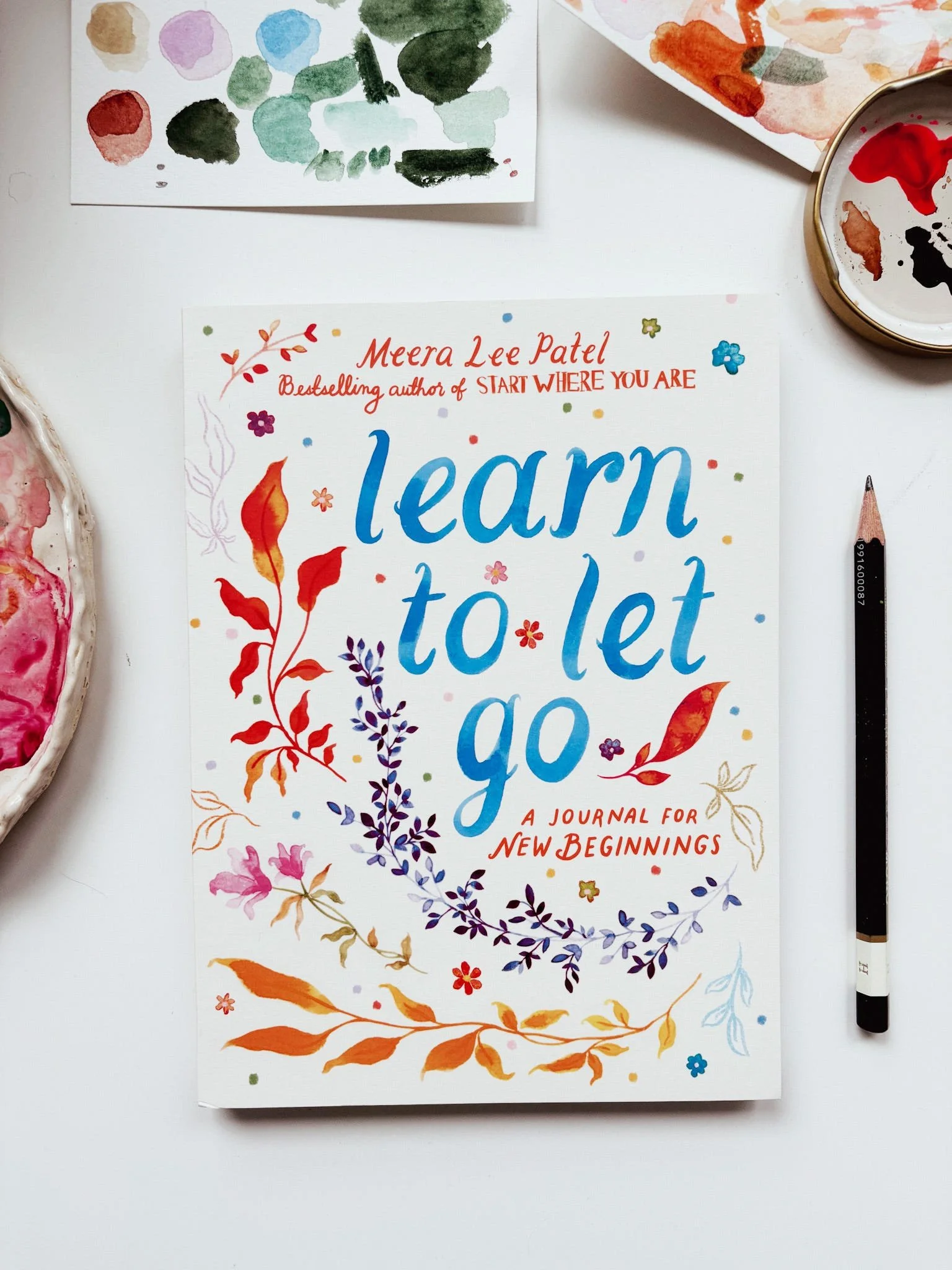
I am excited to reveal the cover for my upcoming journal, Learn to Let Go: A Journal for New Beginnings! This cover came together after many, many rejected concepts and sketches, and after much back and forth between me and my design team. 

In the end, I am pleased: it is bright, joyful, and reinforces the beauty in letting go: only by relinquishing our attachment to the emotions, relationships, and dynamics that weigh us down can we create the space necessary for new, evolutionary growth. 

I will speak a lot more about this journal in the upcoming months—I have a slew of comics and interviews (all about letting go!) that I’m excited to make and share with you. Releasing the unfair expectations I have of myself—as a mother, artist, and general human-person—has been a reoccurring lesson over the past few years and I’m strangely excited to dip into these reflections and share how I’ve grown.

If you have the means to pre-order and support this journal, please do—pre-ordering now will make a huge difference in the success of this book! 

As I’ve written before, pre-orders are vital to the success of any book. All publishers rely on pre-orders (and sales, in general) to see whether the books we write resonate with people and whether they should continue supporting us in creating them. Strong pre-orders for this book indicate strong interest. Strong interest encourages my publisher to buy my next book.

More than that, pre-orders signal to my publisher—and the larger world of book publishing—that the work I’m making is important. That talking about emotions, vulnerability, and the complexity of the human condition is important. That a person will be required to let go of that which hurts them, but that sometimes, they’ll have to make peace with the loss of a thing, or a person, or a place they loved, too—and that it’s okay to need help. 

Below are links to the regulars; I’ll update this list as the book becomes more widely available:

Amazon, Barnes & Noble, Bookshop.org, Books A Million, Hudson Booksellers, Target, Walmart

As always—thank you for reading, engaging, pre-ordering, and supporting my work. Every little bit helps, and I am ever so grateful. 

TUESDAY

“On returning from a walk today I said to myself that I would not be like some girls, who are comparatively serious and reserved. I do not understand how this seriousness comes; how from childhood one passes to the state of girlhood. I asked myself, "How does this happen? Little by little, or in a single day?" Love, or a misfortune, is what develops, ripens, or alters the character.

If I were a bel esprit I should say they were synonymous terms; but I do not say so, for love is the most beautiful thing in the whole world. I compare myself to a piece of water that is frozen in its depths, and has motion only on the surface, for nothing amuses or interests me in my DEPTHS.”

—from artist and writer Marie Bashkirtseff’s diary, Marie Bashkirtseff: The Journal of a Young Artist, 1860-1884

WEDNESDAY

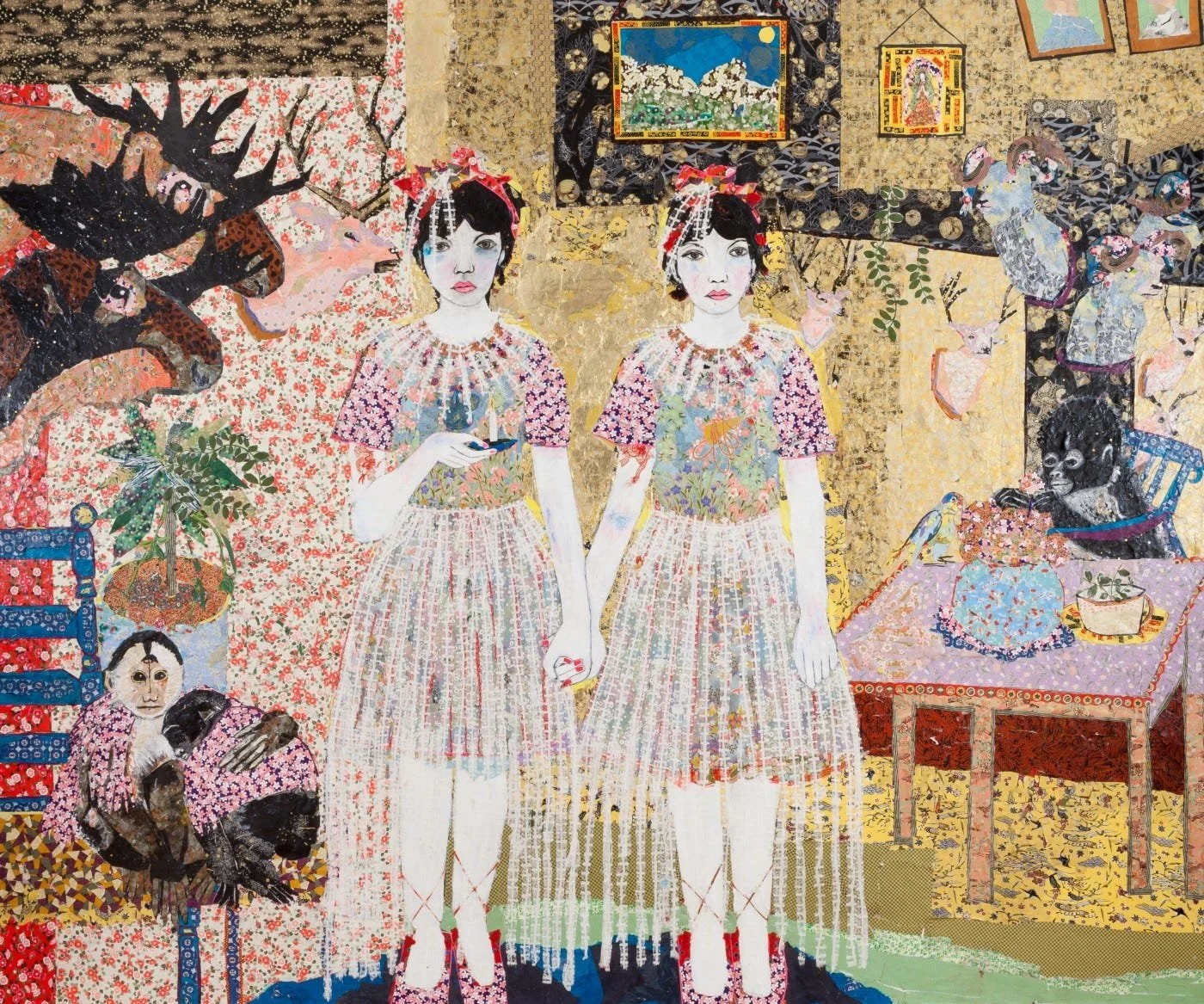
As I continue to research, practice, and begin to incorporate various methods of collage and printmaking into my art, I’ve been unable to get the work of María Berrío out of my head.

Aminata Linnaea, 2013 by María Berrío, courtesy of Victoria Miro

Berrío works primarily by layerring hundreds of torn, cut, and collaged pieces of Japanese paper on top of each other. She then adds light, shadow, and detail using watercolor or acrylic washes, pencil, and ink. The effect is dazzling. I love her use of color and pattern, and especially how her figures remain starkly flat throughout.

THURSDAY

“Satori is kind of enlightenment in life. These moments of illumination: Lying in bed at night, and all of a sudden you realize, I need to be a better partner, a better brother, be more patient, stop being petty. Then you wake up and life happens — a bad work email, someone’s being annoying — and you lose sight of all of that. So satori is a brief window, and the idea for Buddhists is to allow the understanding in that brief window to alter your life.”

—from an interview with Ocean Vuong in The New York Times


FRIDAY

Look, the trees
are turning
their own bodies
into pillars

of light,
are giving off the rich
fragrance of cinnamon
and fulfillment,

the long tapers
of cattails
are bursting and floating away over
the blue shoulders

of the ponds,
and every pond,
no matter what its
name is, is

nameless now.
Every year
everything
I have ever learned

in my lifetime
leads back to this: the fires
and the black river of loss
whose other side

is salvation,
whose meaning
none of us will ever know.
To live in this world

you must be able
to do three things:
to love what is mortal;
to hold it

against your bones knowing
your own life depends on it;
and, when the time comes to let it
go,
to let it go.

—In Blackwater Woods by Mary Oliver

See you next week!

xx,

M


To sign up for my weekly newsletter, Dear Somebody, please subscribe here.
In Books, Process Tags Books, Learn to Let Go, A Journal for New Beginnings, Marie Bashkirtseff, María Berrío, Ocean Vuong, Mary Oliver
Comment

Dear Somebody: The many lives inside us.

May 2, 2025

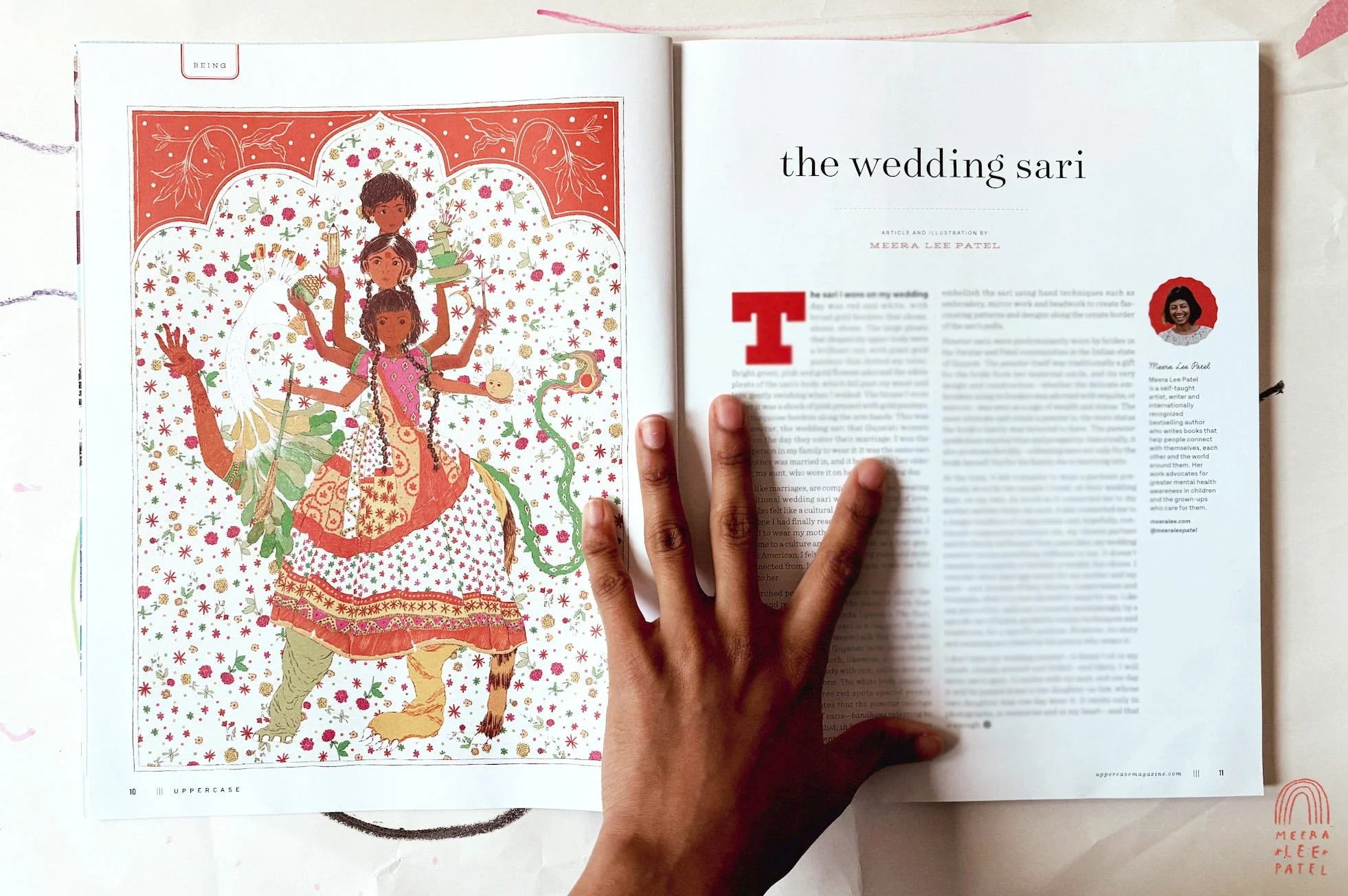
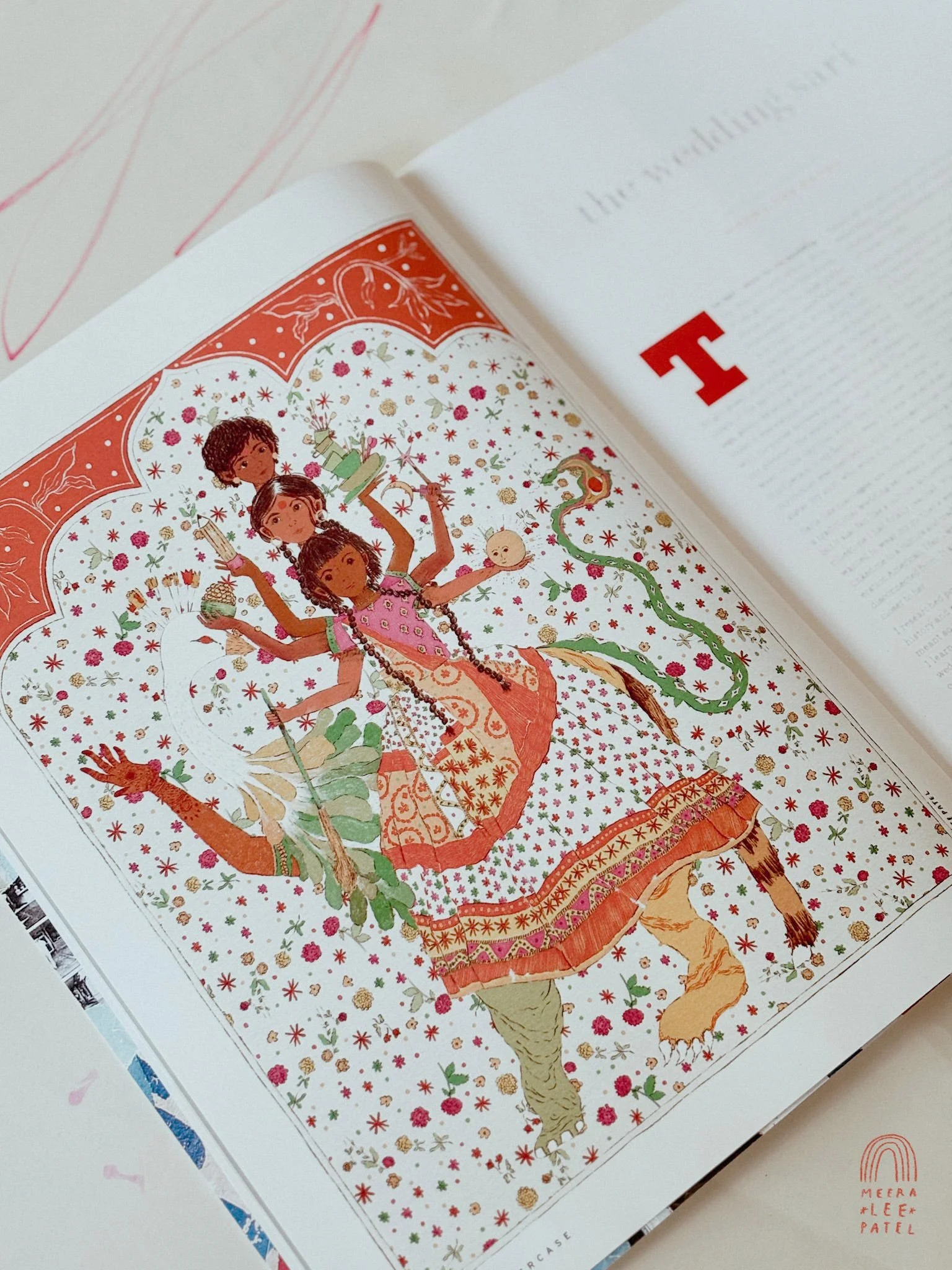
The Wedding Sari for Issue 65 of Uppercase Magazine (2025)

A year from now, here are five things from this week that I'd like to remember:

MONDAY 

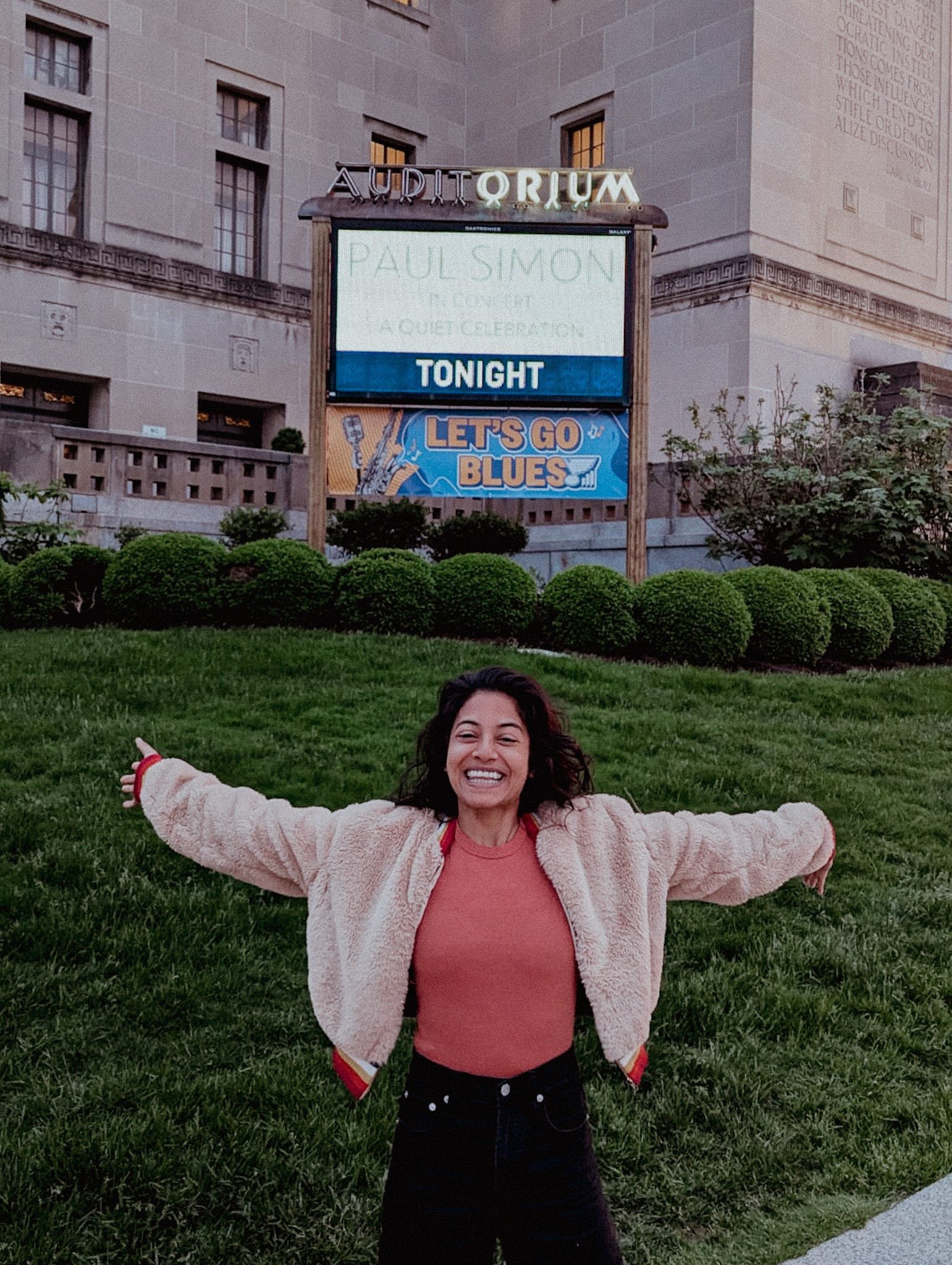
Paul Simon at Stifel Theatre in Saint Louis (2025)

For the first time since 2019, T and I go to a show. The last time I saw a musician play life was six years ago, in Nashville—before the pandemic, before lockdown, before two children and graduate school and all of the rest. I was a different person then, carrying different dreams and hopes and worries. 

I’m rarely in a crowded room anymore. I barely remember what it’s like to be part of a collective movement—to be collectively moved, to collectively move alongside hundreds of other people who are listening to the same music that I am. I’m so used to making art alone, within the privacy of my own studio that I often forget what it’s like to witness someone making their own right in front of me; a special kind of bravery.

We settle into our seats at Stifel Theatre and watch Paul Simon walk onto the stage. It is strange to see the person who created the soundtrack to my life. No other musician has taken me from childhood to having children of my own, no other musician who has a song for every moment I remember most. He plays his latest record and I’m flooded with my own past: the many Novembers spent deep in conversation on park benches; the hundreds of letters we wrote; the long drives to Atlantic City, salt water taffy and ankles in the sea; the friendships I believed would follow me to the end of my life; the friendships that haven’t lasted long enough to see me to my forties. 

Paul plays and I remember exactly where I was when the Twin Towers fell; watching the dawn chase the night over the Atlantic; years of loneliness and years of being known; running to catch the SEPTA train to Philadelphia; the many New York City winters bleeding me; the gold bracelets I gave to my loved ones on my wedding day, and the one I’ve worn on my right wrist, each day, for the past six years. He plays and I listen to the many people he has been. He plays and I remember myself. After all of these years, after changes upon changes, I am more or less the same. 

Ben Kweller at Off Broadway in Saint Louis (2025)

The next day, we see Ben Kweller in a small, crowded space that transports me to my teenage years. It’s a stark opposite to the evening before: the sound is too loud and the floors too sticky. Hundreds of us smushed together, faces full of earnest eagerness, waiting for a 43-year old man play the songs we love most. It’s a stark opposite to the evening before: we jump and we dance and I don’t look backwards once. I’m having fun, something that the seriousness of me doesn’t say or feel that often but that I want more of. That’s what good art does: it wakes the sleeping parts of you. 

Ben plays Thirteen and I think of what love used to be, he plays Family Tree and I think of Dorian, the sweetness of a young child finding his way; he plays On My Way and I’m out of my head now, finally in this room, with the music in me. He plays Lizzy and I’ve got T’s hand in mine. We’ll keep love alive, even on Texas time. 

TUESDAY

The Wedding Sari for Issue 65 of Uppercase Magazine (2025)

The Wedding Sari for Issue 65 of Uppercase Magazine (2025)

“The more intricate and ornate a panetar is, the more status the bride’s family was believed to have. The panetar symbolizes marital bliss and prosperity; historically, it also promises fertility—a blessing seen not only for the bride herself, but for the family she was marrying into.

At the time, it felt romantic to wear a garment previously worn by two people I loved, on their wedding days, on my own. As much as it connected me to my mother and her sister, my aunt, it also connected me to a longer tradition of compromise and, hopefully, continued compassion between me, my chosen partner, and the family we formed. Now, years later, my wedding panetar means something different to me. It doesn’t resemble prosperity or fertility or wealth, but choice. I consider what marriage meant for my mother and my aunt—and, because of their choices, compromises, and triumphs, what it is now allowed to mean for me. Like any piece of art, each sari is created, painstakingly, by a specific set of hands, guided by certain techniques and traditions, for a specific purpose. However, it’s story and meaning is created by the person who wears it.”

—An excerpt from my latest essay, The Wedding Sari, for Issue #65 of Uppercase Magazine

WEDNESDAY

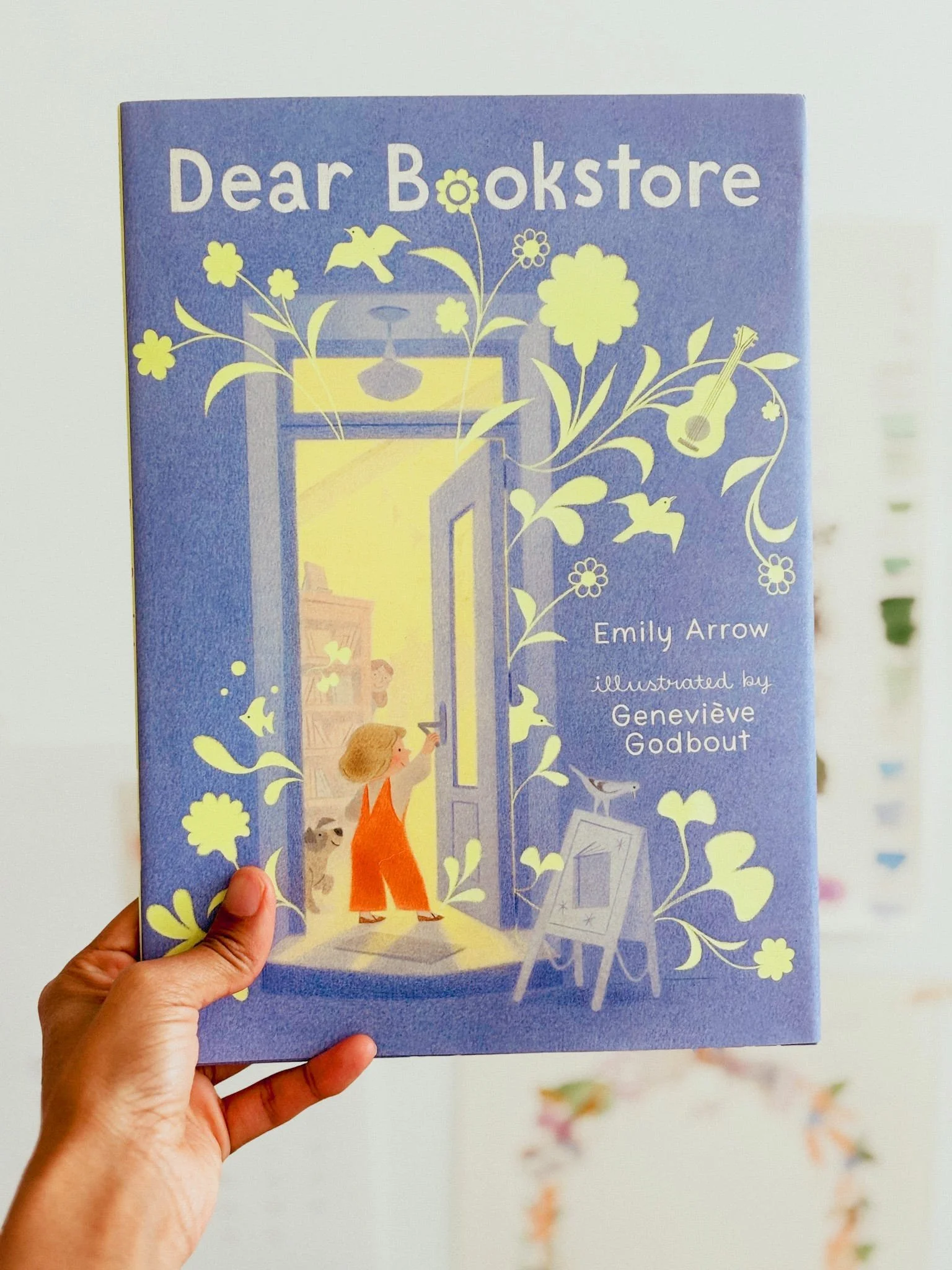
I can’t believe I haven’t shared Dear Bookstore with you yet! This picture book about the importance of bookstores was written by my dear friend Emily Arrow and illustrated by my friend Geneviève Godbout. 

It’s such a gorgeous and sweet love letter to bookstores, the third place they’ve become for so many of us, and the community they foster. Please shout about it, purchase a copy, and request it at your library. 

THURSDAY

“Imagination—not intellect—has saved my life. It has saved the lives of the people, animals, and lands to which I belong, those I hold most beloved. Imagination, I believe, is the way we dream into the future—futures that can’t be defined by any paperwork or bullet or algorithm or machine. Imagination brings us into abolitionist practices, into the pu’uhonua (places or people of refuge) we’ve yet to meet. As scholar Jamaica Heolimeleikalani Osorio reminds in her work: there is no ‘ōlelo word for rights, only kuleana—our responsibility.

Making nonsense of the story, of our collective stories, is a weapon. I was a child magician, and what I’ve learned from sleight of hand is that the eyes will follow an arc or shape made, from beginning to end. But if the hand moves in a straighter line, our eyes look back to the beginning, to the source of that movement. This is the objective—to keep our eyes fixed forward, bracing and bracing for what’s next, instead of allowing the space to look back, or around, to what we know. Our work, then, becomes mending the stories. Tying those strings back together.”

—T. Kira Māhealani Madden on Listening to the Past, from 100 Days of Creative Resistance

FRIDAY

I hear the drizzle of the rain
Like a memory it falls
Soft and warm continuing
Tapping on my roof and walls

And from the shelter of my mind
Through the window of my eyes
I gaze beyond the rain-drenched streets
To England, where my heart lies

My mind’s distracted and diffused
My thoughts are many miles away
They lie with you when you’re asleep
And kiss you when you start your day

And a song I was writing is left undone
I don’t know why I spend my time
Writing songs I can’t believe
With words that tear and strain to rhyme

And so you see, I have come to doubt
All that I once held as true
I stand alone without beliefs
The only truth I know is you

And as I watch the drops of rain
Weave their weary paths and die
I know that I am like the rain
There but for the grace of you go I

—Kathy’s Song by Paul Simon

See you next week!

xx,

M


To sign up for my weekly newsletter, Dear Somebody, please subscribe here.
In Life Tags Uppercase Magazine, Paul Simon, Music, Nashville, Ben Kweller, Dear Bookstore, Emily Arrow, Geneviève Godbout, T. Kira Māhealani Madden
Comment

Dear Somebody: Birthday thoughts.

April 25, 2025

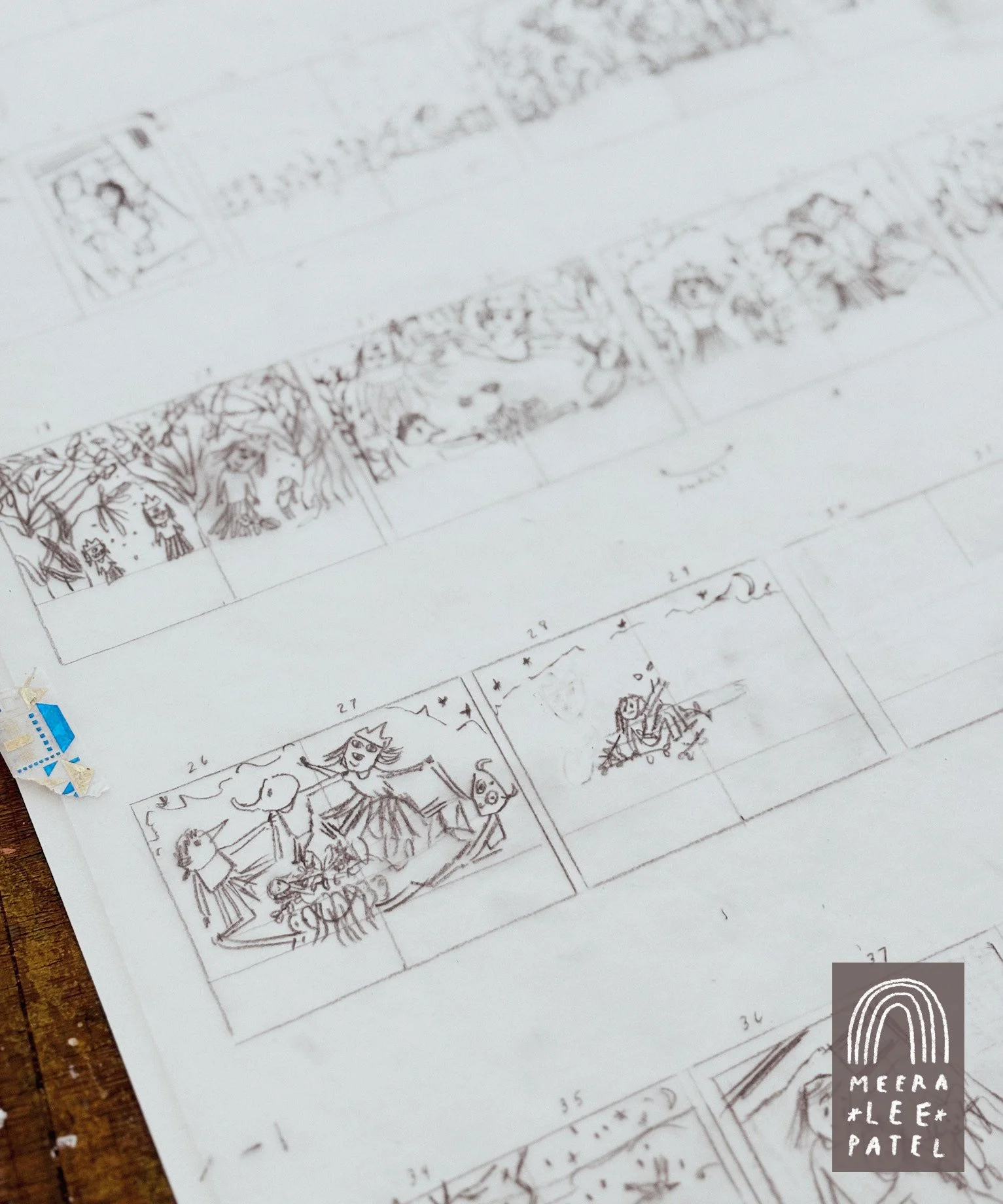
New storyboard for an old story that has a special place in my heart (graphite on tracing paper, 2025)

A year from now, here are five things from this week that I'd like to remember:

MONDAY 

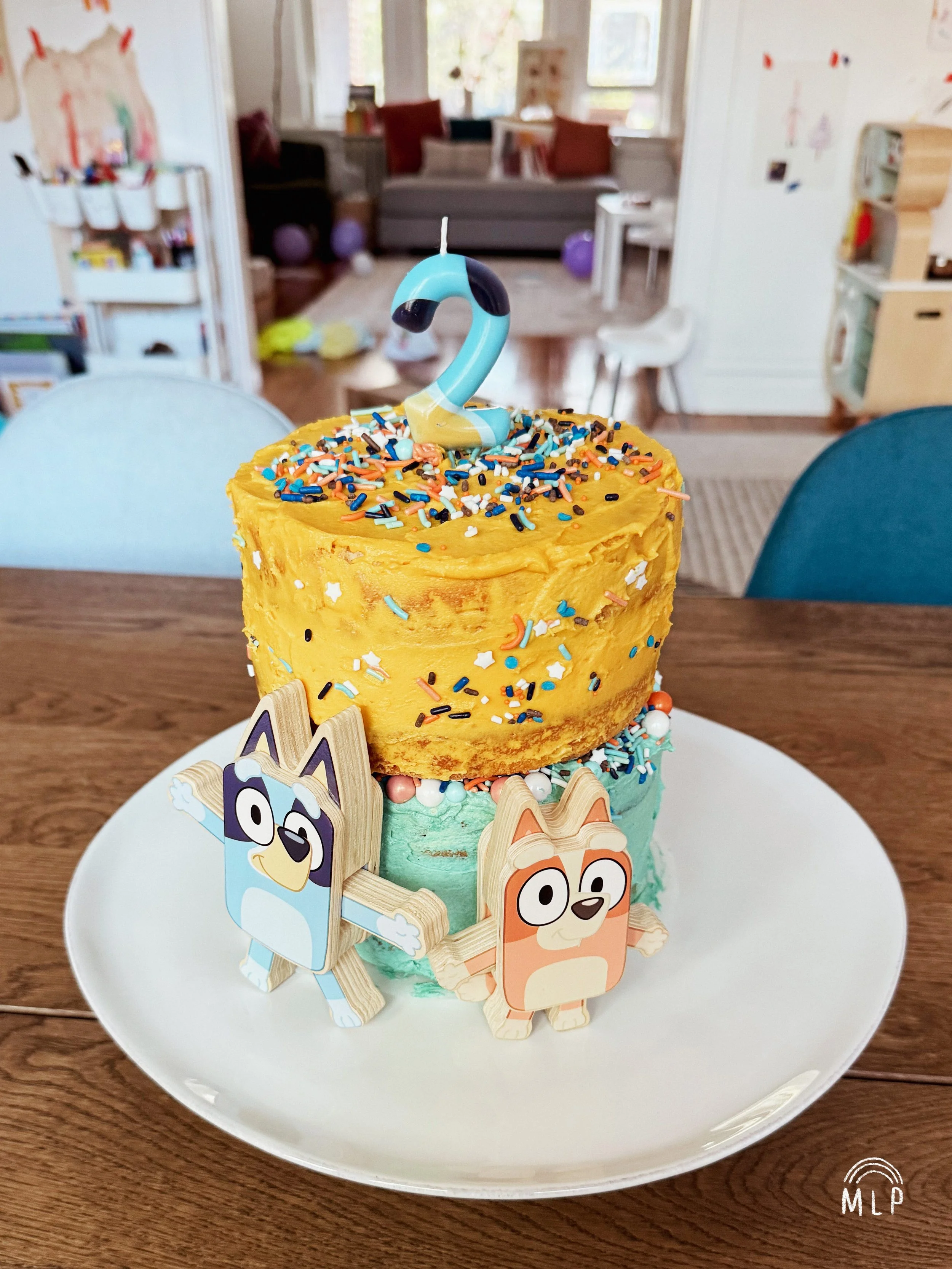
A Bluey cake for little F’s second birthday (April 2025)

F was born the day after I was, in late April, after the cherry blossoms have bloomed, beamed, and quietly begun to fall. I like having our birthdays sandwiched together because it makes me feel closer to her—one of the only instances, in my life, where a feeling is more important to me than the actual facts. 

For her second birthday, I made F a Bluey cake. F is the strangest bird, afraid of nothing and no one. She’s always in search of coconut water, her sister’s hand, and a good chuckle. F pulled the entire sun and its shine into our lives; she’ll laugh at a room full of darkness and then, when she’s ready, she’ll turn the light back on.

TUESDAY

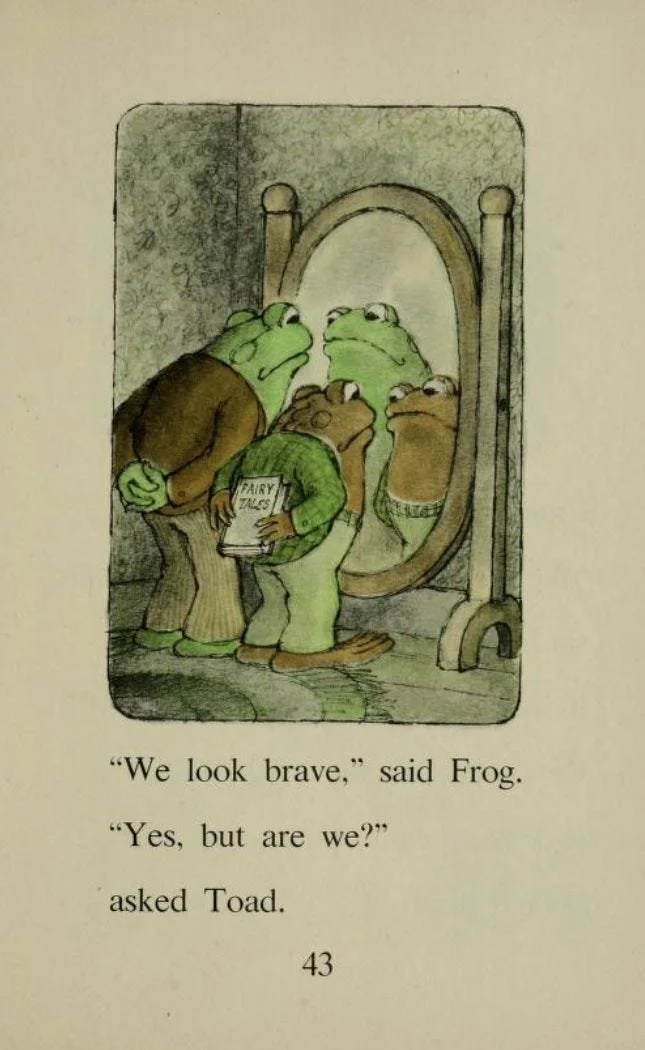
An image from Frog and Toad: Dragons and Giants by Arnold Lobel

Birthday thoughts from Frog and Toad by Arnold Lobel, my always-favorite. 

WEDNESDAY

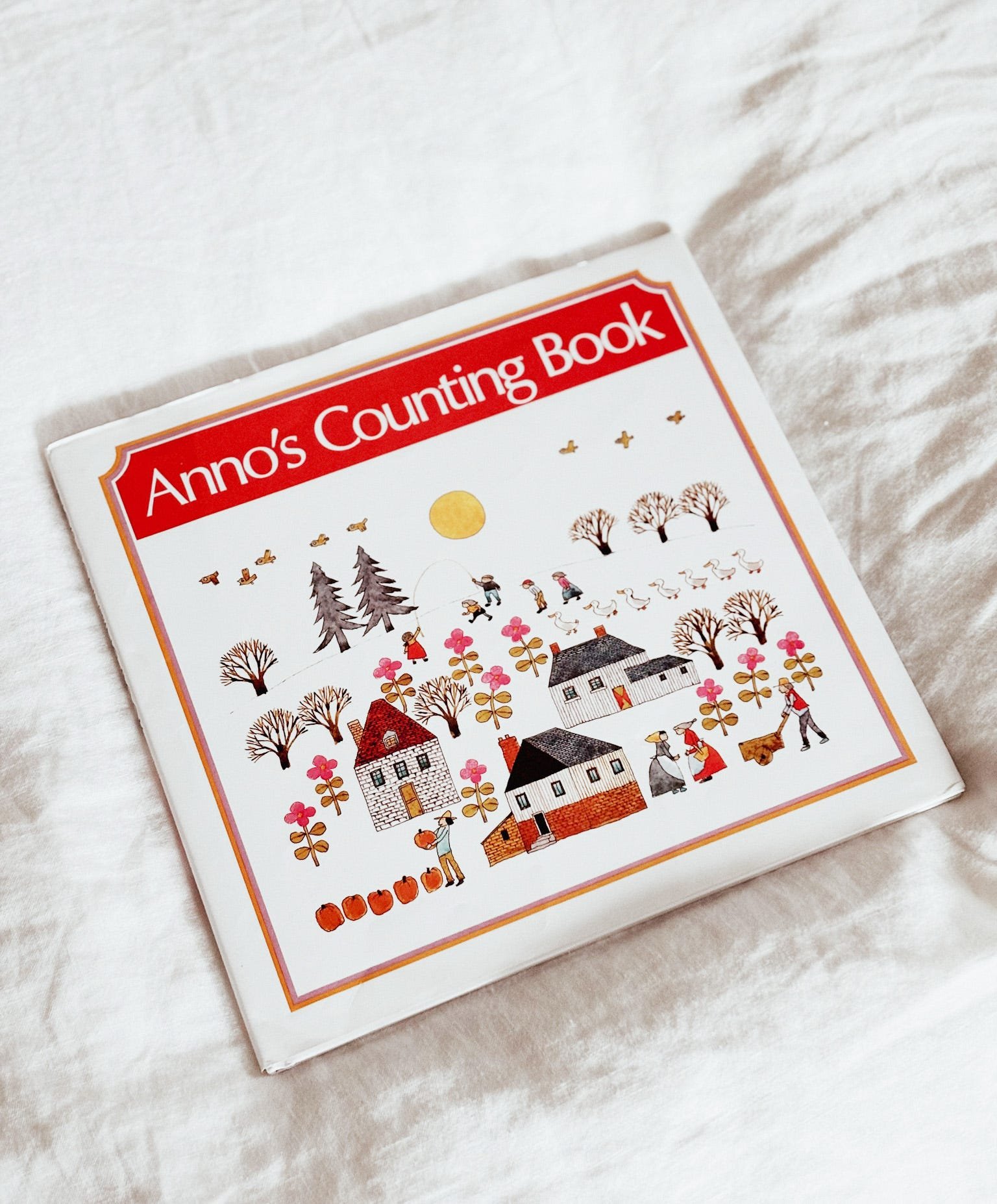
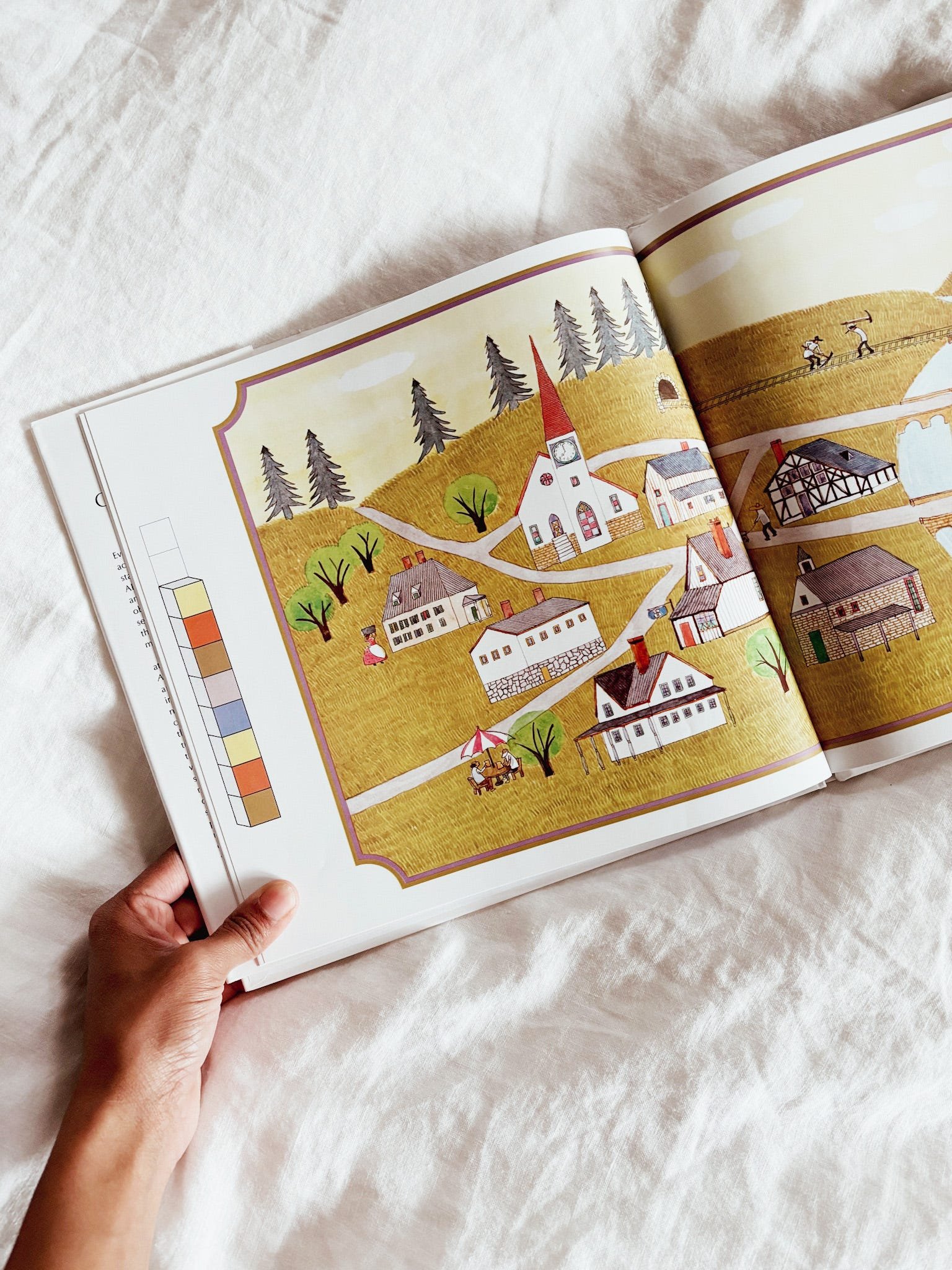
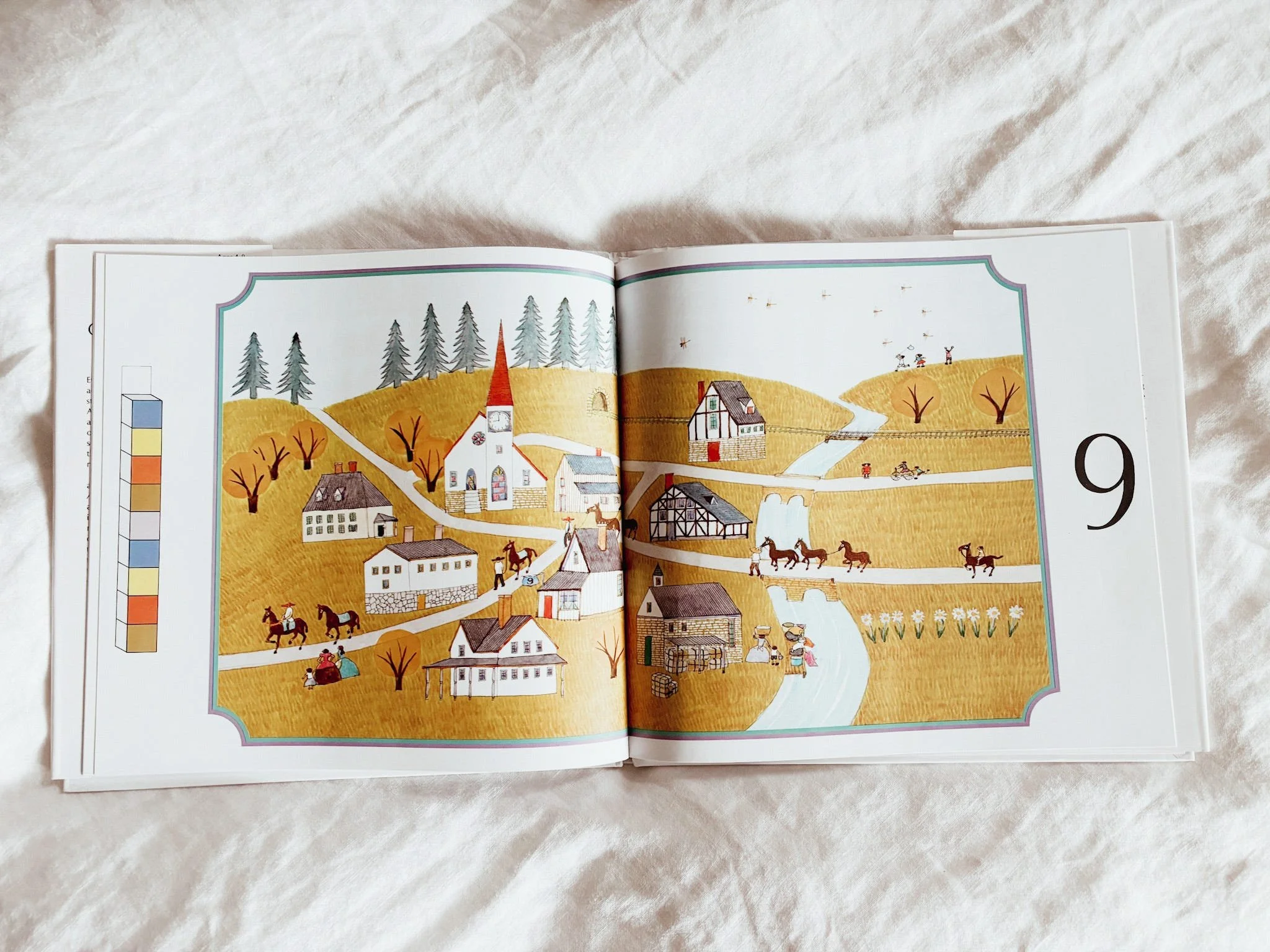
On one of our recent playground days, I found Anno’s Counting Book in the little free library. I’d never heard of Japanese illustrator and author Mitsumasa Anno before, but I loved the tiny, charming illustrations immediately, and wanted to spend more time with them. Skimming the inside jacket flap, I was struck by his belief that all children are born mathematicians and want to bring sense and order into all they observe through numbers

Cover of Anno’s Counting Book by Mitsumasa Anno

Interior spread from Anno’s Counting Book

Interior spread from Anno’s Counting Book

As a child—and now as an adult, I detest math, because I don’t believe I’m good at it. It doesn’t come naturally to me and never has. So much of what we like and don’t like as adults is rooted in how it made us feel about ourselves as children. When I was young, math made me feel incompetent; today, it still does. 

I tell N all the time that her brain is the most powerful thing she has. If she tells it she can do something, it will help her to. I appreciate that Anno, who spent 10 years teaching math before writing books, held the deep notion that all children are brilliant mathematicians, and that our job as adults is to help them believe that. 

It is a simple and powerful belief, and I feel silly that I never really considered it before. But, of course, as is the way of books: now I have. 

P.S. When Mitsumasa Anno died in 2021, Publisher’s Weekly published a short obituary worth reading. 

THURSDAY

“…I have sometimes thought that a woman's nature is like a great house full of rooms: there is the hall, through which everyone passes in going in and out; the drawing-room, where one receives formal visits; the sitting-room, where the members of the family come and go as they list; but beyond that, far beyond, are other rooms, the handles of whose doors perhaps are never turned; no one knows the way to them, no one knows whither they lead; and in the innermost room, the holy of holies, the soul sits alone and waits for a footstep that never comes.” 

—from Edith Wharton’s The Ghost Stories

FRIDAY

today we are possible.

the morning, green and laundry-sweet,
opens itself and we enter
blind and mewling.

everything waits for us:

the snow kingdom
sparkling and silent
in its glacial cap,

the cane fields
shining and sweet
in the sun-drenched south.

as the day arrives
with all its clumsy blessings

what we will become
waits in us like an ache.

—birth-day by Lucille Clifton

See you next week!

xx,

M


To sign up for my weekly newsletter, Dear Somebody, please subscribe here.
In Life Tags Birthday Cake, Birthday, Parenting, Parenthood, Frog and Toad, Mitsumasa Anno, Edith Wharton, Lucille Clifton
Comment

Dear Somebody: Lost in a field.

April 18, 2025

Wedding invitation (watercolor on paper, 2019)

A year from now, here are five things from this week that I'd like to remember:

MONDAY 

I walk the girls to the post office box a couple of blocks away; N has written her very first letter to her beloved cousin. A queue of cars stream down the street, and one finally waits while we cross. The driver slows down as he passes us, rolling down the window. I stiffen and prepare to ignore him before realizing it’s T, my husband. 

I don’t recognize him despite the fact that he looks exactly like himself and is driving my car. He rolls his eyes, used to my oblivious nature, and I laugh. I have an embarrassing habit of not recognizing anybody, including myself. I have an even poorer sense of direction; T regularly jokes that when we’re older, I’ll be lost in a field somewhere and he’ll have to come find me. I always laugh in response—after all, what would I be doing in a field?

He parks the car and comes to join us, and as the four of us walk together to mail one letter, I think about how often I’ve lost myself over the past six years of marriage. Not once have I wanted someone else to find me. I’ve only ever wanted to find a better version of me—to cast a sharp line into the deep blue sea and reel in the person I love and recognize as myself. 

T has always come looking, though, even when I haven’t wanted help—or when I believed I didn’t need it, or when I knew I did but had too much pride to ask for it. We took the hard risks early on in marriage—the farm renovation; the pregnancy-and-first-child-in-Covid; Covid isolation itself; moving to a state without community or support; running two small businesses without child care; graduation school; a second child. With all of those risks came stress, boatloads of it—and we were a young couple who barely knew each other. If marriage is a job, we had no previous work experience. There was misunderstanding, confusion, large triumphs, terrible arguments. There was silence.

Letter writing is a risk. You pour your heart onto paper and walk it carefully down to the post office box. You watch the letter sail off into the great unknown. You hope it arrives safely. Each night, you wonder if it has. Your letter might be misplaced. It might be handled carelessly, dropped into a puddle. The ink smears, the love inside it lost. Or, it might arrive but be forgotten, placed on top of a to-do pile that never gets tended to. But, if you get very lucky, the person you wrote to will write you back. 

Writing is reflective: the more you write, the more it reveals to you about yourself. A relationship worth having does the same. 

It’s our sixth wedding anniversary today. I’m beginning to believe that my future does hold a field, and that I will someday lose myself among the cattails and willows, moon rising high above me, not knowing where I am or how I got there—and T will come looking. 

If I don’t want to be found, he will keep a fair distance, making no sound, and when I’ve had my fill of solitude and quiet and pleasant loneliness, out of the darkness he’ll come, pretending he’s only just arrived. And, although I will always be someone who wants to find her own way home—I’ll be glad that he did. 

TUESDAY

In our dining room hang a few paintings from grad school—paintings I made for a book I wrote and hoped would be published one day. The book was rejected by every publisher it was sent out to, which now feels more relieving than disappointing. It wasn’t ready; neither was I. What can I do? Try again, if I have the fire in my heart required to do so—and I do. 

Paintings I’ve taken down and put away, for now (graphite on paper, 2023)

In the meantime, I’m also switching out the art in my home. As much as I loved these paintings when I made them, I’ve outgrown their presence in my daily life. So in a box they went, off to the basement they went, replaced by this burgeoning series of my three favorite girls:

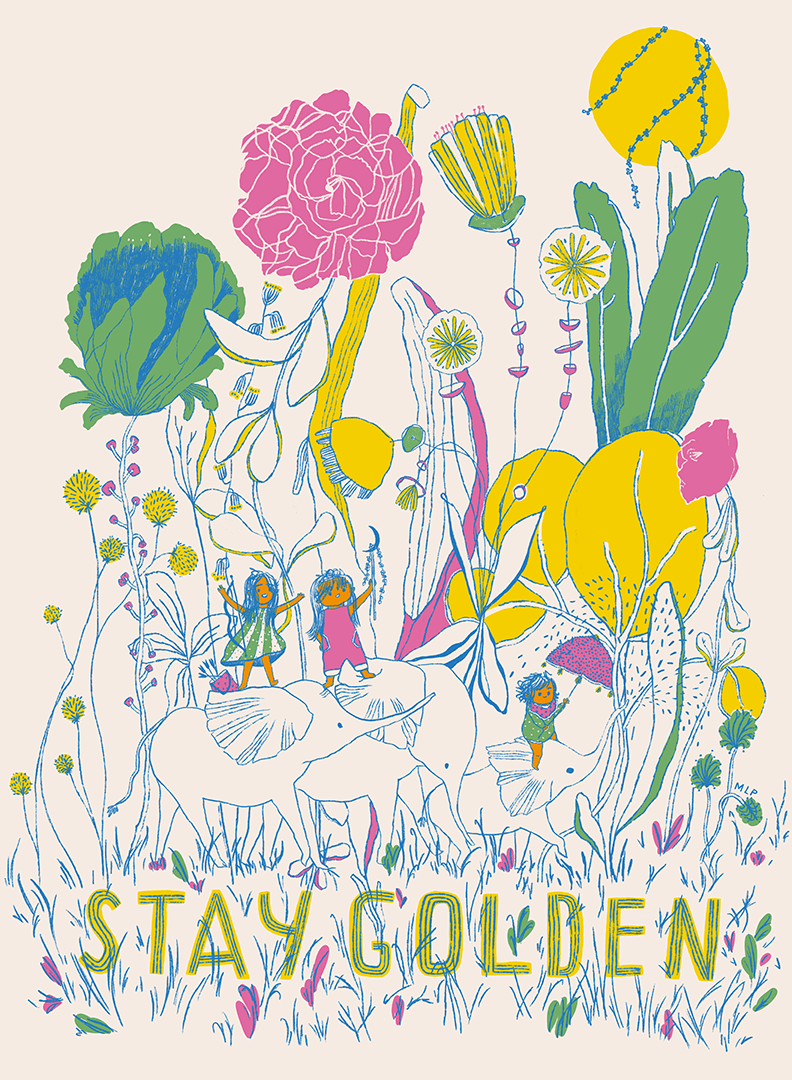
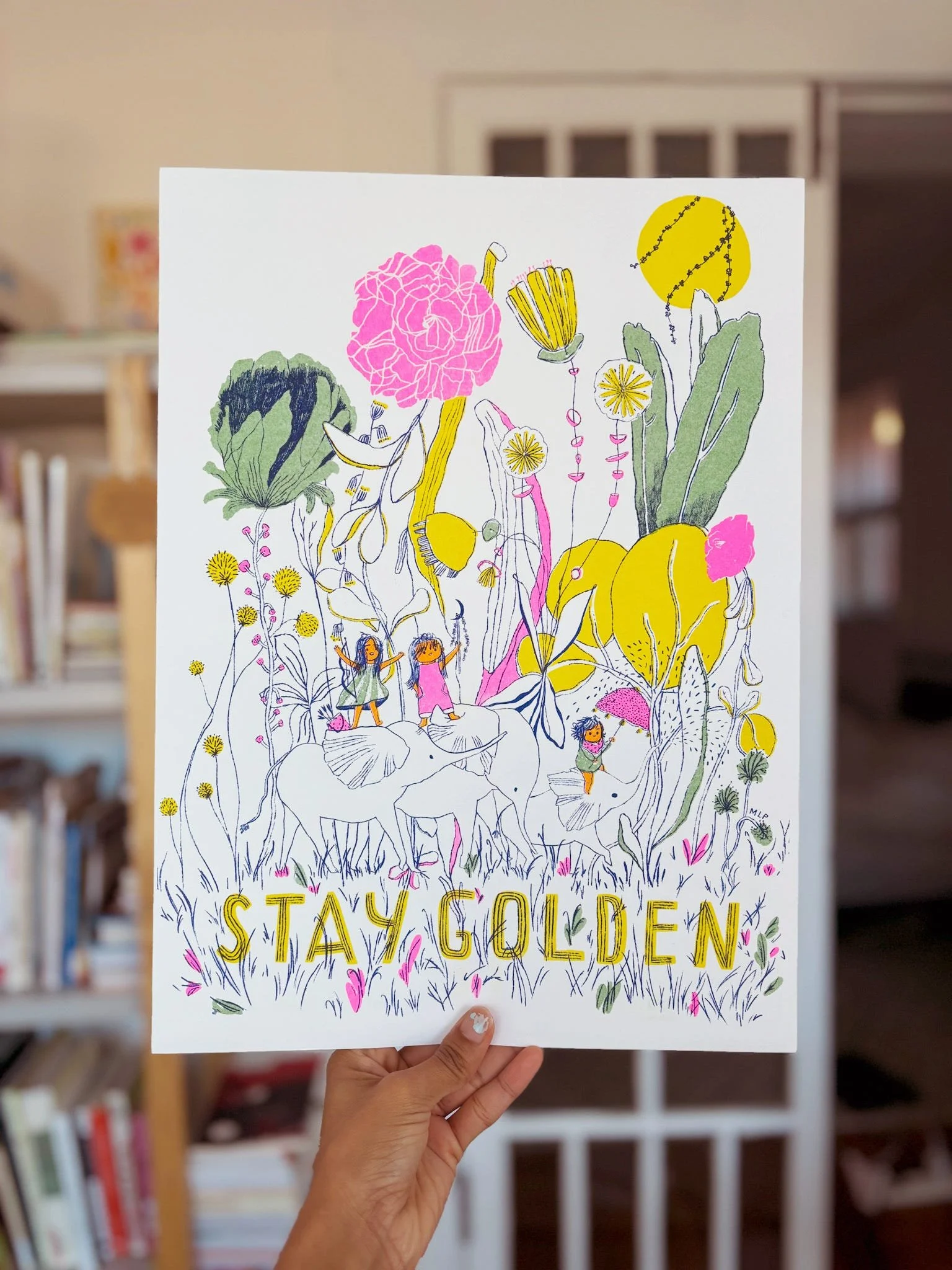
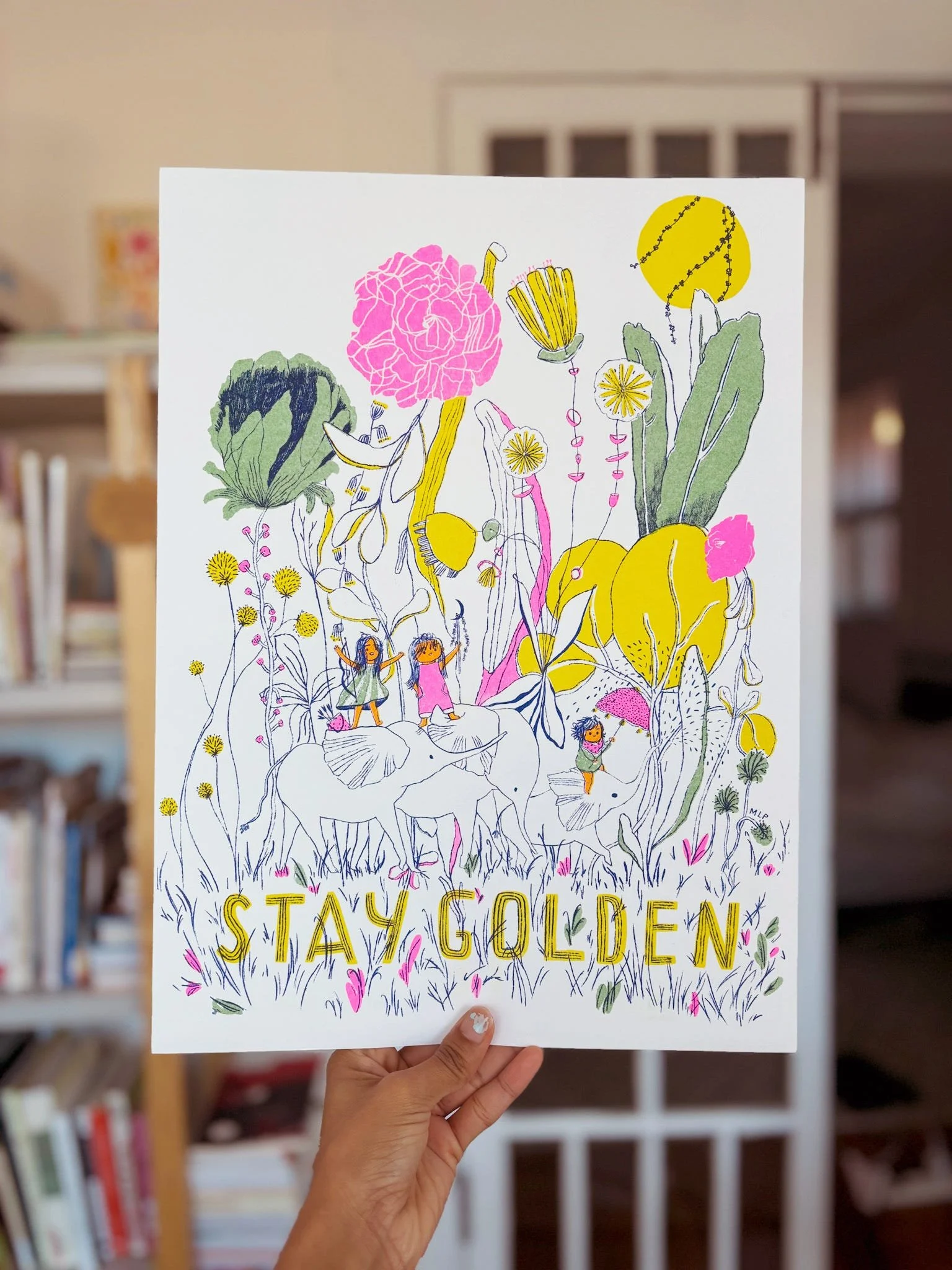
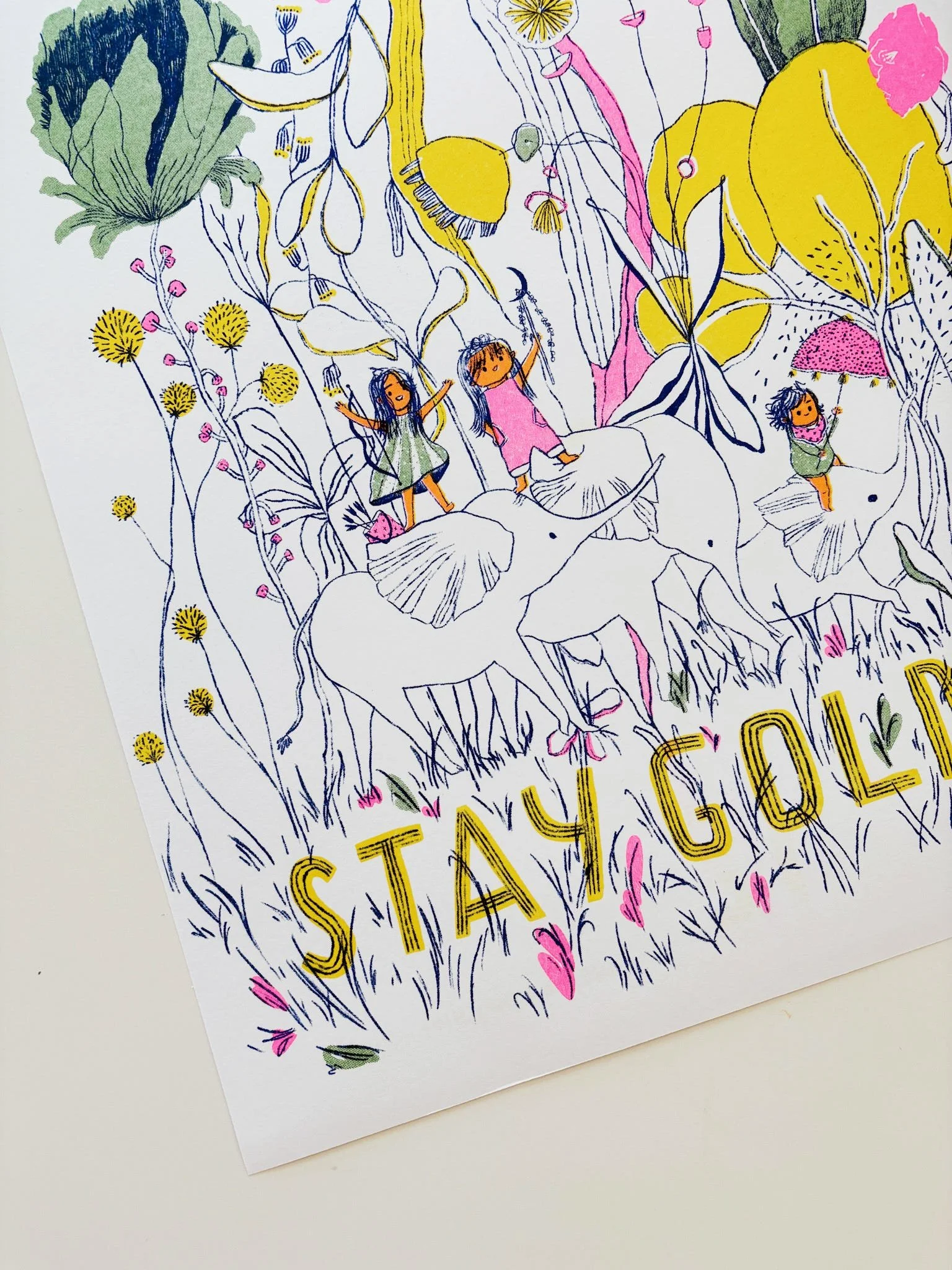
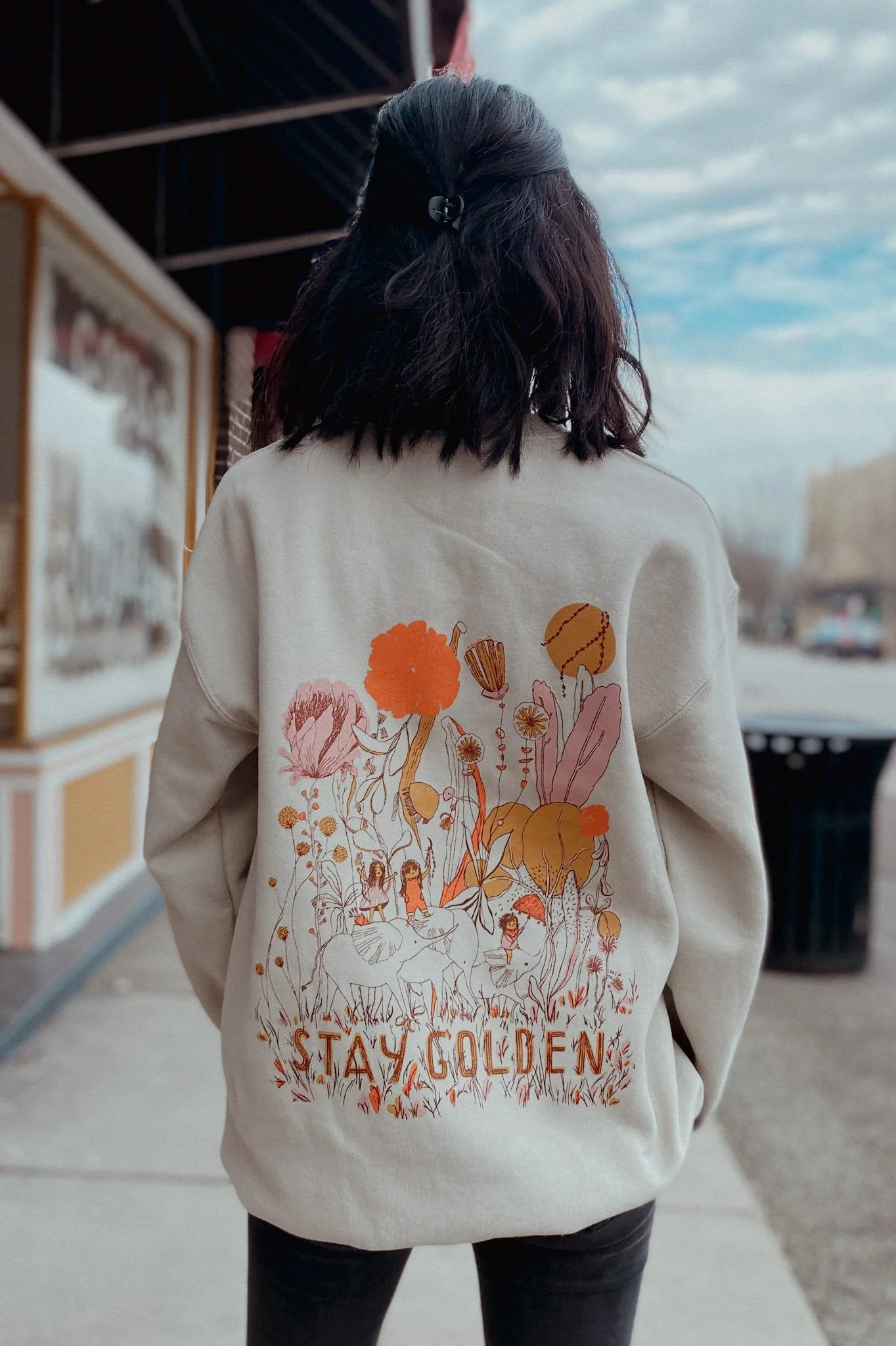
Stay Golden or Three Sisters Establish Rule (2023) 

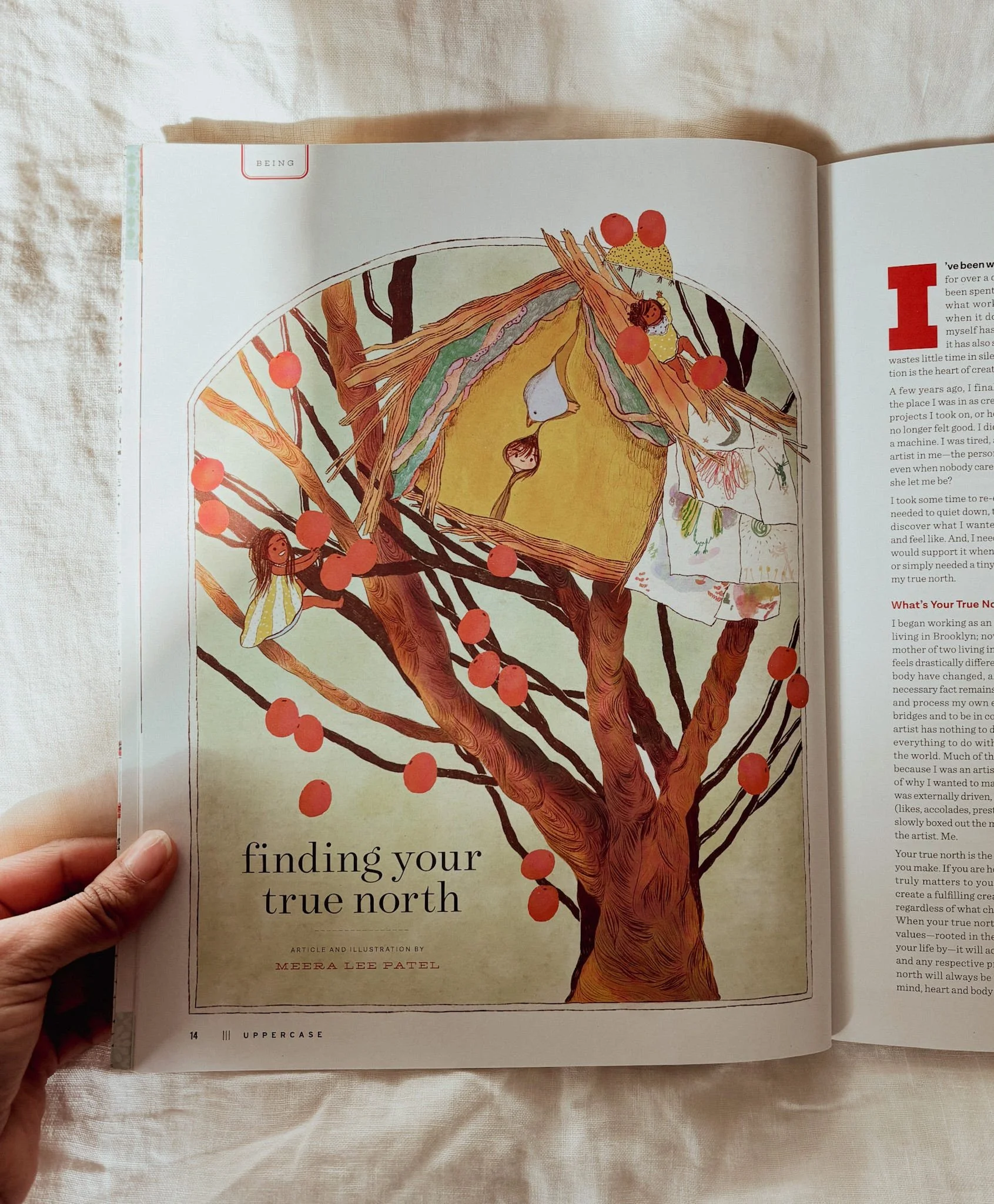
Finding Your True North or Three Sisters Guard Their Treehouse (2025)

Maybe one day I’ll write a book about these three sisters, maybe I won’t. What I do know is how much fun it is to chronicle their growth through these paintings—and how gratifying it is to see that I’m growing, too.


WEDNESDAY

“I walk our Labradoodle, Molly, at around 4 in the morning. It’s just a habit I’ve gotten into, and the hour works well for my writing schedule. Miguel, a doorman in my apartment building, works the night shift. Dressed in his grand quasi-military uniform, he greets Molly and me, holds open the large, heavy door of the building, then stands outside in the open doorway as I walk Molly to a nearby patch of grass. I’ve never felt any danger at that hour because Miguel—who stands 6-foot-5 — watches where we go, in any weather, and waits for our safe return.

One morning, coming out of the elevator, I heard an exquisitely beautiful baritone voice singing “One Love” by Bob Marley. Not Marley’s voice but something its own. I thought the voice must be a recording, but there was no instrumental accompaniment. When I saw Miguel, I asked him, “Did you hear that singing?” He blushed and turned his big face to the side. “That was me,” he said. “I’m sorry. I didn’t know anyone was here.” I told him, “Don’t be sorry. You have a wonderful voice.”

There’s nothing more to the story. Miguel and I have not mentioned his singing again. But it was there, you see. The secret being inside the doorman. The other self, who sang like an angel. I hear it every time Miguel holds open the door and watches protectively. And the big man is bigger still.” —from Roger Rosenblatt’s How to Be a Happy 85-Year-Old (Like Me)


THURSDAY

Our House (2018)

A photograph from one of our early days at our farm outside Nashville, in 2018. 

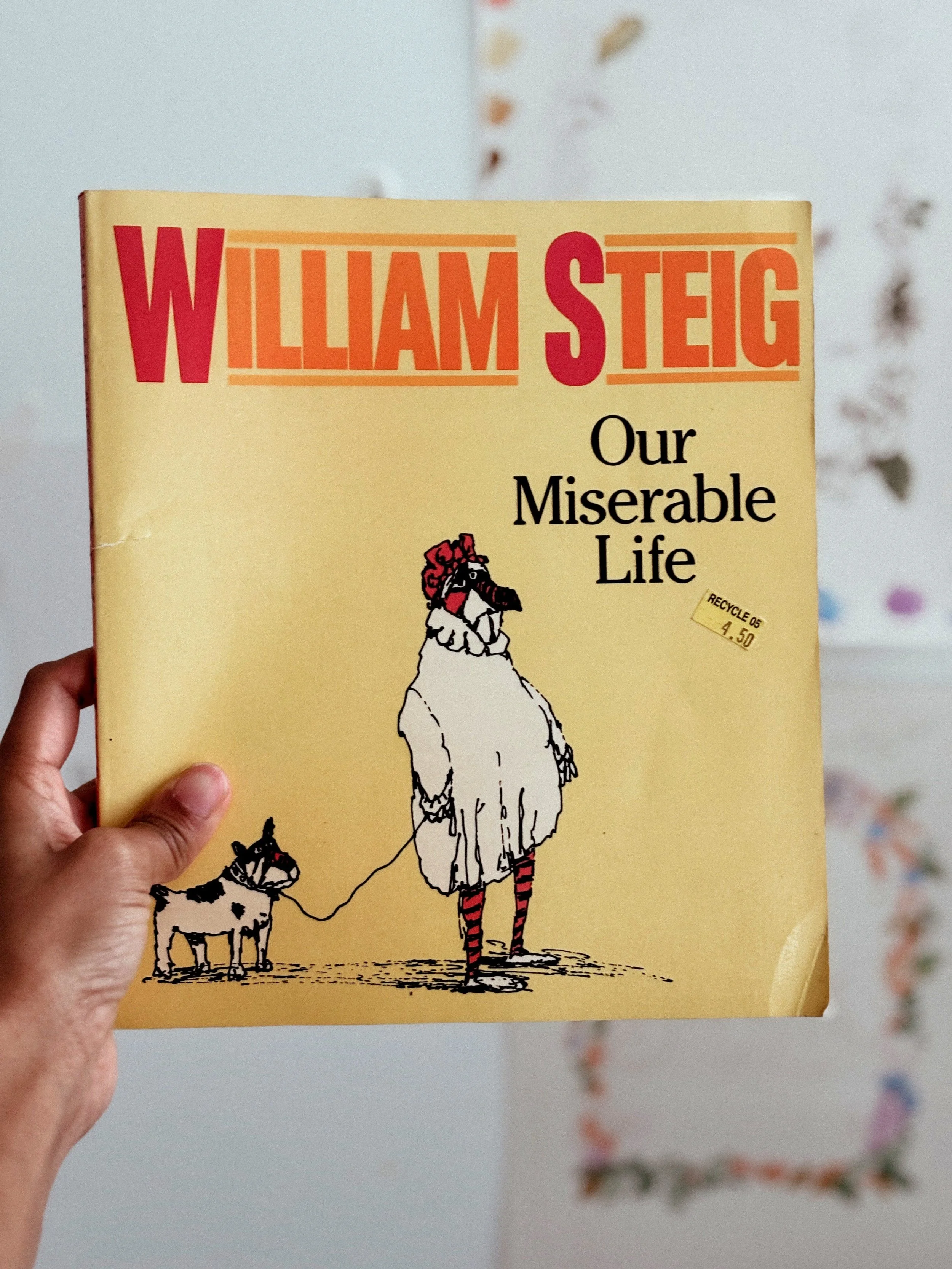
One of the anniversary gifts I received from T this year: Our Miserable Life by William Steig. I already loved Steig for his wonderful picture books, especially Doctor De Soto, which I love reading with N—and I’m excited to wade into his greater depths, including cartoons and musings on the human condition, which, to Steig, is usually despair. 

As Molly Young writes in this article, where she paid homage to his work with a work of her own:

“Strife was Steig’s subject. When he had trouble sleeping, he envisioned himself the owner of a magic long-range dart that he could use to destroy enemies. That’s the man in a nutshell: hellfire fury and imaginative splendor.” Indeed. 

FRIDAY

Sometimes, I think you get the worst
of me. The much-loved loose forest-green
sweatpants, the long bra-less days, hair
knotted and uncivilized, a shadowed brow
where the devilish thoughts do their hoofed
dance on the brain. I'd like to say this means
I love you, the stained white cotton T-shirt,
the tears, pistachio shells, the mess of orange
peels on my desk, but it's different than that.
I move in this house with you, the way I move
in my mind, unencumbered by beauty's cage.
I do like I do in the tall grass, more animal-me
than much else. I'm wrong, it is that I love you,
but it's more that when you say it back, lights
out, a cold wind through curtains, for maybe
the first time in my life, I believe it.

—Love Poem with Apologies For My Appearance by Ada Limon

See you next week!

xx,

M


To sign up for my weekly newsletter, Dear Somebody, please subscribe here.
Tags Wedding, Marriage, Family, Parenting, Parenthood, Graduate School, Roger Rosenblatt, Nashville, William Steig, Anniversary, Molly Young, Ada Limon
Comment

Dear Somebody: A field guide.

April 11, 2025

Sketchbook from the week of April 6th (2025)

A year from now, here are five things from this week that I'd like to remember:

MONDAY 

It’s been almost a year since F regularly slept through the night. Once a duck, quietly quacking to herself, her brain has blossomed in the months since—skyrocketed even, awakened by the world and the possibility in each moment. Even her sleep has sensorial needs, and at all hours of the night she asks for more: more engagement, more stimulation, more. 

At 12:30 am, she begins chanting her own name. Refusing to look at the camera monitor, I instead imagine the early birthday party she’s throwing for herself: moonlight streamers, a parade of stuffies rolling around with her—a celebration of the spectacular wonder she is, gate kept only by her boring diurnal parents and a few wooden crib bars. 

At 2:30 am F screams for coconut water, her one true source of solace, and when none of her sleeping family responds, she screams louder. For now, it’s only sleep, but all the same, it’s painful to watch your child do something that hurts herself, that will contribute to a more difficult tomorrow. At 3:30 am, she demands a new diaper, then a story, then a song. I give in to the diaper, but not the story, and pause at the request for a song. It’s 4:00 am; I have to be up in two hours. 

Twinkle song, F pleads, her eyes bleary. Her perfect mouth is a perfect rainbow, quivering slightly, worn from midnight chanting. I know she hopes for acquiesce: a soft win, just something to get her through this endless night. She is tired of being awake for so long, of being alone for so long. 

Not having slept well for nearly five years now, I am also tired of being awake—but F’s sweetness is too sweet, her longing too clarified, her needs far more reasonable than my own. I hold her in my arms and begin singing Twinkle, Twinkle, Little Star. Her small body rests against mine. I’m fully here, in this moment. Next week, F will turn two; I don’t have many more years of this ahead. 

Halfway through the song, F straightens up. She looks me in the eye. With all the solemnity of a funeral attendee, she raises two hands to cover my mouth and says: Stop. The End. Then she climbs into her crib without looking at me, and closes her eyes. 

TUESDAY

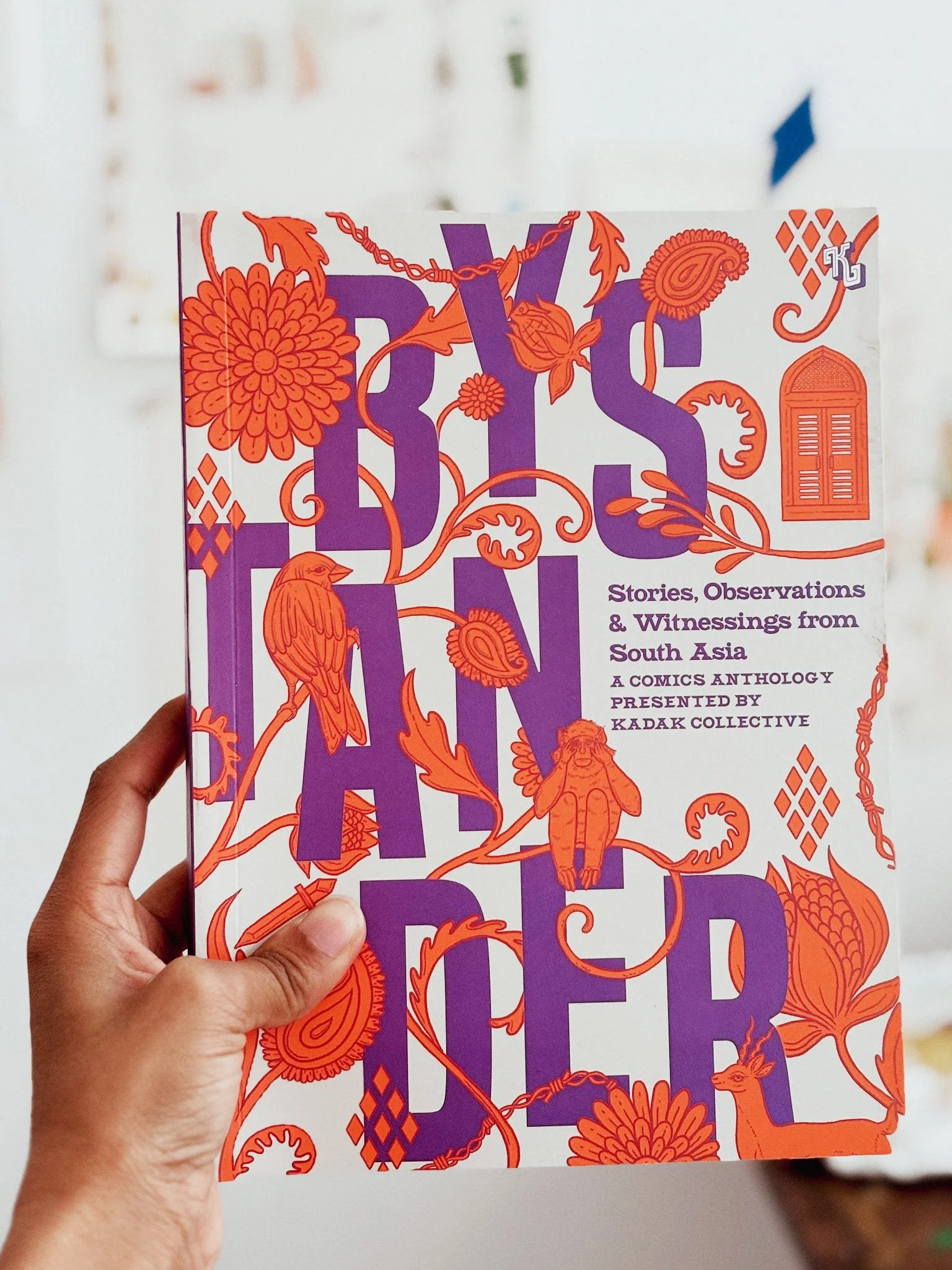
The cover of Bystander, a comics anthology edited by Kadak Collective

I am slowly making my way through Bystander, a comics anthology edited by Kadak Collective, a group of South Asian womxn, non-binary and queer folk who believe making art is “inherently political and can be an intentional, radical act of communication and change.” 

I’m unsurprised in reading so many personal stories that are byproducts of sweeping political and social narratives—stories that were incubated inside a society that forgets community in favor of oneself. The actions of any bystander—one who observes but does not participate, will always transgress the walls of an individual life and seep into the fabric of our larger societies and worlds, whether or not one intends for it to. Every action has a consequence; every inaction does, too. 

WEDNESDAY

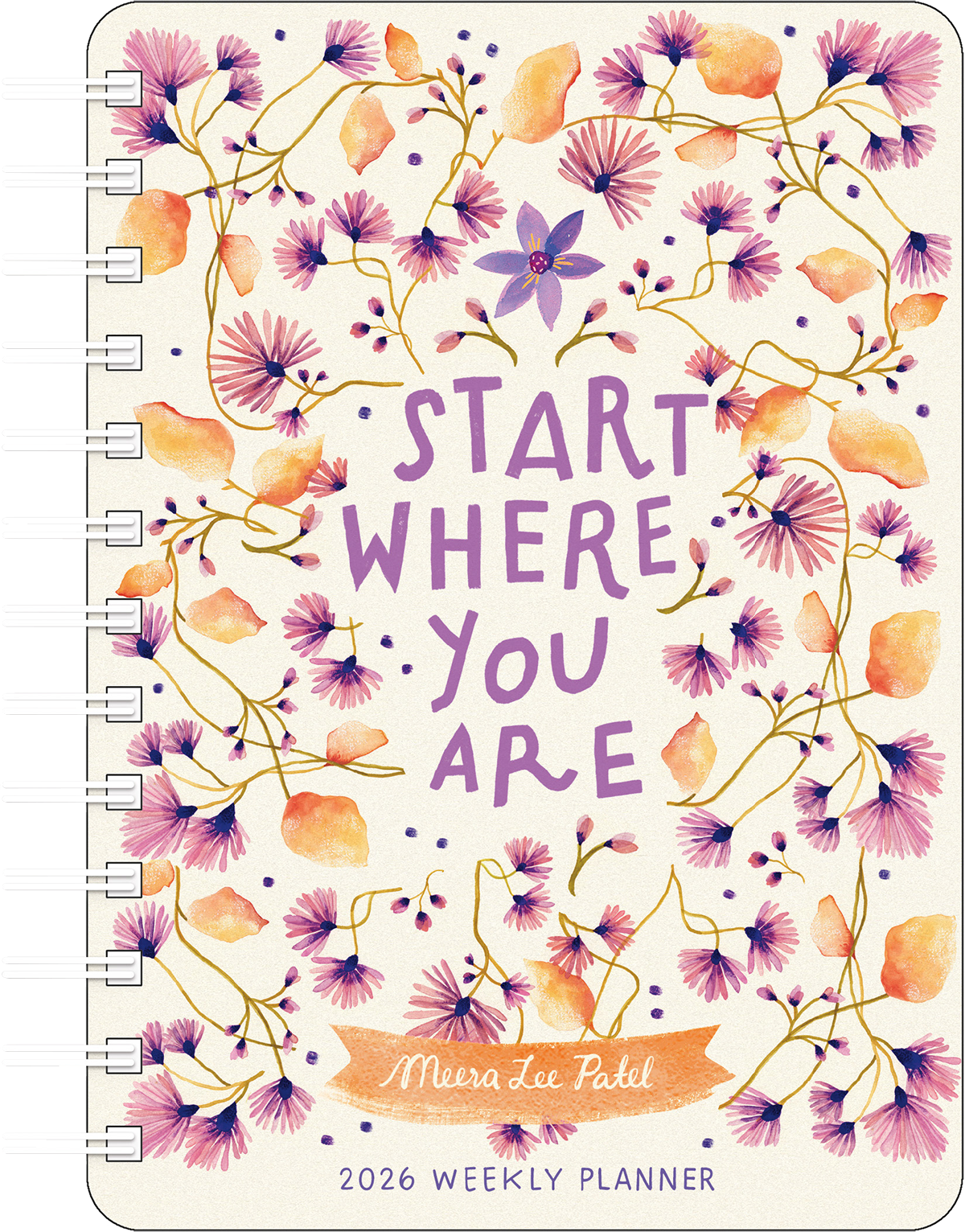
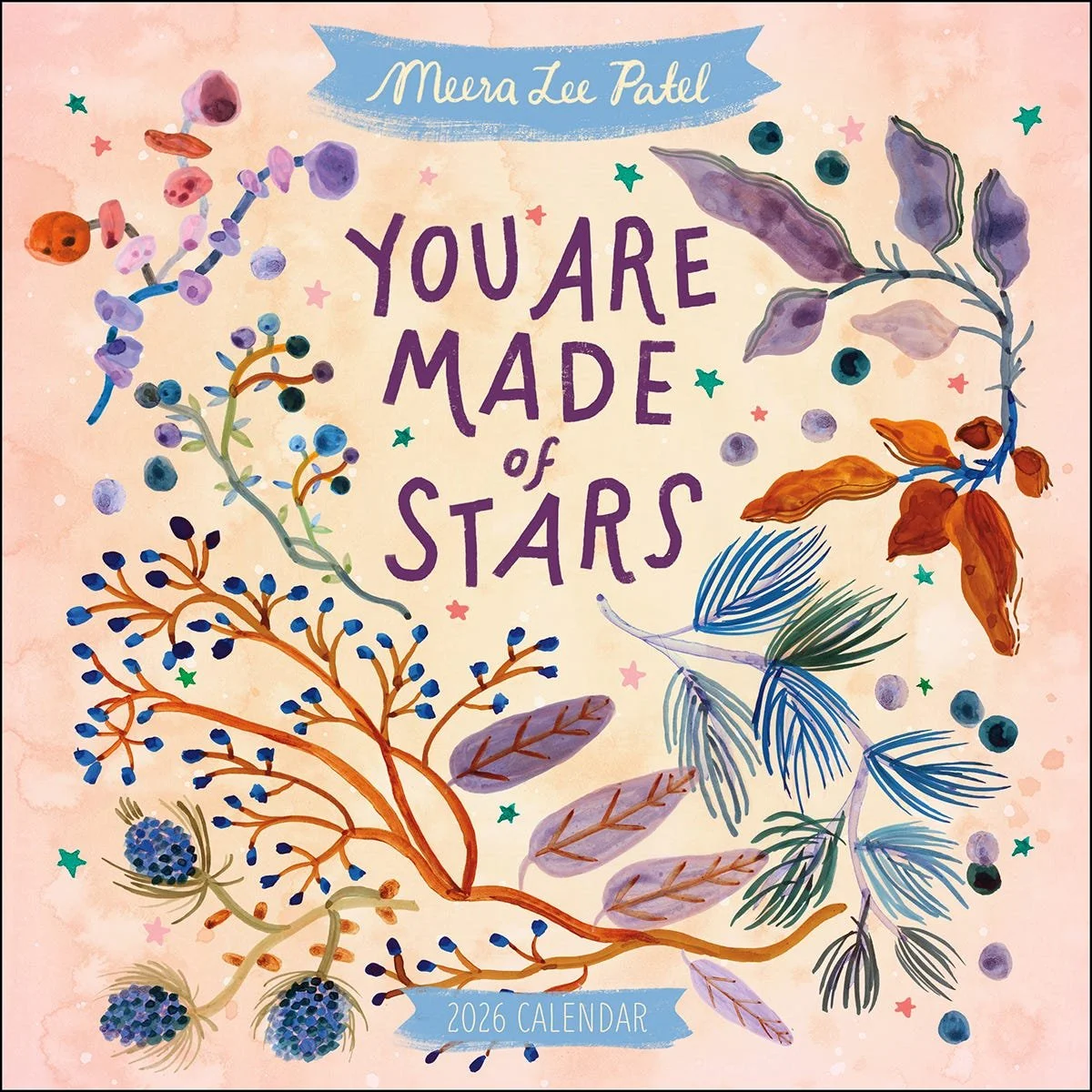
I am pleased to share that my 2026 calendars with Amber Lotus Publishing are now available for pre-order! 

Start Where You Are 2026 weekly planner

You Are Made of Stars 2026 wall calendar

Pre-orders do make a huge difference for artists. Now, especially, it will help my publisher give me the opportunity to create calendars for the 2027 year, too. 

Start Where You Are 2026 weekly planner: Available for pre-order on Amazon and Barnes & Noble

You Are Made of Stars 2026 wall calendar: Available for pre-order on Amazon and Barnes & Noble

If you’re planning on grabbing a few for yourself or a friend, please do! I am, as always, grateful.

THURSDAY

What if every subway stop was named after a woman? the latest project by Rebecca Solnit; America’s brightest minds will walk away by Neel Patel. 

I read Big Swiss by Jen Beagin, which felt far too gratuitous for me to maintain interest in—but I did finish it. 

I finished The Great Alone by Kristin Hannah, which I enjoyed, mostly, for the introduction to rural Alaskan living, but it didn’t choke me the way Hannah’s work usually does. 

I’m beginning Flâneuse by Lauren Elkin and drawing my way through Ghosts, Monsters, and Demons of India by Rakesh Khanna and J. Furcifer Bhairav. 

FRIDAY

Once, in the cool blue middle of a lake,
up to my neck in that most precious element of all,

I found a pale-gray, curled-upwards pigeon feather
floating on the tension of the water

at the very instant when a dragonfly,
like a blue-green iridescent bobby pin,

hovered over it, then lit, and rested.
That’s all.

I mention this in the same way
that I fold the corner of a page

in certain library books,
so that the next reader will know

where to look for the good parts. 

—Field Guide by Tony Hoagland

See you next week!

xx,

M


To sign up for my weekly newsletter, Dear Somebody, please subscribe here.
In Sketchbook, Process Tags Parenting, Parenthood, Kadak Collective, Comics, Amber Lotus Publishing, Calendar, Planner, Start Where You Are, You Are Made of Stars, Rebecca Solnit, Neel Patel, Jen Beagin, Kristin Hannah, Lauren Elkin, \, Rakesh Khanna, J. Furcifer Bhairav, Tony Hoagland
Comment

Dear Somebody: Tiny joys.

April 4, 2025

A few pages from my 100 Day Project (2025)

A year from now, here are five things from this week that I'd like to remember:

MONDAY 

Week of March 9, 2025

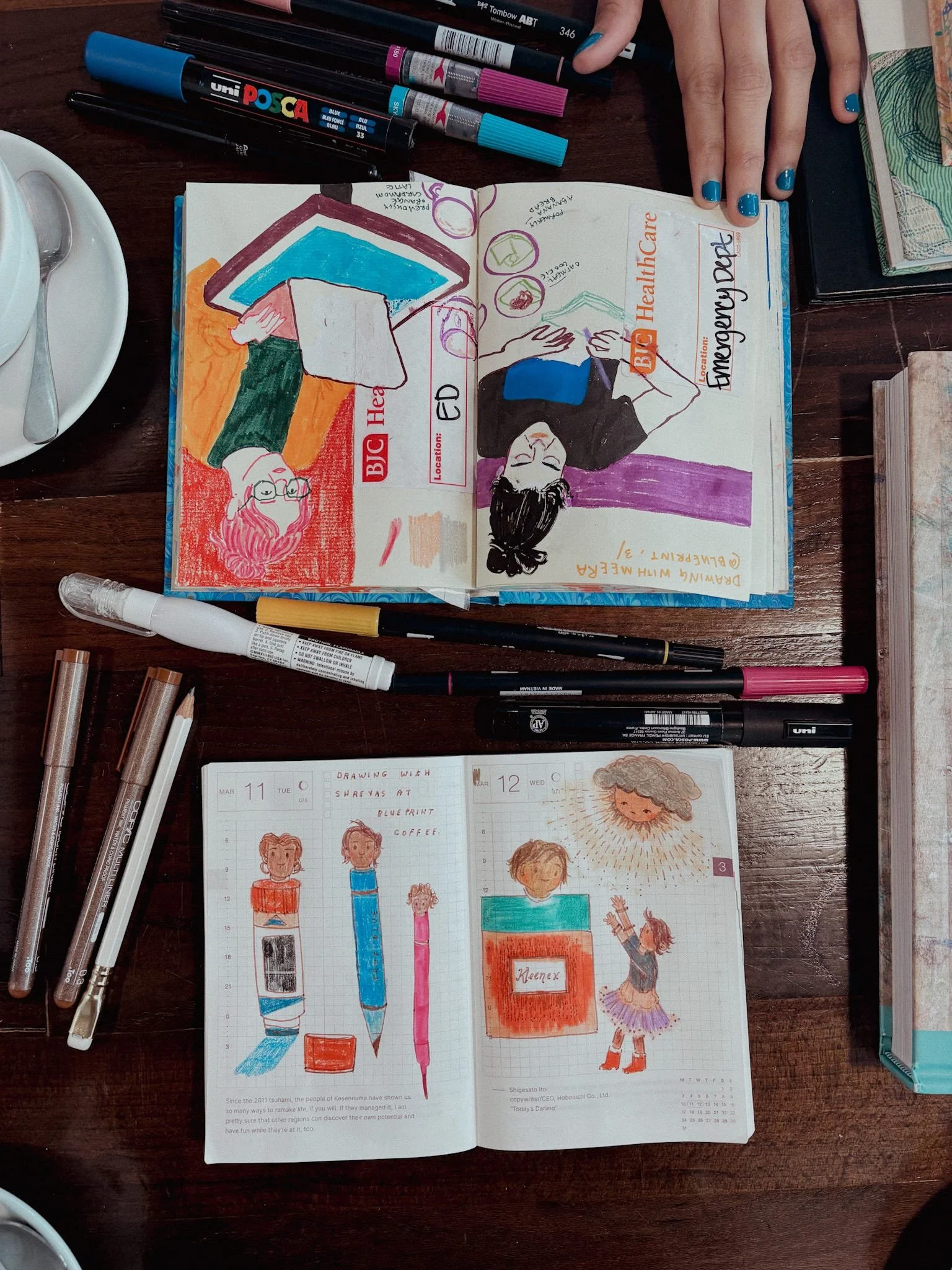
Two sketchbooks open at a coffee shop (2025)

After a long night of not-sleeping, I take a shower and walk myself to our local coffee shop to meet a friend. We’re going to draw together, something I haven’t done since I lived in Nashville nearly four years ago. Our conversation meanders naturally, and I watch where it goes with interest, each turn leading to a fork where both roads seem equally worth the stroll. I spend 3 hours unregrettably, using my hands in the way I prefer. The time together is easy and sweet; a tiny joy. 

Week of March 23, 2025

Key Biscayne, Florida (2025)

We take the girls to Miami for a couple of weeks and it doesn’t go as expected. Though full of sea, sunshine, and new adventures, it’s also sticky with resistance, sleeplessness, and many more meltdowns than I’d been prepared for. 

I find myself more tired than I usually am when we travel—vulnerable, even, as if I’d foolishly let my guard down. Had I fooled myself into thinking our family had become good travelers? Why am I so surprised by the inconsistent nature of young children? I try to stay in the moment, but I fail. 

Back at home, I wince at how poorly I’d handled the trip. I wish I’d been steadier—the consistent one, the dependable one. I wish, I want, but all I can do is try again—so I don’t dwell, knowing that that in itself is progress. In a couple of months, we’ll go to the lake, and I’ll breathe as I swim through those waters, and I’ll breathe as I help my sweet kid swim through her endless tears, too: a tiny joy. 

Week of April 1, 2025

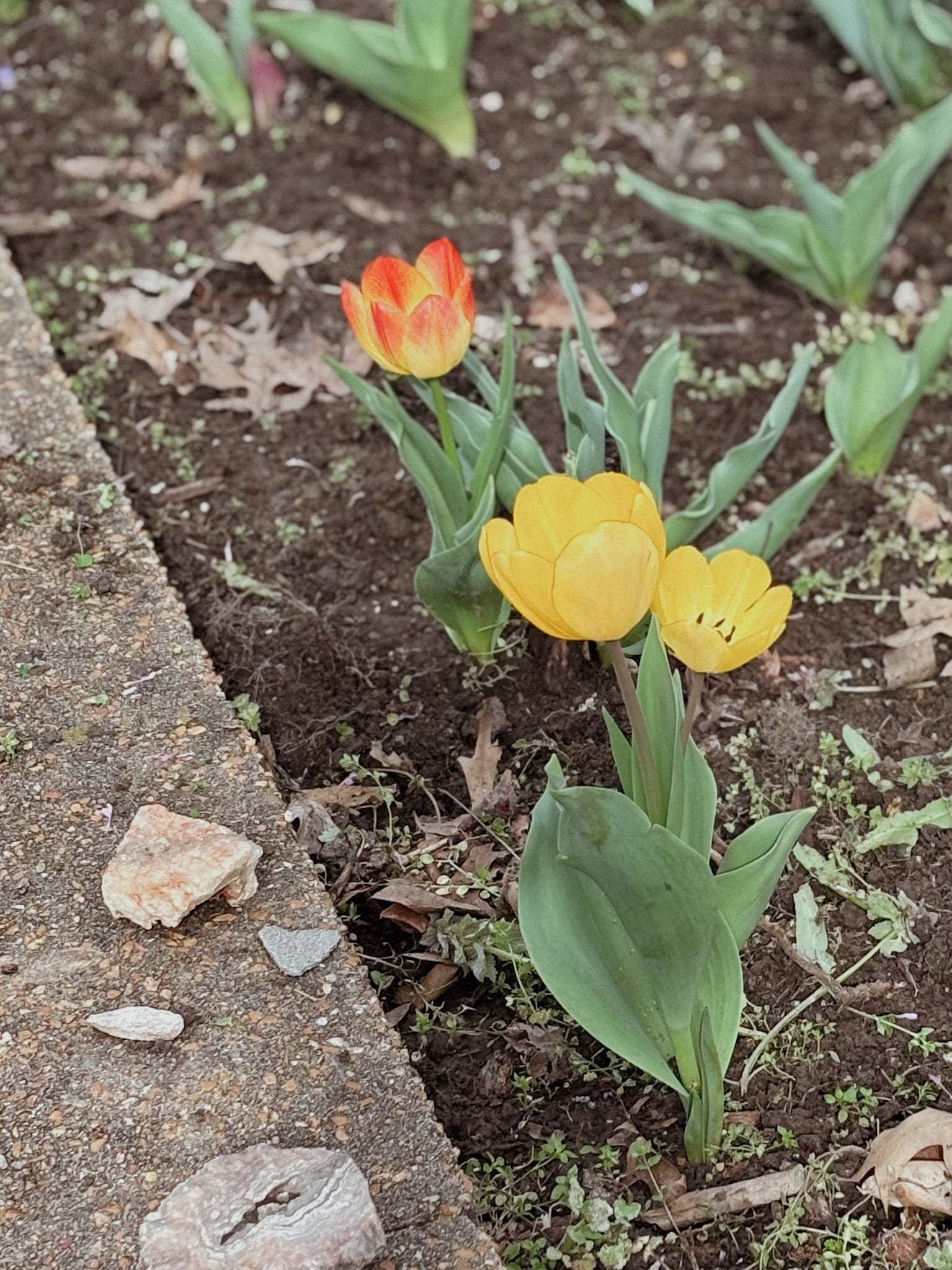
The first of Spring’s tulips (2025)

On the walk back home, the morning doves commune. Clusters of grackles scavenge the dumpsters, the deep peacock blue of their feathers glinting in the sunlight. The tulips we planted last November peak through the soil, their leaves sturdy and true. N runs ahead to count how many faces are turned to the sun. Later, when the sky opens up to let the thunder through, she watches the tulips button themselves up again, dozens of soft leaves bracing against the sudden wind. I watch her, and this is a tiny joy. 

TUESDAY

“I tell my students all the time that all writing makes a thematic argument with the reader. Even the writing that seeks not to, that’s still a stance. The stance that says “escape is a worthy cause.” That means, according to my own rules, this piece of writing is making an argument with you. What could it be? I’m never sure at first. And this is supposed to be about writing and I’ve jumped the shark. But I think if I analyze my argument here, it would be this: there are different flavors of privilege. There is the kind of privilege that, when you use it, takes something away from other people. And then there is the kind that, when you use it, doesn’t. It just—is. And then there is the kind that, when you use it, actually makes it easier for other people to use their privilege, too. Escape is the last kind, when used in particular ways, at least, and at particular times. But you have to escape and also stay for it to remain the last type of privilege.” 

—from “Escape” by A.E. Osworth, author of the forthcoming Awakened

WEDNESDAY

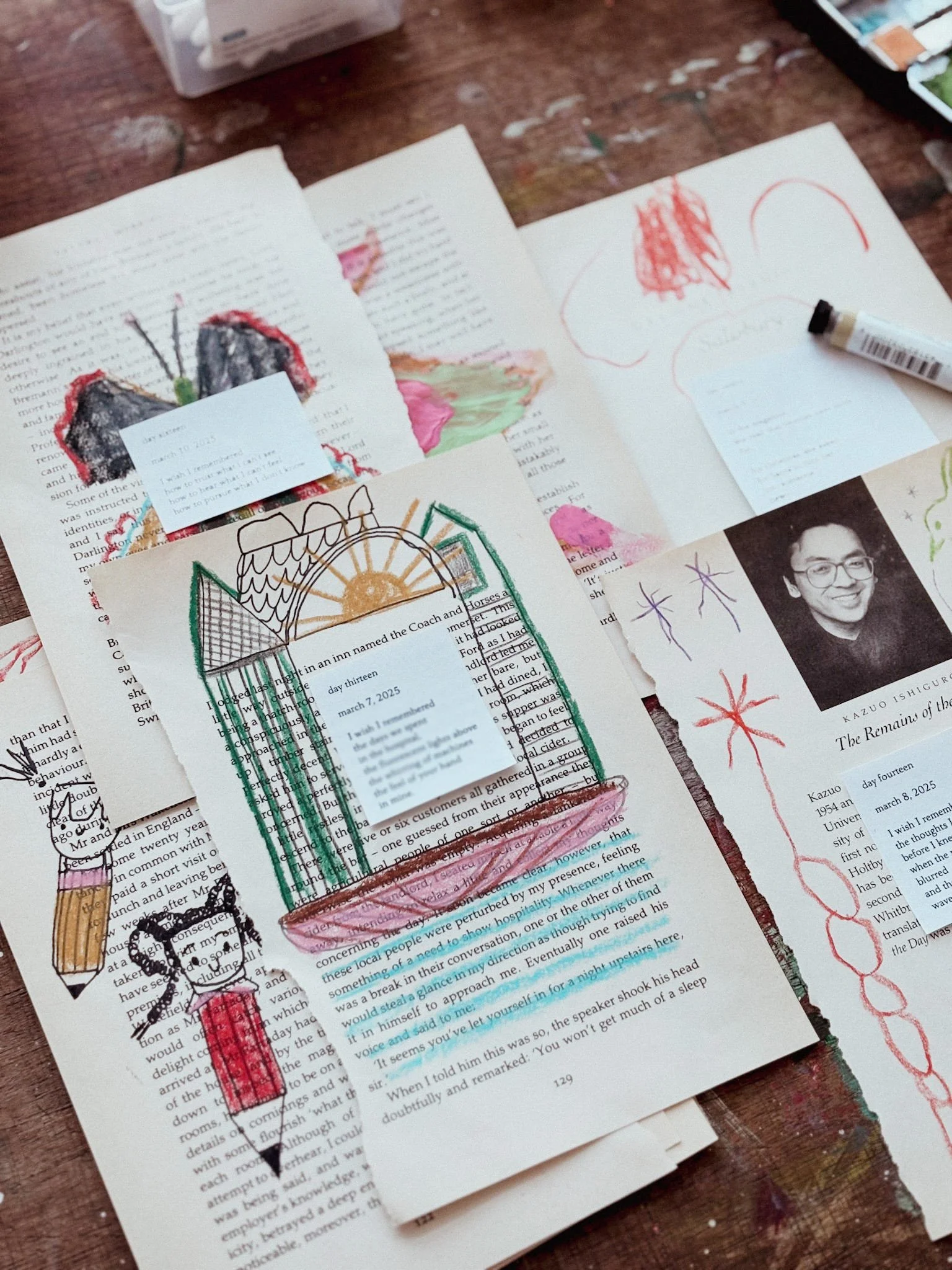
A few pages from my 100 Day Project: poetry and collage (2025)

I joined the 100-day project a few weeks ago, as always, encouraged by my friend Margaux Kent. For it, I picked our daily poem project back up and added a bit of collage, a bit of sketch, and every week or so, I mail a stack of them to her home.

There are many reasons why daily habits are nearly impossible for me to implement, both logistically and practically. Strictly emotionally speaking, perfectionism rests at the heart. I have an unfair expectation of progress—that if I do the same thing everyday, I’ll eventually master it. A fear of failure, the dreadful sense that I might not get better, even if I keep at it, leads me to stop before I start.

I’m on day 40 of the daily project now. I’ve missed days here and there, but I’ve always caught up. I don’t like what I write or draw 99% of the time, but I do it anyway, and the next day, I do it again. I haven’t progressed in any of the ways I’d anticipated—I don’t write better poetry and my sketchbook isn’t full of beautiful drawings—but I have noticed small, unexpected changes that feel even more fruitful: 

  • I have ideas. I write them down, and I find I have even more the next day. 

  • I feel less emotionally-indebted to my work or myself, less tied to what I produce or how much of it. 

  • I like writing to another person daily, even if they don’t write back. The unrequited nature of this project makes it feel even more powerful, like I’m corralling my own attention back. 

  • I am proving myself wrong. I am changing, developing discipline, and determined to complete the challenge. 

Are any of you doing the 100-day project? If so, let me know in the comments — I’d love to follow along

THURSDAY

Reading artist Julie Benbassat’s illustrated 7-year eulogy for her father, David, brought me to tears. This walk through David Benbassat’s life, and Julie’s remembrance of their time together, reminded me of how little so many of us know about our parents, and who they were before they brought us into the world. 

FRIDAY

The man I married sat next to me
after our wedding, October light pouring in
over dusty pews as he loosened his tie
and sipped from a cup of apple cider,
closing his eyes to savor the taste.

Now I think I didn’t marry him so much
as his amazement for the everyday,
the way he still gasps each time we see
something new—baby painted turtle
plodding through a stream in the quarry,

or a neon-orange caterpillar inching
across crisp leaves on the trail,
how he kneels to film it from every angle
while I crouch beside him, in awe
of his awe, learning all that I can.

—Married to Amazement by James Crews

See you next week!

xx,

M


To sign up for my weekly newsletter, Dear Somebody, please subscribe here.
In Sketchbook, Process Tags Sketchbook, Process, Nashville, Florida, Parenting, Parenthood, Travel, A.E. Osworth, Margaux Kent, Julie Benbassat, David Benbassat, James Crews
Comment

Dear Somebody: In the dead of winter.

March 7, 2025

A year from now, here are five things from this week that I'd like to remember:

MONDAY 

The work I’ve done all week has amounted to nothing, nothing I am proud of, anyway—but each morning, in the dead of winter, while the snow bares its teeth, as the light trickles slowly onto my desk, I sit and think of the hundreds of tulips we planted last November; the hundreds of snowdrops, too, and how one day soon will be the day that each bloom stands and turns its shining face towards the sun. 

The work I’ve done all week has amounted to nothing, nothing I can show or use, anyway—but each morning, in the dead of winter, while the snow bares its teeth, as the light trickles slowly onto my desk, I sit and do my best to order a feeling that sits inside me into sentences or pictures that another person might one day find comforting or clarifying. It doesn’t always work out, but what one thing always does? I stand and turn my shining face towards the sun. 

TUESDAY

Does It Honor Life? in Yanyi’s The Reading; Krista Haston’s board of cutaway houses; Thelonious Monk’s Les Liaisons Dangereuses 1960. 

WEDNESDAY

“Clarifying the why behind the work you make, and the work you wish to one day make, is necessary for maintaining creative longevity on a small and large scale. Artists who pursue their craft for internally seeded reasons, such as a sense of personal satisfaction or because it aligns with a personal value, will persist in circumstances where those who are achieving goals for external reasons will not.They will be able to endure disappointment and discouraging circumstances because there is meaning behind their pursuit. Their creative practice is steady, unwavering, and often leaves them with little choice: It is something they must do because it reflects the person they wish to be and the person they believe they are.”

—An excerpt from my latest essay, Finding Your True North, for Issue #64 of Uppercase Magazine

THURSDAY

“To love someone else is easy, but to love what you are, the thing that is yourself, is just as if you were embracing a glowing red-hot iron: it burns into you and that is very painful. 

Therefore, to love somebody else in the first place is always an escape which we all hope for, and we all enjoy it when we are capable of it. But in the long run, it comes back on us.” —Carl Jung

FRIDAY

Once there was a man who filmed his vacation.
He went flying down the river in his boat
with his video camera to his eye, making
a moving picture of the moving river
upon which his sleek boat moved swiftly
toward the end of his vacation. He showed
his vacation to his camera, which pictured it,
preserving it forever: the river, the trees,
the sky, the light, the bow of his rushing boat
behind which he stood with his camera
preserving his vacation even as he was living it
so that after he had had it he would still
have it. It would be there. With a flick
of a switch, there it would be. But he
would not be in it. He would never be in it.

—Vacation by Wendall Berry

See you next week!

xx,

M


To sign up for my weekly newsletter, Dear Somebody, please subscribe here.
In Life Tags Yanyi, Krista Haston, Thelonious Monk, Uppercase Magazine, Carl Jung, Wendall Berry
Comment

Dear Somebody: A new friend.

February 28, 2025

A year from now, here are five things from this week that I'd like to remember:

MONDAY 

Last week welcomed our seventh snow day this year, so what was once novel and exciting quickly became an all-too-familiar slog of parenting-and-working or parenting-and-working-at-night, where both the quality of parenting and the quality of work suffers. I find myself dreaming of the hobbies I’ll one day adopt when my career fits more neatly into our lives, tucked into the corners of a regular school day. I wonder, regularly, how other parents manage it all; I imagine they get by with a little help from their friends. 

F is sick and has been, on and off, for a few weeks now. My relentlessly joyful kid has turned into a bundle of crank, screaming when I pick her up and screaming when I put her down. I find myself overwhelmed by everyone’s needs, not because their needs exist, but because I am responsible for them; the overwhelm persists despite the fact that this is a responsibility I both respect and take seriously. I find myself longing for the intimacy community brings, the ease of togetherness that transforms a simple snow day from a state of isolation into a festive celebration, full of joyful shrieks and snowy dogpiles. 

Each day, the city grows colder. The temperature dips from 16 degrees to 10, then six—but feels like six below. The days are full, and for that I am grateful, but there is a fierce restlessness that accumulates after spending so many days indoors. On day five, we pull on our cozy boots, our hats, our gloves. N zips her coat up to the throat and we stuff a screaming F into her snowsuit, transforming her into an incredibly puffy, even cuter version of herself. We traipse outside. 

The frigid winter air smacks my face and immediately, I feel exhilarated—thrilled by the snow white sky hovering above me, removed of all color or feeling. Such is the wonder of mother earth. We lay down on the sidewalk, backs against snow drifts. My palms face the clouds, empty, open.

A neighborhood girl wanders up to us, clad in a bright pink outfit. She doesn’t introduce herself, just shimmies right in, and lays down on the ground next to us. N stiffens, not ready for somebody new. The girl tends to F instead, helping her up when she falls over, holding her hand to help her jump. 

I am impressed by this child’s demeanor, her refusal to be ignored. She is sweet and hopeful; she is looking for a friend. We chit chat, wondering if N’s heart will open. Slowly, it does.

Over the course of 20 minutes, I watch parallel play turn into cooperative play. My role as facilitator shifts into unnecessary interference, and I remove myself to watch from the porch. N and her new friend imagine, run, stomp. They take their little sisters and spin them around. They shriek and find snowballs. There is joy. 

When I tuck N into bed that night, her voice shines with pride. Mama, she says, her eyes bright: Did you see? I made a new friend today. 

I think about the magic of friendship—how unlike so many other experiences, it never loses its particular thrill. A new friend at age 4 brings the same combination of unexpected love, surprise, and excitement that a new friend at age 34 does, and I suspect a new friend at age 40 will feel the same. 

This is the beauty of friendship. It doesn’t always last, and it doesn’t always fit well, but when it does, it calms your spirit like a colorless sky, and brings you somewhere new. 

TUESDAY

I recently listened to The Partition Project and am in the middle of listening to Solito. 

Upon Ruth Franklin’s recommendation, I re-read Shirley Jackson’s The Lottery, not having remembered it from my high school days. Shocked, once again, at how clear of a mirror literature is, how it reflects the degree of our humanity back to us. 

I love that fellow illustrator/author Sandra Dieckmann is chronicling her daughter, Ronja’s, drawings — they are just so gorgeous, truly suspended somewhere between reality and imagination. I’m frequently inspired by N’s artwork, and Sandra’s endeavor has me considering how to best catalog her artwork, too. 

I found my friend Cyndie Spiegel here, and welcome her weekly missives on life, work, and finding microjoys. 

T and I watched Hack Your Health and I loved two things most: learning about my gut microbiome and being re-introduced to Andrea Love’s animation. She’s worked on a few films I’ve loved, like Tulip (a collaboration with Phoebe Wahl) and Pinocchio, but I really lost myself in these cooking with wool animations. 

WEDNESDAY

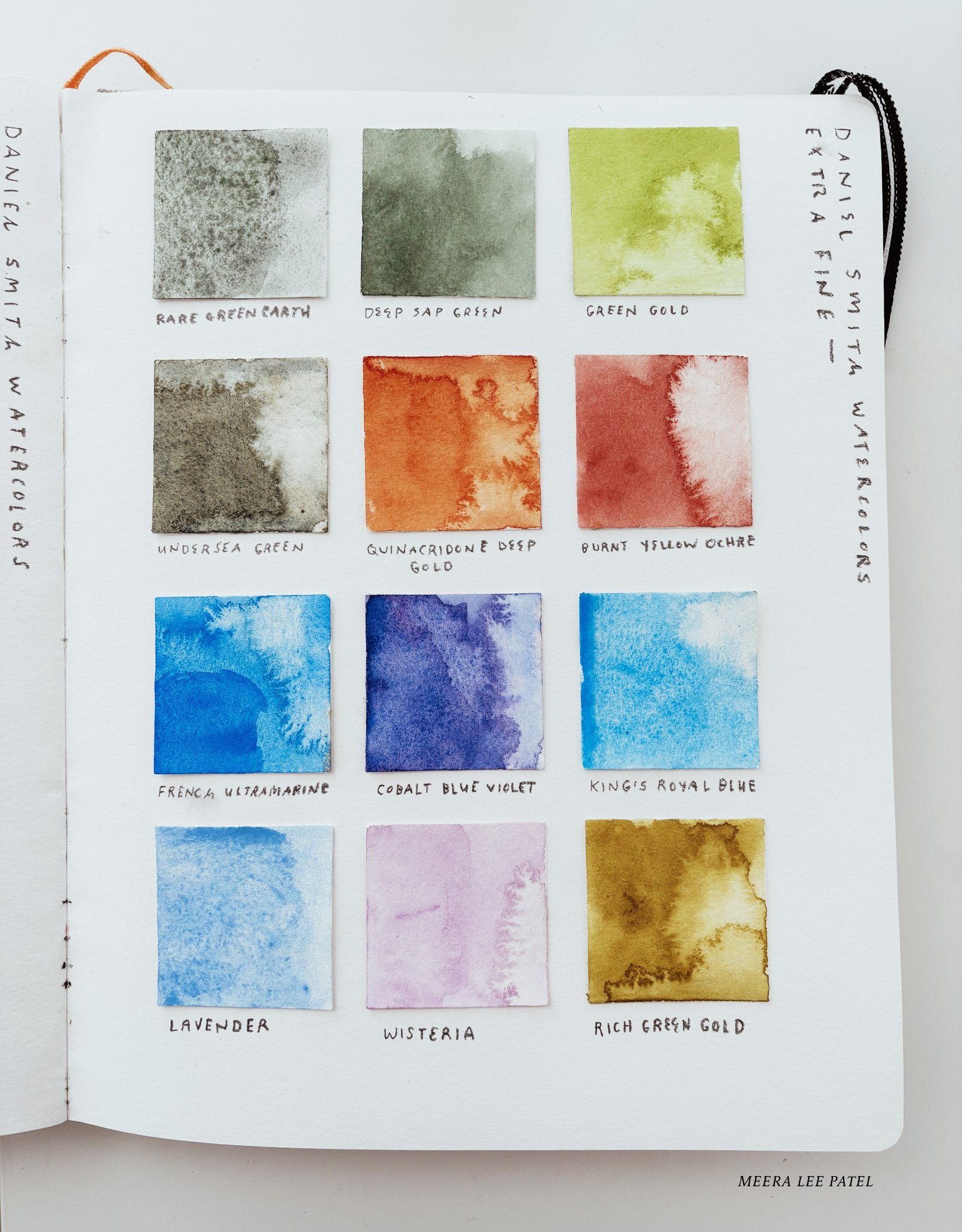
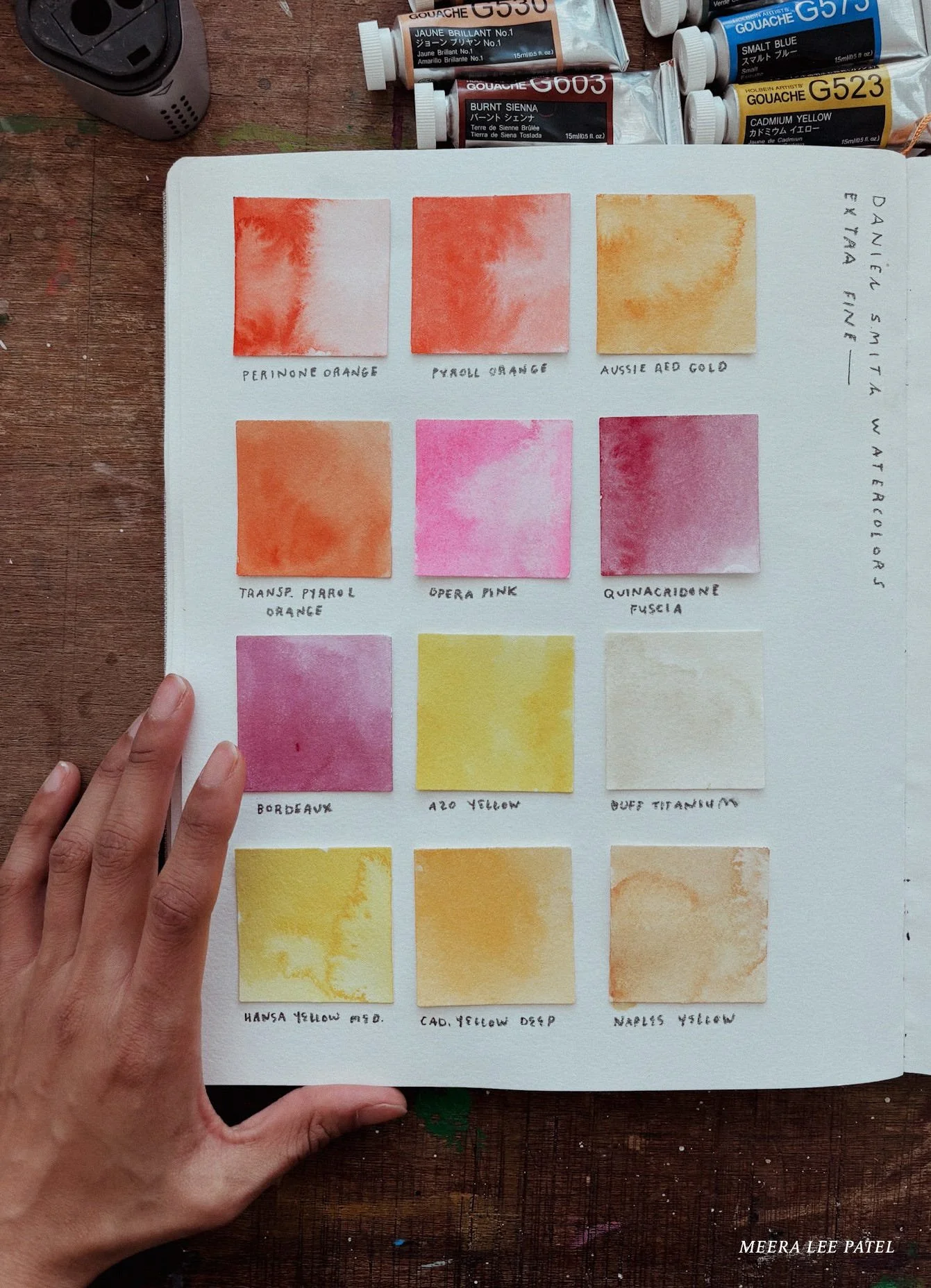
After five rounds of concept sketches for Dear Library, I started over. There were several reasons behind this, and I’ll share more when I can, but for now, it means that I need a new color story for this book. 

I’ve never had a color swatching practice — it seemed an indulgent use of time, and it still does. The process of swatching colors is incredibly meditative. Restorative. Like most healthy pursuits, there’s not much to immediately show or share of the work taking place—but internally, incredible shifts take root. 

I make conscious efforts in rewiring the parts of my brain that tell me fun should be replaced with productive and so I’ve been color swatching diligently, ignoring the voice inside my head. It’s been great.

For me, this process has been most useful in:

  1. Pushing myself to create color harmony with unlikely color palettes; exploring palettes beyond my comfort and regular rotation. 

  2. More accurately seeing the temperature of any particular color and how that temperature changes when placed against another hue.

  3. Being able to pinpoint which combination of colors evokes the emotional atmosphere I’m trying to create. 

  4. Quite literally seeing that there is usually, and almost always—more than one solution. 

THURSDAY

I enjoyed looking through these illustrated love letters from the Archives of American Art. 

FRIDAY

The night sounds like a murder
of magpies and we’re replacing our cabinet knobs
because we can’t change the world, but we can
change our hardware. America breaks my heart
some days, and some days it breaks itself in two.
I watched a woman have a breakdown in the mall
today and when the security guard tried to help her
what I could see was all of us
peeking from her purse as she threw it
across the floor into Forever 21. And yes,
the walls felt like another way to hold us in
and when she finally stopped crying
I heard her say to the fluorescent lighting, Some days
the sky is too bright. And like that we were her
flock in our black coats and white sweaters,
some of us reaching our wings to her
and some of us flying away.

—Magpies Recognize Themselves in the Mirror by Kelli Russell Agodon

See you next week!

xx,

M


To sign up for my weekly newsletter, Dear Somebody, please subscribe here.
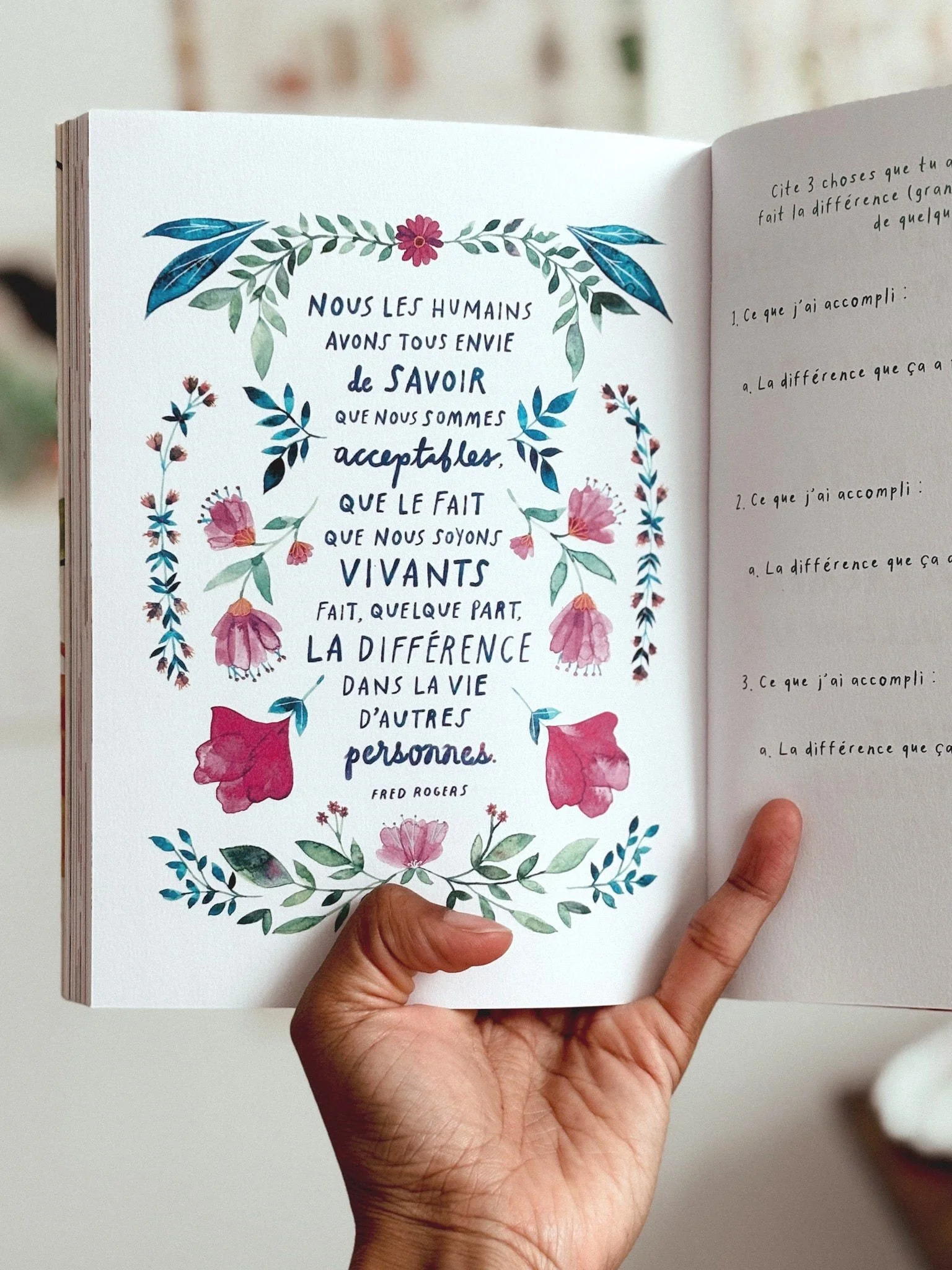
In Process, Life, Sketchbook Tags Parenting, Parenthood, Family, snow, Ruth Franklin, Shirley Jackson, Sandra Dieckmann, Cyndie Spiegel, Hack Your Health, Andrea Love, Tulip, Phoebe Wahl, Pinocchio, DEAR LIBRARY, Kelli Russell Agodon
Comment

Dear Somebody: Nothing, nothing.

February 14, 2025

Finding Your True North for Issue #64 of Uppercase Magazine (2025)

A year from now, here are five things from this week that I'd like to remember:

MONDAY 

It’s been awhile since I wrote. There was some travel, some sickness, some coming back to life. I’m still figuring things out; I’m still dedicated to the daily task of figuring things out. What else can I do? Nothing, nothing. 

Failing friendships, abandoned resolutions, the agonizingly slow crawl towards progress: these were all things that clawed at me a few months ago, seeping into my brain in-between my dreams and demanding more of my time, more of my efforts. Now, I let them fall away with ease. What can I do? Nothing, nothing, so I pour the skeletons out my window and raise the blinds to the morning ahead. 

Each day feels less like it’s getting away from me, and I feel less like I’m trying to get away from myself. Somehow, the smog has lifted. My brain is less dreams-and-pollution, more dreams-and-strangeness. I am reminded of time’s simple magic: its ability to transform a dilemma so magnificent into a pebble, into a not-problem so small, so ordinary, that I forget to think of it.

I slip on my shoes, small cloud-like things, and head out the door. I listen for the cardinals and the mourning dove; I follow the clouds through the sky. I like my little walks—to the corner coffee shop, the neighborhood library, the community garden. To nowhere at all. 

I walk to the library, but it’s closed. I walk to the coffee shop, but it’s closed, too. My timing is amiss or the world wants me to stay still—what can I do? Nothing, nothing. I turn around. A mile away, my sweet little family breathes childhood into our sweet little house. Quite happily, I take the shortest way home. 

TUESDAY

Meera Lee Patel x Biely & Shoaf: SO MUSHROOM IN MY HEART FOR YOU

Meera Lee Patel x Biely & Shoaf: MY HEART IS WITH YOU

Meera Lee Patel x Biely & Shoaf: HAPPILY EVER AFTER

I have a new collection of cards out with Biely & Shoaf, and I’m especially charmed by how the gold foil on these turned out! All of my new cards are available on the Biely & Shoaf website and at stores throughout the country. 

WEDNESDAY

Sisters celebrating a birthday (2025)

I flew to my sister’s for a quick few days to celebrate her birthday. It was a sweet treat to sit around a table with a very large martini and so many wonderful friends who love her as much as I do. 

THURSDAY

There are many versions of Conference of the Birds, a 5000-line Persian poem written by Sufi poet Farid-ud-din Attar; I treasure the edition I have, illustrated by the skilled Peter Sis. 

Serendipitously, I stumbled upon this article by The Heritage Lab which summarizes portions of the poem and distills some of the symbolism within it—but what I love most are the many included paintings, many dating back to the mid 16th-century, all inspired by this classic poem . 

FRIDAY

My husband and I held the films up against the sliding glass door in
Oregon the summer it seemed my sadness might never go away, trying
to make sense of whatever illness swirled there in black and white and
gray, so terrible the river winding through me seemed more real than I
was, somewhere beneath the Douglas fir's shawl of liquid silver, the
grape leaves unfurling their fuzz of green.

Here were thought and memory, feeling and dream. I stared into those
transparent sheets of myself my husband traced with one finger as I'd
seen him trace our route across a ten thousand foot mountain, follow-
int the convoluted folds and cross sections as patiently as he followed
the slow lines of elevation.

And I thought, This is what matters--the transparent mind that lets the
world through like a window, one we can open any time, whenever we
want, the wind in our hair, mysterious, fern-delicate, human. Or is it his
standing beside me that I remember, ready to remind me that what felt
crazy was only a matter of degree, my footing on that mountain easily
recovered by reaching my hand out to his as he balanced, just a few steps
ahead, impossibly steady before me?

—Looking at MRI Scans of My Brain by Alison Townsend

See you next week!

xx,

M


To sign up for my weekly newsletter, Dear Somebody, please subscribe here.
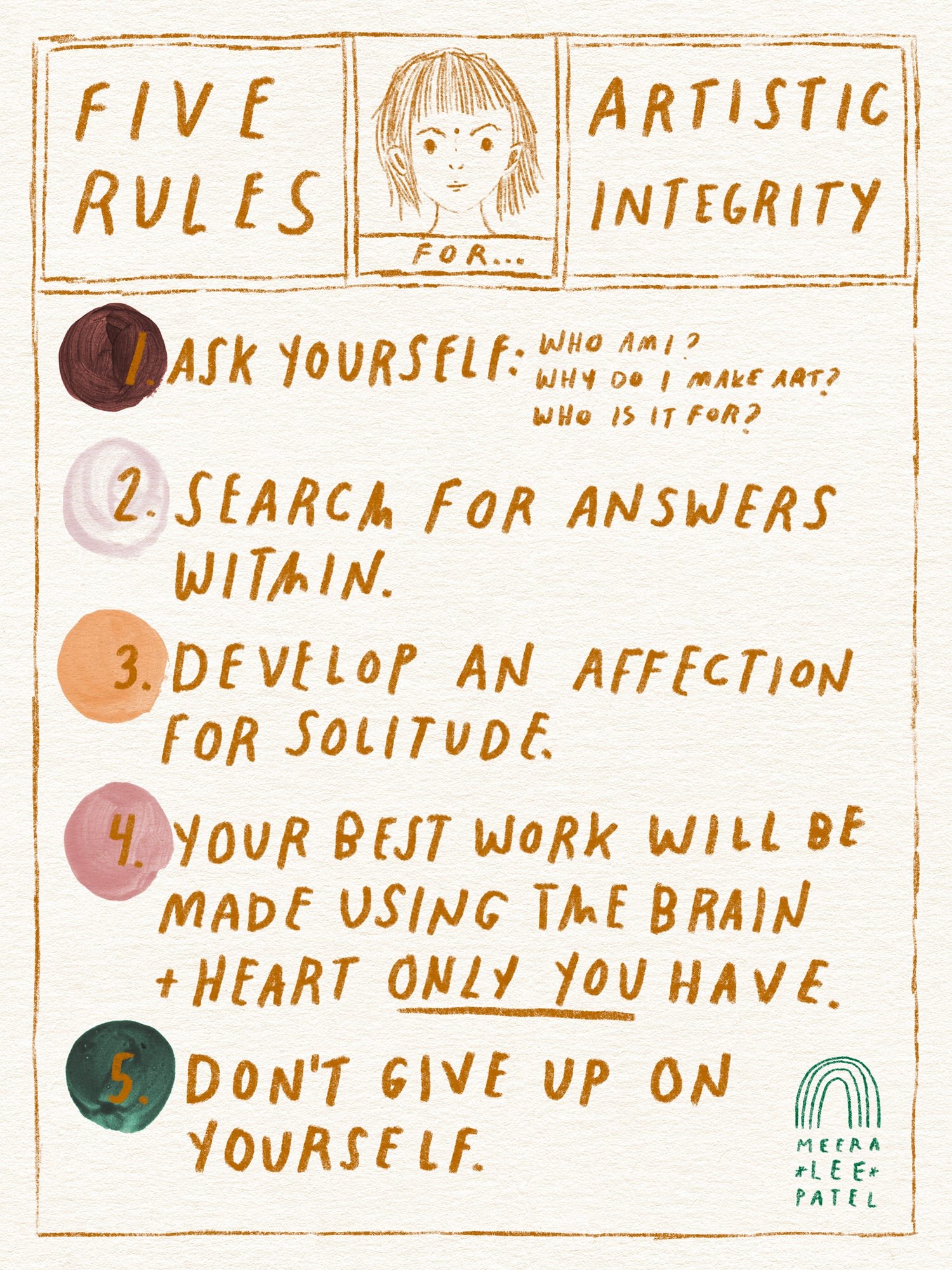
In Life Tags Uppercase Magazine, Travel, Life, Biely & Shoaf, Greeting Cards, Sisters, Sisterhood, Family, Farid-ud-din Attar, The Heritage Lab, Alison Townsend
Comment

Dear Somebody: Should I be doing more?

January 24, 2025

My desk this week: color studies, sketches, rewrites (2025)

A year from now, here are five things from this week that I'd like to remember:

MONDAY 

Lately, the position I find myself in most in nose to the ground, cleaning up after F’s meals. I sweep up crumbs and half-chewed banana, along with entire chunks of sandwich that have fallen out of her grinning mouth. Mine is a kid whose laughter will not wait for a bite to be chewed or properly swallowed; whose joy will not be tamed by rules or fatigue or her sister’s annoyance—whose joy is, in fact, a medicine for even-reasonable rules or well-earned fatigue or understandable annoyance; whose heart will not falter or close, even as mine does, at the state of this world. 

Lately, the position I find myself in most is sleepwalking to F’s room around midnight, then two am, then three, and four. For months now she’s been wide awake when she should be sleeping, and over these past few weeks, she’s begun screaming, too. I wonder if the world’s collective anxiety seeps into her skin during the dark hours of the night, if she is so annoyed at our inability to separate wrong from right that she’s resorted to screaming. 

When I lift her out of bed, she clings to me with relief. At nearly two years old, F is still a tiny thing, a baby monkey smuggling herself away in my arms. Outside of this room, beyond the walls of my home, families are bundled up and sent back to countries they don’t recognize. Others move of their own accord, to states and cities who will attempt to protect them when the rest of their country will not. Some go to school and don’t return home because their friends and neighbors believe real freedom is the power to destroy another person’s world. 

Safety is a matter of luck, and I was born on the side of it that faces up—the side sunlight reaches after it travels through a thousand years of cold and darkness. 

Lately, the position I find myself in most is stiff-necked, eyes closed, breathing in my kid’s presence and thinking of all the others. I breathe in her brown skin’s scent and consider what I can do—how I can transform the small marble of hardness in my own heart into something new, something that will help someone else. I breathe in my kid’s spirit and I know I can try harder. I breathe in my kid’s pulse and my heart, a temperamental old thing, slowly begins to open once more.

TUESDAY

The problems of our time are overwhelming—so much so that a paralysis can set in. Unfortunately, paralysis is just that: paralysis. It doesn’t encourage you to create change in yourself or the world, and it doesn’t allow you to help anyone else. 

  • Helplessness stems from inaction. Commit to fostering hope within yourself by believing that your actions matter—that there is meaning in every small deed, even if it seems underwhelming. Does it feel like enough? Never. Is it better than doing nothing at all? Yes.

  • Operating in a state of total despair (or worse, being unable to function)doesn’t mean you see reality more clearly than those who are content.Cultivating joy within yourself despite the realities that surround you is a strength.

  • Ask yourself which causes align with your values. Choose a single issue that is close to your heart. Learn more about it, and slowly integrate small changes in your lifestyle that support these causes.

  • Learn to live with a certain amount of fear and anxiety. Remember that the presence of both indicates that you care—that you’re a thoughtful, feeling person who wants to make a difference.

—Excerpted from How it Feels to Find Yourself: Navigating Life’s Changes with Clarity, Purpose, and Heart, my book of illustrated essays.

WEDNESDAY

“People are redefining ambition. Most of us who hit 40 have had enough experiences—winning and losing—to know that it is all actually “winning” and “losing.” The best job in the world can also cause you profound stress. Getting the promotion, raise, book deal that you always wanted, might feel like a hard-won achievement in certain ways, and in others, it is likely to be anti-climatic and send you spinning off into a moment of existential confusion. If you’ve experienced the texture of work long enough, you start to sober up about what really matters to you, what you are really made for, and what you want to spend your precious energy and time on. You understand that the deepest sense of self-realization doesn’t come through paychecks or titles, but through genuine, intrinsic pride that you have done something you are delighted by with people who delight you. Midlife is a moment to seek a more finely calibrated understanding of all of this and start advocating for yourself within work settings (whether that means joining a labor union or saying no more to freelance work or not tolerating assholes). Of course the most insecure your financial situation, and the less lucrative your life’s work, the more constraints you face on living into these truths. Which is why economic disparity is about so much more than “food on the table,” but people’s ability to give the world their best gifts and live their fullest, most realized lives.” —From Courtney Martin’s Grow Bigger, Not Bitter

THURSDAY

Winsor McCay, Little Nemo in Slumberland, 26 July 1908

The animated legacy of Little Nemo’s walking bed: I read Little Nemo as a child; as an adult, I have a deep appreciation for Winsor McCay’s imagination and drawing ability. I find more and more that McCay’s tight lines and evocative color palette are influencing how I think about drawing and the drawings I want to make—that maybe “fun” in drawing doesn’t necessarily mean spontaneity in line or execution, but fluidity in thought and effective communication. 

FRIDAY

I can hardly imagine it
as I walk to the lighthouse, feeling the ancient
prayer of my arms swinging
in counterpoint to my feet.
Here I am, suspended
between the sidewalk and twilight,
the sky dimming so fast it seems alive.
What if you felt the invisible
tug between you and everything?
A boy on a bicycle rides by,
his white shirt open, flaring
behind him like wings.
It’s a hard time to be human. We know too much
and too little. Does the breeze need us?
The cliffs? The gulls?
If you’ve managed to do one good thing,
the ocean doesn’t care.
But when Newton’s apple fell toward the earth,
the earth, ever so slightly, fell
toward the apple as well.

—The World Has Need of You by Ellen Bass

See you next week!

xx,

M


To sign up for my weekly newsletter, Dear Somebody, please subscribe here.
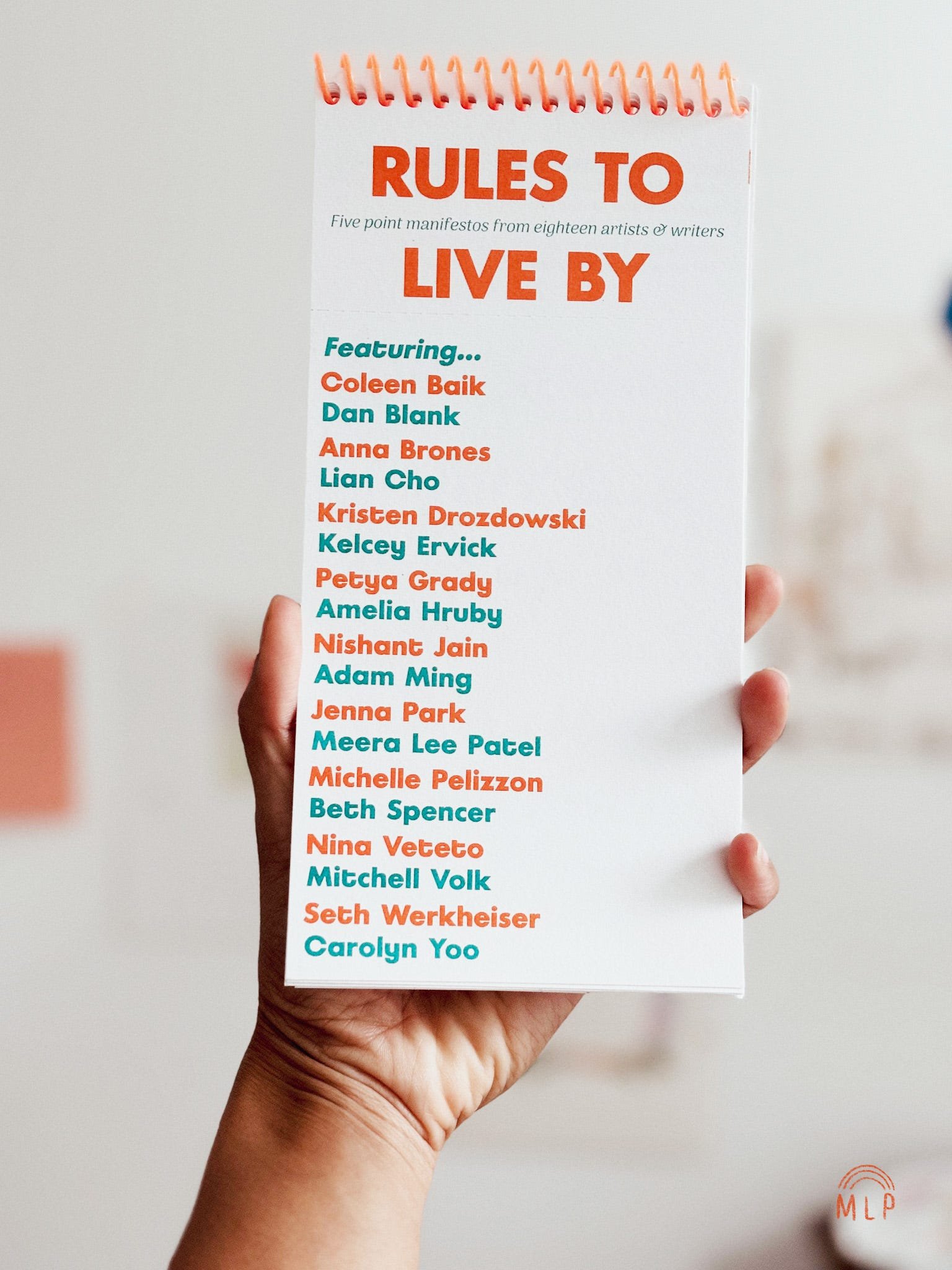
In Sketchbook, Process, Motherhood Tags Parenting, Parenthood, Safety, Helplessness, inaction, despair, values, How it Feels to Find Yourself, Books, Courtney Martin, Winsor McCay, Little Nemo, Ellen Bass
Comment

Dear Somebody: The anchors we carry.

January 17, 2025

Moon Man and the five children (sketchbook, 2025)

A year from now, here are five things from this week that I'd like to remember:

MONDAY 

For the second time since N was born, I board a plane and travel with my children alone. We embark on a surprise trip to my sister’s, and none of us can wait. For N, it’s her cousins and all of the treats she doesn’t receive at home—but mostly, it’s her cousins. For F, it’s her cousins and the acrobatics—three flights of stairs to climb up and down on—but mostly, it’s her cousins. For me, it’s all of it: me and my sister and our five children, all corralled under one roof, a tangle of limbs and tears and, of course, indoor hide-and-seek.

Now and then, it pokes at me that the places most comforting to me are the ones where I’ve spent my formative years: by the water, on the east coast, near my sibling. Will I always turn towards the anchors of my childhood? Will I always feel the tug, known deeply by younger siblings—of reaching, wanting more? Of forever feeling two steps behind? 

The thoughts tumble in my mind while I stand at the kitchen island, watching my nephews play Madden on the living room floor. The oldest offers to teach me, but I love him too much to disappoint him by actually playing. N and Z are in the playroom, concocting meals out of pretend ingredients. They feed their dollies, they feed each other. They yell to see if anyone else is hungry; we all yell back that we aren’t. Only F feels out of sorts, clinging to my legs, wailing for something she doesn’t have the language to express. My sister scoops her up and carries her outside.

I smell the snow before I sense it, before I see the soft clumps accumulate on the back steps. The kitchen window isn’t cracked but the sharp, dampened scent of winter leaks in anyhow. I’m going to watch the snow, I announce. No one responds. 

In my sister’s arms, F is quiet. She’s listening to the snow, or maybe it’s very arrival is the world’s simple way of listening to her. Such is the strength of a young child’s heart. 

One by one, the rest of our band files onto the porch: first Z, who wants to see; then N, who wonders what Z is up to; then both boys, curious as to where everyone went. For this moment, Madden is on pause. 

The snowdrifts sort my thoughts and I know what I know: I don’t have an affinity for New Jersey or the east coast—or any particular nostalgia for the past. The only anchor I carry from childhood is my sibling, an anchor I’ll carry from house to house, shore to shore.

Our five children are cousins: together and sweet. The snow is the snow: always a pleasure. And I, so far removed from the roof, roads, and city that I call my own, feel perfectly at home. 

TUESDAY

“There’s one ceramic piece, by my daughter — my wife and I are super sad that we lost that. It’s an image of her as a 12-year-old holding a globe with the world on fire on top of her head. And it’s her in her overalls with her striped shirt on and brown hair. It’s an interpretation of an image I made after the fires in Malibu. She was becoming this awesome artist, interpreting the world through her art just like I do. To me it was an image of uncontrollable powerlessness — that feeling you know everyone shares, but through a kid’s eyes. My daughter’s sculpture was a symbol of someone becoming who they are in a moment of time we’ll never get back to.” —Cleon Peterson on what they grabbed.

I found these resources for LA from Nicole Cardoza’s Reimagined to be really helpful. Included are links to help organize, volunteer, and donate to aid those impacted by the wildfires. 

WEDNESDAY

The Hunters in the Snow, 1565, oil on wood

The Census at Bethlehem (1566), oil on wood panel

These world landscapes by painter Pieter Bruegel which simultaneously evoke in me a sense of war and peace, storm and calm, winter and the first day of spring. 

THURSDAY

“Consciousness lives on. The body is like a car, and the driver is the spirit, the bit of consciousness, the atom, the soul, you could say. And so the car gets old and rusted and falls apart and the driver gets out and continues on.” —David Lynch, rest in peace.

“Ideas are like fish. If you want to catch little fish, you can stay in the shallow water. But if you want to catch the big fish, you’ve got to go deeper. Down deep, the fish are more powerful and more pure. They’re huge and abstract. And they’re very beautiful.

The beautiful thing is that when you catch one fish that you love, even if it’s a little fish—a fragment of an idea—that fish will draw in other fish, and they’ll hook onto it. Then you’re on your way. Soon there are more and more and more fragments, and the whole thing emerges. But it starts with desire.”

—from Catching the Big Fish: Meditation, Consciousness, and Creativity by David Lynch

FRIDAY

So after weeks of rain
at night the winter stars
that much farther in heaven
without our having seen them
in far light are still forming
the heavy elements
that when the stars are gone
fly up as dust finer
by many times than a hair
and recognize each other
in the dark traveling
at great speed and becoming
our bodies in our time
looking up after rain
in the cold night together

—January by W. S. Merwin

See you next week!

xx,

M


To sign up for my weekly newsletter, Dear Somebody, please subscribe here.
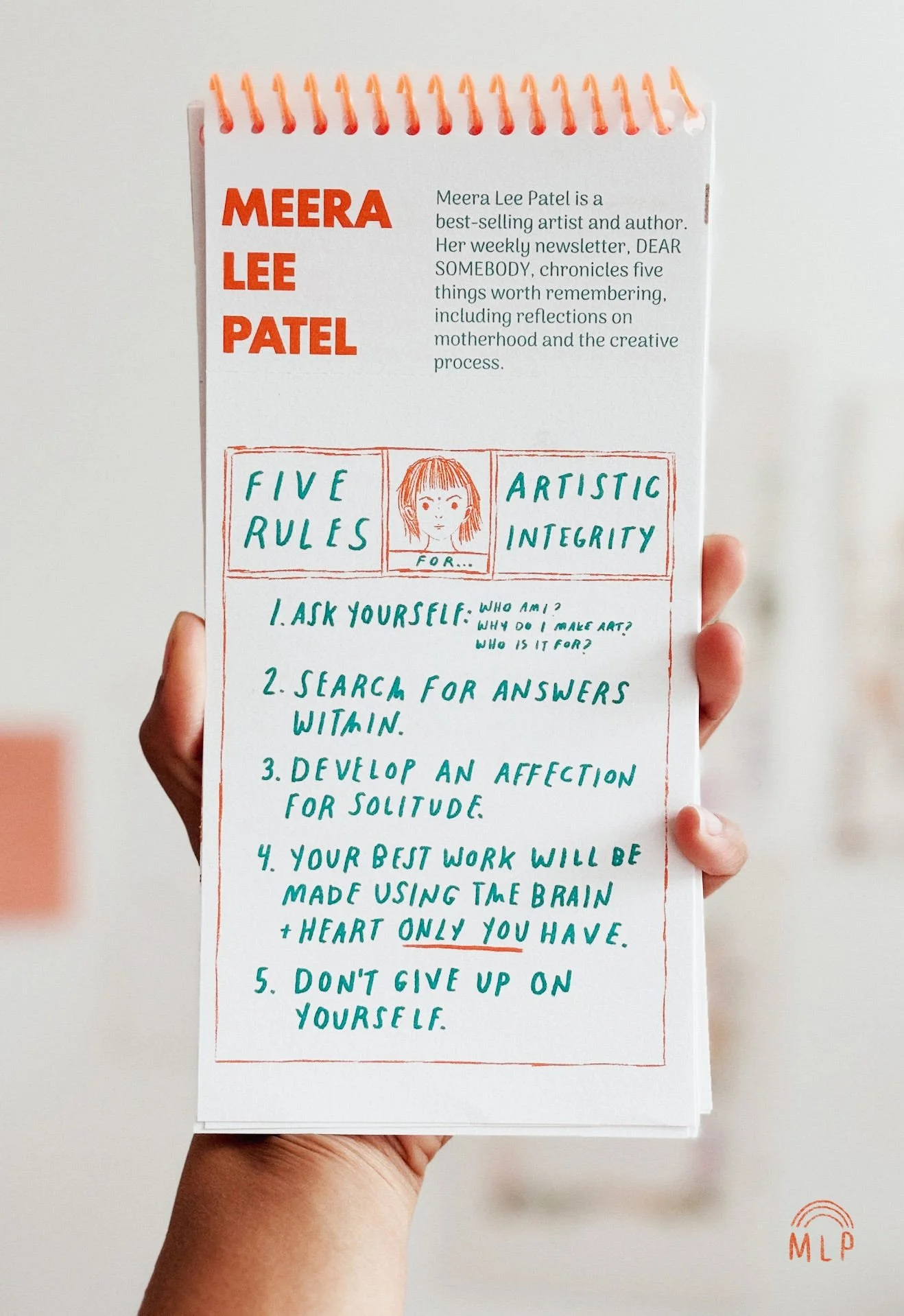
In Sketchbook, Life Tags Traveling, Parenting, Parenthood, snow, Family, Nicole Cardoza, Cleon Peterson, Pieter Bruegel, David Lynch, W. S. Merwin
Comment

Dear Somebody: A new year's day.

January 10, 2025

Sketchbook page from January 9, 2025

A year from now, here are five things from this week that I'd like to remember:

MONDAY 

When the first snow of the new year falls, I wake up to the syrupy hours of early morning and slope down the stairs. My cold nose presses against the iced windows while drifts stream down, soft ribbons sparkling against the dark night. A lone car whistles. An enormous moon watches. 

Last year felt like a loss, a piling up of all I didn’t get to. The days moved slowly: a never-ending trail of meal-making and playing catch up, of falling farther and farther behind, of willing my mind to be present and my temper further restrained, of tempering my expectations while motioning for my spirit to remain untethered, unfettered, dancing before me. 

Last year felt like a loss, a blur of all I was too overwhelmed to see. The days turned quickly: a whirl of cake-making and playing dress up, of celebrations and wishes, of willing myself to be a better mother than the ones I’ve been before, of one step forward and several steps back, of choosing—again and again—to tear it all down and rebuild, rather than simply walking away. 

Last year felt like a loss, a constant pinging of everything beyond my control. A year of reaching: where the person I am followed the person I want to be, of days that marked death and deaths that marked each day, of choosing to remind and remember, of chilling loneliness and bitter stagnation, of seeding and searching for new growth, and still—the gratitude for each new morning, evening, star. 

Now the days are gathered up behind me, three hundred-and-some in all. Looking back, I see a few neatly washed, some fed and watered, some treasured—but all worn through well, all loved and wanted.

Last year felt like a loss, but it also brought me back to myself. I sit here and write, the most honest form of loving I know, and feel the presence of someone I haven’t been before. Someone who tries, in the ways she knows how, to leave a change in the people and places she comes across. 

I love making resolutions. I love big, lofty lists of vows and ambitious goals, but in this new year, I have only one: to love myself the way I love life—in acceptance of all it is, in awe of all it can be. And I wish the same for you. 

TUESDAY

I’ve been under Chihiro Iwasaki’s spell for years now, long before I visited the Chihiro Art Museum in Nerima, Tokyo in 2019 and took in the full breadth of her work.

Chihiro Iwasaki, Tyltyl and Mytyl Running after the Blue Bird from Aoi Tori (The Blue Bird), Kodansha, 1969 | Courtesy of the Chihiro Art Museum Tokyo

The Little Mermaid Thinking of the Prince

Source: Jama’s Alphabet Soup

It’s been five years since I visited that museum, which was previously the home she shared with her husband and son, but her work continues to influence the paintings I make and the shape I’d like my life to take.

Rarely do I spent a day in my studio without considering the war-struck life she lived, the ethereal nature of her paintings, the sensibility in her line work, or the philosophy steadily strung throughout her paintings: to live a simple and modest life, to listen for laughing voices, and to protect our children at all costs. 

WEDNESDAY

An image of Richard Brautigan’s Karma Repair Kit

THURSDAY

I kept my more/less list extremely minimal and to-the-point this year, with the understanding that improvement on this one core item will greatly impact the rest of my world and everything inside it:

“The word "love" is most often defined as a noun, yet all the more astute theorists of love acknowledge that we would all love better if we used it as a verb. I spent years searching for a meaningful definition of the word "love," and was deeply relieved when I found one in psychiatrist M. Scott Peck's classic self-help book The Road Less Traveled, first published in 1978. Echoing the work of Erich Fromm, he defines love as "the will to extend one's self for the purpose of nurturing one's own or another's spiritual growth." Explaining further, he continues, "Love is as love does. Love is an act of will-namely, both an intention and an action. Will also implies choice. We do not have to love. We choose to love." Since the choice must be made to nurture growth, this definition counters the more widely accepted assumption that we love instinctually.” —from bell hooks’ All About Love

For archival purposes, here’s last year’s more/less list. 

FRIDAY

The day feels put together hastily
like a gift for grateful beggars
being better than no time at all
but the bells are ringing
in cities I have never visited
and my name is printed over doorways
I have never seen
While extracting a bone
or whatever is tender or fruitful
from the core of indifferent days
I have forgotten
the touch of sun
cutting through uncommitted mornings
The night is full of messages
I cannot read
I am too busy forgetting
air like fur on my tongue
and these tears
which do not come from sadness
but from grit in a sometimes wind

Rain falls like tar on my skin
my son picks up a chicken heart at dinner
asking
does this thing love?
Deft unmalicious fingers of ghosts
pluck over my dreaming
hiding whatever it is of sorrow
that would profit me

I am deliberate
and afraid
of nothing.

—New Year’s Day by Audre Lorde

See you next week!

xx,
M


To sign up for my weekly newsletter, Dear Somebody, please subscribe here.
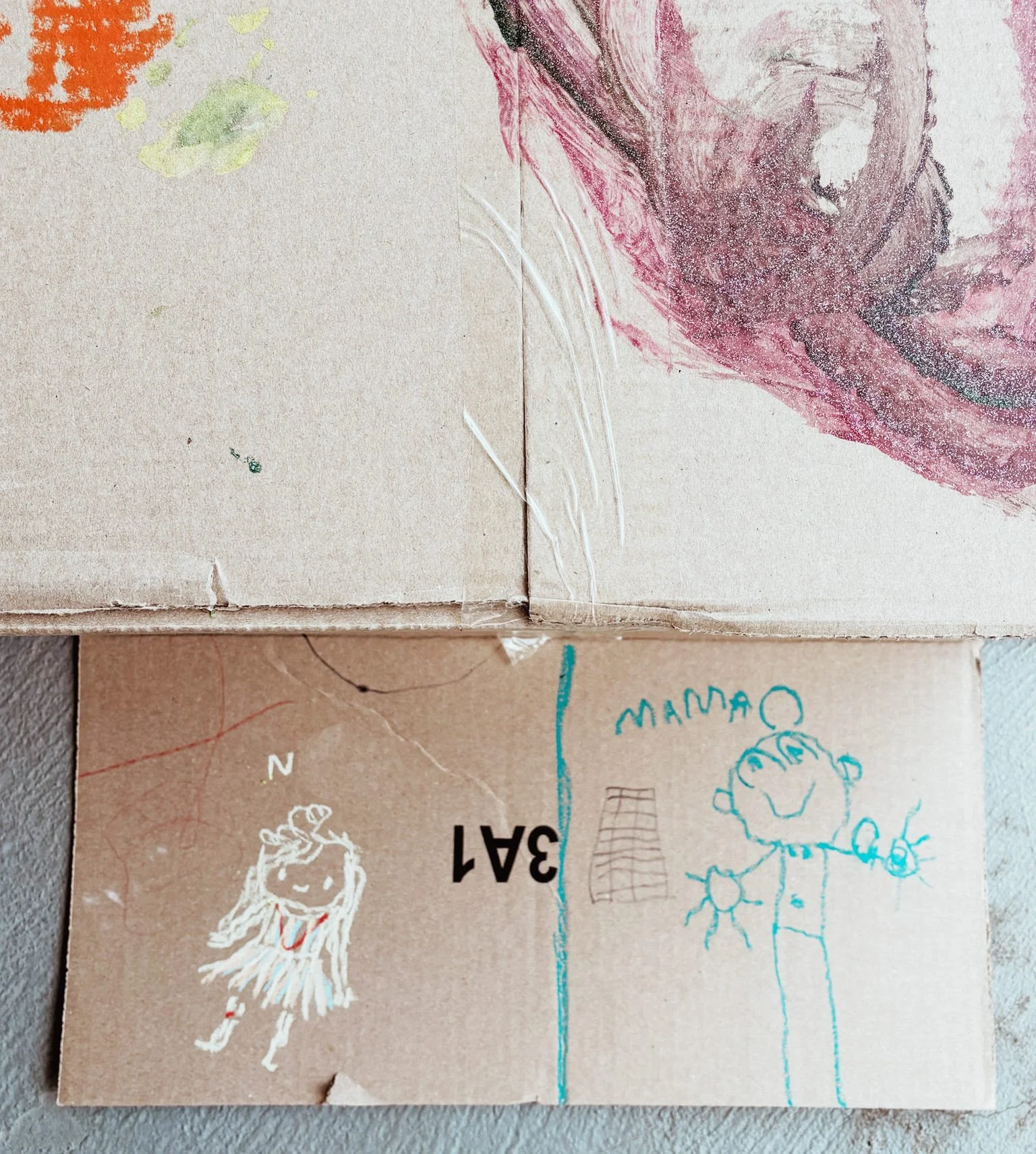
In Sketchbook, Process Tags Sketchbook, snow, Chihiro Iwasaki, Chihiro Art Museum, Richard Brautigan, more/less list, new year, resolutions, Bell Hooks, Audre Lorde
Comment

Dear Somebody: The December sun.

December 20, 2024

A year from now, here are five things from this week that I'd like to remember:

MONDAY 

In the morning, she watches me wake. I rub my eyes and yawn while she waits to be taken out of her crib. What did you dream about? I ask her, searching her face for an answer. Her sleep sack is rumpled, worn, but her smile is bright, her eyes wide. I think about how I could use a little more sleep. She thinks about how fascinating the world is.

We go out onto the porch and watch the wind. “What a beautiful breeze we’re having,” I say while she watches headlights cut through the darkness. The sky slowly lightens, and she studies each car or bus that passes by with growing interest. The bees are already hard at work. We watch them gather pollen from each hydrangea in the front yard and carry it elsewhere, to some unknown flower on another part of the street. Maybe they’re traveling to another neighborhood, we muse. Maybe they’re heading back to their home hive in another country. Every living thing is on its own journey.

The December sun streams in from the east, the light climbing higher and higher. It sparkles between branches, dancing through the leaves. She reaches for the light and tries to pinch beams between her pointer finger and thumb. It’s strange, isn’t it, how we can feel the sunlight’s warmth but can’t hold it in our hands? She doesn’t answer me but grasps at the rays flowing onto the porch, millions of tiny dust fragments spinning like ballerinas on a cement-and-stone stage.

—from How it Feels to Find Yourself: Navigating Life’s Changes with Clarity, Purpose, and Heart, my book of illustrated essays


TUESDAY

As it’s gift-giving season, I’d be foolish not to remind you, dear readers, that booksmake the perfect gift! 

These will still arrive by 12/25 and are currently on sale in many online retailers, including Barnes & Noble, Target, and Amazon.

For illustrated essays: How it Feels to Find Yourself and My Friend Fear

For those unearthing their bravery: Go Your Own Way, Start Where You Are

For those who need a little less: Create Your Own Calm

For those who want to know themselves more deeply: Made Out of Stars, Start Where You Are

For those who love planning: my 2025 calendar and planner

For those who love paper: art prints, limited edition risographs, and greeting cards

WEDNESDAY

“Your doubt may become a good quality if you train it. It must become knowing, it must become critical. Ask it, whenever it wants to spoil something for you, whysomething is ugly, demand proofs from it, test it, and you will find it perplexed and embarrassed perhaps, or perhaps rebellious. But don’t give in, insist on arguments and act this way, watchful and consistent, every single time, and the day will arrive when from a destroyer it will become one of your best workers — perhaps the cleverest of all that are building at your life.” 

—Rainer Maria Rilke on doubt, in Letters to a Young Poet

THURSDAY

The making of The Glassworker, which I can’t wait to see; my favorite winter animation, based on Raymond Briggs’ original book; on turning writing into a life. 

FRIDAY

Listen
with the night falling we are saying thank you
we are stopping on the bridges to bow from the railings
we are running out of the glass rooms
with our mouths full of food to look at the sky
and say thank you
we are standing by the water thanking it
smiling by the windows looking out
in our directions

back from a series of hospitals back from a mugging
after funerals we are saying thank you
after the news of the dead
whether or not we knew them we are saying thank you

over telephones we are saying thank you
in doorways and in the backs of cars and in elevators
remembering wars and the police at the door
and the beatings on stairs we are saying thank you
in the banks we are saying thank you
in the faces of the officials and the rich
and of all who will never change
we go on saying thank you thank you

with the animals dying around us
our lost feelings we are saying thank you
with the forests falling faster than the minutes
of our lives we are saying thank you
with the words going out like cells of a brain
with the cities growing over us
we are saying thank you faster and faster
with nobody listening we are saying thank you
we are saying thank you and waving
dark though it is

—Thanks by W. S. Merwin

See you next week!

xx,

M


To sign up for my weekly newsletter, Dear Somebody, please subscribe here.
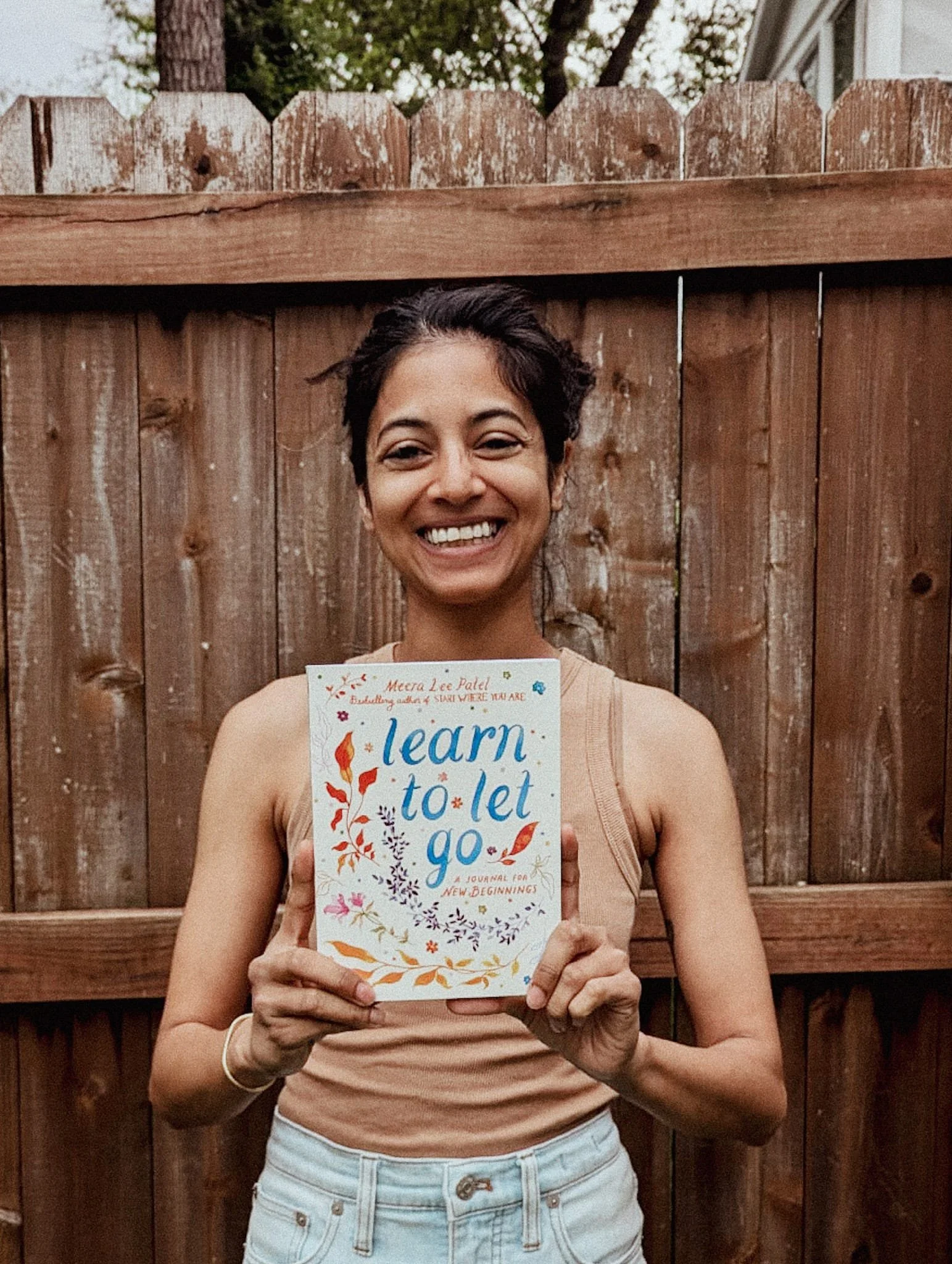
Comment

Dear Somebody: You are spring.

December 6, 2024

A small peek into my latest drawing (mixed media, 2024)

A year from now, here are five things from this week that I'd like to remember:

MONDAY 

When the first snow of the season slowly falls, I wake up before the world and climb down the stairs. I press my nose against the cold windows of the front door and watch the drifts settle on the dark streets. A lone car whistles down the street, its headlines waving like a ribbon through the snowfall. After that, it is quiet, and I feel lucky to be alone.

Before the snow begins, T salts a hundred houses where his family doesn’t live because someone else’s does. I read the news gingerly, like a child checking to see if the burners are still warm. Dead children, wildfires, disease, manhunts. Hopelessness is not helpful, but actual food and water is, so I donate everywhere I can and feed my own girls. It feels like so many direct their own pain onto others, but I feel lucky that so many do not. 

Before T salts a hundred houses, we spend a few days in Nashville. We celebrate friends, visit their children, see how we’ve all fallen and mended. We sit around the table in a friendship that feels more comfortable each year, and I eat a meal that someone else lovingly cooks for me. I see each person’s heart growing wider, more open, pumping blood, struggling as it reaches—but always reaching anyway. I know how much mine has struggled to stay open this year—but it has, it does, and I feel lucky to know each open heart at this table, especially my own. 

TUESDAY

Jo Nakashima’s beautiful and strange origami; the right of return (100% of proceeds directly aid the people of Gaza); Einstein time; this gorgeous edition of The Complete Tales by Beatrix Potter, which I was thoughtfully given to borrow by a friend. 

WEDNESDAY

I am reading many interesting picture books while I rewrite a manuscript I began a few weeks ago. The manuscript itself is simple, which gives me the ability to push the envelope further with my drawings. The question I keep asking myself is: How can I tell multiple stories at once?

A few books that do this well are: 

The Midnight Fair by Gideon Sterer and illustrated by Mariachiara Di Giorgio, a very enchanting, completely wordless book about forest creatures visiting a fairground. 

Crushing by Sophie Burrows, which really illuminates just how deeply emotions can be communicated in only two colors. Another twoc-olobook that does this beautifully is My Best Friend, written by Julie Fogliano and illustrated by Jillian Tamaki. 

Small in the City by Sydney Smith, which utilizes panels to draw the reader closer (or push them farther away) from the main character’s world. 

THURSDAY

A few days late to share this, but still remembering my favorite November poem and the painting I made for it a few years ago.

A small peek into my latest drawing (mixed media, 2024)

FRIDAY

Sit down. Inhale. Exhale.
The gun will wait. The lake will wait.
The tall gall in the small seductive vial
will wait will wait:
will wait a week: will wait through April.
You do not have to die this certain day.
Death will abide, will pamper your postponement.
I assure you death will wait. Death has
a lot of time. Death can
attend to you tomorrow. Or next week. Death is
just down the street; is most obliging neighbor;
can meet you any moment.

You need not die today.
Stay here--through pout or pain or peskyness.
Stay here. See what the news is going to be tomorrow.

Graves grow no green that you can use.
Remember, green's your color. You are Spring.

—To the Young Who Want to Die by Gwendolyn Brooks

See you next week!

xx,
M

In Life, Writing, Process Tags Nashville, Jo Nakashima, Beatrix Potter, Writing, The Midnight Fair, Gideon Sterer, Sophie Burrows, Sydney Smith, Gwendolyn Brooks
Comment

Dear Somebody: In the midst of things.

November 22, 2024

Stay Golden, four-color risograph. Printed by Land Gallery in Portland, Oregon (2024)

A year from now, here are five things from this week that I'd like to remember:

MONDAY 

I plot the process for my current book, drawing a path that can take me from concept sketches to final paintings and then production work. I follow the path, and for awhile, all goes according to plan: I collect inspiration; I draw initial concepts and then four rounds of revised sketches; I kill my darlings, I stay open to criticism. 

I keep to the path but the path stops making sense. The more I work on sketches, the more afraid I feel of making final drawings. The more I work on perfecting my linework, the more afraid I feel of picking up a paintbrush. I don’t want to fail; I know I will. 

I’m overwhelmed by how circuitous the path has become, as if it were designed to keep me from progression. But the path is a line, not a loop—and hadn’t I drawn it myself? I know how I like to work: matter of factly, like a machine. I know how I like my process to feel: clean, orderly, with little friction. I know what I want to create: surprise, the unfolding of what I haven’t planned. 

On Saturday morning, I visit Chris Wubbena’s exhibit at The St. Louis Artist’s Guild. It’s titled In the Midst of Things. Each sculpture is created by the enmeshment of everyday objects, each removed from where they once stood in the middle of their own respective lives. I walked around the room of miniature buildings, some tilted at precarious angles or stacked atop slippery mixtapes. There are poems in the center of these buildings; there are voices and video; there are people and their stories. All smushed together. All leaking surprise. Somewhere in the middle. 

In the midst of things is a literary device where the narrative work begins in the middle of the plot—not at the beginning. Though I carefully designed my creative process to keep my fear and anxiety at bay, it only cultivates more of both. It encourages me to continue planning instead of creating. It forces me to stay in the beginning so I never have to be in the middle—and the middle is where surprise lives. 

When I come home from the exhibit, I say goodbye to my plan. My studio is a mess. I’ve only properly sketched out half of the book, but instead of planning the rest, I jump into a final painting. I choose colors like an artist instead of a scientist; I let myself feel. I swish the paint around on the page, I let it pool where it shouldn’t. This painting isn’t from the beginning of the book, nor at the end. It’s page 17—right in the middle of the story, where all of the surprises are still waiting to happen. 

I have a bunch of thumbnails, only one final drawing, and more questions than answers—but I know the answers are somewhere in here, beneath the gouache tubes and tracing paper and my own apprehension. It feels messy being in the middle, but I also feel the satisfying stretch of discomfort—of knowing my mind is working under conditions it isn’t used to, that my body is familiarizing itself with a feeling that isn’t easy.

I don’t know how to paint this book, but I’m figuring it out. It’s messy where I am, but I stand my ground. I’m on the cusp of unraveling a mystery, of finding water, of waking up in the place where it all finally begins to make sense. 

Standing in the middle, I begin to understand it—where surprise really lives. It’s somewhere here: in the midst of things. 

TUESDAY

Stay Golden, four-color risograph (2024)

Stay Golden, four-color risograph (2024, detail shot)

After much experimentation, Stay Golden is available as a four-color risograph print! It was printed very thoughtfully in blue, yellow, green, and magenta inks by Land Gallery in Portland, Oregon. It is available exclusively through Buy Olympia. 

Many thanks to Pat for all of his hard work and dedication in making this edition happen! 

Stay Golden crewneck sweatshirts, made in collaboration with Golden Hour

The original Stay Golden crewneck, made in collaboration with Golden Hour Candle Co., is available here — perfect for this crisp, cool weather. Both make excellent gifts.


WEDNESDAY

“You will take bits from books you’ve read and movies you’ve seen and conversations you’ve had and stories friends have told you, and half the time you won’t even realize you’re doing it. I am a compost heap, and everything I interact with, every experience I’ve had, gets shoveled onto the heap where it eventually mulches down, is digested and excreted by worms, and rots. It’s from that rich, dark humus, the combination of what you encountered, what you know and what you’ve forgotten, that ideas start to grow.” 

—from Ann Patchett’s This is The Story of a Happy Marriage

I am still working my way through all of Emile Mosseri’s film scores, which is my current favorite music to write or draw to. My family is tired of the Minari soundtrack, so now I’ve moved onto Kajillionaire, The Last Black Man in San Francisco, and Homecoming. 

As a middle-schooler, I was hugely mesmerized by Frank L. Baum’s method of worldbuilding. I bookmarked this piece by John Updike to understand more about how a series of intricately-crafted books continue to be overshadowed by the film they inspired.

Lastly, I loved this list on how to reassess your childhood relationships by Malaka Gharib—thoughtfully provoking. 

THURSDAY

I was pleased to receive a few copies of the French edition of Go Your Own Way, from my French publisher, Le Livre de Poche! 

The French edition is available here, and the English version is available here. 

FRIDAY

Leave the dishes.
Let the celery rot in the bottom drawer of the refrigerator
and an earthen scum harden on the kitchen floor.
Leave the black crumbs in the bottom of the toaster.
Throw the cracked bowl out and don’t patch the cup.
Don’t patch anything. Don’t mend. Buy safety pins.
Don’t even sew on a button.
Let the wind have its way, then the earth
that invades as dust and then the dead
foaming up in gray rolls underneath the couch.
Talk to them. Tell them they are welcome.
Don’t keep all the pieces of the puzzles
or the doll’s tiny shoes in pairs, don’t worry
who uses whose toothbrush or if anything
matches, at all.
Except one word to another. Or a thought.
Pursue the authentic-decide first
what is authentic,
then go after it with all your heart.
Your heart, that place
you don’t even think of cleaning out.
That closet stuffed with savage mementos.
Don’t sort the paper clips from screws from saved baby teeth
or worry if we’re all eating cereal for dinner
again. Don’t answer the telephone, ever,
or weep over anything at all that breaks.
Pink molds will grow within those sealed cartons
in the refrigerator. Accept new forms of life
and talk to the dead
who drift in through the screened windows, who collect
patiently on the tops of food jars and books.
Recycle the mail, don’t read it, don’t read anything
except what destroys
the insulation between yourself and your experience
or what pulls down or what strikes at or what shatters
this ruse you call necessity.

—Advice to Myself by Louise Erdrich

See you next week!

xx,

M


To sign up for my weekly newsletter, Dear Somebody, please subscribe here.
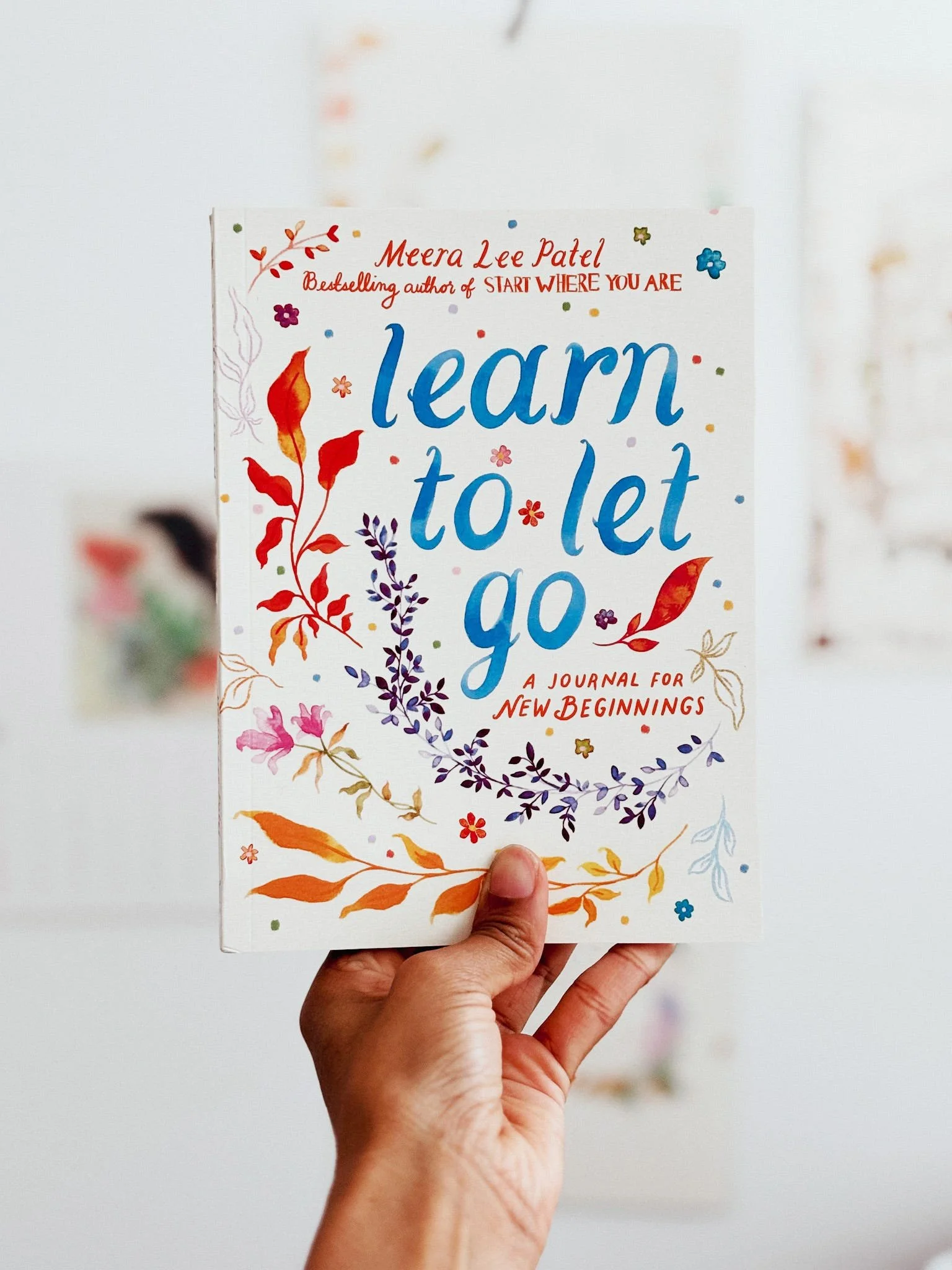
In Process, Books Tags risograph, Chris Wubbena, Buy Olympia, stay golden, Ann Patchett, Emile Mosseri, Minari, Kajillionaire, The Last Black Man in San Francisco, Homecoming, John Updike, Frank L. Baum, Malaka Gharib, Go Your Own Way, Louise Erdrich
Comment
← Newer Posts Older Posts →

Meera Lee Patel is an artist, writer, and book maker. Her books have sold over one million copies, and been translated into over a dozen languages worldwide.
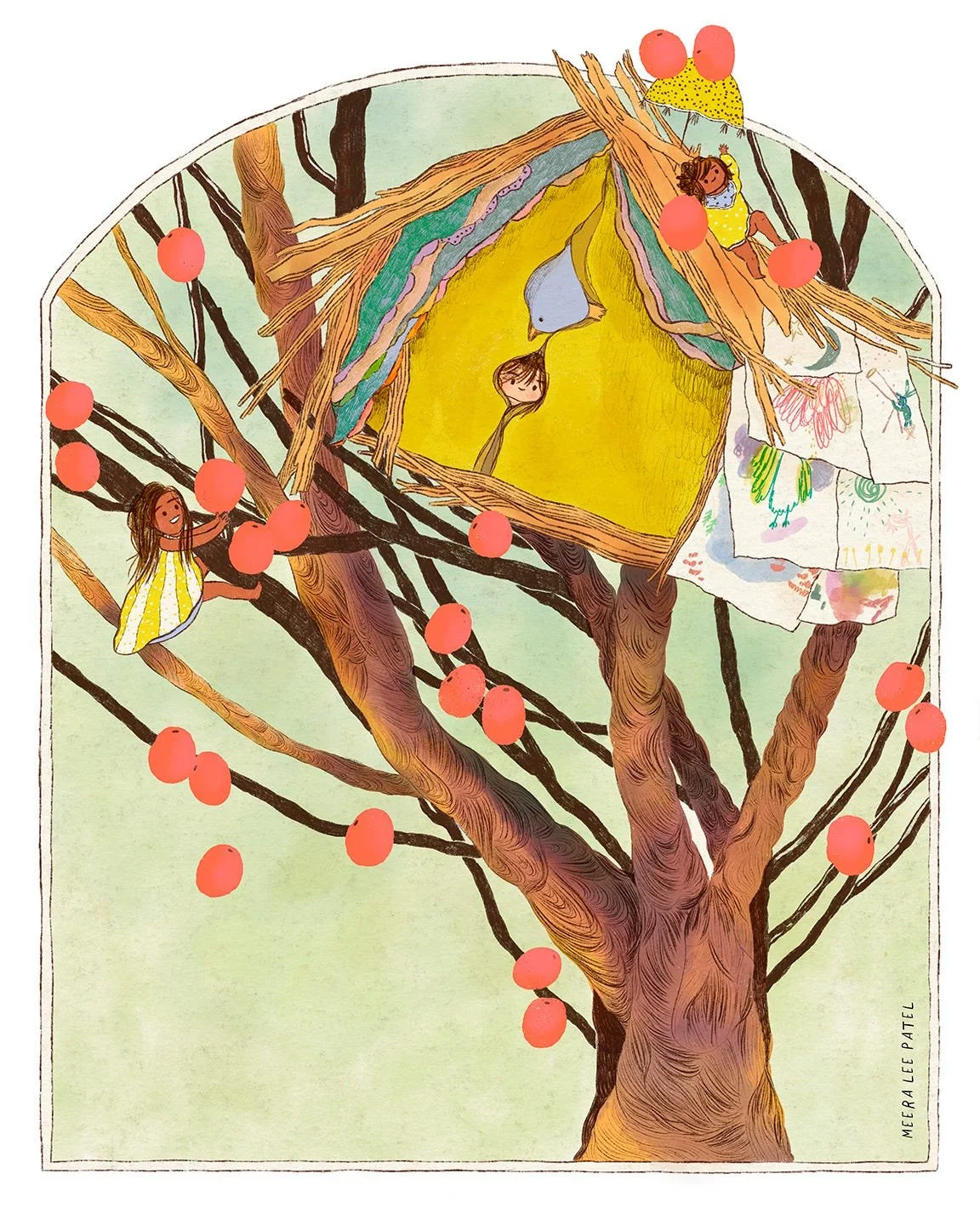
Her newsletter, Dear Somebody, is a short weekly note chronicling five things worth remembering, including a look into her process, reflections on motherhood, and creative inspiration.
Join thousands of other readers by subscribing.


Latest Posts

Featured
June 12, 2026
Dear Somebody: Knowing I have enough.
June 12, 2026
June 12, 2026
May 29, 2026
Dear Somebody: I am my own muse.
May 29, 2026
May 29, 2026
May 8, 2026
Dear Somebody: A story has a sense of the whole.
May 8, 2026
May 8, 2026
April 10, 2026
Dear Somebody: The hard work of it makes me shine.
April 10, 2026
April 10, 2026
April 3, 2026
Dear Somebody: A thousand years.
April 3, 2026
April 3, 2026

categories

  • Books 12
  • Life 64
  • Motherhood 12
  • Picture Book 1
  • Process 31
  • Sketchbook 12
  • Writing 4
Full archive
  • June 2026 1
  • May 2026 2
  • April 2026 2
  • March 2026 1
  • February 2026 1
  • January 2026 3
  • December 2025 1
  • November 2025 1
  • October 2025 4
  • September 2025 3
  • August 2025 1
  • July 2025 1
  • June 2025 3
  • May 2025 3
  • April 2025 4
  • March 2025 1
  • February 2025 2
  • January 2025 3
  • December 2024 2
  • November 2024 2
  • October 2024 2
  • September 2024 3
  • August 2024 2
  • July 2024 2
  • June 2024 2
  • May 2024 3
  • April 2024 2
  • March 2024 4
  • February 2024 4
  • January 2024 3
  • December 2023 2
  • November 2023 2
  • October 2023 4
  • September 2023 5
  • July 2023 2
  • June 2023 2
  • May 2023 3
  • April 2023 2
  • March 2023 4
  • February 2023 3
  • January 2023 4
  • December 2022 2
  • November 2022 1
  • August 2022 1
  • July 2022 2
  • May 2022 2
  • April 2022 2
  • March 2022 1
  • January 2021 1

READ MY BOOKS


Copyright © 2023 Meera Lee Patel